Honeybun requires only microliters of material to deliver rapid, parallel viscosity and rheology measurements for up to 10 samples per minute.
Its use of disposable consumables eliminates the need for washing, while the full shear-rate sweeps provide detailed insights into the behavior of biologic formulations under various flow conditions. This system replaces outdated, time-consuming, and sample-intensive methods with the fastest low-volume viscosity measurements available.
- Rapid, parallel testing: Up to 10 samples can be measured per minute, enabling complete viscosity and rheology profiles without hindering development
- Low sample volume: A minimum of 35 µL per sample is required (even less in low-volume mode), facilitating early-stage viscosity testing even with limited material.
- Broad viscosity range: Covers a viscosity range of 0.5–150 cP, allowing for the characterization of formulations from early stages to high-concentration biologics.
- Real-world temperatures: Sample testing can be performed at temperatures ranging from 4–45 °C, enabling measurements directly from refrigeration, at ambient temperatures, or under physiological conditions.
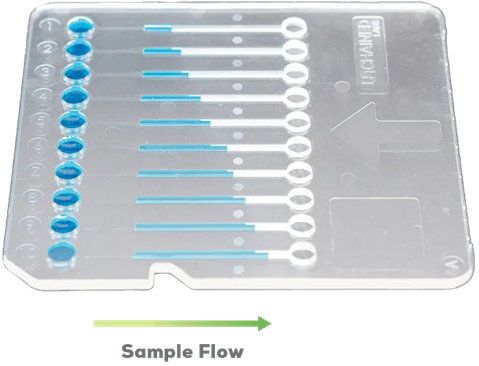
Image Credit: Unchained Labs
Capabilities
Short and sweet
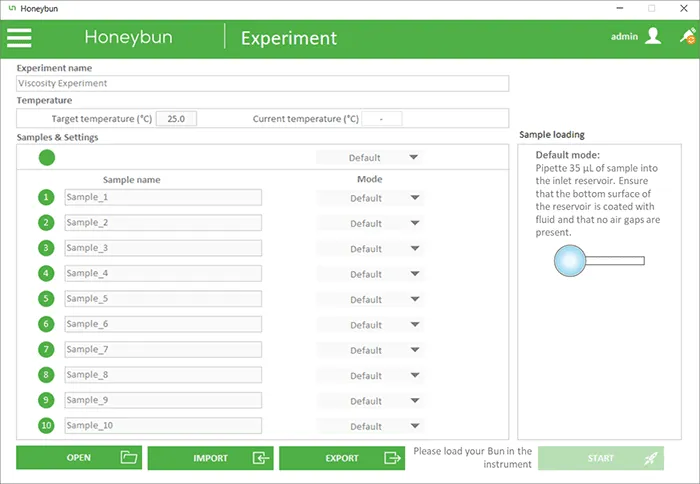
Image Credit: Unchained Labs
Provide complete sample details if desired, or use the expedited option. Honeybun's software automatically populates all necessary information, enabling experiments to be completed extremely quickly. A three-click process facilitates experimental setup and data acquisition.
Acquire crucial viscosity data
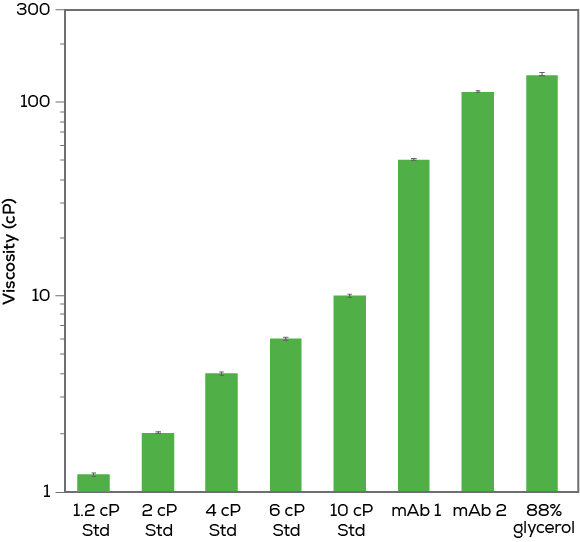
Image Credit: Unchained Labs
Honeybun ensures comprehensive acquisition of essential viscosity data. Its efficiency and high throughput simplify the process of collecting viscosity measurements whenever modifications are made to protein concentration or formulation.
Know the flow
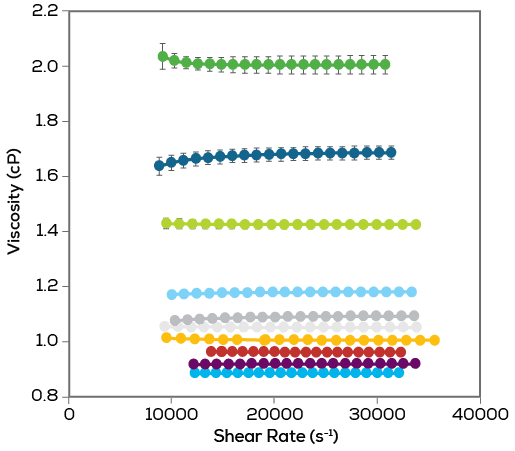
Image Credit: Unchained Labs
As Honeybun functions as a rheometer, each experiment incorporates a sweep of shear rates within each channel. This enables comparison of the flow behavior of every sample, regardless of whether it exhibits Newtonian properties.
Testing at different temperatures
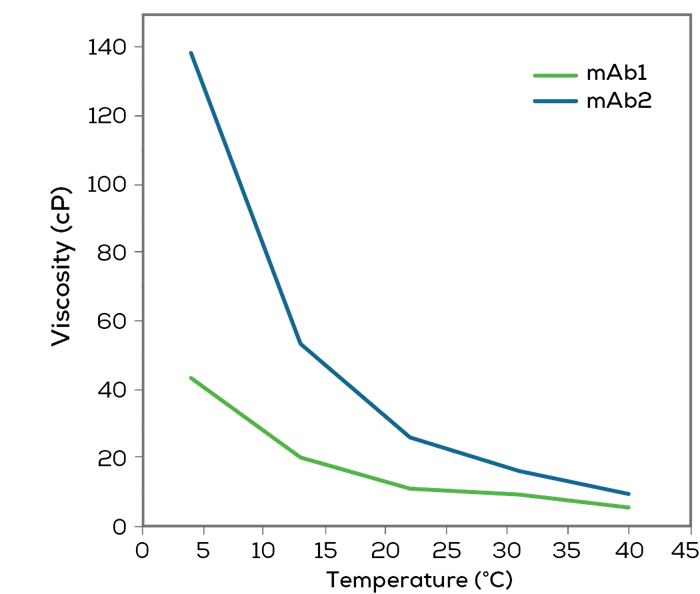
Image Credit: Unchained Labs
Temperature control ranges from 4 °C to 45 °C, providing insight into sample behavior under various conditions, including refrigeration, room temperature, or manufacturing heat.
Tech
Viscosity and rheology
What it does: Viscosity quantifies a sample's resistance to flow. Rheometry investigates how this viscosity changes in response to shear stress.
Why it matters: Understanding a sample's viscosity and its flow behavior under shear is crucial for administration and syringeability. This knowledge is particularly important for high-concentration biologics.
Specifications
Source: Unchained Labs
| Instrument |
Specification |
| Physical |
Dimensions: 46 cm W x 45 cm D x 43 cm H; 28 kg |
| Computer |
Separate computer with Windows 11 included |
| Electrical |
Input voltage: 110–230 V AC 50–60 Hz
Max power: 500 W |
| Nitrogen or compressed air requirements |
Pressure: 6–10 bar (87–145 PSI)
Flow rate: ≥10 L/min
Gas type: Compressed nitrogen or air following ISO 8573-1:2010 (quality classification 7,4,4, or class 4) |
| Detection method |
Camera: CMOS
Resolution: 1920x1080 |
| Approval |
CE, FCC |
| Application |
| Sample types |
Antibodies and other proteins, vaccines, viral vectors and injectables |
| Sample temperature range |
4–45 °C |
| Temperature control accuracy |
±0.5 °C |
| Viscosity range |
0.5–150 cP |
| Viscosity accuracy |
<3% |
| Viscosity precision |
<3% |
| Consumable |
| Bun material |
Cyclic olefin copolymer |
| Samples per bun |
10 |
| Recommended sample volume |
35 µL (default mode) or 15 µL (low volume mode) |
| Measurement total time |
≤1 minute (≤ 10 cP) |