Introduction
What are climate-resilient crops?
Links between environment and nutrient profiles
Evidence: Do resilient crops improve nutrition?
Limitations of current evidence
Implications for nutrition policy
Conclusions
References
Further reading
As climate change reshapes global agriculture, emerging evidence reveals that pairing stress-tolerant crops with biofortification may be key to safeguarding both harvests and human nutrition.
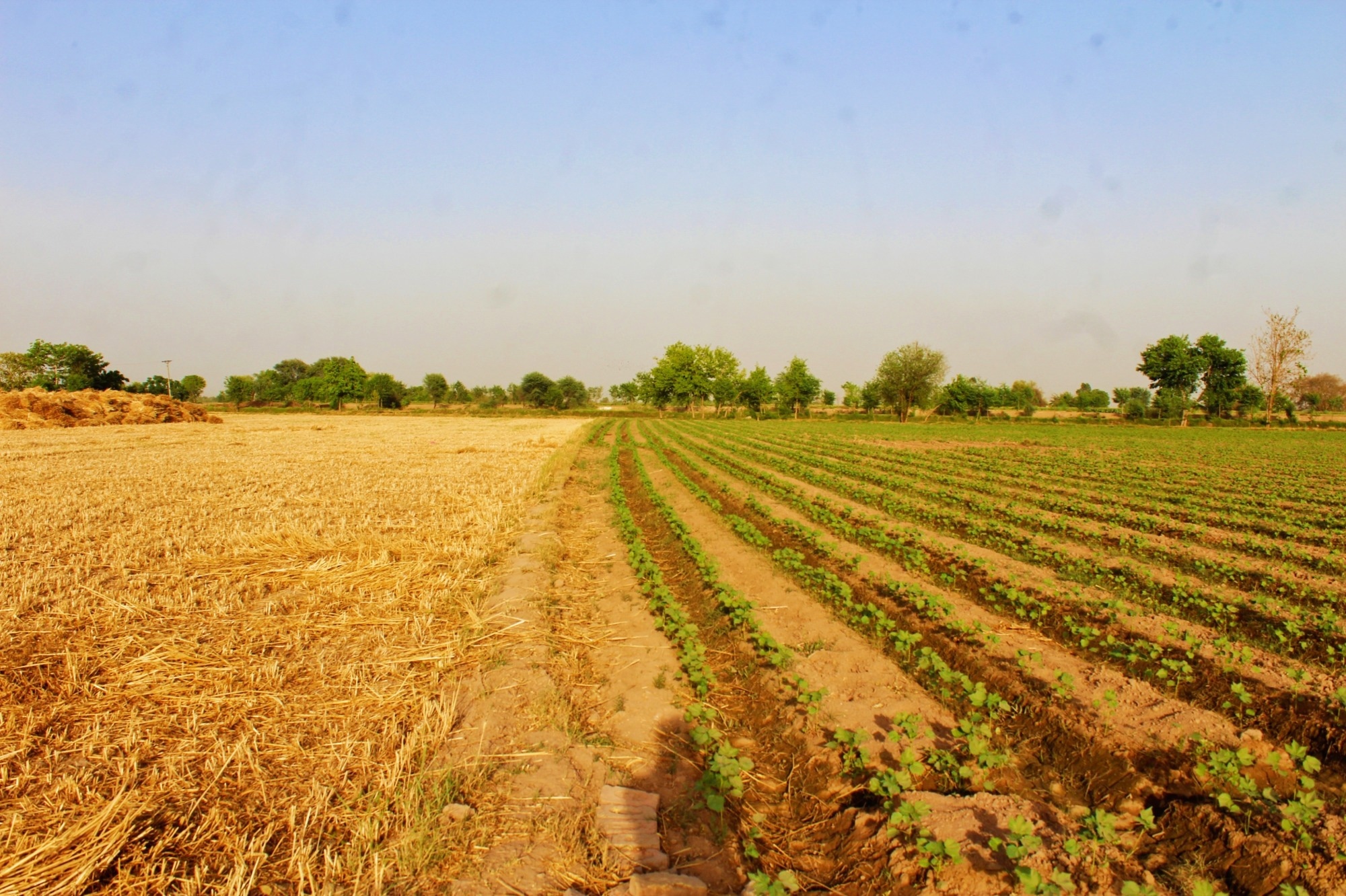 Image Credit: PixProfessional / Shutterstock.com
Introduction
Climate change is an existential threat to global food systems, with extreme weather events already disrupting food production and pushing millions into food insecurity.1 Simultaneously, rising atmospheric carbon dioxide (CO2) levels can reduce the nutritional density of staple crops (including protein and key minerals such as iron and zinc), even when yields increase under elevated CO2 conditions. These nutrient dilution effects are particularly pronounced in C3 crops such as wheat and rice, which respond strongly to elevated CO2, whereas C4 crops (e.g., maize) exhibit comparatively smaller direct CO2-driven nutrient changes.2
In response to these converging threats to crop yields and nutrient composition, climate-resilient crops have emerged as an effective adaptation strategy. This article examines scientific and policy evidence supporting the widespread adoption of climate-resilient crops to stabilize food production and, when nutrition-sensitive traits are included (e.g., biofortification), to improve diet quality.1,3,6
What are climate-resilient crops?
Definitions and traits
Climate-resilient crops are crops that have been engineered or selected to possess specific adaptive traits that allow them to maintain yield stability and physiological fitness under intensifying abiotic and biotic stresses. Unlike traditional or wild-type varieties that may collapse under stress, resilient crops are defined by their ability to maintain productivity despite unpredictable weather patterns, such as prolonged droughts or intense heat waves.3
Key research-validated agronomic traits include increased water-use efficiency, heat tolerance during critical growth stages, such as flowering, and robust root systems that can access subsoil moisture during drought. At the molecular level, resilience breeding increasingly integrates genomics, transcriptomics, metabolomics, and advanced phenotyping platforms to identify stress-responsive pathways and accelerate selection. Artificial intelligence and machine learning tools are being used to analyze large-scale omics and phenotypic datasets to predict stress tolerance traits and optimize breeding strategies.3
Distinction from biofortification
Climate resilience primarily focuses on agronomic survival and yield stability in the face of an environmental shock. Comparatively, biofortification specifically aims to increase the density of micronutrients in the edible parts of the plant.3
Because climate stress and elevated CO2 can depress crop nutrient concentrations, pairing climate-resilient agronomic traits with biofortification is often framed as a way to protect both harvests and nutrient intakes.1,2,6 This integration recognizes that resilience without nutritional enhancement may stabilize calories, but not necessarily micronutrient adequacy.
The most globally prominent examples of climate-resilient crops include cereals like sorghum and millets, which are naturally adapted to grow in arid conditions and require less water than maize or rice.4 Other examples include drought-tolerant maize varieties developed for Sub-Saharan Africa and stress-tolerant legumes like pigeon pea and cowpea.3
The Power of Drought-Resistant Crops in Climate-Resilient Farming
Links between environment and nutrient profiles
Climate stress and plant nutrient content
Climate change can affect crop nutritional quality through interacting stresses (heat, drought, and shifting pest/disease pressures) that alter plant physiology, yield formation, and nutrient allocation.3,4 Heat stress during reproductive stages can disrupt pollination and grain filling, while combined heat–drought stress alters photosynthesis, enzyme activity, and nutrient remobilization.4 Furthermore, elevated CO2 has been associated with declines in concentrations of key nutrients (including nitrogen/protein and minerals), which can compound nutrition risks even where calories remain available. Proposed mechanisms include carbohydrate dilution effects, altered transpiration rates affecting mineral uptake, and changes in gene expression related to nutrient metabolism.2
Human nutrition implications
Reviews synthesizing evidence on elevated CO2 highlight a consistent concern: nutrient “dilution” effects in major staples, including reductions in protein and minerals such as iron and zinc, with potential consequences for populations heavily dependent on plant-based diets.2 These effects are particularly concerning in regions where wheat and rice constitute a large share of dietary protein and micronutrient intake.
These observations suggest potentially severe implications for human health, particularly among populations that primarily rely on plant-based diets. The reduction in iron and zinc content in staple crops threatens to exacerbate the prevalence of anemia and stunting, both of which are conditions that already affect billions globally.1
Accordingly, nutrition-sensitive climate adaptation strategies increasingly emphasize not only yield stability but also the protection (or improvement) of the micronutrient quality of diets.1,2
Evidence: Do resilient crops improve nutrition?
Biofortified vs. resilient traits
Although climate-resilient traits stabilize food availability, they do not guarantee improved nutritional quality unless those traits are specifically engineered into the novel crop. However, combining resilience with biofortification traits can yield synergistic benefits.3,4
In practice, this means that “climate-resilient crops” may improve nutrition indirectly (through greater and more reliable harvests and income), while biofortified climate-resilient crops can also improve nutrition directly by increasing micronutrient intakes.1,3,6 This distinction reflects the difference between availability-mediated nutrition gains and nutrient-density-mediated gains.
For example, biofortified varieties that are also drought-tolerant can help ensure nutritional gains are less vulnerable to climate-related crop failure.1,3 Advanced breeding approaches increasingly integrate stress-tolerance screening with selection for nutritional traits.3
Human evidence and biomarkers
Empirical studies have begun to quantify the health impacts of these crops. In a randomized controlled study involving school-aged children in India, the consumption of iron-biofortified pearl millet significantly improved iron status and reversed deficiency, demonstrating that biofortified traits are biologically efficacious.6
For non-biofortified improved/resilient varieties, much of the strongest available evidence in these sources centers on household food security outcomes (e.g., higher food expenditures and a higher probability of being food secure), rather than on direct changes in micronutrient biomarkers.7 Thus, current evidence for nutrition improvements from resilience-only crops remains primarily indirect and mediated through food access and income pathways.
Drought-tolerant maize in sub-Saharan Africa
In sub-Saharan Africa, the deployment of drought-tolerant maize (DTM) has been a critical adaptation strategy to help combat the region’s severe drought crisis. In Zimbabwe, one ex-post household study found that adopters of drought-tolerant maize harvested substantially more maize than non-adopters (with model estimates indicating ~617 kg/ha additional production), translating into increased income and extended household food availability.8
More broadly, the same Zimbabwe study cites prior regional trial evidence that top drought-tolerant hybrids out-yielded farmer varieties by >35% under low-yield conditions and >50% under high-yield conditions, underscoring the potential for yield stabilization under variable rainfall.8 However, these sources primarily support food security and income pathways; they do not, on their own, establish micronutrient biomarker improvements from drought-tolerant maize adoption.7,8
Limitations of current evidence
Despite these documented and validated successes, there remains a lack of long-term data on dietary quality and micronutrient status outcomes directly attributable to the adoption of climate-resilient (non-biofortified) crops.2,3,7,8 Most impact evaluations focus on yield, income, or food security metrics rather than biochemical indicators of nutrient status. Additional studies are also needed to identify more robust biomarkers to track nutritional status in real time during climate shocks, as the current reliance on anthropometry often fails to capture the immediate physiological impacts of nutrient deprivation.1
Implications for nutrition policy
Integrating climate-resilient crops into the broader food system requires greater investments in post-harvest infrastructure, such as storage and transportation, to reduce food loss and nutrient decay.1 Effective policy strategies are also needed to support both supply-side actions (e.g., climate-smart agriculture and scaling biofortification) and demand-side actions that improve access to healthy, sustainable diets.1
Seed-system and market-shaping interventions may also accelerate uptake of nutrient-dense climate-relevant varieties; for example, the ARC model described for iron pearl millet emphasized faster variety release procedures, pre-release seed bulking, and processor commitments to create demand.5 Such system-level coordination reflects a shift from isolated breeding advances toward integrated climate–nutrition policy frameworks.
Policies must also be gender-responsive and inclusive. For example, research has found that women and girls are disproportionately affected by climate change and malnutrition, despite their central role in food production and household nutrition.1
Strengthening social protection programs to be ‘climate-smart’ can similarly build resilience among vulnerable populations.1 These policy directions are consistent with calls to better align climate and nutrition strategies rather than treating them in isolation.1
Conclusions
Climate-resilient crops, especially when paired with nutrition-sensitive approaches such as biofortification, offer a potent solution to stabilize food systems and support human health amid environmental shocks.1,3,6 However, the magnitude of nutritional benefits depends on whether resilience traits are combined with deliberate nutrient enhancement and whether supportive food system policies enable equitable access. Nevertheless, agronomic innovation alone is insufficient and must be supported by coherent policies that align supply chain investments in climate-smart agriculture with public interventions that promote healthy, sustainable diets.1
References
- Standing Together for Nutrition Consortium. (2025, February). The climate crisis and the nutrition crisis are intertwined: The need and the opportunity for policy actions to address both crises simultaneously [Policy brief]. Micronutrient Forum. https://micronutrientforum.org/wp-content/uploads/2025/02/ST4N_The-Climate-Crisis-and-the-Nutrition-Crisis-are-Intertwined_Policy-Brief_Feb-2025.pdf
- Ekele, J. U., Webster, R., Perez de Heredia, F., et al. (2025). Current impacts of elevated CO2 on crop nutritional quality: a review using wheat as a case study. Stress Biology 5(1). DOI: 10.1007/s44154-025-00217-w. https://link.springer.com/article/10.1007/s44154-025-00217-w
- Thingujam, D., Gouli, S., Corray, S. P., et al. (2025). Climate-Resilient Crops: Integrating AI, Multi-Omics, and Advanced Phenotyping to Address Global Agricultural and Societal Challenges. Plants 14(17); 2699. DOI: 10.3390/plants14172699. https://www.mdpi.com/2223-7747/14/17/2699
- Yuan, X., Li, S., Chen, J., et al. (2024). Impacts of Global Climate Change on Agricultural Production: A Comprehensive Review. Agronomy 14(7); 1360. DOI: 10.3390/agronomy14071360. https://www.mdpi.com/2073-4395/14/7/1360
- HarvestPlus. (2023). Commercializing Iron Pearl Millet in One Year: A Success Story of HarvestPlus in Nigeria. HarvestPlus. https://www.harvestplus.org/commercializing-iron-pearl-millet-in-one-year-a-success-story-of-harvestplus-in-nigeria/
- Finkelstein, J. L., Mehta, S., Udipi, S. A., et al. (2015). A Randomized Trial of Iron-Biofortified Pearl Millet in School Children in India. The Journal of Nutrition 145(7); 1576–1581. DOI: 10.3945/jn.114.208009. https://www.researchgate.net/publication/276068914_A_Randomized_Trial_of_Iron-Biofortified_Pearl_Millet_in_School_Children_in_India
- Manda, J., Gardebroek, C., Kuntashula, E., & Alene, A. D. (2018). Impact of improved maize varieties on food security in Eastern Zambia: A doubly robust analysis. Review of Development Economics 22(4); 1709-1728. DOI: 10.1111/rode.12516. https://edepot.wur.nl/458698
- Lunduka, R. W., Mateva, K. I., Magorokosho, C., & Manjeru, P. (2017). Impact of adoption of drought-tolerant maize varieties on total maize production in South-Eastern Zimbabwe. Climate and Development 11(1); 35-46. DOI: 10.1080/17565529.2017.1372269. https://pmc.ncbi.nlm.nih.gov/articles/PMC6397629/
Further Reading
Last Updated: Feb 22, 2026