Introduction
How does microwave cooking work?
Effects of microwave cooking on nutrients
How microwaving compares with other cooking methods
Other considerations
Conclusions
References
Further reading
Microwave cooking does not uniquely destroy nutrients; most nutrient loss is driven by heat, water, and cooking time rather than the method itself. It often preserves vitamins better than boiling, thanks to shorter cooking times and reduced water use, while still causing the typical heat-related structural changes in food.
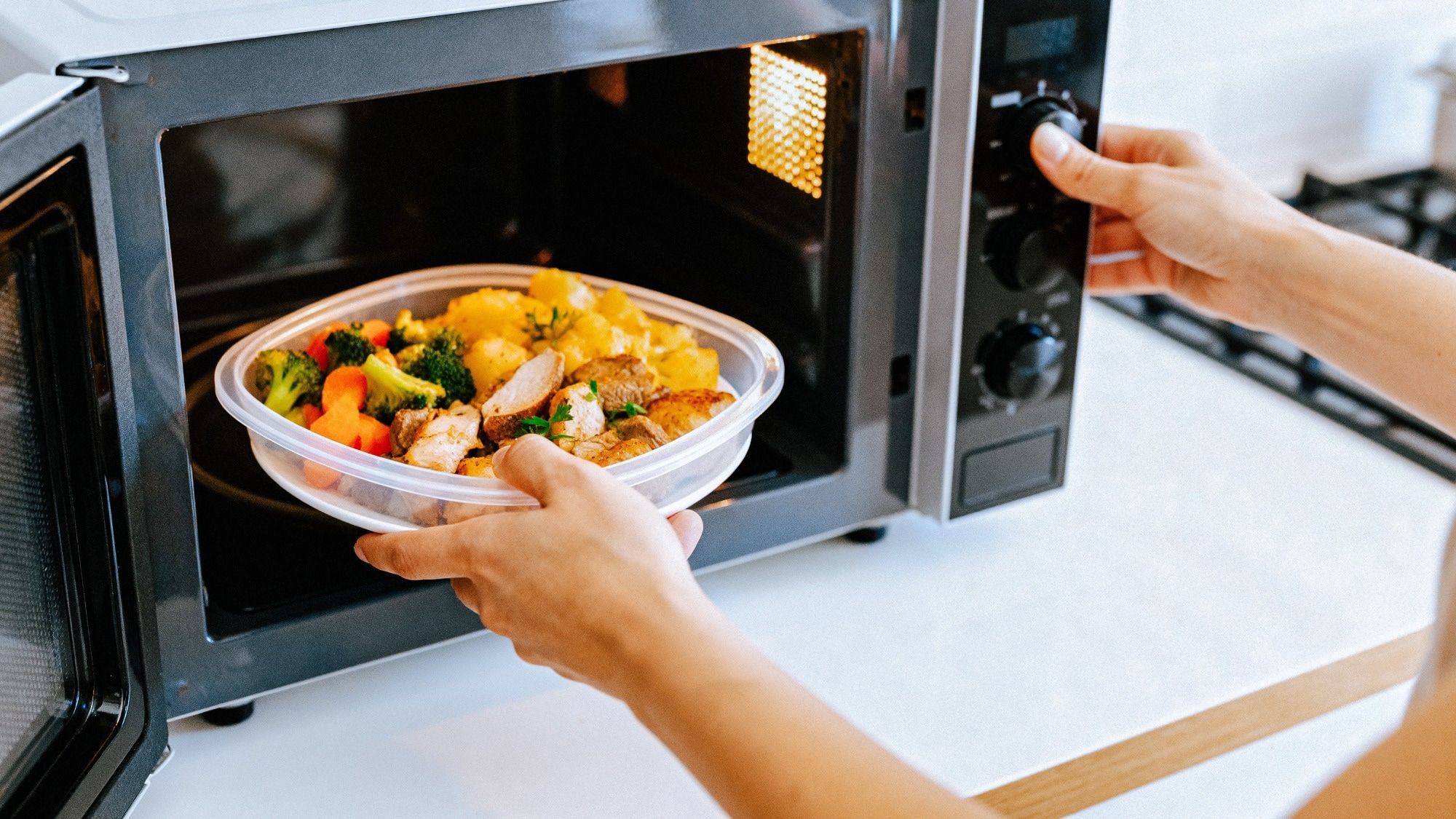 Image Credit: GraphinityLab / Shutterstock.com
Introduction
Microwave ovens are common household appliances due to their convenience and economic benefits. Understanding how microwaves work and their actual impact on nutrients is essential to addressing persistent misconceptions and evaluating their role in everyday cooking.1,3
This article explores the impact of microwave cooking on nutrient content and how it compares with other cooking methods for preserving food quality and nutritional value.
How does microwave cooking work?
Microwaves use short-wavelength electromagnetic radiation, like radio waves, that primarily interact with water and electrically charged molecules in food, producing rapid vibrations that generate heat. This internal generation of heat allows food to cook quickly and often more uniformly throughout the food matrix due to volumetric heating, although uneven heating and “hot” and “cold” spots can still occur in practice, which is comparable to conventional methods like baking or frying that rely on heat transfer from an external source to the food’s surface.2,3
Microwave heating is faster, more energy-efficient, and requires less added water or oil than conventional methods. Importantly, nutrient loss is primarily driven by heat exposure itself rather than the heating method. Boiling or frying, for example, takes longer and uses high heat, which can destroy some of the food's nutritional value. In contrast, microwave cooking delivers rapid heating with shorter exposure to heat, thereby reducing the extent of nutrient degradation.2,3
Effects of microwave cooking on nutrients
Microwaving food alters its nutrient content and the molecular structure of macronutrients such as carbohydrates and lipids. Specifically, microwaving affects the digestibility of starches, alters protein structures by unfolding or reforming molecular bonds, and, under certain conditions, causes lipid oxidation, although these effects are comparable to those of other thermal cooking methods. For example, microwave treatment can increase the formation of resistant starch and slow starch digestibility under certain conditions. These structural changes are typical of heating processes and do not inherently reduce overall nutritional value, but they can impact texture, flavor, and nutrient availability.1
Water-soluble vitamins like vitamin C are particularly sensitive to cooking conditions, especially if exposed to high heat or cooked for long periods. Compared with microwave cooking, boiling often retains more vitamins, as boiling can lead to nutrient leaching into the water. Studies show vitamin C retention can be higher with microwaving than boiling across many vegetables. However, vitamin retention can vary by nutrient and vegetable; for example, microwave cooking has been shown to cause greater losses of vitamin K in some vegetables while preserving it better in others. Fat-soluble vitamins, such as E and K, may also change during cooking; however, their retention varies depending on the food and method used.4
Microwave cooking affects nutrients differently depending on the type of food, its composition, cooking time, temperature, and water content. Overall, nutrient changes are more strongly influenced by cooking time, temperature, and water use than by whether a microwave is used, highlighting the importance of proper cooking practices.3,4
Is Microwaving Your Food Dangerous? | Earth Science
How microwaving compares with other cooking methods
Many traditional cooking methods involve exposing ingredients to heat for a certain amount of time and, in some cases, large amounts of water or oil. Whereas boiling can lead to significant nutrient losses by water-soluble vitamins leaching into the cooking liquid, frying and grilling expose food to higher temperatures that degrade heat-sensitive nutrients.3,4
In contrast, microwave cooking uses rapid internal heating, which reduces cooking time and limits exposure to high temperatures, helping preserve heat-sensitive nutrients. Because it often uses little or no added water, microwaving can reduce nutrient losses associated with leaching.3,4 Microwave processing is associated with efficient heating and can maintain or even enhance certain functional or antioxidant properties depending on the food, making it a practical alternative to conventional methods.2
Key factors influencing nutrient retention across all cooking methods include cooking time, temperature, and the amount of water used. Higher temperatures and longer cooking times break down more nutrients, while excess water leads to the leaching of vitamins and minerals.
Other considerations
There are many misconceptions about cooking with microwaves, including some related to safety and whether and how eating food cooked in a microwave oven is harmful. One common myth is that microwaves emit radiation that would make foods prepared in the microwave radioactive or otherwise unhealthy; however, microwaves only emit non-ionizing radiation, which is safe and does not make food radioactive or fundamentally alter its chemical nature beyond normal heating effects.1,3
Another misconception is that microwaving destroys nutrients to a greater extent than other cooking methods. Evidence indicates this is not the case; in many situations, microwaving preserves nutrients as well as or better than other methods due to shorter cooking times.3,4 Importantly, microwave cooking is faster and uses minimal water, thereby allowing it to better preserve nutrients than conventional methods.1,3
Microwave power and cooking duration affect food quality and nutrition, as higher power levels and longer cooking times can lead to greater heat exposure and more rapid nutrient degradation. Variations in moisture levels and cooking conditions may also affect macromolecules such as proteins, starches, and lipids during cooking.1,3
 Image Credit: Zyn Chakrapong / Shutterstock.com
Conclusions
As with all cooking methods, the effects of microwaving depend on time, temperature, and the use of water. Current evidence shows that microwave cooking does not uniquely destroy nutrients and can often preserve them effectively due to shorter cooking times and reduced water use. Microwaving is a convenient cooking method that efficiently retains nutrient content in food, often better than traditional methods like boiling or frying.3,4
References
- Deng, X., Huang, H., Huang, S., et al. (2022). Insight into the incredible effects of microwave heating: Driving changes in the structure, properties and functions of macromolecular nutrients in novel food. Frontiers in Nutrition 9. DOI: 10.3389/fnut.2022.941527.https://www.frontiersin.org/journals/nutrition/articles/10.3389/fnut.2022.941527/full
- Nguyen, T. P., & Songsermpong, S. (2022). Microwave processing technology for food safety and quality: A review. Agriculture and Natural Resources 56(1); 57-72. DOI: 10.34044/j.anres.2021.56.1.06. https://li01.tci-thaijo.org/index.php/anres/article/view/253973
- Harvard Health Publishing. (2021, August 17). Microwave cooking and nutrition. Harvard Medical School. https://www.health.harvard.edu/staying-healthy/microwave-cooking-and-nutrition
- Lee, S., Choi, Y., Jeong, H. S., et al. (2017). Effect of different cooking methods on the content of vitamins and true retention in selected vegetables. Food Science and Biotechnology 27(2); 333-342. DOI: 10.1007/s10068-017-0281-1. https://link.springer.com/article/10.1007/s10068-017-0281-1
Further Reading
Last Updated: Mar 26, 2026