Introduction
What is oral processing?
How food texture affects eating behavior
Food texture and satiety
Chewing speed and appetite
Biological mechanisms
Impact on energy intake and weight
Interaction with food type and processing
Practical Implications
Limitations and research gaps
Conclusions
References
Further reading
Food texture and chewing speed influence appetite, satiety, and energy intake through mechanisms of oral processing and gut signaling. These effects are modest but consistent, suggesting practical relevance for dietary behavior and weight management.
Image Credit: kimberrywood / Shutterstock
Introduction
Food choices and eating behavior influence appetite and weight. An increasing body of evidence suggests that the texture of foods, as well as the rate of consumption, can influence our appetite. Solid and semi-solid foods may keep us full for longer than liquids. Meta-analytic evidence shows that solid foods reduce hunger compared to liquids (mean difference ≈ −4.97 mm on visual analog scales), while higher viscosity foods also modestly enhance fullness. Supporting this, studies show that individuals who consume whole, high-viscosity foods experience less hunger than those who consume juices and purees. These observations have increased scientific interest in the role of food texture and eating behavior in regulating appetite.1
What is oral processing?
Oral processing is the chewing of food to break it down into smaller particles for digestion. The texture, consistency, and type of food, alongside eating speed, determine food consumption and energy intake. People typically chew harder, more elastic foods for longer than they do softer, more lubricative foods. Prolonged mastication exposes harder foods to oral enzymes for comparatively longer periods of time than softer or liquid foods.2,3
Studies now indicate that increased oral processing, including more chews per bite and slower eating, can reduce overall energy intake. Not only this, but chewing food longer can also reduce our desire to eat and influence gut hormones that regulate satiety and appetite. Meta-analysis evidence indicates prolonged chewing significantly reduces self-reported hunger and often lowers food intake.3
How food texture affects eating behavior
The texture of food determines how quickly and how much we consume. Structurally complex foods, such as gels with poppy or sunflower seeds, require more chewing, prolonging their time in the mouth. Such foods are therefore consumed slowly. Liquids and soft foods, on the other hand, can be consumed quickly with minimal chewing, reducing overall meal duration. Shorter oral exposure times may weaken oro-sensory signaling and delay satiation responses.3 Chewing foods thoroughly can also lower energy intake, irrespective of appetite changes. Food texture may therefore affect oral processing abilities and dietary behavior by influencing eating speed, bite size, and energy intake.2
Food texture and satiety
The texture or smoothness of foods can determine our feeling of fullness. Individuals consuming structurally complex, viscous, and solid formulations reportedly experience less hunger than those who consume fluids and semi-solid items with similar energy content. Higher viscosity foods have been shown to increase fullness scores (≈ +5.20 mm), though effects on subsequent intake vary across studies.1 Early experiments with oat-based beverages of different viscosities support these findings. Foods with particulate inclusions can also help individuals feel full for longer, which decreases appetite. This has been observed among individuals who consume aerated beverages compared with those who consume non-aerated beverages containing a similar number of calories.1
These effects, although modest, have been observed in several studies with different experimental settings, suggesting a consistent association between food texture, satiety, and appetite. However, the mechanistic underpinnings are unclear, and the evidence should be interpreted cautiously because study designs and texture definitions differ substantially. While some studies attribute these effects to differences in gastric emptying and distension, others emphasize sensory factors such as mouthfeel and oral exposure.1
Chewing speed and appetite
The speed at which we eat regulates appetite by influencing satiety signals and, consequently, energy intake. Fast chewing has been linked to increased energy intake. This is because when food is present in the mouth for short periods, it may reduce the oral sensory feedback involved in satiety signaling. Eating slowly, on the other hand, increases oral exposure, allowing satiety signaling between the gut and the brain. As a result, slow eaters feel fuller and tend to eat less compared to fast eaters. Studies have demonstrated such effects among individuals who consume nuts or chew gum and their influence on gut hormones.3
Building on these observations, eating speed can have important health implications. Faster chewing is positively correlated with hunger and, as a consequence, with increased food consumption. Experimental evidence also shows that faster eating rates (e.g., higher kcal/min intake) are associated with increased total energy intake due to delayed satiety signaling.4 Excess energy intake can increase the risk of overeating and obesity by supplying more energy to the body than it actually needs to carry out various physiological processes. Slower eating promotes earlier fullness, and thus exerts opposite effects. However, the associations between eating speed, appetite, and energy intake are non-linear, with several diet- and health-related influencing factors.3
Biological mechanisms
Eating behavior can influence gut hormones that regulate appetite and satiety. The speed of eating and the number of chews per bite can also influence gut-brain signaling. For example, chewing foods for longer with more chews per bite has been linked to lower levels of ghrelin, the ‘hunger hormone’, after meals. At the same time, slow eating with prolonged mastication can increase levels of satiety hormones, including glucagon-like peptide-1 (GLP-1) and peptide YY (PYY).3
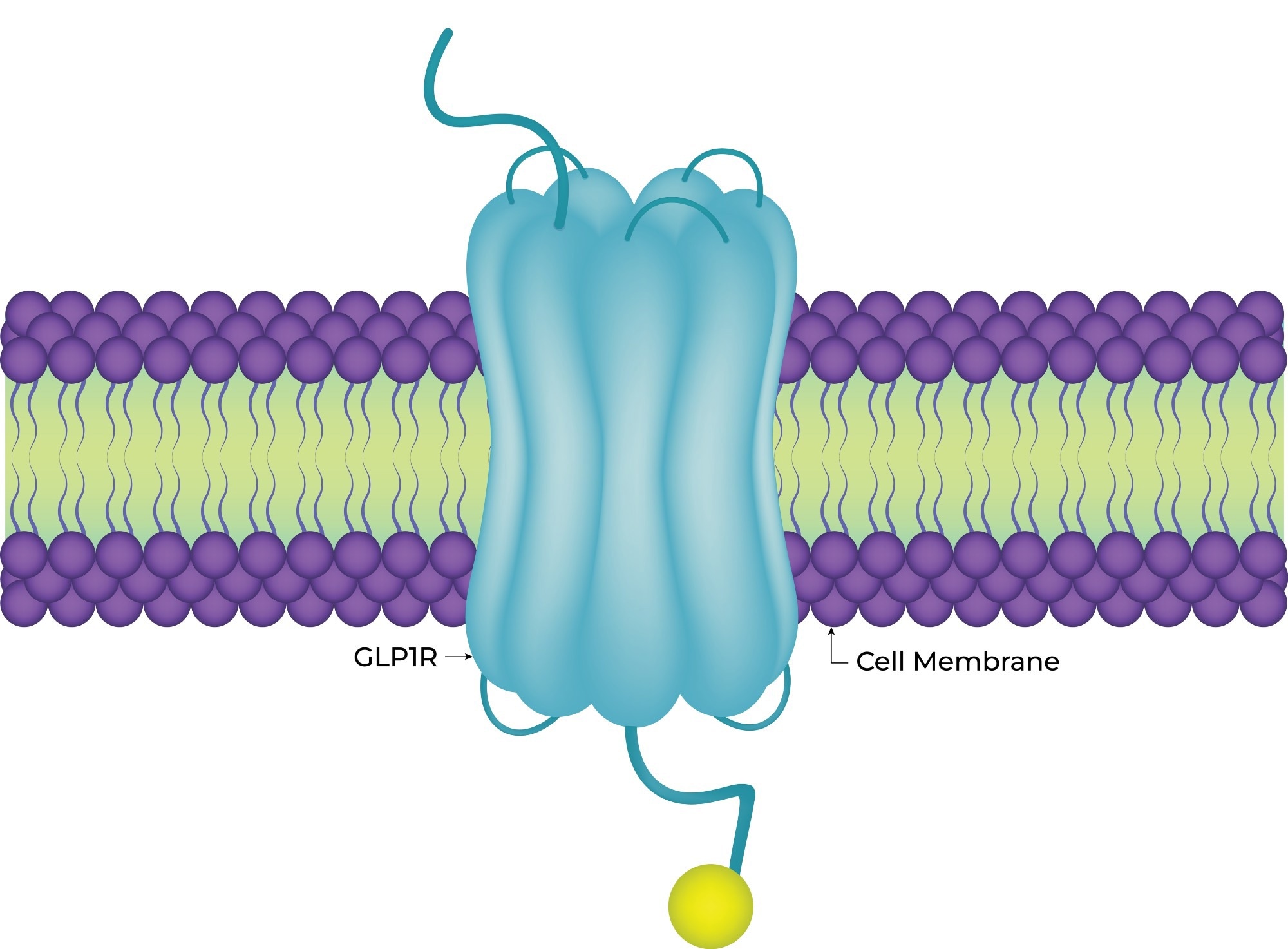
Illustration of the Glucagon-like Peptide-1 (GLP-1) receptor embedded in the cell membrane. The diagram shows the GLP1R protein interacting with the lipid bilayer of the cell membrane, illustrating how GLP-1 hormones bind to receptors to regulate insulin secretion and glucose metabolism. Image Credit: HamjaIU / Shutterstock
Evidence suggests that increased mastication can enhance some gut hormone responses (e.g., GLP-1, PYY) while suppressing hunger signals, contributing to earlier satiation. Slow chewing with smaller, multiple bites also promotes food digestion and nutrient absorption. Compared to one large bolus, foods broken down into smaller particles may alter digestion and absorption kinetics in the intestines. The process also activates enteroendocrine cells to secrete GLP-1 and PYY, keeping individuals fuller for extended periods. Slower eating also favors signal transmission to and from the brain through the vagus nerve. Soft foods may reduce oral exposure and weaken early satiation cues, leading individuals to consume more food in a short period.3
Impact on energy intake and weight
Excess energy intake leads to weight gain. Food texture and eating behavior can influence this balance by potentially altering energy intake. Habitual fast eating has been linked to lower satiety and increased appetite, both of which lead to increased food consumption and energy intake. If cells do not use excess energy, individuals gain weight.1
Eating slowly and chewing food thoroughly has been associated with smaller meals, less food consumption, and lower energy intake. Across studies, reductions in intake are modest but consistent enough to suggest possible cumulative effects on long-term energy balance. Thus, in addition to regular exercise and eating whole, fiber-rich foods, eating them slowly and increasing oral exposure time through increased mastication offers a simple, practical approach to supporting obesity prevention or weight-management efforts. Compared with fast eaters, slow eaters with similar diets may reduce short-term energy intake, but the long-term cardiometabolic benefits remain unclear and require further study.1,3
Interaction with food type and processing
Beyond food texture and eating speed, the level of processing can influence energy intake and metabolic regulation. Ultra-processed foods are typically softer and smoother, factors that promote quick consumption. These foods are often less satiating and can be consumed more quickly, leading to higher energy intake before satiety signals fully develop. As a result, individuals who consume these packaged, readily available, industrially processed foods may eat more, promoting a positive energy balance. This excess energy is stored as body fat. In comparison, minimally processed foods such as whole fruits, vegetables, and other fiber-rich options require greater chewing efforts, which promotes satiety and regulates appetite, limiting overall food consumption. Thus, these naturally firmer, minimally processed foods promote health through enhanced satiety, whereas ultra-processed foods on supermarket shelves are associated with adverse health outcomes.4
Practical Implications
Individuals can benefit from chewing foods longer and reducing bite size to promote fullness and reduce appetite, ultimately reducing food consumption and energy intake. A simple strategy is to prioritize whole, naturally textured, high-viscosity, high-fiber foods while limiting consumption of processed foods and liquid formulations. For example, eating an orange can be more beneficial than drinking canned orange juice loaded with added sugars and preservatives. Thus, individual eating behavior and food preferences work hand in hand in appetite control and weight regulation.4
At the manufacturer level, foods could be designed with particles or different textures to increase their structural complexity and viscosity, thereby promoting fullness and reducing food consumption. For older adults, however, texture modification requires balance: softer or higher-moisture foods may improve chewing safety and comfort, but may also reduce sensory appeal or energy density if not carefully formulated.2 Integrating these behavioral practices with dietary patterns and food modifications could offer a scalable approach for weight management, while also supporting the gut and its influence on various body organs and organ systems.1
Limitations and research gaps
There has been increasing research in the influence of food type, texture, consumption, and oral processing profiles on energy intake through effects on gut hormones and other satiety factors. However, most existing studies vary in their methods and lack standardized measurements, which limits the generalizability of their findings. Moreover, inference is largely drawn from short-term studies. High heterogeneity across studies (e.g., variability in texture definitions and appetite measures) further limits the strength of causal conclusions.1 Larger-scale investigations with longer follow-ups and diverse populations are required to clarify long-term impacts on body weight and validate previous findings.1,2
Future studies must also account for individual differences in factors such as age, culture, and dental status, all of which can influence eating patterns. Older adults are especially heterogeneous: tooth loss, xerostomia, dysphagia, and reduced mastication strength can alter both texture perception and food acceptance.2 Analyzing individual physiological parameters and biomarkers of gut health, metabolism, energy utilization, and weight could further improve mechanistic understanding and help develop personalized care models. Leveraging texture in food design could improve the acceptability and palatability of beneficial foods, thereby promoting individual health and reducing the global obesity burden.1,2
The hidden health benefits of eating slowly | BBC Global
Conclusions
Food texture and chewing speed emerge as meaningful, often overlooked factors in regulating satiety, appetite, and energy intake. Simple strategies such as choosing structurally complex, minimally processed foods and eating them more slowly may help reduce energy intake and support weight management. Although individual effects are modest and sometimes heterogeneous, their consistency across controlled studies and meta-analyses suggests practical relevance for everyday dietary behavior.1,3 Moving forward, integrating both food choice and eating behavior may offer a practical and scalable approach to improving metabolic health and reducing obesity risk.3
References
- Stribiţcaia, E., Evans, C. E., Gibbons, C., Blundell, J., & Sarkar, A. (2020). Food texture influences on satiety: Systematic review and meta-analysis. Scientific Reports, 10, 12929. DOI: 10.1038/s41598-020-69504-y, https://www.nature.com/articles/s41598-020-69504-y
- Giles, H. et al. (2025). A systematic review of the factors affecting textural perception by older adults and their association with food choice and intake. Appetite, 214, 108202. DOI: 10.1016/j.appet.2025.108202, https://www.sciencedirect.com/science/article/pii/S0195666325003551
- Miquel-Kergoat, S., Braesco, V., Freeman, B., and Hetherington, M. (2015). Effects of chewing on appetite, food intake and gut hormones: A systematic review and meta-analysis. Physiology & Behavior 151, 88–96. DOI: 10.1016/j.physbeh.2015.07.017, https://www.sciencedirect.com/science/article/pii/S0031938415300317?via%3Dihub
- Juul, F., Vaidean, G., & Parekh, N. (2021). Ultra-processed Foods and Cardiovascular Diseases: Potential Mechanisms of Action. Advances in Nutrition, 12(5), 1673-1680. DOI: 10.1093/advances/nmab049, https://www.sciencedirect.com/science/article/pii/S2161831322004628
Further Reading
Last Updated: Apr 23, 2026