Caffeine Use in Sports: Benefits, Tolerance, and Limitations
Defining Non-Stimulant Pre-Workout Formulations
Key Ingredients for Energy and Endurance
Secondary Ingredients With Potential Performance Benefits
Performance Gains vs. Real-World Variability
Safety, Dosing, and Expectations
Conclusions
References
Further Reading
Caffeine is an established ergogenic aid that improves exercise performance by delaying fatigue and increasing alertness. Despite its efficacy, limitations such as tolerance, adverse effects, and interindividual variability have driven growing interest in non-stimulant alternatives.
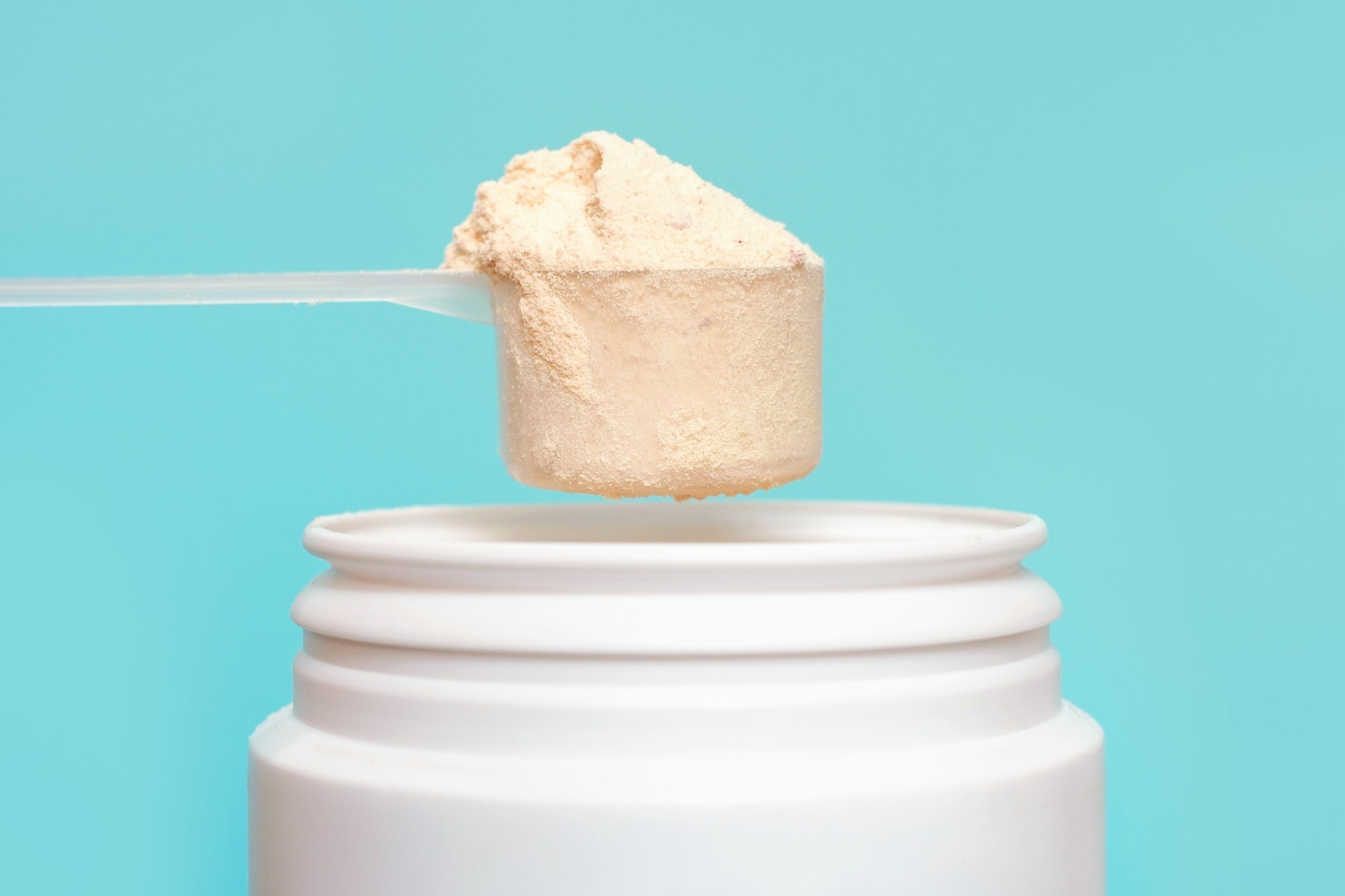 Image Credit: Tatiana Kim / Shutterstock.com
Caffeine Use in Sports: Benefits, Tolerance, and Limitations
Researchers estimate that 70 % of young adults consume at least one nutritional supplement, with 30 % reporting regular use of pre-workout energy products. Modern sports science defines pre-workout supplements as mixtures consumed before exercise to increase the availability of energy substrates, thereby creating physiological conditions that favor endurance and muscle mass gain.1,2
Caffeine (C8H10N4O2) is a methylxanthine adenosine receptor antagonist that delays the perception of fatigue and enhances fat oxidation. Chronic caffeine consumption reduces tolerance, subsequently necessitating higher doses to achieve the same ergogenic effect.
High caffeine intake increases the risk of common side effects such as jitters and insomnia, thus emphasizing the need for alternative ingredients that sustain energy and focus. The widespread prevalence of individuals with high caffeine sensitivity has similarly encouraged the exploration of non-caffeinated alternatives.1,3
Multi-ingredient pre-workout supplements (MIPS) incorporate a wide range of ingredients, such as amino acids, nitric oxide (NO) compounds to increase energy, and creatine to enhance athletic performance.3
Compared to stimulants like caffeine and nicotine, which target the areas of the brain that perceive work and fatigue, non-stimulant ingredients mediate biochemical pathways that maintain endurance and blood flow. At the same time, they address fatigue through physiological mechanisms.3
Unfortunately, reviews highlight persistent challenges in defining the efficacy of these products due to proprietary blends that do not disclose specific dosages of individual active compounds.3
Key Ingredients for Energy and Endurance
Beta-Alanine
Beta-alanine is the rate-limiting precursor to carnosine or β-alanyl-L-histidine. Carnosine is a dipeptide that buffers hydrogen ions (H+) generated during high-intensity exercise, thereby delaying the onset of metabolic acidosis to support sustained muscular effort.4
Previous research has investigated the efficacy of acute single doses of beta-alanine before physical exercise; however, these formulations were largely ineffective. Rather, the National Institutes of Health (NIH) Office of Dietary Supplements recommends a minimum of two to four weeks of intake to saturate muscle carnosine reservoirs.5
One study suggests that fragmented dosing protocols of 4-6.4 g per day, with these doses divided into smaller servings throughout the day to minimize paresthesia, effectively enhance maximal strength and power-related outcomes for up to eight weeks.4
Beta Alanine Explained in 60 Seconds - Better Than Your Typical Supplement?
Video credit: PictureFit / Shutterstock.com
Creatine
Creatine monohydrate is one of the most studied, safest, and effective supplements for increasing strength and energy supply during high-intensity activity. Numerous studies confirm that creatine facilitates rapid rephosphorylation of adenosine diphosphate (ADP) to adenosine triphosphate (ATP) through the phosphocreatine system, significantly enhancing energy reserves.5
Even a short-term loading protocol of 0.3 g/kg for three consecutive days can significantly increase repetitions completed at 60-80 % 1-repetition maximum (1RM) and reduce cardiovascular strain during exercise in resistance-trained athletes.6
Citrulline and NO Boosters
L-citrulline and citrulline malate (CM) act as NO enhancers by improving vasodilation and muscle oxygenation during strenuous physical exercise and post-exercise recovery. Previously, CM supplementation has been reported to reduce muscle soreness by up to 41.8 % between 24 and 48 hours after exercising.7
Importantly, citrulline supplementation may not improve oxygen uptake (VO2) kinetics. One meta-analysis of aerobic performance showed no statistically significant difference between users and controls during low-intensity exercise. These findings suggest that the primary benefits of citrulline intake are more evident during anaerobic or high-intensity interval efforts.7
Taurine and L-tyrosine
Taurine is an essential amino acid that regulates cellular hydration and calcium handling. Acute doses of taurine have demonstrated a significant positive effect on endurance in hot environments, with studies revealing a Bayesian P-score ranking of 12.8 % for improving endurance capacity.8
L-tyrosine, a precursor to catecholamines such as adrenaline, noradrenaline, and dopamine, is associated with moderate-quality evidence suggesting it is generally ineffective for improving whole-body endurance performance. Consequently, L-tyrosine is only recommended to support cognitive function and focus when athletes experience significant mental fatigue or environmental stress, rather than as an endurance-enhancing supplement.9
Nitrates
Research on inorganic nitrates, primarily derived from beetroot extracts, indicates that these compounds utilize a non-enzymatic pathway to increase NO bioavailability. By reducing oxygen demand in skeletal muscles, NO supplementation mitigates exercise-induced acidic or hypoxic conditions. For example, chronic nitrate supplementation has been associated with statistically significant improvements in cyclists’ endurance time-trial performance.10
 Image Credit: Snide12 / Shutterstock.com
Acute MIPS ingestion can improve anaerobic power, the total volume of work completed in a resistance session, and improve anaerobic peak power output among athletes. Nevertheless, these effects vary based on supplement combinations, dosages, ingestion timings, and athletes’ training status.1-3
Virability in formulation is highlighted as the most persistent current limitation in sports nutrition. Certain ingredients like creatine and beta-alanine require chronic loading to be effective, whereas nitrates and other compounds offer acute benefits, which further contribute to interindividual differences.3
Safety, Dosing, and Expectations
Most non-stimulant pre-workout supplements are generally safe when consumed in recommended doses. Although cardiovascular events like palpitations have been documented, these adverse effects are often restricted to individuals with preexisting health conditions or specific intolerances.2
The NIH Office of Dietary Supplements shows that the most commonly reported side effect in sports nutrition research is paresthesia following high doses; however, these events are temporary and considered physiologically harmless. In fact, emerging data suggest that certain components, such as taurine and citrulline, may confer cardioprotective benefits by improving consumers’ endothelial function and reducing homocysteine levels.2,5
Consumers are advised to select products based on ingredient transparency and align supplement use with their specific training goals. Specifically, creatine and beta-alanine can be taken daily for chronic adaptations, whereas NO boosters between 60 and 120 minutes before exercise can provide hemodynamic support.3,5
Conclusions
Non-caffeine supplements are widely used to enhance exercise capacity and cardiovascular resilience. A balanced approach that prioritizes high-quality, transparently labeled products, alongside proper diet and hydration, remains the most effective strategy for optimizing athletic performance.
References
- Martinez, N., Campbell, B., Franek, M., et al. (2016). The effect of acute pre-workout supplementation on power and strength performance. Journal of the International Society of Sports Nutrition 13(1). DOI: 10.1186/s12970-016-0138-7. https://www.tandfonline.com/doi/full/10.1186/s12970-016-0138-7#abstract
- Bella, Y. F., Cupido, S. R. S., Inacio, P. A. Q., et al. (2025). Pre-Workout Supplements and Their Effects on Cardiovascular Health: An Integrative Review. Journal of Cardiovascular Development and Disease 12(4); 112. DOI: 10.3390/jcdd12040112. https://www.mdpi.com/2308-3425/12/4/112
- Harty, P. S., Zabriskie, H. A., Erickson, J. L., et al. (2018). Multi-ingredient pre-workout supplements, safety implications, and performance outcomes: a brief review. Journal of the International Society of Sports Nutrition 15(1). DOI: 10.1186/s12970-018-0247-6. https://www.tandfonline.com/doi/full/10.1186/s12970-018-0247-6
- Ong, S., Chen, W., Chien, K., & Hsu, C. (2025). Dosing strategies for β-alanine supplementation in strength and power performance: a systematic review. Journal of the International Society of Sports Nutrition 22(1). DOI: 10.1080/15502783.2025.2566368. https://www.tandfonline.com/doi/full/10.1080/15502783.2025.2566368
- NIH Office of Dietary Supplements. (2024). Dietary supplements for exercise and athletic performance: Fact Sheet for Consumers. National Institutes of Health. https://ods.od.nih.gov/factsheets/ExerciseAndAthleticPerformance-HealthProfessional/. Accessed 14th April 2026.
- Salem, A., Ammar, A., Kerkeni, M., et al. (2025). Short-term creatine supplementation enhances strength, reduces fatigue, and accelerates recovery in resistance-trained athletes: a double-blind, randomized, crossover trial. Journal of the International Society of Sports Nutrition 22. DOI: 10.1080/15502783.2026.2617283. https://pmc.ncbi.nlm.nih.gov/articles/PMC12833896/
- Viribay, A., Fernández-Landa, J., Castañeda-Babarro, A., et al. (2022). Effects of Citrulline Supplementation on Different Aerobic Exercise Performance Outcomes: A Systematic Review and Meta-Analysis. Nutrients 14(17). DOI: 10.3390/nu14173479. https://pmc.ncbi.nlm.nih.gov/articles/PMC9460004/
- Li, J., Liu, S., Wang, S., et al. (2025). Effects of Nutritional Supplements on Endurance Performance and Subjective Perception in Athletes Exercising in the Heat: A Systematic Review and Network Meta-Analysis. Nutrients 17(13); 2141. DOI: 10.3390/nu17132141. https://pmc.ncbi.nlm.nih.gov/articles/PMC12252039/
- Solon-Júnior, L. J. F., Alvarez, D. A., B., Gonzalez, B. M., et al. (2023). The effect of tyrosine supplementation on whole-body endurance performance in physically active population: A systematic review and meta-analysis including GRADE qualification. Journal of Sports Sciences 41(22); 2045-2053. DOI: 10.1080/02640414.2024.2309434. https://www.tandfonline.com/doi/abs/10.1080/02640414.2024.2309434
- Wong, T. H., Sim, A., & Burns, S. F. (2022). The effects of nitrate ingestion on high-intensity endurance time-trial performance: A systematic review and meta-analysis. Journal of Exercise Science & Fitness 20(4); 305-316. DOI: 10.1016/j.jesf.2022.06.004. https://pmc.ncbi.nlm.nih.gov/articles/PMC9287610/
Last Updated: Jun 1, 2026