Introduction
How Mastication Influences Appetite and Satiety
The Brain-Mouth-Gut Connection
Chewing, Food Texture, and Metabolic Responses
Does Chewing More Reduce Food Intake?
Mastication and Metabolic Health
Chewing Difficulties and Digestive Symptoms
Chewing, Aging, and Nutritional Health
Could Mastication Become a Nutrition Strategy?
Conclusions: Chewing Contributes to Digestion and Eating Behavior
References
Further reading
From the first bite to gut-brain signals, researchers are examining how chewing and food texture shape the body’s response to a meal.
 Image Credit: Studio Romantic / Shutterstock.com
Introduction
Mastication, or chewing, is a rhythmic process with finely synchronized movements coordinated by different components of the masticatory system. This initial step of digestion mechanically breaks down food for swallowing.
Chewing increases the food's surface area, mixes it with saliva, and forms a lubricated bolus that is easier to swallow. Salivary enzymes also begin digesting food components such as starch.1,6
Chewing also provides the brain with information about food. Oral sensory receptors convey information about taste, texture, and temperature, while food aromas also contribute to sensory signaling. These sensory signals can influence saliva production, digestive responses, and appetite even before food reaches the stomach.1,2,6
Chew Chew Train – Food's Journey Through Your Body!
How Mastication Influences Appetite and Satiety
Satiation describes the processes that end a meal, whereas satiety describes appetite suppression after eating. Slow eating increases the time food remains exposed to sensory receptors in the mouth and may affect appetite-related signals. Gut hormones such as peptide YY (PYY), glucagon-like peptide 1 (GLP-1), and cholecystokinin (CCK) help regulate appetite, but their responses to chewing and food texture vary across studies.1,2,5
A growing body of evidence suggests that increasing chews per bite and prolonging mealtimes may reduce food intake in some settings. By contrast, faster eating is associated with higher calorie intake and greater body weight. Nevertheless, these associations do not establish that rapid eating causes weight gain or that ghrelin explains the relationship.
Eating slowly prolongs oral sensory exposure and may allow fullness signals to influence meal size. Eating rate also varies with bite size, food texture, pauses between bites, and social or environmental conditions, making it difficult to isolate the contribution of chewing alone. Meal duration and chewing frequency should be assessed separately when interpreting study findings.3,6
The Brain-Mouth-Gut Connection
Food-related sensory cues and oral processing engage neural pathways involved in reward, appetite, and digestion. Sensory signals from sight, smell, taste, and oral processing can contribute to the cephalic phase response.
Mastication may help initiate physiological processes like salivation and changes in digestive activity before nutrients reach the intestine. These early responses prepare the body for subsequent digestion and absorption. However, their presence does not establish that additional chewing improves nutrient absorption in everyone.1,6
Autonomic nervous system activity helps coordinate digestive responses to eating. Oral processing interacts with the gut–brain axis (GBA), a bidirectional communication network that sends signals to and from the brain and the gastrointestinal tract.
Vagal pathways and gut-derived hormones transmit information about gastrointestinal distension and nutrient exposure, helping regulate appetite and meal termination. These signals, which arise after food is swallowed, differ from the sensory responses generated before swallowing.1,5
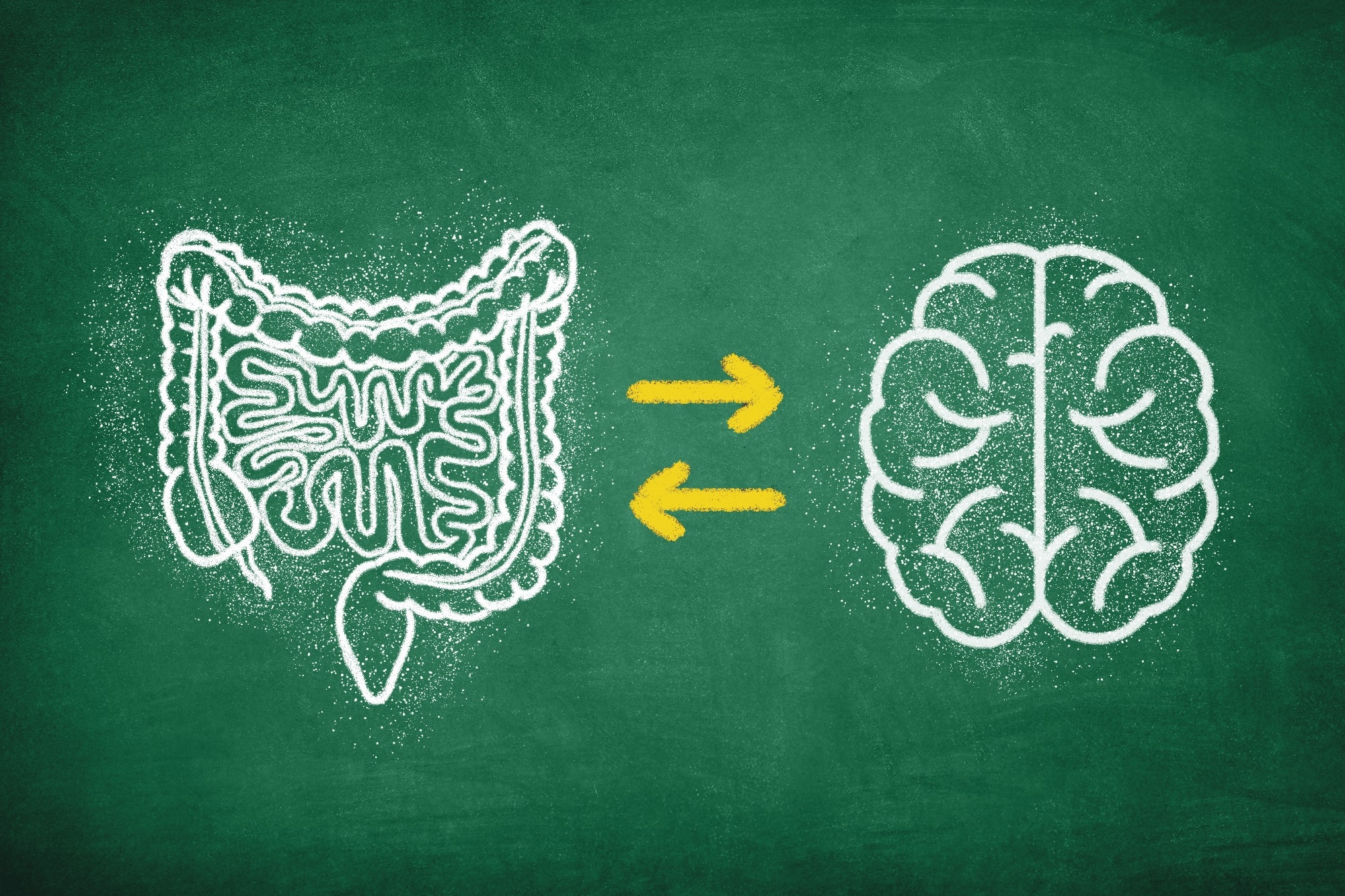 Image Credit: ahmetmapush / Shutterstock.com
Chewing, Food Texture, and Metabolic Responses
The texture of foods we consume can influence chewing behavior and digestive processes. Changing food texture and internal structure can alter gastric emptying, glucose absorption, insulin secretion, and post-meal glycemic responses. Beyond texture, how food is consumed may also affect satiety, appetite, and energy intake. The direction and magnitude of these effects vary with food composition and study conditions.
The food matrix describes how nutrients are physically organized within a food, which can influence their release during digestion. People can consume liquids more easily and quickly than solids. Shorter oral exposure may contribute to differences in appetite responses, but liquids are not uniformly less satiating.2,6
People usually take smaller bites of harder foods and chew them longer, which can slow eating and reduce meal intake. Harder foods have reduced eating rate and food intake by 9-21% in some studies; however, the magnitude varied across foods and study conditions.
Whole foods often retain structures that require more oral processing, though processing effects vary. Processing can also improve nutrient availability and does not always speed digestion or increase glycemic responses.6
Does Chewing More Reduce Food Intake?
Some experimental studies link increased mastication to lower energy intake, potentially through slower eating and greater sensory exposure to food. Solid foods have been associated with lower hunger than liquids, whereas thicker foods correlate with greater fullness; however, differences in subjective hunger and fullness do not always translate into lower calorie consumption.1,2,6
Comparisons between whole fruit and juice illustrate how food form can affect appetite. Studies discussed in the food-texture review found that whole apples produced greater satiety than apple juice under the conditions tested. Fiber content, physical structure, and consumption rate can contribute to these differences; therefore, chewing alone cannot explain the effect. Food structure, energy density, nutrient composition, and eating rate can all influence energy intake, thus limiting fair comparisons between whole and processed foods based on chewing requirements alone.2,6
The available evidence does not establish a universal chew count for appetite control. Chewing time varies with food texture and individual eating habits. Chewing efficiency also differs from chewing frequency: more chewing strokes do not necessarily mean food is broken down more effectively. The relevant goal is to prepare food adequately for comfortable swallowing, with advice adapted to individual oral function.1,3,6
 Image Credit: KrakenImages.com / Shutterstock.com
Both the number of chews per bite and chewing speed can influence post-meal insulin and glucose responses, though results vary by food and participant group. Some experiments have linked thorough mastication or prolonged chewing to higher early GLP-1 concentrations and satiety.1,6
Studies have shown associations between rapid eating and higher daily energy intake, greater body mass index (BMI), adiposity, and cardiometabolic disease risk. Interpreting these associations requires attention to food choices, habitual eating behavior, and other differences between faster and slower eaters. Demonstrating a short-term glucose or hormone response also does not establish a reduction in future disease risk.1,3,6
Chewing Difficulties and Digestive Symptoms
Poor food breakdown has been associated with inflammatory changes and H. pylori infection in patients with dyspepsia. However, these findings were observational and do not establish that inefficient chewing causes infection or gastrointestinal disease.1
People with chewing difficulties, such as older adults, also tend to eat fewer fruits and vegetables and may have lower intakes of nutrients such as calcium, potassium, and vitamin C. Maintaining oral function can help preserve dietary variety. Still, the broader effects on the gut microbiome and long-term disease outcomes remain uncertain.1,4
Chewing, Aging, and Nutritional Health
Older adults may experience oral and systemic conditions that affect eating. Age-related changes can also impair mastication, contributing to inadequate nutrition and muscle loss. In older adults, reduced muscle function and masticatory efficiency, along with changes in saliva production and taste perception, may further affect eating, swallowing, and food intake.
Dry mouth can also reflect chronic illness or medication use. Its effects on taste, swallowing, and denture comfort may further restrict food choices.4
Dentine hypersensitivity, dental caries, or pain from ill-fitting dentures can also contribute to nutritional deficiencies in older adults. Periodontal disease, tooth loss, and dry mouth may lead older individuals to reduce food intake and dietary variety.
Older individuals may also prefer softer foods that are easy to swallow. Avoiding harder foods can limit access to protein, fiber, vitamins, and minerals.4
The American Dental Association recognizes a bidirectional relationship between diet, nutrition, and oral health. While sugary foods may predispose individuals to dental disease, pain, infection, and tooth loss may make it difficult to consume certain foods.
Dental treatment combined with personalized dietary counseling may help address these problems. Assessment should include both chewing ability and whether the diet provides adequate nutrients.4
 Image Credit: pain au chocolat / Shutterstock.com
Could Mastication Become a Nutrition Strategy?
Modifying chewing behavior could complement dietary interventions but should not be considered a standalone nutrition strategy. By changing food form and texture, nutritionists could adapt meals to individual eating abilities and nutritional goals.
This may be particularly relevant to weight management and healthy aging. For example, textures that require more oral processing may slow eating and reduce intake in people seeking weight management. These changes must remain acceptable to the person eating, as textures that reduce enjoyment can be difficult to maintain in everyday meals.6
People with dysphagia or impaired chewing function may require individualized dietary modifications for safe and adequate nutrition. For those at risk of malnutrition, maintaining sufficient energy and protein intake takes priority over reducing meal size.
Softer, nutritionally adequate foods may be appropriate when harder textures limit intake. Dental and nutritional care should address the underlying difficulty and its consequences for food selection.1,4,6
Healthcare providers should personalize dietary regimens to individual health status and nutritional needs. Practical interventions may combine suitable food textures, manageable bite sizes, and changes in eating pace, though their utility will depend on oral function, habitual eating behavior, and the nutritional goal. Longer-term intervention studies are needed to determine whether changes in chewing behavior produce lasting improvements in weight or metabolic health.1,3,4,6
Conclusions: Chewing Contributes to Digestion and Eating Behavior
Chewing is an active biological process that links food consumption, digestion, appetite, and metabolism. While mastication may influence eating behavior, nutritional intake, and metabolic responses, the evidence does not establish chewing modification as an effective treatment for obesity or metabolic disease.
The type and quantity of food consumed are established determinants of health, and chewing behavior may contribute to short-term differences in satiation and energy intake. Any advice to change chewing habits should account for the foods a person eats, their ability to chew comfortably, and their nutritional needs.1,2,6
References
- Kumar, A., Almotairy, N., Merzo, J. J., et al. (2023). Chewing and its influence on swallowing, gastrointestinal and nutrition-related factors: a systematic review. Critical Reviews in Food Science and Nutrition, 63(33), 11987–12017. DOI: 10.1080/10408398.2022.2098245. https://www.tandfonline.com/doi/full/10.1080/10408398.2022.2098245?scroll=top&needAccess=true#abstract
- Stribiţcaia, E., Evans, C. E. L., Gibbons, C., et al. (2020). Food texture influences on satiety: systematic review and meta-analysis. Scientific Reports, 10, 12929. DOI: 10.1038/s41598-020-69504-y. https://www.nature.com/articles/s41598-020-69504-y
- Chen, Y., Fogel, A., Bi, Y., & Yen, C. C. (2024). Factors associated with eating rate: A systematic review and narrative synthesis informed by the socio-ecological model. Nutrition Research Reviews, 37(2), 376–395. DOI: 10.1017/S0954422423000239. https://www.cambridge.org/core/journals/nutrition-research-reviews/article/factors-associated-with-eating-rate-a-systematic-review-and-narrative-synthesis-informed-by-socioecological-model/2B1BCD9F652FDA669142E72995FE7E01
- Chan, A. K. Y., Tsang, Y. C., Jiang, C. M., et al. (2023). Diet, Nutrition, and Oral Health in Older Adults: A Review of the Literature. Dentistry Journal, 11(9), 222. DOI: 10.3390/dj11090222. https://www.mdpi.com/2304-6767/11/9/222
- Moris, J. M., Heinold, C., Blades, A., & Koh, Y. (2022). Nutrient-Based Appetite Regulation. Journal of Obesity and Metabolic Syndrome, 31(2), 161–168. DOI: 10.7570/jomes22031. https://www.jomes.org/journal/view.html?doi=10.7570/jomes22031
- Forde, C. G., & Bolhuis, D. (2022). Interrelations Between Food Form, Texture, and Matrix Influence Energy Intake and Metabolic Responses. Current Nutrition Reports, 11, 124–132. DOI: 10.1007/s13668-022-00413-4. https://link.springer.com/article/10.1007/s13668-022-00413-4#citeas
Further Reading
Last Updated: Nov 4, 2026
 AI can recreate food convincingly, but there is one thing it still struggles to trigger