Introduction
What is in black acid rain?
How black acid rain affects human health
Environmental effects
Historical references
Public health guidance
References
Further reading
From wartime oil fires to industrial disasters, this article explores how toxic pollutants transform into black acid rain and what science reveals about its real risks to human health and the environment.
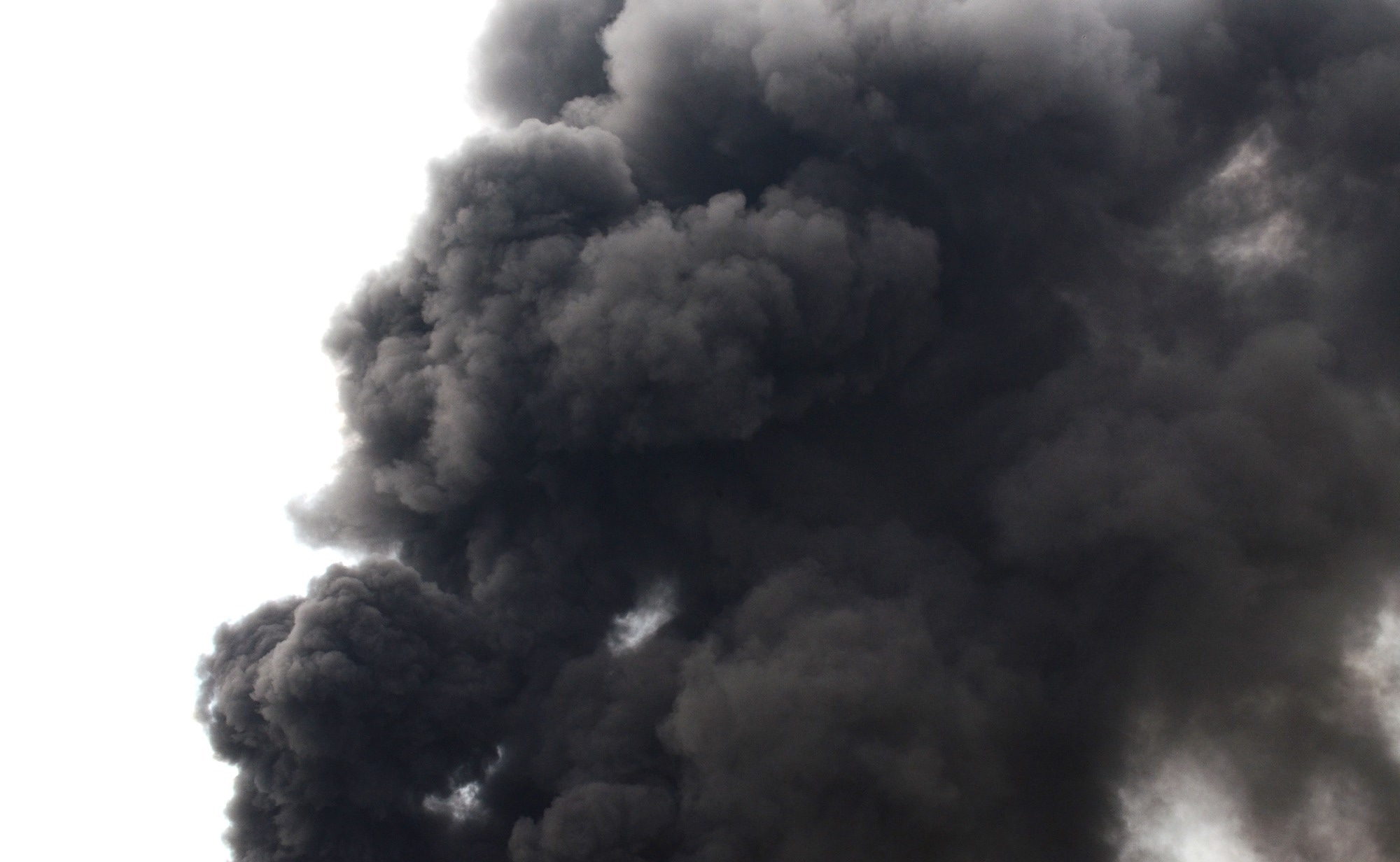 Image Credit: COLOA Studio / Shutterstock.com
Introduction
Black acid rain, which can form after burning large amounts of crude oil, is a toxic mixture of fuel byproducts and atmospheric condensation. This form of precipitation occurs when combustion-derived pollutants and soot particles mix with atmospheric moisture and acidic gases, producing dark-colored rainfall that may contain acidic aerosols, hydrocarbons, and fine particulate matter.1 In addition to direct environmental damage, exposure to black acid rain also has the potential to cause skin irritation and respiratory damage; however, the magnitude of long-term health effects remains uncertain and depends on exposure levels and pollutant composition. Thus, health risks are primarily associated with inhalation of polluted air and aerosols, rather than direct contact with rainwater itself.1
What is in black acid rain?
Burning crude oil produces a wide range of environmental and health contaminants, of which include sulfur dioxide (SO2), carbon dioxide (CO2), carbon monoxide (CO), nitrogen oxides (NOx), volatile organic compounds (VOCs) like benzene, polycyclic aromatic hydrocarbons (PAHs), hydrogen sulfide (H2S), and soot.1
Once released into the atmosphere, these pollutants undergo chemical reactions like oxidation that lead to the generation of sulfuric acid (H2SO4), nitric acid (HNO3), and other acidic gases. The condensation of these acids into organic aerosols forms droplets that, due to the presence of soot, ash, and organic combustion residues, appear black.
The concomitant destruction of oil facilities can contribute to the additional release of materials made with flame retardants and other chemicals that also accumulate in the rain.3 Fine particulate matter and acidic aerosols can also bind metals and organic oxidants, increasing their toxicity once inhaled.4
The characteristic dry desert of the Gulf region is abundant in sand and other fine particulate matter, which serve as carriers for airborne pollutants generated by oil fires.1 These particles can remain suspended in the atmosphere for extended periods and later be incorporated into precipitation events, contributing to the dark appearance and chemical complexity of so-called “black rain.”
Scientists warn about "black rain" as Iran war rages on
How black acid rain affects human health
Inhalation of SO2, NOx, and particulate matter in acid rain can irritate the respiratory tract, increasing the risk of asthma, bronchitis, and other chronic respiratory illnesses.5 Acidic aerosols may also interact with oxidant gases and particulate metals in the respiratory tract, triggering oxidative stress and inflammation in lung tissue.4 Children, the elderly, pregnant women, as well as individuals with existing cardiovascular and respiratory disease, are particularly vulnerable to these effects.
In addition to respiratory symptoms, the deep penetration of acidic particles and other fine particles into the lungs increases cardiovascular stress. Particles smaller than 2.5 μm can penetrate deeply into lung tissue and have been associated with cardiopulmonary morbidity and premature mortality.1 Exposure to corrosive chemicals present in acid rain can induce skin toxicity in the form of irritation or chemical burns; however, most documented health effects during major pollution events have been linked to inhalation exposure to smoke and polluted air, rather than direct dermal exposure to rainfall.
The absorption of acid rain by groundwater and surface bodies allows heavy metals and other pollutants to enter drinking water supplies, thereby increasing the likelihood of gastrointestinal distress, skin irritation, and other health issues. Increased acidity may also alter the chemical behavior of contaminants in water, enhancing the solubility and mobility of certain toxic metals.4 The magnitude of these risks primarily depends on pollutant concentrations, environmental dilution, and water treatment practices.
Environmental effects
The typical pH range of rain is 5.0-5.5 due to the natural presence of carbonic acid. Comparatively, acid rain has a pH of less than five, with some events causing rain acidity to reach a pH of 2.0-3.04.
As acid rain falls, soil subsequently becomes acidified, thereby reducing the availability of calcium, magnesium, and other essential nutrients while increasing the solubility of heavy metals like mercury and aluminum.5 Nutrient loss in soil also reduces the photosynthetic efficiency of plants, which prevents their ability to grow and reproduce.
In the agricultural industry, crops such as wheat, corn, and soybeans are highly vulnerable to the environmental impacts of acid rain. Acidity also destroys important microorganisms within soil that are involved in organic matter degradation and nutrient cycling, further weakening plant health.
Acidic deposition can also influence freshwater and coastal ecosystems by altering water chemistry and, in some environments, may contribute to broader acidification processes affecting aquatic organisms. Laboratory and field studies show that reduced pH conditions can decrease survival, calcification, growth, and development in certain marine organisms.5 Importantly, large-scale ocean acidification observed globally is primarily driven by increased atmospheric carbon dioxide, rather than acid rain alone.
The toxins and chemicals will likely pose long-term environmental impacts on Tehran and the surrounding areas.3
Historical references
Shortly after the atomic bombings of Hiroshima and Nagasaki in 1945, black rain carrying highly radioactive material persisted for several months while also spreading to surrounding areas. Large epidemiological analyses of survivors exposed to this rainfall have not demonstrated statistically significant increases in cancer incidence or overall mortality attributable solely to rain exposure, partly because individual exposure levels and locations were difficult to reconstruct decades after the event.6
In late February of 1990, over 1,000 oil wells were left to burn for several days in Kuwait, causing detectable fire byproducts reaching the Persian Gulf. Researchers estimate that about 4.6 million barrels of oil were burned every day during this period, which led to over 20,000 tons of soot emitted each day, along with 130-140 million tons of CO2.2
Acute toxicity was reported among soldiers deployed in Kuwait, with reported symptoms including headache, lightheadedness, fatigue or weakness, skin rashes, and diarrhea, and the prevalence and severity of these symptoms were determined by soldiers’ proximity to the fires.1 These symptoms were primarily self-reported in health surveys and generally declined after soldiers left the exposure area. Aside from military personnel, most of the land surrounding these oil reserves was unoccupied, unlike the densely populated areas of Tehran affected by recent fires.
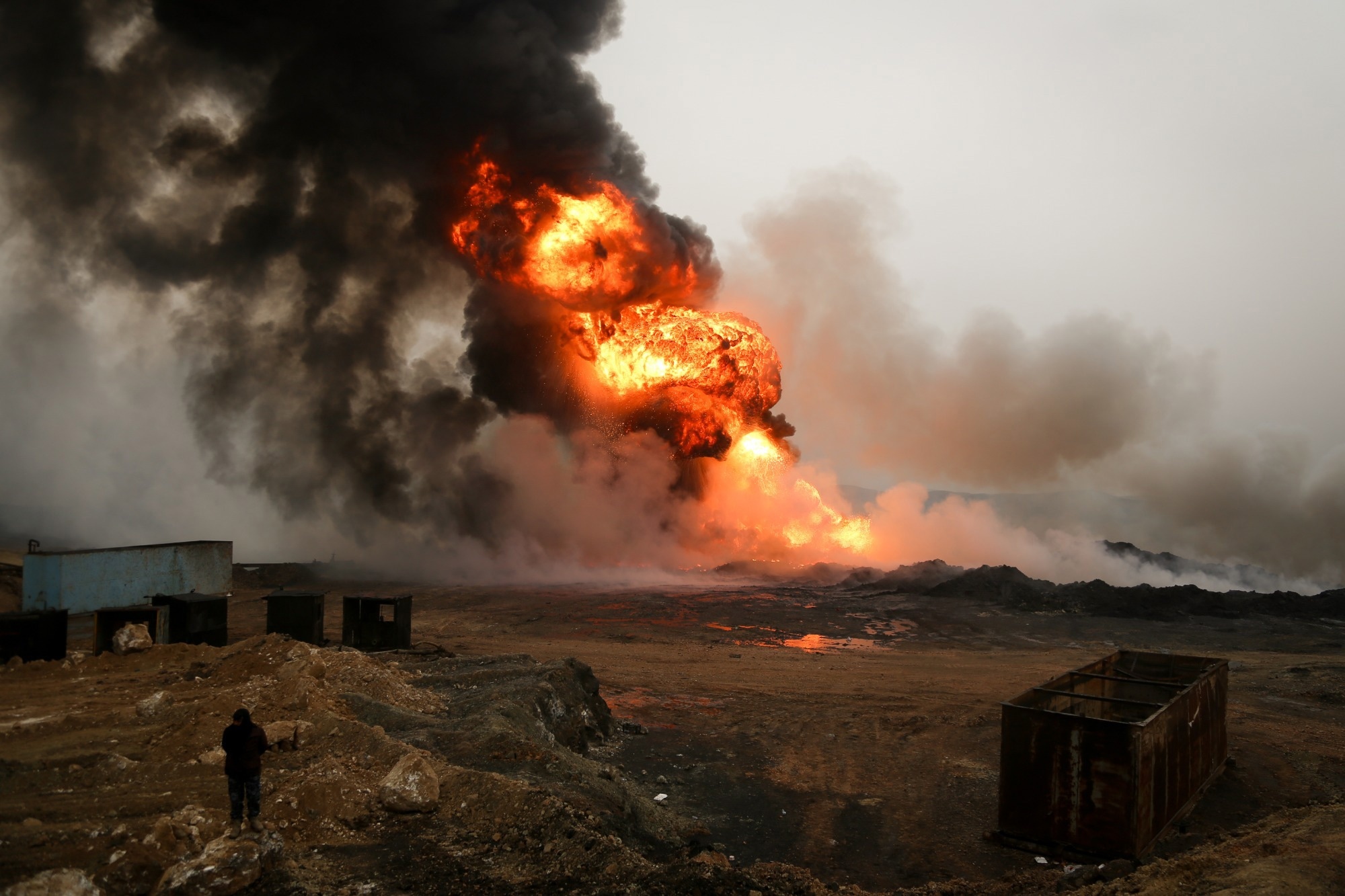 Image Credit: Girish_Gupta / Shutterstock.com
Public health guidance
Local authorities advise residents to remain indoors and limit their outdoor exposure, particularly during periods of smoke and contaminated rainfall. Wearing masks and protective clothing when outside can reduce the risk of inhaling particulate matter and toxic combustion byproducts circulating within the atmosphere. Public health guidance may also include monitoring air quality levels, avoiding direct contact with contaminated rainwater, and ensuring that drinking water supplies are properly treated and tested for pollutants following major pollution events.
References
- Spektor, D. M. (1998). A review of the scientific literature as it pertains to particulate exposure during the Persian Gulf War. Santa Monica (CA): RAND Corporation. Available from: https://www.health.mil/Reference-Center/Publications/1998/01/01/A-Review-of-Scientific-Literature-as-it-Pertains-to-Particulate-Exposure-during-the-Persian-Gulf-War
- Linden, O., Jerneloev, A., & Egerup, J. (2004). The Environmental Impacts of the Gulf War 1991. IIASA Interim Report. IIASA, Laxenburg, Austria: IR-04-019. https://pure.iiasa.ac.at/id/eprint/7427/.
- Jacobo, J. (March 10, 2026). “What to know about ‘black rain’ that fell in Iran after strikes on oil reserves” Available from: https://abcnews.com/International/black-rain-fell-iran-after-strikes-oil-reserves/story?id=130901326.
- Song, X., Wu, D., Su, Y., et al. (2024). Review of health effects driven by aerosol acidity: Occurrence and implications for air pollution control. Science of the Total Environment 955. DOI: 10.1016/j.scitotenv.2024.176839. https://www.sciencedirect.com/science/article/abs/pii/S0048969724069961?via%3Dihub.
- Kroeker, K. J., Kordas, R. L., Crim, R., et al. (2013). Impacts of ocean acidification on marine organisms: quantifying sensitivities and interactions with warming. Global Change Biology 19(6); 1884-1896. DOI: 10.1111/gcb.12179. https://pmc.ncbi.nlm.nih.gov/articles/PMC3664023/.
- Sakata, R., Grant, E. J., Furukawa, K., et al. (2014). Long-Term Effects of the Rain Exposure Shortly after the Atomic Bombings in Hiroshima and Nagasaki. Radiation Research 182(6); 599-606. DOI: 10.1667/RR13822.1. https://bioone.org/journals/radiation-research/volume-182/issue-6/RR13822.1/Long-Term-Effects-of-the-Rain-Exposure-Shortly-after-the/10.1667/RR13822.1.full.
Further Reading
Last Updated: Mar 16, 2026