From NucleraReviewed by Olivia Frost
This article and associated images are based on a poster originally authored by Tom Guilliam, Elena Rahmani, Marco Manni, Stephanie Reikine and Ruben Tomás and presented at ELRIG Drug Discovery 2026 in affiliation with Nuclera Ltd.
This poster is being hosted on this website in its raw form, without modifications. It has not undergone peer review but has been reviewed to meet AZoNetwork's editorial quality standards. The information contained is for informational purposes only and should not be considered validated by independent peer assessment.

Obtaining stable, functional GPCRs is the primary bottleneck in determining their structure. Traditional “extract-and-rescue” methods using detergents are slow, harsh, and often result in aggregation or inactivity. This article demonstrates a rapid workflow for β1-adrenergic receptor (β1AR) production that bypasses detergents entirely.
Using cell-free protein synthesis (CFPS), this technique expresses directly into defined nanodiscs, screening to identify the precise lipid environment required for native folding and activity.
Stabilize as you synthesize
CFPS bypasses detergent requirements. The nascent protein inserts directly into membrane scaffold protein (MSP)-lipid nanodiscs during translation, producing stable receptors.
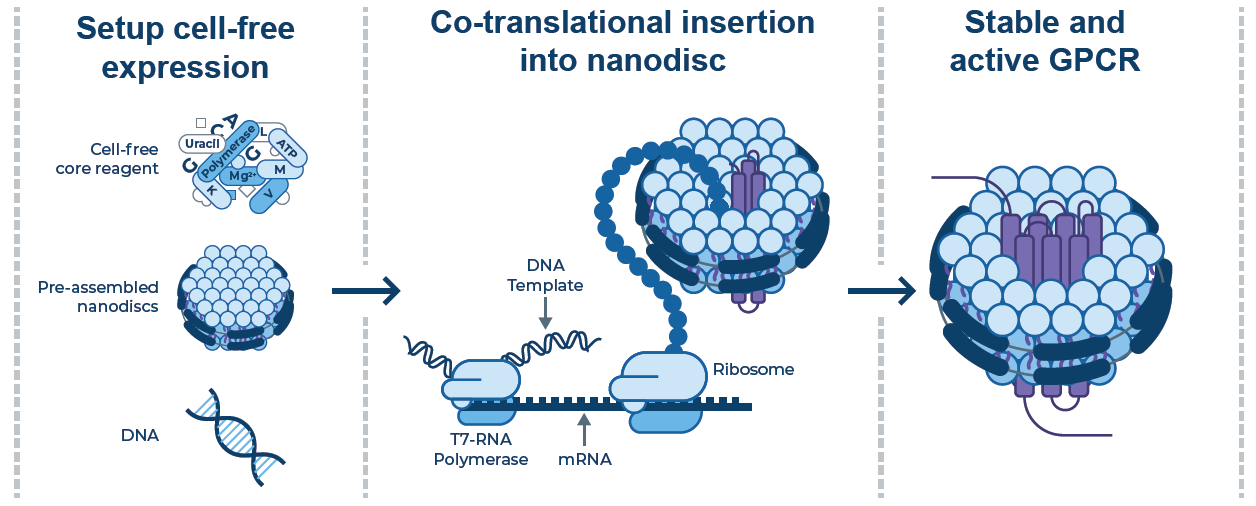
Figure 1. Cell-free protein synthesis allows co-translational insertion into nanodiscs. Image Credit: Image courtesy of Tom Guilliam et al., in partnership with ELRIG (UK) Ltd.
eProtein Discovery™ accesses GPCRs in 48 hours
Nanodiscs are tunable design spaces; finding the right one is critical for receptor yield and activity. The eProtein Discovery system automates multiplex screening of GPCR constructs against Nuclera’s tailored GPCR Nanodisc panel. Identify the optimal MSP-lipid composition through robust, automated digital microfluidics screening, and scale to purified, assay-ready protein in under 48 hours.

Figure 2. eProtein Discovery workflow. Screen to identify the best conditions for your GPCR and then select top candidates to scale up within 48 hours. Image Credit: Image courtesy of Tom Guilliam et al., in partnership with ELRIG (UK) Ltd.
Can eProtein Discovery combined with Nuclera’s GPCR-specific nanodiscs produce highly active β1AR?
1. Result – 24-hour multiplex screen identifies yield-enabling β1AR variants and nanodiscs
The researchers screened three β1AR variants against four of eight nanodiscs within the eProtein Discovery GPCR nanodisc panel and four commercially available nanodiscs using eProtein Discovery.
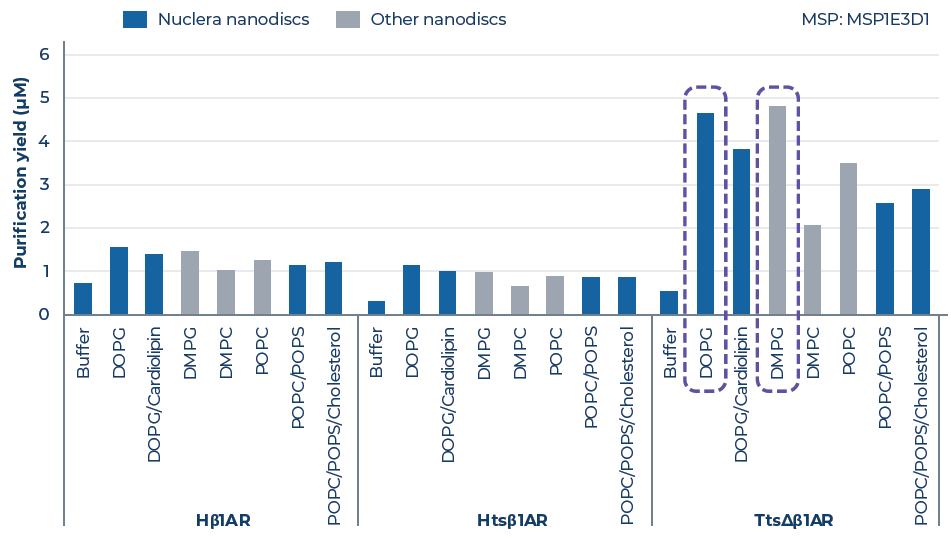
Figure 3. Purified yield results of hβ1AR, htsβ1AR, and ttsΔβ1AR. All β1AR variants were multiplex screened against a panel of Nuclera GPCR-specific and commercially available nanodiscs. PDI/GSSG was also added to all cell-free mixes. Image Credit: Image courtesy of Tom Guilliam et al., in partnership with ELRIG (UK) Ltd.
Constructs:
- Human full-length (hβ1AR)
- Human full-length, thermally stable (htsβ1AR)
- Turkey truncated, thermally stable (ttsΔβ1AR)
- TtsΔβ1AR delivered the highest purification yields
- Negatively charged lipids (DOPG/DMPG) were consistently top-performing conditions (purple dashed line)
- TtsΔβ1AR selected for scale-up
2. Results: From screen to scale: >100 μg/mL of β1AR in 48 hours
TtsΔβ1AR was scaled up in six of the nanodiscs screened. ∼100 μg/mL of purified ttsΔβ1AR was delivered using MSP1E3D1-DOPG nanodiscs in less than 48 hours.
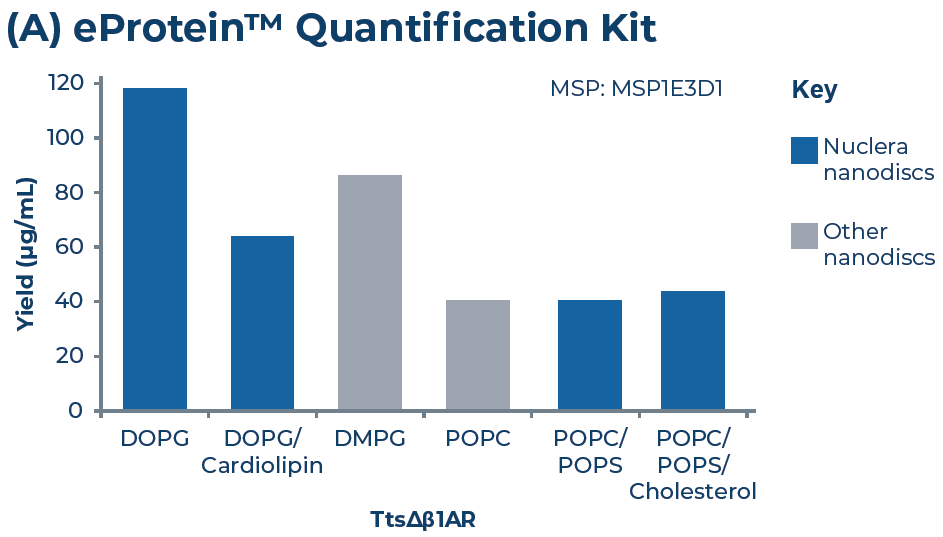
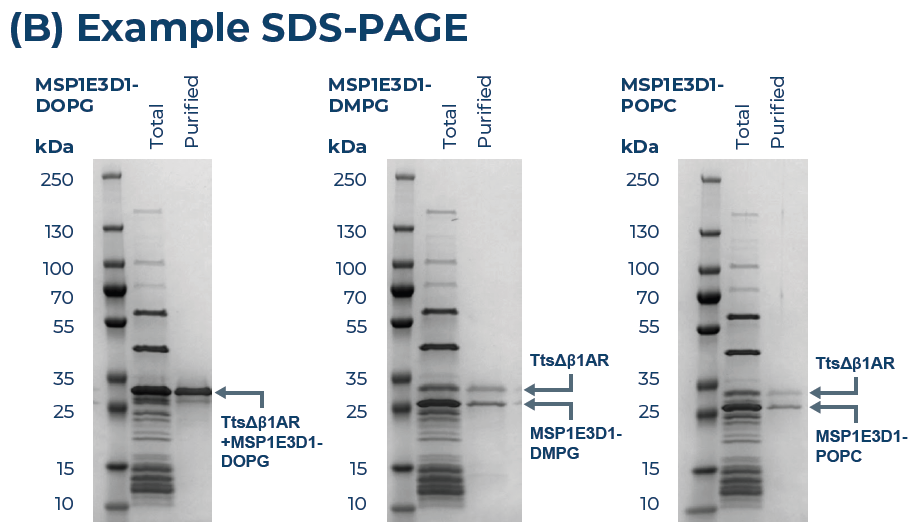
Figure 4. TtsΔβ1AR scale-up results. TtsΔβ1AR was scaled up in six nanodisc conditions. (A) Yield was quantified using the eProtein Quantification kit. (B) Example SDS-PAGE of ttsΔβ1AR scaled-up using three nanodisc scale-up. PDI/GSSG was also added to all cell-free mixes. Image Credit: Image courtesy of Tom Guilliam et al., in partnership with ELRIG (UK) Ltd.
3. Result: Nuclera GPCR nanodiscs improve functional ligand-binding fraction (threefold)
The study evaluated the functional fraction using ligand affinity chromatography (LAC).
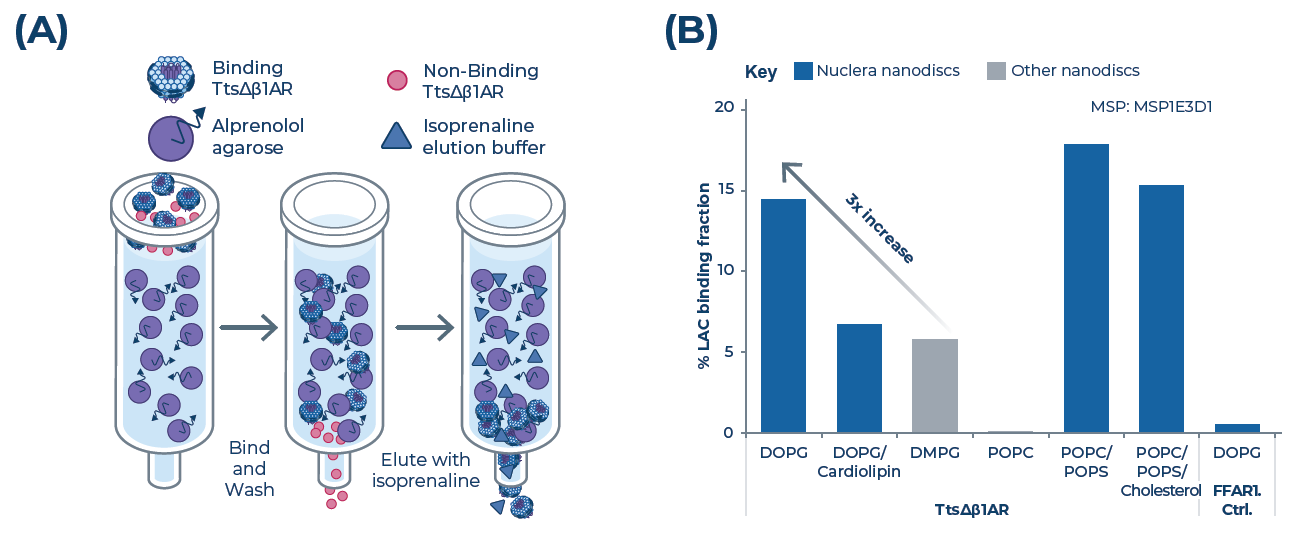
Figure 5. Ligand binding assessment of TtsΔβ1AR scale-up using (LAC). (A) Schematic of ligand affinity chromatography. (B) Percentage ligand binding fraction determined by LAC. Image Credit: Image courtesy of Tom Guilliam et al., in partnership with ELRIG (UK) Ltd.
- Nuclera GPCR-specific nanodiscs offered the highest functional fraction (∼18%)
- DMPG offered high yields, but produced ttsΔβ1AR of 3-fold less activity compared to DOPG
- POPC produced inactive ttsΔβ1AR, confirming the importance of lipid composition screening for functional GPCRs
4. Result: Structure ready: Isolating the active monomer
SEC cleanly separated a stable, monomeric, functional β1AR receptor, increasing the functional fraction threefold to 45% and creating a superior reagent for Cryo-EM or SPR.
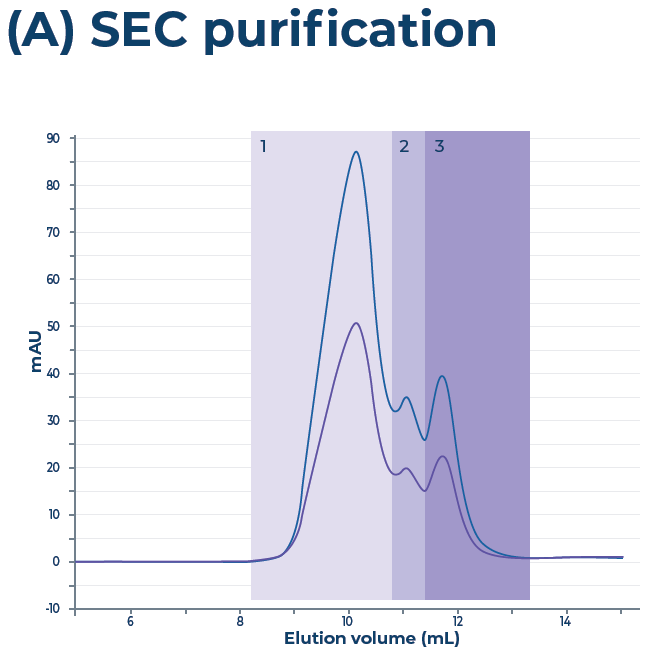
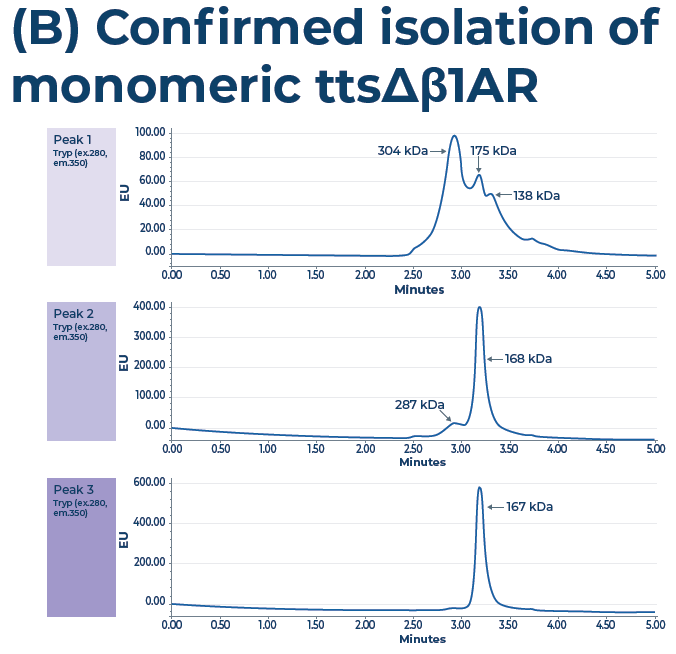
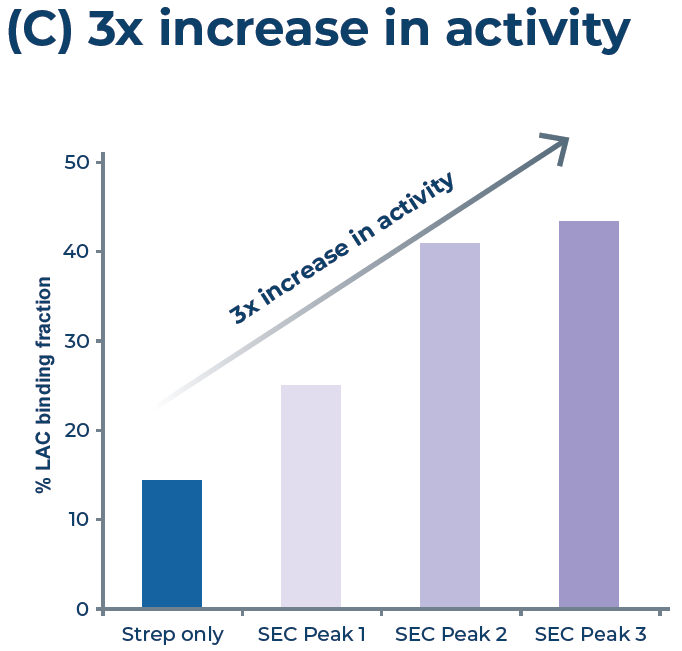
Figure 6. SEC purification, monodispersity assessment (post-SEC), and ligand binding activity. (A) SEC purification was used to separate different GPCR-nanodisc conformations. (B) SE-UHPLC was used to confirm peak 3 contained the monodisperse, active ttsΔβ1AR. (C) Ligand binding activity using LAC was repeated to confirm enrichment of the ligand-binding fraction. Image Credit: Image courtesy of Tom Guilliam et al., in partnership with ELRIG (UK) Ltd.
Conclusion: Active GPCR in days, not weeks
- Speed: DNA to functional enriched Turkey truncated thermal stable β1AR in <72 hours using cell-free blends containing GPCR tailored nanodiscs
- De-risking: Multiplex screening rapidly identifies construct and lipid composition that leads to assay-ready protein
- Yield: Scalable active GPCR production enabled >100 μg/mL purified receptor in 48 hours
- Function: Active ligand-binding fraction increased to 18% with Nuclera GPCR nanodiscs
- Quality: SEC enables monomer isolation and threefold enrichment of functional fraction
- Future work: Focus on optimizing human β1AR for structural biology
About Nuclera
Nuclera is the pioneer in bringing rapid protein prototyping to the benchtop. We make proteins accessible through eProtein Discovery™.
Through our technology, we accelerate breakthrough improvements in human health and empower life science researchers with easy access to target proteins.
Founded in 2013 by PhD students at the University of Cambridge, the company now has a presence in Cambridge, UK and Boston, MA employing over 100 employees.
About ELRIG (UK) Ltd.
The European Laboratory Research & Innovation Group (ELRIG) is a leading European not-for-profit organization that exists to provide outstanding scientific content to the life science community. The foundation of the organization is based on the use and application of automation, robotics and instrumentation in life science laboratories, but over time, we have evolved to respond to the needs of biopharma by developing scientific programmes that focus on cutting-edge research areas that have the potential to revolutionize drug discovery.
Comprised of a global community of over 12,000 life science professionals, participating in our events, whether it be at one of our scientific conferences or one of our networking meetings, will enable any of our community to exchange information, within disciplines and across academic and biopharmaceutical organizations, on an open access basis, as all our events are free-of-charge to attend!
Our values
Our values are to always ensure the highest quality of content and that content will be made readily accessible to all, and that we will always be an inclusive organization, serving a diverse scientific network. In addition, ELRIG will always be a volunteer led organization, run by and for the life sciences community, on a not-for-profit basis.
Our purpose
ELRIG is a company whose purpose is to bring the life science and drug discovery communities together to learn, share, connect, innovate and collaborate, on an open access basis. We achieve this through the provision of world class conferences, networking events, webinars and digital content.
Sponsored Content Policy: News-Medical.net publishes articles and related content that may be derived from sources where we have existing commercial relationships, provided such content adds value to the core editorial ethos of News-Medical.net, which is to educate and inform site visitors interested in medical research, science, medical devices and treatments.
Last Updated: Oct 12, 2026
 Nuclera eProtein Discovery system installed at leading academic institutes