From NucleraReviewed by Olivia Frost
This article and associated images are based on a poster originally authored by Chris Icke, Ania Boczkaj, Sumit Kalsi, Andreas Waeber, Raman Pandey, Mozhdeh Khajvand and Ruben Tomás and presented at ELRIG Drug Discovery 2026 in affiliation with Nuclera Ltd.
This poster is being hosted on this website in its raw form, without modifications. It has not undergone peer review but has been reviewed to meet AZoNetwork's editorial quality standards. The information contained is for informational purposes only and should not be considered validated by independent peer assessment.

Design is outpacing validation
Artificial intelligence (AI) can generate thousands of promising antibody variants. However, pushing these in silico libraries directly into traditional mammalian cell expression and validation workflows creates a massive bottleneck.

Figure 1. Current bottleneck in antibody hit validation workflow. Image Credit: Image courtesy of Chris Icke et al., in partnership with ELRIG (UK) Ltd.
The solution: Triage your library rapidly with cell-free protein synthesis
By inserting an automated, cell-free protein synthesis (CFPS) triage step upstream of mammalian biology, computational teams can rapidly and cost-effectively filter out AI-generated non-binders and reserve premium CHO validation strictly for confirmed hits.
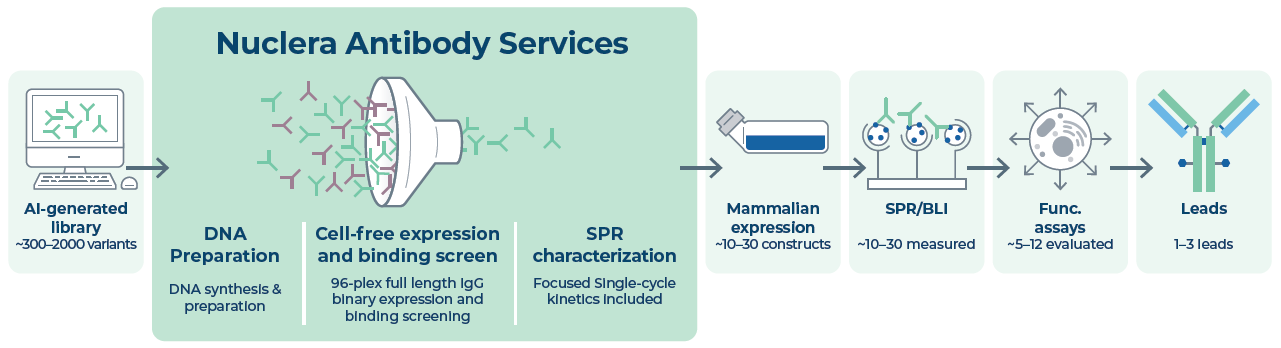
Figure 2. The cell-free validation engine. Nuclera Antibody Services uses a CFPS engine to produce full-length IgG expression, binary ELISA-based binding screening, and single-cycle SPR kinetics. Image Credit: Image courtesy of Chris Icke et al., in partnership with ELRIG (UK) Ltd.
Real-world case study 1 (anti-PD-1)
The AI-generated anti-PD-1 library was provided by Natural Antibody. PD-1 is a well-characterized immune checkpoint with extensive public structural and affinity data.
Expression results
98% build success: 92 of 94 variants expressed as intact IgG in cell-free synthesis
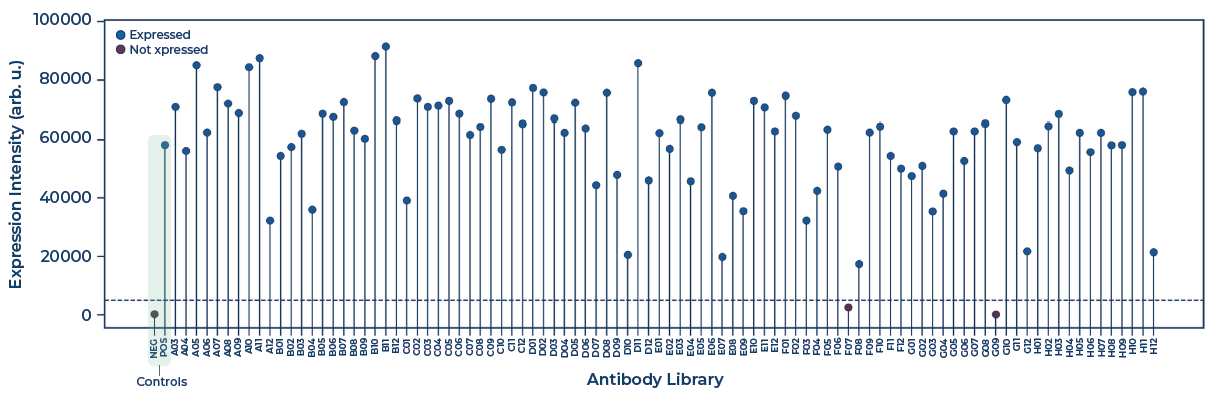
Figure 3. Expression classification of computationally designed anti-PD-1 variants. The dashed line represents the threshold for confirmed expression. Image Credit: Image courtesy of Chris Icke et al., in partnership with ELRIG (UK) Ltd.
Real-world case study 2 (anti-IL-6)
The AI-generated anti-IL-6 library was provided by Dr. Pietro Sormanni (Imperial College London). IL-6 is a soluble, flexible pro-inflammatory cytokine with complex receptor-binding interfaces that are historically difficult to target via zero-shot, de novo design.
Expression results
100% build success: 94 of 94 variants expressed
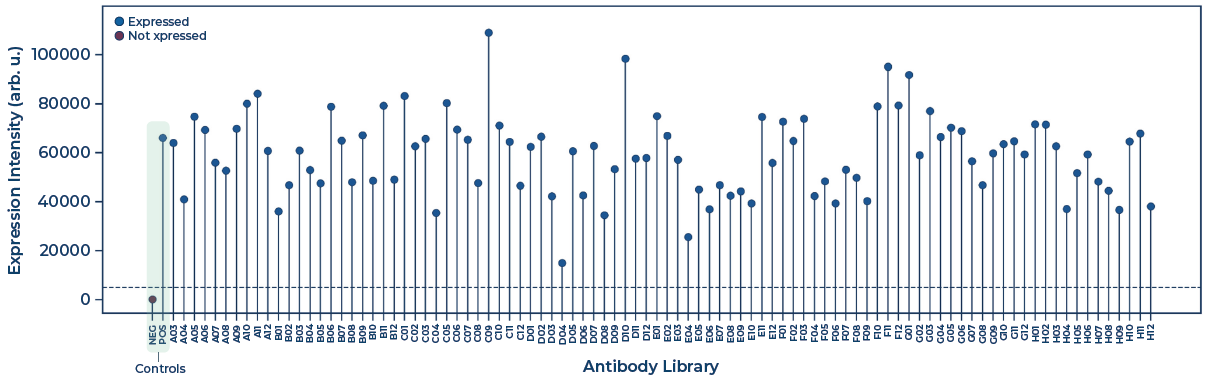
Figure 4. Expression classification of computationally designed anti-IL-6 variants. The dashed line represents the threshold for confirmed expression. Image Credit: Image courtesy of Chris Icke et al., in partnership with ELRIG (UK) Ltd.
Cell-free full-length IgG expression success provides a reliable, standardized foundation for subsequent binary triage.
Triage binary binding assay results
Stop the 66% failure rate early: The binary screen identified 61 non-binders, diverting them from expensive CHO workflows.
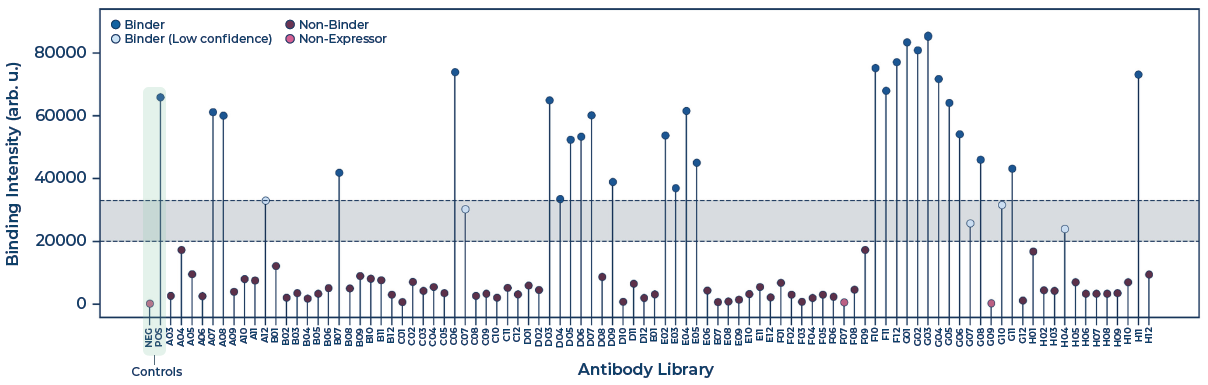
Figure 5. Binary binding triage of the anti-PD-1 library. The shaded zone represents low-confidence binders. Data points above the shaded zone represent binders, and data points below represent non-binders. Image Credit: Image courtesy of Chris Icke et al., in partnership with ELRIG (UK) Ltd.
Triage binary binding assay results
Catching 83% non-binders: Successfully identified 78 non-binders out of 94, preventing weeks of wasted mammalian expression, purification, and budget on dead-end sequences.
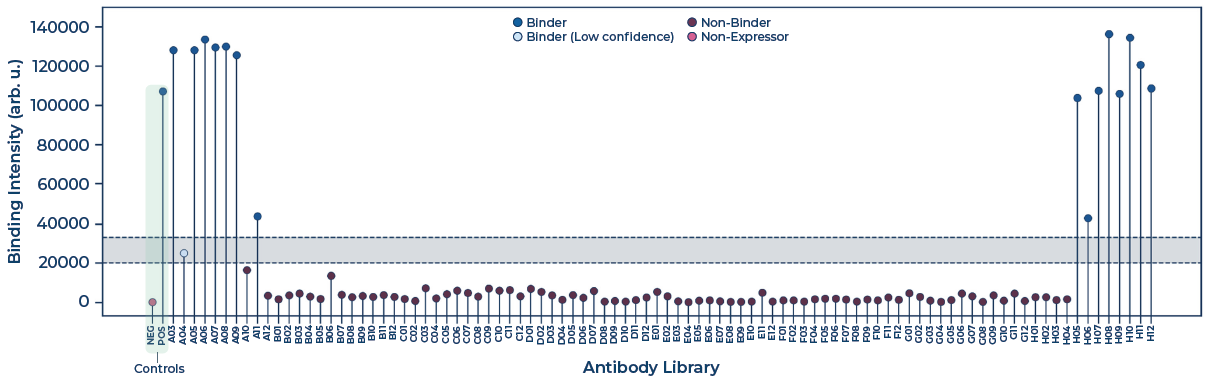
Figure 6. Binary binding triage of the anti-IL-6 library. The shaded zone represents low-confidence binders. Data points above the shaded zone represent binders, and data points below represent non-binders. Image Credit: Image courtesy of Chris Icke et al., in partnership with ELRIG (UK) Ltd.
The 96-plex binary binding screen cleanly categorizes AI-generated libraries as binders or non-binders, quickly and cost-effectively.
SPR results: 91% concordance on binders with CHO BLIELISA

Figure 7. Cell-free vs. CHO binding concordance for PD-1. Left plate map: Cell-free ELISA binding results. Middle plate map: Cell-free SPR results. Right plate map: CHO BLI reference dataset. Image Credit: Image courtesy of Chris Icke et al., in partnership with ELRIG (UK) Ltd.
SPR results: 94% concordance on binders with CHO SPRELISA

Figure 8. Cell-free vs. CHO binding concordance for IL-6. Left plate map: Cell-free ELISA binding results. Middle plate map: Cell-free SPR results. Right plate map: CHO SPR reference dataset. Image Credit: Image courtesy of Chris Icke et al., in partnership with ELRIG (UK) Ltd.
SPR results: Example anti-PD-1 sensorgrams
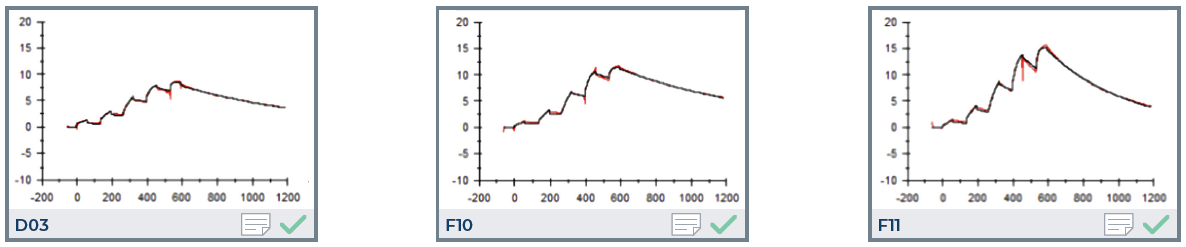
Figure 9. Anti-PD-1 example SPR kinetics. Clean sensorgrams captured directly from unpurified, cell-free-expressed antibodies. Single-cycle kinetics deliver decision-grade on-rates, off-rates, and affinities at scale. Image Credit: Image courtesy of Chris Icke et al., in partnership with ELRIG (UK) Ltd.
SPR results: Example anti-IL-6 sensorgrams
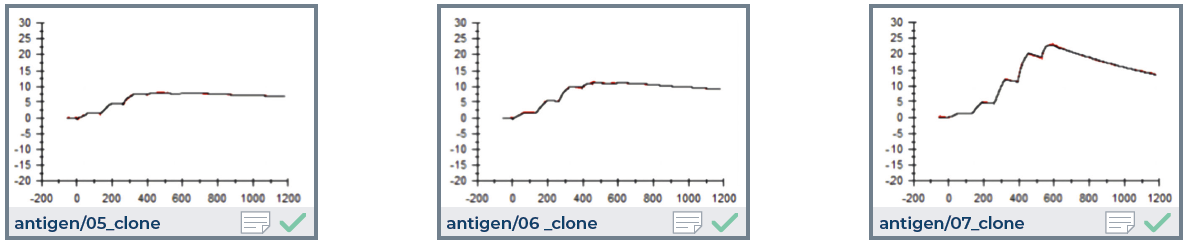
Figure 10. Anti-IL-6 example SPR kinetics. Clean sensorgrams captured directly from unpurified, cell-free-expressed antibodies. Single-cycle kinetics deliver decision-grade on-rates, off-rates, and affinities at scale. Image Credit: Image courtesy of Chris Icke et al., in partnership with ELRIG (UK) Ltd.
The results showed over 91% concordance between y/n triage and CFPS SPR and CHO kinetics results, confirming reliable early triage of hits.
Conclusion: Fast, predictive triage protects the mammalian pipeline
- Rapid triaging
- 186 digital sequences expressed, triaged, and converted to decision-grade SPR from 14 days
- Stop wasted spend
- 139 non-binders successfully diverted from costly CHO workflows
- Trust your data
- >91% concordance with CHO data supports cell-free screening for reliable early hit triage
About Nuclera
Nuclera is the pioneer in bringing rapid protein prototyping to the benchtop. We make proteins accessible through eProtein Discovery™.
Through our technology, we accelerate breakthrough improvements in human health and empower life science researchers with easy access to target proteins.
Founded in 2013 by PhD students at the University of Cambridge, the company now has a presence in Cambridge, UK and Boston, MA employing over 100 employees.
About ELRIG (UK) Ltd.
The European Laboratory Research & Innovation Group (ELRIG) is a leading European not-for-profit organization that exists to provide outstanding scientific content to the life science community. The foundation of the organization is based on the use and application of automation, robotics and instrumentation in life science laboratories, but over time, we have evolved to respond to the needs of biopharma by developing scientific programmes that focus on cutting-edge research areas that have the potential to revolutionize drug discovery.
Comprised of a global community of over 12,000 life science professionals, participating in our events, whether it be at one of our scientific conferences or one of our networking meetings, will enable any of our community to exchange information, within disciplines and across academic and biopharmaceutical organizations, on an open access basis, as all our events are free-of-charge to attend!
Our values
Our values are to always ensure the highest quality of content and that content will be made readily accessible to all, and that we will always be an inclusive organization, serving a diverse scientific network. In addition, ELRIG will always be a volunteer led organization, run by and for the life sciences community, on a not-for-profit basis.
Our purpose
ELRIG is a company whose purpose is to bring the life science and drug discovery communities together to learn, share, connect, innovate and collaborate, on an open access basis. We achieve this through the provision of world class conferences, networking events, webinars and digital content.
Sponsored Content Policy: News-Medical.net publishes articles and related content that may be derived from sources where we have existing commercial relationships, provided such content adds value to the core editorial ethos of News-Medical.Net which is to educate and inform site visitors interested in medical research, science, medical devices and treatments.
Last Updated: Oct 12, 2026
 Nuclera appoints Joseph Bertelsen as Chief Commercial Officer