In this interview, News Medical speaks with Ram Parameshwar, Associate Manager of Product Management, Calibration Solutions at Mesa Labs, and Laurence R. Durio, Principal of Durio Consulting Services, about the importance of flow calibration in industrial hygiene and occupational and environmental health and safety (OEHS) applications. They discuss the evolution of calibration technologies, the role of primary standards, common pitfalls that can invalidate samples, and practical strategies for ensuring defensible exposure data.
Can you please explain your roles at Mesa Labs and within the industrial hygiene profession?
Ram Parameshwar: I oversee product strategy and market development for our instrumentation portfolio and lead commercial, product management, and marketing initiatives. My background is in instrumentation and diagnostics, spanning applications in industrial power generation, medical devices, and life sciences.
Laurence R. Durio: I have worked in OSHA enforcement, chemical manufacturing, consulting, and environmental health over the course of my career. Today, I primarily perform industrial hygiene and environmental expert witness work and teach EPA, HUD, and DEQ certification courses. I have always been more of a field industrial hygienist focused on applications and getting the job done.
Watch the Full Webinar
What is flow calibration, and why is it so important for industrial hygiene and OEHS professionals?
Laurence R. Durio: Calibration is the comparison of an instrument to a known standard, with emphasis on 'known'. In industrial hygiene settings, we are usually talking about airflow, although the same principles apply to other physical agents.
We measure flow with a device of known accuracy, a calibrator. Typically, we do not stop at measuring the flow; we also adjust it to a desired value. We do this because we have to know how much air has been drawn through our sample media. If we do not know that, we cannot calculate airborne concentrations for comparison to exposure limits.
Some equipment is also designed to operate at a specific flow rate. Cyclone separators used for silica sampling are a good example. Bioaerosol samplers and impaction-based methods also require very specific flow rates. Calibration ensures the accuracy and validity of our results.
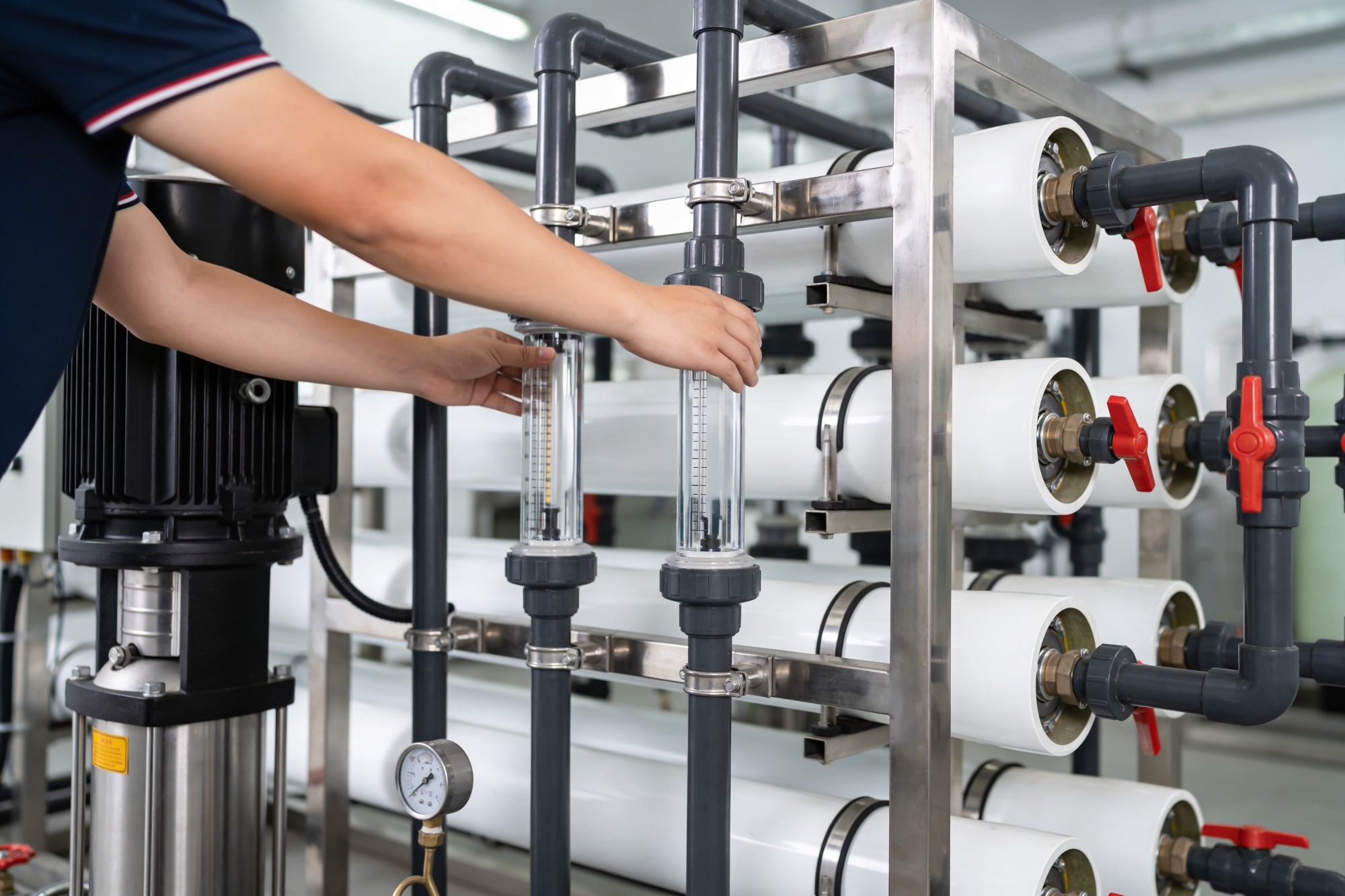 Image Credit: Shutterstock.com/snide12
Why do industrial hygienists need to know exactly how much air has been drawn through their sampling media?
Laurence R. Durio: Everything comes back to concentration calculations. Whether we are sampling gases, vapors, dusts, fibers, or biological contaminants, we need to know both the amount of contaminant collected and the volume of air sampled.
If we do not know the volume of air that passed through the sampling media, we cannot accurately calculate exposure concentrations. Without accurate calibration, the entire sampling exercise is compromised.
False high results can lead to unnecessary controls and expenses. False low results are even worse because they can jeopardize employee health and environmental protection. We want to avoid both.
How have flow calibration methods evolved from soap bubble meters to modern primary standards?
Laurence R. Durio: When I started, we used soap bubble meters; they worked reasonably well for the time. A soap bubble would travel through a burette of known volume, and we would time it with a stopwatch. The system was simple and cost-effective, but accuracy was limited. Bubbles could break, timing could vary, and some commercially available burettes were not particularly accurate.
Rotameters became common later. They are simple visual flow indicators, but their accuracy depends on fluid properties and cleanliness. Even small deposits inside the tube can affect readings.
Bell provers and other volumetric devices followed, offering improved performance but often lacking portability. Eventually, piston provers became the preferred solution, measuring the movement of a piston through a known volume over a measured period. Though the concept is straightforward, achieving the precision required for modern calibration standards took significant engineering effort.
What distinguishes a primary standard from a secondary standard?
Laurence R. Durio: Primary standards are based on directly measurable physical quantities such as volume, time, pressure, and temperature. Those measurements are traceable to national and international standards.
A piston prover is a primary standard because it measures the volume displaced by the piston and the time required for that movement. The calculation is direct and traceable.
Secondary standards are based on analogies or indirect measurements. They may use thermal properties, pressure changes, or vane movement and often rely on algorithms to estimate flow. They can be useful, but they involve assumptions. Every additional assumption introduces another opportunity for error, meaning primary standards are generally preferred when defensibility is important.
Why are temperature and pressure corrections so important when sampling gases and vapors?
Laurence R. Durio: Temperature and pressure corrections are critical because occupational exposure limits for gases and vapors are typically expressed using standard volumes rather than actual physical volumes.
Gases expand and contract with changes in temperature and pressure. A temperature change of about 15 °C can result in roughly a 5% change in volume. Elevation changes can have a similar impact.
For gas and vapor sampling, we standardize for temperature and pressure because the body responds to the mass of the inhaled contaminant, not just its concentration. If we fail to apply the required corrections, we can invalidate the sample.
At the same time, some particulate methods are based on actual volumetric flow and should not be standardized. It is essential to follow the requirements of the specific method being used.
What regulatory and professional guidance should industrial hygienists be aware of when calibrating equipment?
Laurence R. Durio: Professional practice and regulatory requirements are generally aligned. The standard expectation is that pre- and post-sampling calibrations remain within ±5%.
OSHA and NIOSH both recommend highly accurate calibration practices, and many methods recommend or require the use of primary standards. OSHA substance-specific standards frequently mandate primary standards because they provide defensible measurements.
Some environmental methods are even more stringent and may require accuracy levels approaching 1%. The key point is that calibration is not something we are making up as we go along; there is established professional and regulatory guidance, and we should follow it.
Can you share an example of how poor calibration practices can compromise sampling results?
Laurence R. Durio: One example involved regulatory sampling performed with an instrument that was not capable of being properly calibrated for the environment in which it was used.
The instrument was used in a very hot, caustic process environment and ultimately failed, producing false high readings. Based on those readings, a facility received citations for contaminant concentrations that were not actually present.
The situation escalated through multiple levels of review and eventually became part of a significant legal dispute. What opened the door to challenging the findings was the fact that the instrument had not been calibrated appropriately and was not suitable for the conditions under which it was used.
Calibration is not the only factor affecting data quality, but it is the first step. If the calibration is invalid, everything that follows becomes questionable.
When evaluating flow calibrators, which performance characteristics matter most?
Ram Parameshwar: Accuracy across the entire flow range is critical, particularly at low flow rates used for gas and vapor sampling. Reliability is equally important.
Industrial hygienists often bring multiple sampling pumps into the field, but typically only one calibrator. If the calibrator fails, the entire sampling effort may be compromised.
The ability to compensate for temperature and pressure is also important, especially when working in different geographic locations or environments where those factors can significantly influence flow measurements.
What final advice would you give industrial hygiene professionals who want to ensure defensible exposure data?
Laurence R. Durio: If in doubt, check your method and follow it. Use equipment that is appropriate for the application, keep calibrators within their operating limits, and document everything.
Calibration is the foundation of defensible exposure data. If you do not have validity at the first step, nothing that follows matters.
Ram Parameshwar: I would add that professionals should work with qualified OEMs and accredited service providers. Proper maintenance, calibration traceability, and accreditation all contribute to confidence in the data and ultimately support better decisions for worker health and safety.
Watch the Full Webinar
About Ram Parameshwar
Ram Parameshwar is Associate Manager of Product Management for Calibration Solutions at Mesa Labs. He oversees product strategy and market development for the company’s instrumentation portfolio. With a background in industrial instrumentation, calibration, and diagnostic technologies, Ram leads commercial, product management, and marketing initiatives that support product adoption, business growth, and improved customer outcomes.
His work focuses on helping organizations achieve measurement integrity and traceability across regulated industrial, environmental, and life science applications.
About Laurence R. Durio
Laurence R. Durio, CIH, is Principal of Durio Consulting Services and a Certified Industrial Hygienist with more than 50 years of experience in occupational and environmental health. His career has included OSHA enforcement, chemical manufacturing, industrial hygiene consulting, large-scale remediation projects, and exposure assessment program development.
He has supported clients across the United States on complex industrial hygiene challenges, hazardous materials management, regulatory compliance, and expert witness services. In addition to his consulting work, Laurence teaches EPA, HUD, and DEQ certification courses and is widely recognized for his practical expertise in sampling integrity, exposure monitoring, and real-world industrial hygiene applications.
About Mesa Labs, Inc.
At Mesa Labs, we apply technical expertise and technological innovation to improve quality of life for patients, workers, and consumers worldwide. Our products and services directly impact the critical environments that advance medical breakthroughs, keep industry moving, and ensure the safety of products we use every day.
Who we are
Our business encompasses a group of niche brands – Agena Bioscience, Gyros Protein Technologies, and Mesa Labs – serving highly regulated markets. We look for opportunities at the leading edge of biomedical science and quality assurance in research and clinical settings.
How we work
With more than 700 employees around the world, we’re passionate about connecting our skills to a bigger purpose. We approach every day with a uniquely customer-centric vision to protect the vulnerable by empowering every employee to make a real difference.
What we make possible
Our multinational business has a long history of outperforming the market and compounding financial returns while positively impacting global health and safety. Mesa’s high-growth strategy prioritizes application leadership and customer-first solutions.