England's national HPV vaccination program was associated with nearly 200 fewer cervical cancer deaths by the end of 2024, offering the strongest evidence yet that high vaccine uptake can dramatically reduce cervical cancer mortality and accelerate progress toward eliminating the disease.
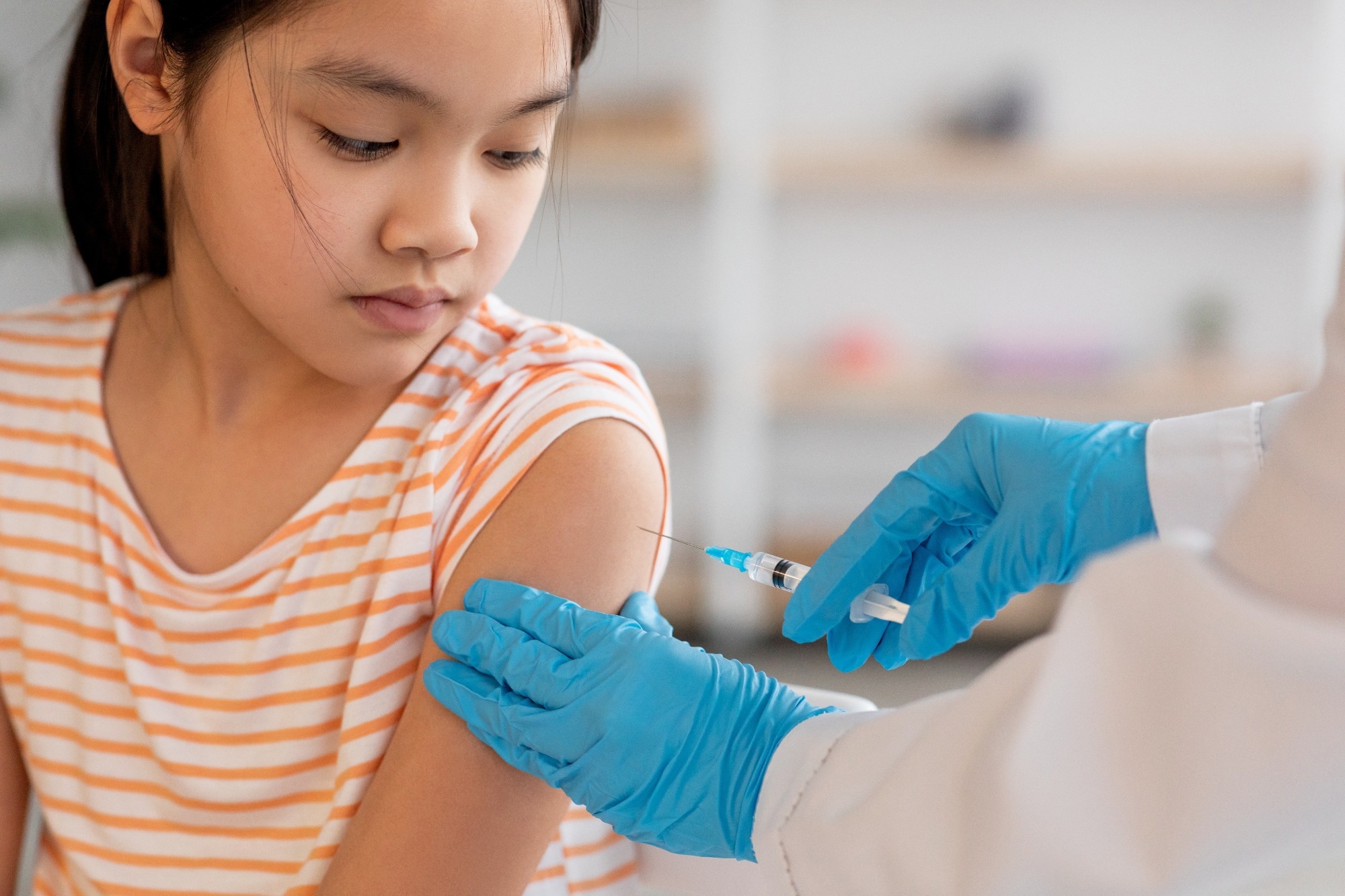 Study: Cervical cancer mortality trends following HPV vaccination in England, 2001–24: an analysis of population-based mortality data. Image credit: Prostock-studio/Shutterstock.com
High human papillomavirus (HPV) vaccination coverage is associated with a significant reduction in cervical cancer mortality in England, according to a new study published in The Lancet.
HPV vaccine's impact on cervical cancer deaths
HPV vaccination is a cornerstone of the World Health Organization's (WHO) strategy to eliminate cervical cancer as a public health problem, and around 150 countries have now incorporated the vaccine into their national immunization programs.
Clinical trials and real-world studies have consistently shown that HPV vaccination reduces persistent HPV infections and cervical cancer incidence. However, evidence demonstrating whether these reductions translate into fewer cervical cancer deaths has remained limited.
England introduced its national HPV vaccination program in 2008 for girls aged 12–13 years, achieving 80–90% vaccine coverage before the COVID-19 pandemic. A catch-up campaign, targeting girls aged 14–18 years, was also implemented between 2008 and 2010. To determine whether this high vaccine uptake has influenced cervical cancer mortality, researchers from Queen Mary University of London analyzed population-level mortality data from 2001 to 2024 among women aged 20–24, 25–29, and 30–34 years.
Highest vaccine coverage linked to greatest mortality reductions
The analysis showed that the greatest reductions in cervical cancer mortality occurred in women who received the HPV vaccine at ages 12–13 years, the group with the highest vaccination coverage (around 90%).
Among women aged 20–24 years between 2020 and 2024, no cervical cancer deaths were recorded, corresponding to a 100% reduction compared with pre-vaccination rates. However, the researchers emphasize that this reflects the absence of observed deaths during the study period and is likely due to the already very low underlying mortality rate, rather than complete elimination of cervical cancer deaths in this age group.
Benefits were also observed among women from earlier birth cohorts who were offered vaccination up to age 18 years, with vaccine coverage ranging from approximately 63% to 87%. In these cohorts, cervical cancer mortality fell by 80% among women aged 20–24 years in 2015–19 and by 69% among women aged 25–29 years in 2020–24.
Statistical modeling further estimated a 100% relative reduction in cervical cancer mortality risk among vaccinated women aged 20–24 and 25–29 years. Among women aged 30–34 years, most of whom received the vaccine at ages 14–18 years, when prior HPV exposure was more likely, the estimated risk reduction was 63%, although the researchers note that this estimate was less certain because of wide confidence intervals.
Evidence strengthens case for widespread adolescent HPV vaccination
This population-level observational study provides the first robust national-level evidence that high HPV vaccination coverage is associated with substantial reductions in cervical cancer mortality in England, supporting the WHO's goal of eliminating cervical cancer as a public health problem. The greatest benefit was seen among women vaccinated at ages 12–13 years, with high vaccine uptake associated with marked reductions in cervical cancer deaths among women aged 20–29 years.
By the end of 2024, the national HPV vaccination program was associated with approximately 200 fewer cervical cancer deaths in England. The researchers believe this represents only a small proportion of the program's long-term impact, as the number of deaths prevented is expected to rise substantially over the next two decades as vaccinated women grow older.
The reduction in mortality was smaller among women aged 30–34 years, most of whom received the vaccine between ages 14 and 18 years. According to the researchers, vaccination at older ages is expected to be less effective because individuals are more likely to have already been exposed to HPV before immunization.
Because the study was observational and based on population-level data, it cannot directly prove that HPV vaccination caused the observed reductions in mortality. However, the researchers argue that, when considered alongside evidence from randomized controlled trials and previous observational studies showing that HPV vaccination prevents persistent HPV infection and cervical cancer, the findings satisfy the Bradford Hill criteria supporting a causal interpretation.
The authors also note that changes in cervical screening, treatment, or sexual behaviour are unlikely to explain more than a small proportion of the decline in cervical cancer mortality. Nevertheless, they acknowledge that their statistical model assumes no herd protection among unvaccinated women and relies on population-level vaccination coverage rather than individual vaccination records.
Overall, the findings strengthen the evidence that HPV vaccination reduces not only cervical cancer incidence but also cervical cancer mortality. The authors conclude that maintaining high vaccine uptake among young adolescents will be critical as countries continue working toward the WHO goal of eliminating cervical cancer as a public health problem.
Download your PDF copy by clicking here.
 Five-session SBRT preserves quality of life before pancreatic cancer surgery