Seventeen years after their previous global assessment, researchers used new evidence and geostatistical modeling to reveal where conventional surveillance may be missing much of the true toll of snakebite.
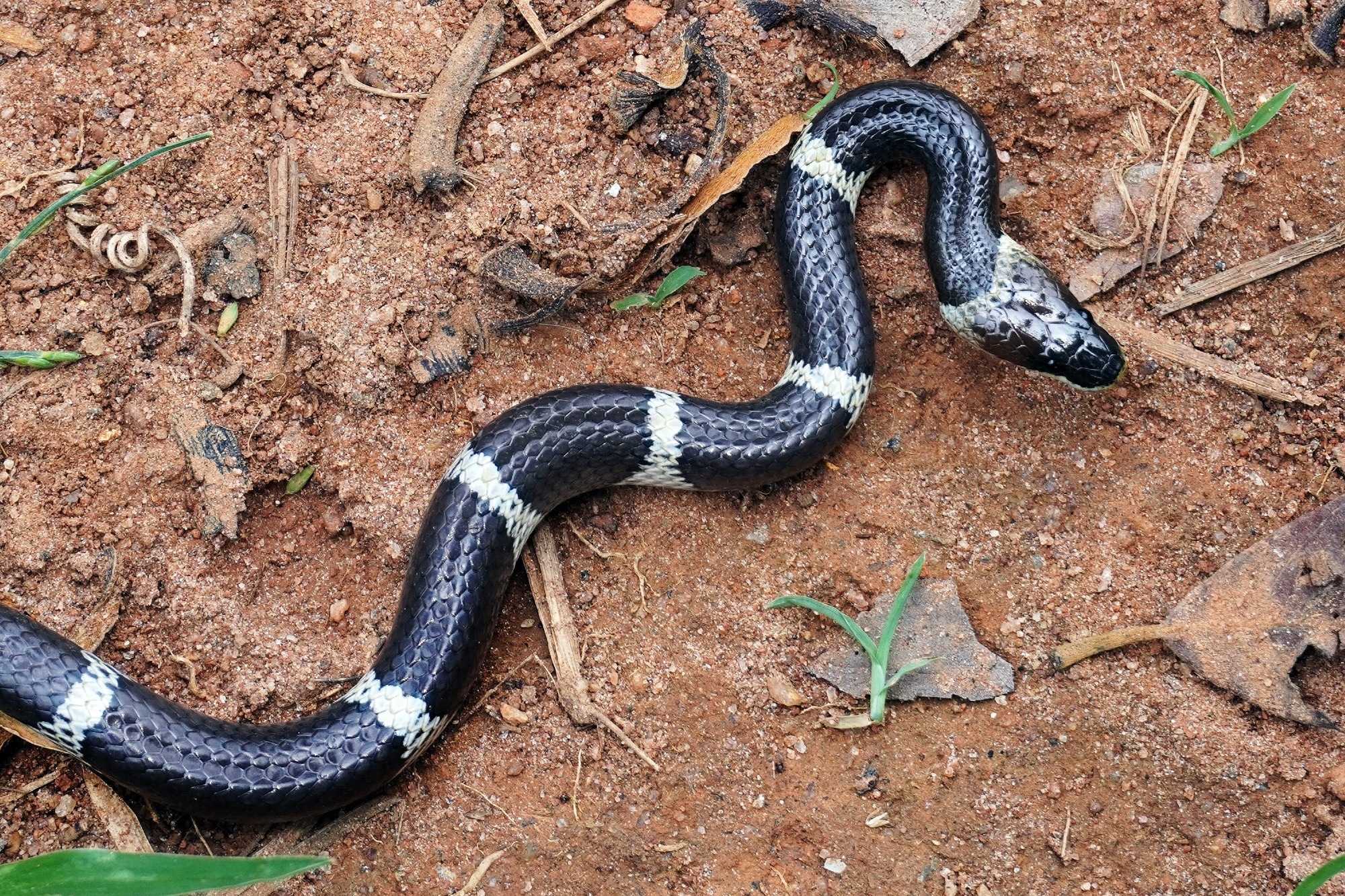
Study: Estimates of global burden of snakebite: A literature review and geostatistical modelling study. Top down view of an Indian krait (Bungarus caeruleus), a highly poisonous snake on the ground. Image Credit: AjayTvm / Shutterstock.
A recent modeling study published in the journal PLoS Medicine suggests that lower-income countries and resource-poor rural communities may be especially vulnerable to snakebite, snake envenomings (SE), and mortality. At least 2.1 million snake envenomings and 274,000 deaths were estimated to occur annually, most concentrated in sub-Saharan Africa, where 46% of global envenomings and 45% of related deaths were estimated to occur. South Asia, East Asia, and the Pacific also demonstrated high burdens. The findings could provide updated information, raise awareness, and support health authorities in developing targeted prevention and management strategies for snakebite and envenoming.
SE remains a global public health concern. Snake envenoming disproportionately affects people living in resource-poor rural communities of subtropical and tropical regions, causing substantial morbidity and mortality. Previous researchers have tried to estimate the SE burden worldwide. However, updated information is required to inform policymaking. Most snakebite estimates are based on hospital records and may not include cases in rural settings, where people prefer traditional treatments, contributing to underreporting. Incidence can also vary substantially by region.
About the study
In the present geostatistical study, researchers re-evaluated the snakebite burden worldwide using model-based geostatistical Poisson log-linear models, building on their initial 2007 estimate. They also included snake richness and demographic, socioeconomic, environmental, and agricultural variables as explanatory variables in the models. For these variables, they obtained data from the United Nations Development Program (UNDP), the Food and Agriculture Organization (FAO), and the UN’s Population Division every five years between 2005 and 2020, and the WorldClim database between 2000 and 2024.
Population counts were provided by the WorldPop project and rescaled to a 5.0 km by 5.0 km resolution. The researchers converted the explanatory variables that varied across geographical areas into average values for the relevant region or country. Annual incidence was expressed as the number of cases per 100,000 population. In sensitivity analyses, the researchers excluded nations with imputed covariates for envenomations (n=6) and mortality (n=4).
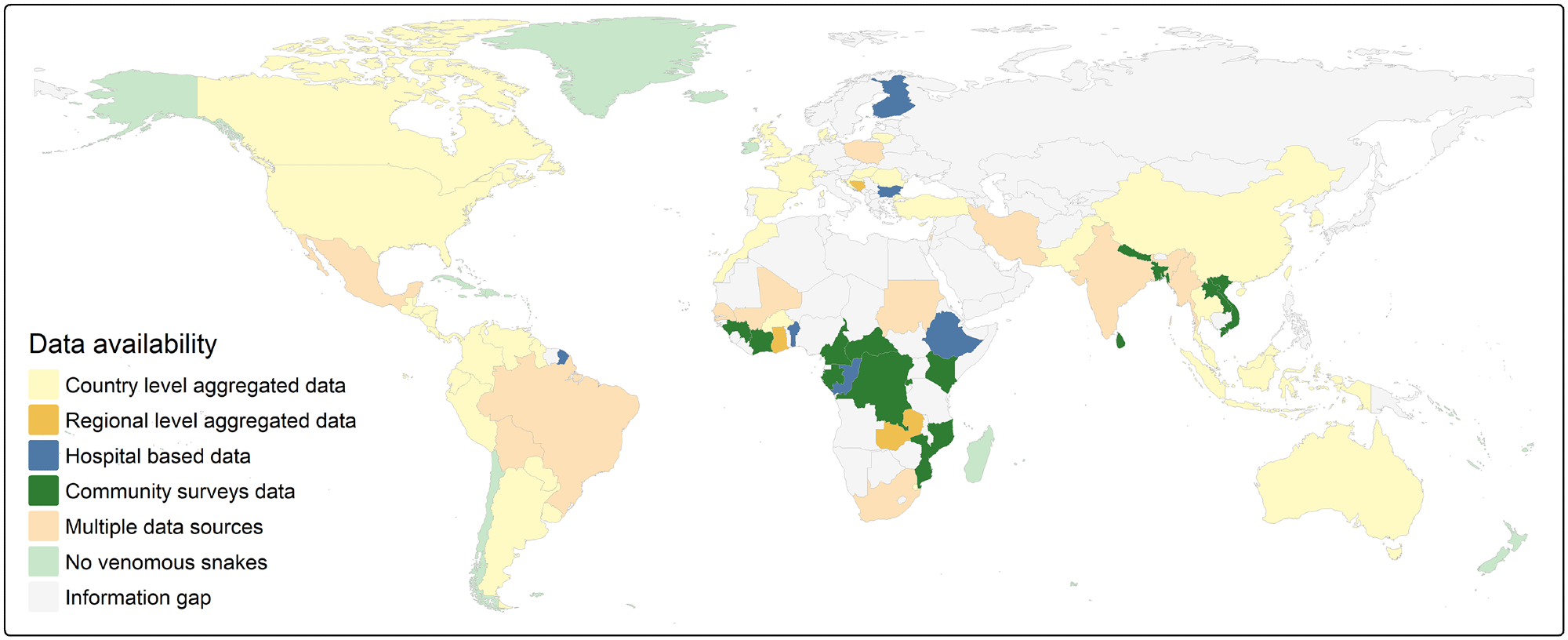
The team also searched the Scopus and PubMed databases for studies evaluating snakebite incidence, envenomations, and deaths published from January 2007 to March 2025, without language restrictions. To identify supplemental information, they also searched grey literature from sources such as National Poison Centers and National Ministries of Health. By integrating regional and national data aggregates with information from community- and hospital-based surveys, they modeled the burden of envenoming and death by geographic location.
Two researchers independently performed data screening. The team also removed records that relied on data from previously identified sources or publications already included in the literature review. Studies based on outdated sources or lacking a scientifically sound methodology were likewise excluded. They also excluded studies that directly cited numbers based on their 2007 estimates for countries without available data.
Results
From 1,689 records initially identified in PubMed and 3,757 records in Scopus, the researchers removed 1,454 duplicates. After abstract screening, they reviewed 615 articles in further detail, of which only 84 publications met the eligibility criteria. In addition to these studies, the team included six grey literature data sources from Malaysia, Thailand, Indonesia, Guyana, India, and the United States Centers for Disease Control and Prevention (CDC). As a result, 90 data sources were included in the final analysis.
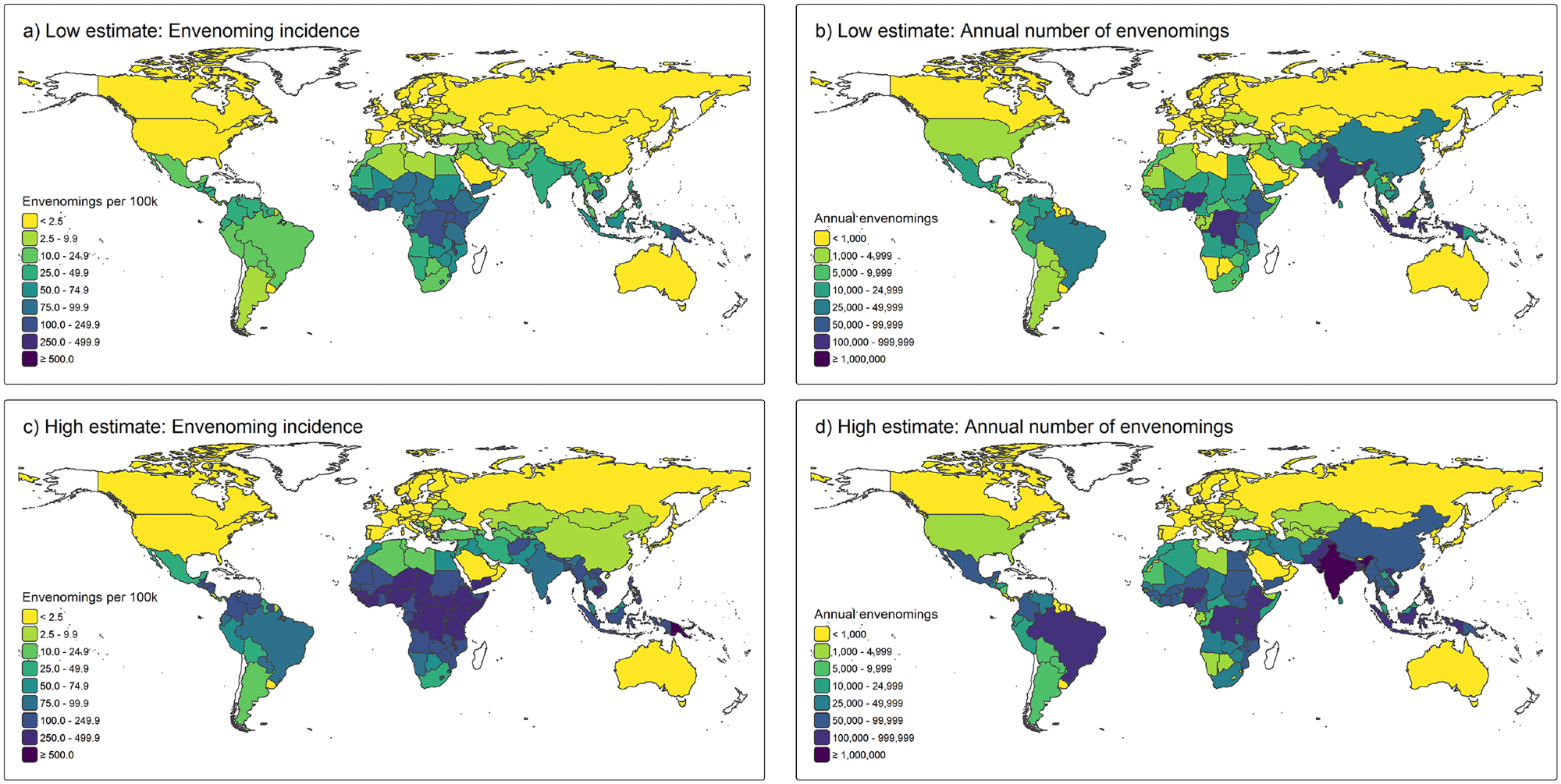
The researchers estimated that at least 2.1 million envenoming cases and 274,000 fatalities occur each year across the globe. Under the high-burden scenario, annual estimates could reach 7 million envenomings and 513,000 deaths. The low and high estimates reflect different assumptions about underreporting rather than statistical uncertainty. Lower-middle-income countries accounted for 56% of estimated envenomings, whereas low-income countries (LICs) had the greatest incidence rates. Notably, nearly half of the global envenoming burden (46%) and associated deaths (45%) were estimated to occur across countries in sub-Saharan Africa. Incidence rates in this region were approximately three-fold higher than those in South Asia. Sensitivity analyses yielded similar results.
The highest envenoming burdens were estimated in countries along the tropical belt. Lower variability in minimum temperature was also associated with a higher incidence of envenoming. India had the highest estimated envenoming burden, while India, Nigeria, Pakistan, and the Democratic Republic of the Congo were among the countries with the highest estimated mortality burdens. Greater gender inequality was associated with higher modeled envenoming incidence and mortality, whereas a larger share of the urban population was associated with lower envenoming incidence. These relationships were predictive rather than causal. Over half of the countries identified with venomous snakes lacked robust empirical envenoming data, and around 28% of the estimated global mortality burden occurred in countries without empirical mortality data, highlighting the need for improved surveillance.
Conclusion
The findings suggest that the global burden of snakebite, including envenoming and deaths, may be substantially greater than previously recognized. Countries south of the Sahara seemed to be the most affected, followed by those in southern and southeastern parts of Asia. Health policies could be designed to target these nations and prioritize resource allocation to high-risk areas within them. However, sparse and heterogeneous epidemiological data, reliance on modeling assumptions in data-poor countries, and substantial within-country variation mean that individual-country estimates should be interpreted cautiously and strengthened through high-quality, population-based surveillance.
Journal reference:
- Ediriweera, D.S., Kasturiratne, A., Pathmeswaran, A., Stienstra, Y., Martín, G., Iwamura, T. et al. (2026) Estimates of global burden of snakebite: A literature review and geostatistical modelling study. PLoS Medicine, 23(8):e1005201. DOI: 10.1371/journal.pmed.1005201, https://journals.plos.org/plosmedicine/article?id=10.1371/journal.pmed.1005201
 U.S. hospital closures outpace openings in rural and urban communities