A worldwide analysis reveals how preventable infections shape cancer incidence across regions, infectious agents, and populations.
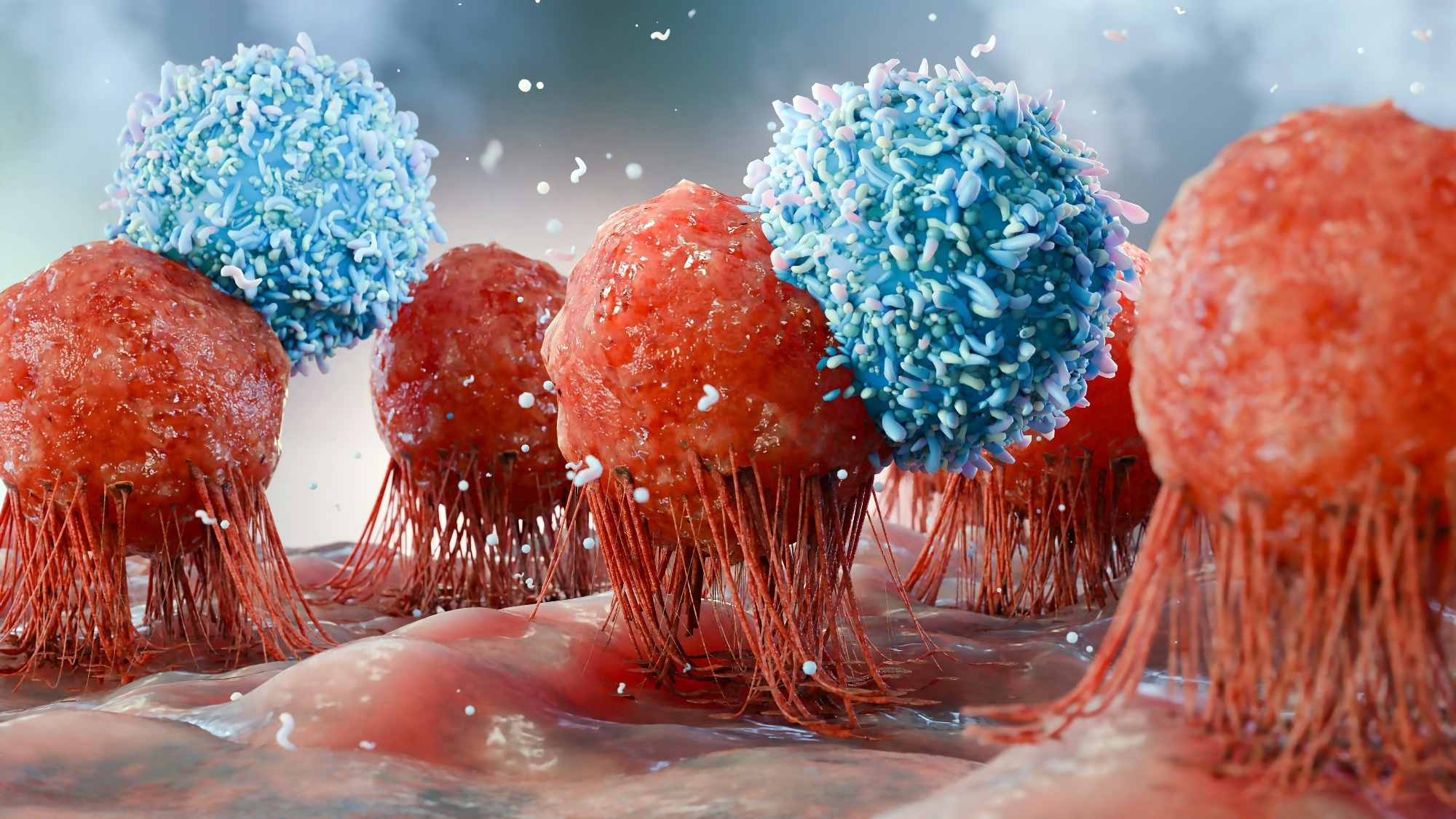 Study: Global burden of cancer attributable to infections in 2024: a worldwide incidence analysis. Image Credit: ALIOUI Mohammed Elamine7 / Shutterstock.com
A recent study published in The Lancet Oncology estimated 2.3 million incident cases of cancers attributable to infections, or 12% of all cancer cases, in 2024. Most cases were attributable to Helicobacter pylori and human papillomavirus (HPV) infections.
How researchers mapped the global cancer burden from infections
Cancer is a major cause of morbidity and mortality worldwide and is associated with considerable social and economic costs. Infectious agents remain an important modifiable risk factor for cancer, with effective infection control measures capable of reducing or preventing exposure to infectious agents. Further investigations into the worldwide incidence of infection-associated cancer could help guide strategies to reduce this burden.
In the present study, researchers evaluated the global burden of infection-attributable cancer in 2024. Using the Global Cancer Observatory's Cancer Today (GLOBOCAN) database, the team estimated absolute counts, population-attributable fractions (PAFs), and age-standardized incidence rates (ASIRs) per 100,000 person-years using the Segi-Doll 1966 World Standard.
Researchers calculated the incidence of cancers attributable to 12 infectious agents classified as Group 1 carcinogens by the International Agency for Research on Cancer (IARC) Monographs Program. These estimates were stratified by age, sex, and country, then aggregated by four World Bank income groups and 14 United Nations (UN) geographical subregions identified in 2022. Cancer types were defined using international cancer classification codes, with registry data used to estimate several specific cancer subtypes.
The Cancer Incidence in Five Continents Volumes 10-12 registry and the African Cancer Registry Network provided supplemental information. The researchers also reviewed studies published in PubMed between 1 January 2019 and 19 February 2026 to place the updated estimates within the existing evidence base.
Five infections account for most infection-related cancers
The team estimated approximately 2.3 million incident infection-related cancer cases in 2024, representing about 12% of global cancer cases. Most cases were attributable to H. pylori (760,000 cases) and HPV (750,000 cases), each accounting for approximately 4.0% of all new cancer cases worldwide.
Hepatitis B virus (HBV) was associated with an estimated 360,000 attributable cancer cases with a population-attributable fraction (PAF) of 2.0%. Epstein–Barr virus (EBV) (260,000 cases, PAF 1.0%) and hepatitis C virus (HCV, 160,000 cases, PAF below 1.0%) also accounted for many infection-attributable cancer cases.
H. pylori-attributable cases were predominantly non-cardia gastric cancer (n=700,000, cancer-specific PAF 85%). Cases attributable to HPV were mostly cervix uteri carcinoma (n=600,000, 100% of cervical cancer cases).
Hepatocellular carcinoma made up most cancer cases attributable to HBV and HCV, while nasopharyngeal cancers were the main driver for EBV-associated cancers.
A 2018 global estimate published in the literature attributed approximately 2.2 million cancers worldwide to infections. The 2018 and 2024 estimates should not be interpreted as showing a change in cancer burden over time because the newer analysis used different data sources, updated PAFs, and 16 additional infection–cancer pairs.
These findings demonstrate that infection-related cancers account for a substantial share of cases worldwide, even with progress in vaccination and screening. Improved infection prevention measures are required, along with scaling up of proven interventions, especially for low- and middle-income countries, which accounted for 77% of all infection-related cancer cases. The authors also identified persistent health inequities and societal, financial, and political barriers that can limit access to established prevention strategies.
Consistent with previous global estimates, eastern Asia demonstrated the largest infection-attributable cancer burden, accounting for 42% of cases worldwide, with an age-standardized incidence rate of 31.9 per 100,000 person-years. H. pylori and HBV contributed the most to infection-related cancer cases in eastern Asia.
Several regions exceeded the global mean ASIR of 22.7, including sub-Saharan Africa, southeastern Asia, and central and eastern Europe, with corresponding ASIRs of 28.5, 23.1, and 24.3, respectively. However, the proportion of all cancers attributable to infections differed across these regions, at 25%, 16%, and 10%, respectively, compared with 12% globally. EBV-attributable cancer types showed regional variations, with 65% of the burden concentrated in eastern, southeastern, and south-central Asia.
ASIRs for Mongolia exceeded the regional average for HBV, H. pylori, HCV, HPV, and EBV. For H. pylori, ASIRs were consistently above the regional average in Japan and South Korea, whereas China had the highest number of HBV-attributable cases globally. For every infectious agent except HPV, ASIRs were higher among males than females across all regions, suggesting that prevention priorities may differ by sex and location.
The authors cautioned that the estimates depend on cancer registry coverage and modeling, with limited high-quality registry data in some regions, particularly Africa. The analysis did not report age-specific burden, and researchers generally applied the same attributable fractions to males and females because sex-specific estimates were unavailable.
The researchers also did not calculate uncertainty intervals because the varied data sources and methods made reliable estimation difficult. These factors could cause the true number of infection-related cancers to be underestimated or overestimated, especially in regions with limited registry coverage.
Prevention could curb a major share of infection-related cancers
The study findings provide an updated snapshot of infection-attributable cancer cases worldwide, supporting faster implementation of infection control measures for cancer prevention. Several proven approaches remain underused, including HBV and HPV vaccination, as well as testing and treatment of H. pylori, human immunodeficiency virus (HIV), HBV, and HCV.
Improving condom accessibility, HIV pre-exposure prophylaxis (PrEP), safe injection practices, and screening for precancerous cervical and anal lesions associated with HPV could help reduce the incidence of infection-related cancers. The authors also called for investment in new preventive vaccines targeting EBV, H. pylori, and Kaposi's sarcoma-associated herpesvirus, alongside coordinated local and global efforts to address the political, financial, and societal barriers that limit existing prevention measures.
 Excess adiposity may alter the immune environment of airways to promote lung cancer