A major analysis of more than 56,000 adults strengthens evidence linking the widespread HSV-1 virus to dementia and Alzheimer's disease, raising new questions about whether preventing or treating infection could help protect brain health.
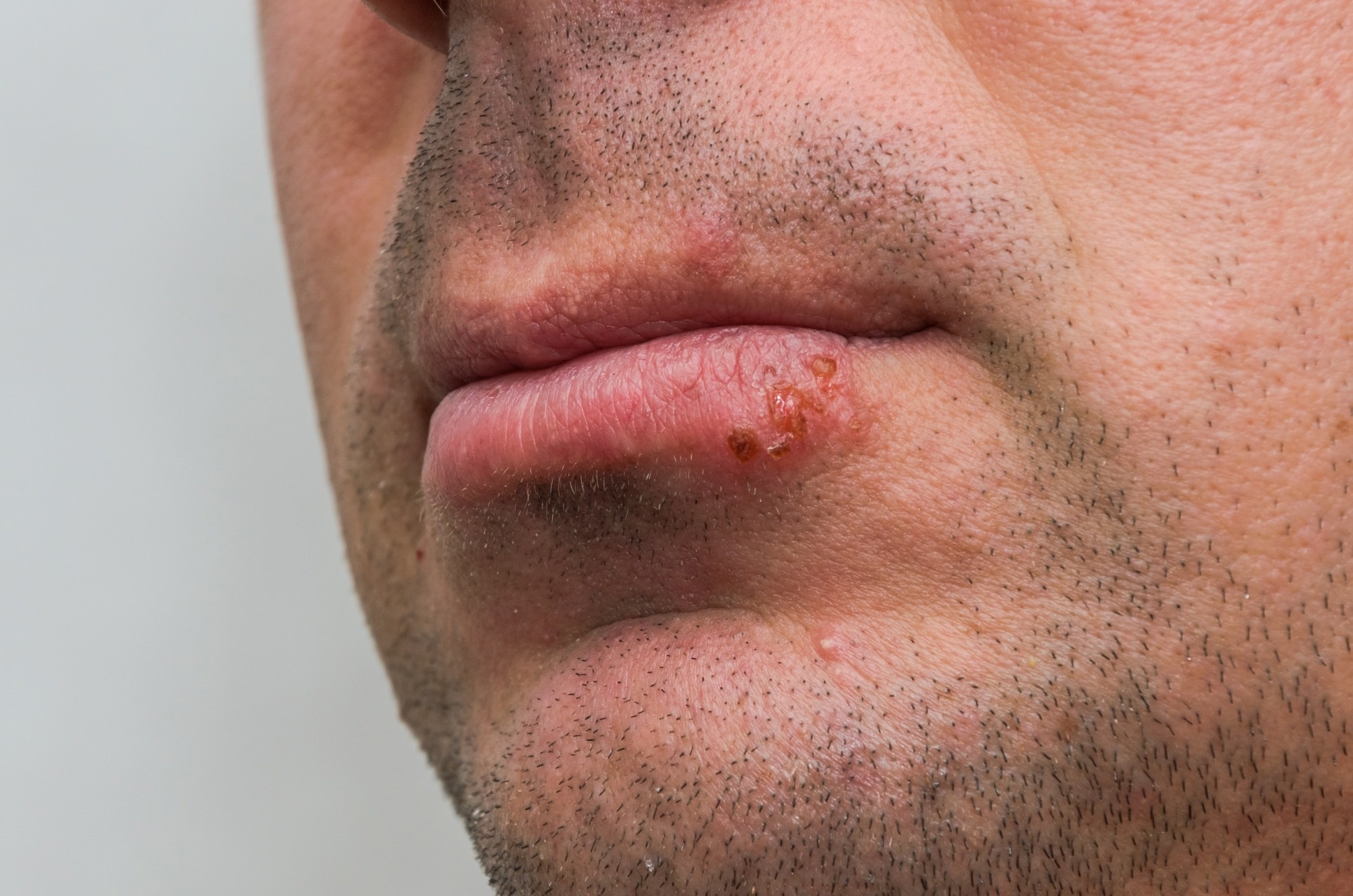 Study: Association Between Herpes Simplex Virus-1 Infection and Dementia or Alzheimer’s Disease: A Systematic Review and Meta-Analysis. Image credit: Volodymyr Nik/Shutterstock.com
A new systematic review and meta-analysis of 11 studies involving 56,292 adults has found that herpes simplex virus type 1 (HSV-1) infection is associated with 48% higher odds of dementia or Alzheimer's disease. Published in Open Forum Infectious Diseases, the findings describe a possible link between the common virus and neurodegenerative diseases that has remained uncertain despite decades of research.
The potential link between HSV-1 and dementia
The number of people living with dementia worldwide is projected to rise from 57.4 million in 2019 to 152.8 million by 2050, highlighting the importance of understanding potential contributors to the disease.
One factor under investigation is HSV-1, a common virus that, as of 2016, was estimated to infect about two-thirds of the global population under 50. It can enter the nervous system and remain dormant for life, which is why researchers have long suspected it may play a role in dementia and Alzheimer’s disease.
Alzheimer's disease is characterized by the accumulation of amyloid-beta plaques and tau protein tangles in the brain. Laboratory studies have shown that HSV-1 infection can trigger Alzheimer's-like changes in experimental models, providing a possible biological explanation for the suspected association.
However, previous reviews have reported conflicting findings, with some identifying an association between HSV-1 and dementia or Alzheimer's disease and others finding no statistically significant link. The researchers therefore conducted an updated review incorporating more recent studies and focusing specifically on HSV-1.
Global evidence examines HSV-1 infection and dementia risk
The researchers searched eight scientific databases and registries for studies published up to February 2024, involving adults aged 18 years or older. Of the 2,178 records identified, 11 studies met the inclusion criteria, involving 56,292 participants with an average age of 66.1 years.
The studies, published between 1997 and 2024, spanned eight countries and included six case-control and five cohort studies. Most were rated at low risk of bias, while one was considered to have moderate risk.
HSV-1 infection was identified through laboratory tests, clinical assessments, medical records, or brain tissue examinations. Researchers assessed dementia and Alzheimer's disease using clinical evaluations, cognitive tests, imaging, or tissue findings.
The researchers pooled the findings using a random-effects meta-analysis, a statistical approach that accounts for differences between studies. The analysis combined odds ratios and hazard ratios after researchers found no apparent difference in the estimates reported using these measures. They also examined whether age, apolipoprotein E (APOE) status, a genetic factor associated with Alzheimer's disease risk, cardiovascular disease, study design, and study quality influenced the results.
HSV-1 linked to 48% higher odds of dementia or Alzheimer's
The pooled analysis found that HSV-1 infection was associated with 48% higher odds of dementia or Alzheimer's disease, although this does not indicate an individual's absolute risk of developing either condition. When the conditions were examined separately, the association remained statistically significant for Alzheimer's disease, with infected individuals having 44% higher odds. A similar trend was observed for dementia overall, but this finding was not statistically significant.
The association was also evident across different study designs and quality ratings, including studies that accounted for age. However, it was not statistically significant when researchers examined estimates that had not been adjusted for other risk factors.
Accounting for genetic risk appeared to weaken the association slightly. Among studies that adjusted for APOE status, an established genetic risk factor for Alzheimer's disease, HSV-1 infection was associated with 27% higher odds of dementia or Alzheimer's disease. However, this estimate was not statistically different from that of studies without APOE adjustment.
Despite these findings, the strength of the association varied considerably between studies, potentially reflecting differences in study methods, participant characteristics, and how other dementia risk factors were accounted for. This variation was absent among studies that adjusted for APOE status, suggesting that genetic factors or differences between study populations may help explain some of the inconsistencies.
How might HSV-1 affect the brain?
The authors discuss several hypotheses. One concerns the hippocampus, a brain region involved in memory and learning. It has an abundance of receptors that HSV-1 uses to enter cells and relatively low antiviral immune activity, which may make this region particularly susceptible to infection. HSV-1 can also stimulate inflammatory responses that may contribute to neuronal damage.
Another proposed mechanism involves amyloid-beta, a protein associated with Alzheimer's disease. Under the antimicrobial protection hypothesis, amyloid-beta may help defend the brain against pathogens, including HSV-1. Its accumulation in response to infection could contribute to chronic inflammation and activation of the brain's immune cells, potentially driving neurodegenerative changes.
These mechanisms remain hypotheses, and the meta-analysis did not directly examine how HSV-1 might affect the brain.
Further research needed to clarify HSV-1's role in dementia
Despite these findings, the evidence has important limitations. For instance, many included studies were retrospective, so the results cannot establish whether HSV-1 infection directly causes dementia or Alzheimer's disease. The studies also used different methods to diagnose these conditions, contributing to variation between their findings. Similarly, differences in how HSV-1 infection was identified mean that evidence of previous exposure did not necessarily indicate active infection in the brain, leaving the role of viral reactivation uncertain.
Furthermore, several studies lacked information about participants' use of antiherpetic medications, which some observational research has associated with lower dementia risk. Limited information about dementia severity also prevented more detailed analyses.
Overall, the findings add to evidence of a possible link between HSV-1 infection and dementia or Alzheimer's disease, but the nature of this relationship remains uncertain. The researchers call for further studies to clarify whether HSV-1 contributes to disease development and whether antiviral treatments or preventive vaccines could reduce dementia risk. No antiviral strategy has yet been established for preventing HSV-1-related cognitive decline. Given the widespread prevalence of HSV-1, these findings could have important implications for future dementia prevention research.
 Digital program boosts positive experiences for Chinese-American dementia caregivers