A controlled feeding trial found no clear dose-dependent improvement in post-meal vascular or metabolic responses, raising questions about whether the acute benefits reported for culinary spices persist with regular consumption.
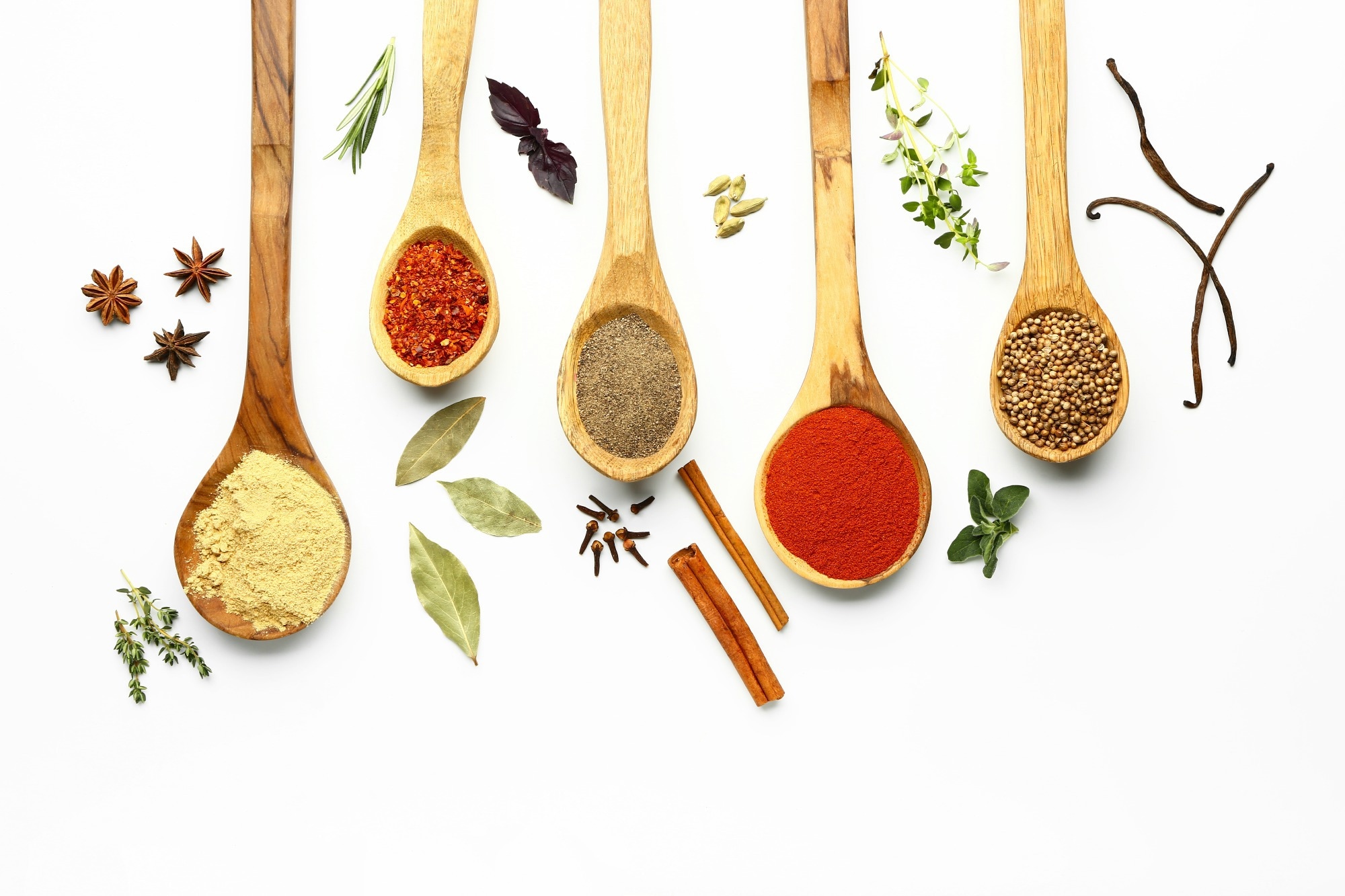
The Effect of Meals with Culinary Doses of Herbs and Spices on Postprandial Endothelial Function, Lipemia, and Glycemia after 4-Week Exposure to Herb- and Spice-Containing Diets: A Secondary Analysis of a Randomized, Crossover, Controlled-Feeding Study. Image Credit: Pixel-Shot / Shutterstock
A recent study published in the journal Current Developments in Nutrition examined the effects of meals containing herbs and spices on glycemia, lipemia, and postprandial flow-mediated dilation (FMD) in adults at risk of cardiometabolic disease.
Dietary Strategies for Cardiometabolic Risk Reduction
Cardiometabolic disease risk is characterized by high blood pressure, poor glucose control, abnormal lipid levels, and endothelial dysfunction. In the U.S., poor diet is a leading cause. Meals high in saturated fat and carbohydrates promote postprandial increases in blood glucose and triglycerides, which are stronger predictors of cardiovascular risk than fasting levels. Postprandial dysmetabolism is associated with oxidative stress, chronic inflammation, and endothelial dysfunction, often assessed by flow-mediated dilation (FMD). Given the prevalence of unhealthy meals, effective approaches to improve post-meal metabolic health are needed.
Herbs and spices are recommended to enhance flavor and help reduce sodium and sugar intake. Evidence suggests that higher culinary doses may improve postprandial lipid profiles, oxidative stress, and endothelial function, and that smaller doses also show benefits when consumed with high-fat, high-carbohydrate meals. Culinary doses of mixed herbs and spices may acutely improve postprandial metabolic health, but whether these effects last with longer-term use is unknown.
Previous research showed that adding a high culinary dose of mixed herbs and spices to the typical American diet reduced 24-hour blood pressure compared with lower culinary doses in adults at risk for cardiometabolic disease, but did not affect fasting blood glucose, lipids, or endothelial function. However, the effects of culinary doses of herbs and spices on postprandial metabolic and vascular responses after longer-term consumption remain unclear.
Exploring the Potential of Culinary Herbs and Spices for Improving Postprandial Health
The current study is a sub-analysis of a parent trial that was a three-period, randomized, crossover, controlled-feeding study, designed to examine the effects of an average American diet containing low, moderate, or high doses of herbs and spices on cardiometabolic risk in adults at elevated risk for cardiovascular disease.
Eligible participants were adults aged 30–75 years with increased waist circumference, a body mass index (BMI) between 25 and 35, and at least one additional cardiometabolic risk factor. Only males and postmenopausal females participated in the meal challenge. Exclusion criteria included recent tobacco use, pregnancy or lactation, use of relevant medications or supplements, selected chronic diseases, unstable weight, and high alcohol intake.
Participants completed three diet periods, each lasting four weeks, with low, moderate, or high spice content (0.5, 3.3, or 6.6 g/2100 kcal/day), separated by a minimum 2-week washout period. At both baseline and following each diet period, participants underwent a meal test (1192 kcal; 49% carbohydrate, 16% saturated fat).
At baseline, participants received a low-spice meal; after each diet period, the meal contained a spice dose corresponding to the preceding diet. The test meal consisted of chicken tikka masala and an apple pie yogurt parfait and incorporated nine common herbs and spices. Daily adherence to the diet was monitored.
The primary outcome, FMD, was measured at fasting and at 120- and 240-minutes post-test meal. Triglycerides, glucose, insulin, and cholesterol were also measured at fasting and up to 240 minutes after the meal. Between-condition effects were assessed using linear mixed-effects models.
Culinary Herbs and Spices Show No Clear Dose-Dependent Cardiometabolic Benefit
A total of 43 adults were included in the analysis, of whom 65% were male, with an average age of 48 years, a BMI of 28.9, and a waist circumference of 102 cm. Participants reported consuming nearly all study foods, with 94% adherence across all diet periods and conditions.
There were no significant differences in mean FMD or other endothelial function measures between diet conditions, and no significant condition-by-time interactions. However, FMD increased at 120- and 240-minutes post-meal compared to fasting, regardless of spice dose. The authors noted that the meal did not produce the expected postprandial impairment in FMD, which may have limited the ability to detect a spice-related benefit. Participants also had relatively normal endothelial function at baseline, leaving less potential for further improvement in FMD.
Glucose, insulin, triglyceride, and cholesterol levels did not show significant interactions between diet and time. While these markers changed over time, an apparent difference in LDL cholesterol between conditions was no longer significant after adjustment for multiple comparisons.
Although insulin AUC differed significantly between diets, with a lower insulin AUC after the low-spice meal than after the moderate-spice meal, the difference remained significant after adjustment for baseline AUC. The authors noted that the reason for this finding was unclear and that insulin sensitivity was not directly assessed. Secondary analyses revealed no meaningful correlations between changes in FMD and triglycerides, except for a weak, transient inverse correlation at 120 minutes after a high-spice meal, which was not observed at 240 minutes.
Individual responses for FMD, lipemia, and glycemia varied widely across all conditions. Before the spice diets, participant characteristics, mainly fasting FMD, accounted for most variability in FMD responses. After four weeks of spice diets, only fasting FMD remained predictive. Age, sex, BMI, and metabolic syndrome status did not explain variability in glucose, insulin, or triglyceride responses before or after the intervention.
Conclusions
The current study found that postprandial endothelial function, lipemia, and glycemia did not differ significantly among the low-, moderate-, and high-spice meal conditions in adults at risk for cardiometabolic disease, even after four weeks of corresponding herb- and spice-containing diets. These results suggest that any acute benefits of culinary herbs and spices may be less apparent with longer-term intake. However, the authors cautioned that the study may have been underpowered to detect modest but clinically meaningful effects and lacked a meal condition containing no herbs or spices.
The trial was funded by the McCormick Science Institute and the National Center for Advancing Translational Sciences, National Institutes of Health. One author serves on the McCormick Science Institute's Scientific Advisory Council, and the paper states that the funding agency had no role in data collection, analysis, interpretation, writing, or submission.
Journal reference:
- Damani J, et al. (2026) The Effect of Meals with Culinary Doses of Herbs and Spices on Postprandial Endothelial Function, Lipemia, and Glycemia after 4-Week Exposure to Herb- and Spice-Containing Diets: A Secondary Analysis of a Randomized, Crossover, Controlled-Feeding Study. Current Developments in Nutrition. DOI: 10.1016/j.cdnut.2026.109441, https://cdn.nutrition.org/article/S2475-2991(26)01806-8/fulltext
 Wearable sensors coupled with AI can non-invasively monitor blood pressure