Multiple myeloma (MM) is an aggressive plasma cell cancer that mostly resides in the bone marrow. Chimeric antigen receptor (Car-T) cell therapies that target the B-cell maturation antigen (BCMA) have transformed MM treatment, but their broad usage is limited due to their high cost and complex manufacturing.
These constraints have fueled interest in allogeneic treatments, which use immune cells obtained from healthy donors.
In this context, natural killer (NK) cells modified to express BCMA-directed CARs could be a promising option, especially when paired with IL-15 to improve persistence and function. In this study, the authors tested the effectiveness of α-BCMA-CAR NK cells with IL-15 co-expression in a xenograft mice model of multiple myeloma.
Key findings
- IL-15 co-expression enhances NK cell persistence and anti-myeloma action.
- After CAR-NK treatment, mice with luciferase-expressing MM cells were monitored by employing the Newton 7.0 FT500 for bioluminescent (BLI) imaging. When CAR and IL-15 were delivered simultaneously, MM development was reduced.
- Weekly whole-body BLI imaging assessed disease control over time. Although tumor clearance in the bone marrow was maintained, localized malignancies appeared at a later point.
- The study used optical imaging-guided necropsy to investigate immunological escape mechanisms. The tumors remained BCMA-positive but showed minimal NK cell infiltration, indicating that resistance was caused by the tumor microenvironment rather than antigen loss.
Conclusions and next steps
This study found that NK cells expressing α-BCMA-CAR with IL-15 efficiently controlled MM and extended survival in a preclinical mouse. However, long-term optical imaging revealed the persistent growth of extramedullary disease, a clinically meaningful recurrence pattern that would have gone undetected with short-term endpoints.
Product highlight
The Newton 7.0 FT500 played a critical role in this study because it enabled high-sensitivity, longitudinal BLI of myeloma progression.
Its signal detection and spatial resolution capabilities helped in distinguishing bone marrow-localized disease from newly forming extramedullary tumors. Additionally, long-term imaging enabled the capture of late-stage relapse occurrences.
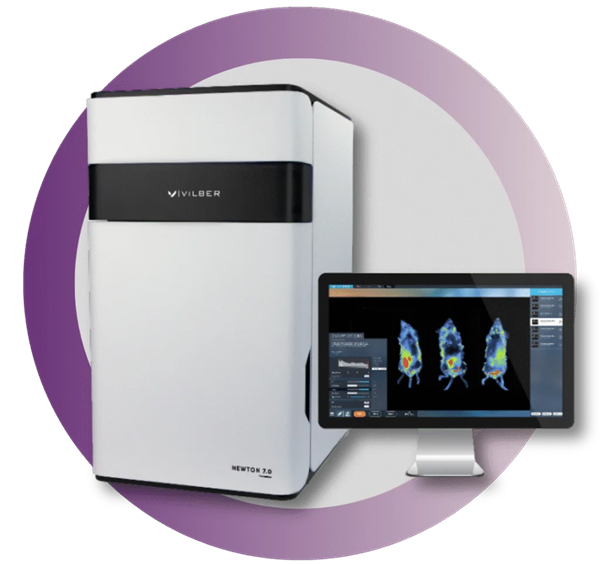
Image Credit: Scintica Instrumentation Inc.
Acknowledgments
Produced using materials originally authored by Shelby Kaczmarek, Donghyeon Jo, Safa Ghaziasgar, Bryan Marr, Stefania Berton, Lisheng Wang, Mehdi Arbabi Ghahroudi, Mihue Jang, Alissa Visram, Scott McComb, and Seung-Hwan Lee.
About Scintica Instrumentation Inc.
At Scintica, we advance science and medicine by supplying researchers with reliable research instrumentation and equipment. Our carefully selected portfolio of imaging systems, research tools, and supporting technologies is designed to reduce complexity and help scientists focus on what matters most, generating
meaningful results.
We partner closely with the preclinical research community to connect teams with solutions that are scientifically robust and built to support research challenges. From system selection through long-term support, our goal is to make research more productive, efficient, and impactful.
Sponsored Content Policy: News-Medical.net publishes articles and related content that may be derived from sources where we have existing commercial relationships, provided such content adds value to the core editorial ethos of News-Medical.net, which is to educate and inform site visitors interested in medical research, science, medical devices and treatments.