The NEWTON FT-900 is the first deeply cooled CCD imager that is specifically tailored to both fluorescence and bioluminescence multispectral imaging for an extensive spectrum of in vivo applications.
It offers non-ionizing and non-invasive biological process observation in real time, in the visible, near, and short-wave infrared spectrum (VIS/NIR/NIR-II), making it perfect for preclinical research.
The all-in-one system supports oncology, immunology, infectious dases, neurology, and biodistribution investigations.
NIR-II light may penetrate deeper into small animal tissue with less autofluorescence, thanks to this state-of-the-art optical imaging system, which reaches 10 times the photon penetration depth of visible fluorescence.
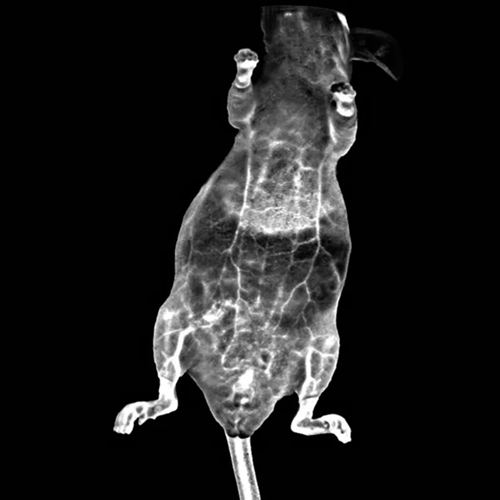
Image Credit: Scintica Instrumentation Inc.
NIR-II fluorescence
The system attains unmatched depth and sensitivity with imaging technology developed to exceed conventional limits. The intensified filtered LED provides 10× greater photon penetration depth than visible fluorescence. Live, ultra-low-noise events can be captured with the cooled 1″CCD SWIR InGaAs camera, featuring 20 µm pixels and video mode for faster acquisition and enhanced sensitivity.
Multiple reporters can be visualized using the overlay feature and benefit from 10 excitation channels (440–980 nm) and 14 high-efficiency emission filters (1000–1500 nm), designed with dual magnetron filter technology for outstanding signal-to-noise ratios. Narrow excitation filters further reduce autofluorescence, ensuring clarity in every image.
Bioluminescent and 3D optical imaging
The sophisticated topographical imaging module enables the reconstruction of bioluminescent signals in three dimensions, allowing for accurate signal volume visualization.
Using the integrated Mouse Atlas, which superimposes organ maps on the topography image, users may gain a greater understanding of tissue structures. Signal position and size can be precisely ascertained using Newton's CCD and 3D cameras.
VIS fluorescence
Managing a broad range of simultaneous signals in the visible spectrum (440–850 nm) means that users may increase the versatility of their experiments. By employing exact mathematical dye separation to guarantee that each channel represents a pure signal, the sophisticated spectral unmixing technology removes crosstalk.
Immunocompromised animals can be transported and imaged using the XT 500 isolation chamber, which is completely enclosed and has HEPA-SPF filters for increased safety and adaptability.
Features and benefits
Metabolic studies
Use the high frame rate for SWIR II to study real-time metabolism, including drug dispersion, heart rate, and breathing.
Luciferase expression
Employ a variety of fluorescent molecular reagents and bioluminescent reporters, such as firefly luciferase.
Vast compatibility
- Zebra fish
- Rodents (up to 10 mice and three rats, guinea pigs, or small rabbits)
- Ex vivo organs, and tissue sections in vitro (in microplates, etc.)
All applications needed in one system
- Monitoring of infections and tumors
- Tracking cell migration
- Targeting molecules with nanoparticles
- Visualization of microcirculation and vasculature
- Studies on pharmacokinetics and biodistribution
Blood flow maps
Acquire comprehensive vascular blood flow maps and other deep tissue information.
Applications
- Tumor and infection monitoring
- Detailed vascular blood flow maps
- Biodistribution and pharmacokinetics studies
- Cell migration tracking
- Vasculature and microcirculation visualization
- Drug dispersion
- Heart rate and breathing
Specifications
Field of view
All models
- Minimum: 6 × 6 cm
- Maximum: 20 × 20 cm
Lens
All models
- Widest lens aperture on the market (f/0.7)
- Proprietary Optics: V.070
- Three-dimensional BLI Tomography
Animal care
All models
- Heated mouse pad (+37 °C)
- Capacity of up to 10 mice
- Individually controlled anesthesia manifolds
Acquisition and analysis software
All omdels
- Easy to use and free of licenses
- 3D BLI topography module
- Data export at 16-bit .tiff or 8-bit .jpg formats
- Cutting-edge software for precise measurement
- Fully GLP and CFR21-compliant
Specifications
Source: Scintica Instrumentation Inc.
| Models |
Newton FT 900 |
Imaging
Modalities: |
NEWTON FT-900 – Ultimate sensitivity for advanced research with a dual-camera architecture. Designed for scientists seeking high-level performance and the deepest insights in NIR-II imaging.
- VIS camera 400– 900 nm
- InGaAs SWIR camera 900– 1700 nm
- Monochrome or color imaging mode
- From 20 frames per second up to many minutes exposure
|
Emission
Filters: |
14 high efficiency filters (customizable)
- Eight VIS Narrow-Bandpass filters (30 nm) : 500/550/600/650/700/750/800/850 nm
- Six SWIR filters (Long-Pass) : 1000/1100/1200/1300/1400/1500 nm
Equipped with 15 positions motorized filter wheel
|
| llumination Sources: |
- 12 excitation channels: 440/480/540/580/640/680/740/780/840/880/940/980 nm
- On-demand customization > 1000 nm
|
| Cameras: |
Double cameras equipped with proprietary f/0.7 lens
- DarQ-11 Scientific grade 16-bit CCD camera (400-900 nm)
- InGaAs SWIR CCD camera (900-1700 nm)
|
| Smart Darkroom and Field of View : |
- Minimum 6 x 6 cm ; Maximum 20 x 20 cm
- Z-Axis motorized camera for precise adjustments
- X/Y-Axis motorized animal stage
- Stainless steel darkroom with wide-access door (110 ° angle)
- Equipped with all safety standards
|
| Animal Handling: |
- Heated Mouse Pad (+20– 37 °C)
- Individual animal breathers
- One to 10 mice (also compatible with other small animals and other types of samples)
|
| Acquisition and Analysis Software: |
- Advanced software for absolute quantification
- Fully GLP and CFR21-compliant
- Data export at 16-bit .tiff or 8-bit .jpg formats
- 3D tomography module available
|