The NGB-R is a versatile, three-dimensional bioprinting platform designed for printing live tissues and organs.
Combining laser-assisted, micro-valve, and extrusion bioprinting techniques, the NGB-R provides exceptional flexibility in bioprinting, accommodating a range of materials from cells to spheroids, and supports the use of a wide variety of biomaterials and hydrogels.
The NGB-R features an integrated microscope for real-time monitoring of cell printing and is supported by a comprehensive software suite that facilitates the management of bioprinting protocols, encompassing everything from biological CAD to the analysis of manufacturing data.
The Next Generation Bioprinter (NGB) systems were developed to incorporate high-resolution Laser-Assisted Bioprinting into this proprietary and innovative platform.
The research-based platform (NGB-R) has a modular design which aims to provide tissue engineers and researchers with greater flexibility in selecting biomaterials and hydrogels, as well as enhanced versatility in their research and development initiatives.
The Next Generation Bioprinting (NGB) NGB-R platform from Poietis has been created to address the current shortcomings in tissue manufacturing and to resolve limitations in existing 3D bioprinting technologies, using single-cell resolution and learning-based methods.
This platform combines automation and robotics with numerous online sensors, including cell microscopy, and incorporates Artificial Intelligence processing. On top of this, it integrates all bioprinting techniques - laser-assisted bioprinting, bioextrusion, and micro-valve bioprinting - a world first in the bioprinting industry.
Features and benefits
Bioprinting enables the precise and reproducible creation of scaffolds, cells, tissues, and organs with a high degree of specificity.
Multi-modality, laser-assisted, bio-extrusion, and micro-valve bioprinting techniques
The NGB-R integrates three distinct bioprinting methods within a single system:
- Laser-assisted-bioprinting (LAB)
- Micro-valve module
- Bio-extrusion
This enables users to continue utilizing the techniques they have developed and grown accustomed to, while integrating new methods, like LAB, to further improve their tissue engineering programs.
High precision (10 µm)
The initial arrangement of cells significantly influences the development of subsequent tissues. Although conventional extrusion-based bioprinting methods do not facilitate accurate placement of printed cells within the hydrogel, NGB-R enables the precise positioning of cells according to pre-designed patterns.
High cellular viability (>95 %)
NGB-R's laser-assisted bioprinting technology employs a nozzle-free method that eliminates damaging forces during the process. Consequently, cell viability exceeds 95 %, and the printed tissues achieve true functionality.
Integrated microscopy and image analysis platform
The NGB-R can be equipped with an optional integrated microscope that captures images of each distinct tissue layer during every stage of fabrication.
The PIA image analysis platform has been designed for the 3D reconstruction of the complete tissue, in addition to providing in-line analysis of 2D and 3D cell patterns. This analysis encompasses, but is not limited to, automatic and precise cell counting to ensure that all wells contain an equal number of cells, as well as calculating the percentage of valid droplets based on your preferences, parameters, and the desired number of cells per droplet.
High resolution, high printing speed
NGB-R is the inaugural commercially accessible device featuring laser-assisted bioprinting, enabling users to deposit micro droplets (spanning sizes from 50 μm to 300 μm) of cell bioink with an accuracy of a few microns. This allows for all levels of resolution, from aggregates to cellular spots and individual cells.
Fluidic multi-cell loading module
This loading module facilitates the production of larger and more intricate tissues in accordance with Good Manufacturing Practices (GMP).
This optional module comprises a Microfluidic cartridge along with an automated pipette or homogenizer.
Robotic-assisted
NGB-R has been developed to tackle automation and reproducibility challenges in tissue manufacturing. A 6-axis robotic arm within the NGB-R facilitates a semi- to fully automated fabrication and monitoring process.
Models and specifications
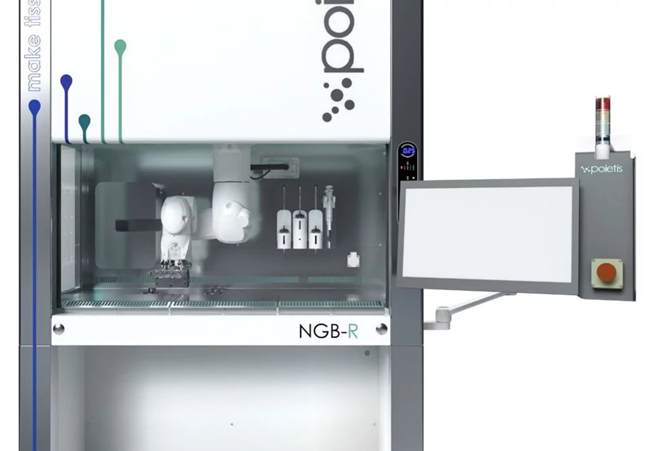
Image Credit: Scintica Instrumentation Inc
NGB-R specifications
- Fully integrated biosafety cabinet
Laser and bio-extrusion printing heads provided.
- Printing method: Automated, hands-free utilizing a 6-axis robotic arm
- Printing surface: Standard, accommodating 6-well and 12-well plates
- CAD and HMI software for tissue design and workflow configuration
- Computer interface: 21-inch HD display
NGB-R
A multi-modal biofabrication device using a distinctive high-resolution laser-assisted bioprinting technology. The NGB-R has been designed and developed specifically for the bioprinting of living tissues aimed at facilitating research and discovery.
Add-on options
- Image analysis software, PIA™ and Viewprint™
- Printing head micro-valve
- Built-in microscope
- Photo-crosslinker
NGB-C
The bioprinting technology is also offered for clinical use (NGB-C), adhering to Good Manufacturing Practices for the production of implantable tissues intended solely for clinical use.
NGB-R imaging gallery
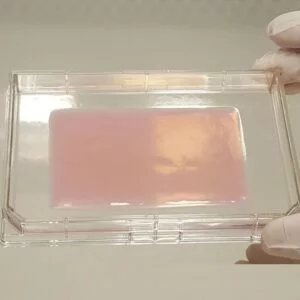
Full-thickness autologous skin tissue. Image Credit: Scintica Instrumentation Inc
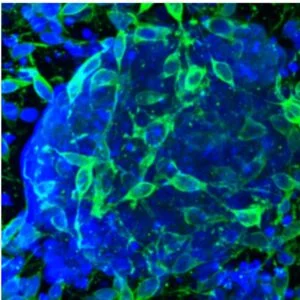
Mouse Neuronal Spheroid Model. Image Credit: Scintica Instrumentation Inc
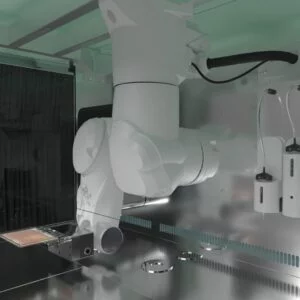
Inside NGB-R Multimodal 4D Bioprinting Platform. Image Credit: Scintica Instrumentation Inc
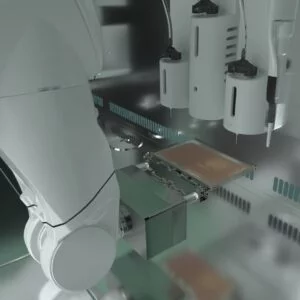
Inside NGB-R Multimodal 4D Bioprinting Platform. Image Credit: Scintica Instrumentation Inc
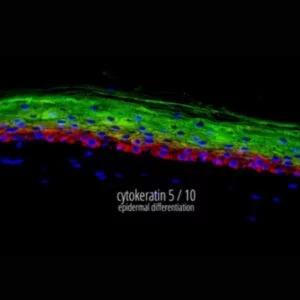
Poieskin™- Skin tissue immunostaining. Image Credit: Scintica Instrumentation Inc
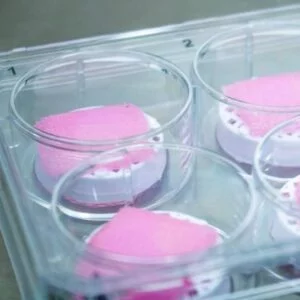
Scale-up bioprinting of 3D tissues on a multi well-plate. Image Credit: Scintica Instrumentation Inc
Poeitis NGB-R - 4D Bioprinter
Video Credit: Scintica Instrumentation Inc
Poieskin Workflow I Poeitis NGB-R 4D Bioprinter
Video Credit: Scintica Instrumentation Inc
Bioprinting applications
Regenerative medicine - Advanced therapies
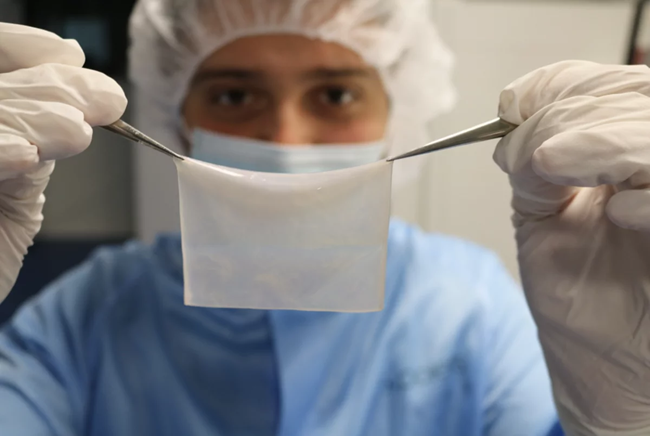
Image Credit: Scintica Instrumentation Inc
Regenerative medicine is an expanding discipline focused on the replacement or regeneration of damaged or diseased cells, tissues, or organs to restore their normal function.
Bioprinting is a method capable of creating tissues and organs with a high level of complexity and reproducibility. The semi- to fully automated NGB-R bioprinter assists in overcoming the existing challenges associated with scaling up the manufacturing of tissues that meet standard quality for human use.
Drug discovery and therapeutic testing
3D bioprinted human tissues can fill the void in the evaluation of therapeutics transitioning from preclinical animal studies to human trials. Using bioprinted tissue models can facilitate high-throughput drug screening.
Disease modeling
3D bioprinting can be utilized to create in vitro three-dimensional disease models that replicate the structural and spatial characteristics of the disease environment. This technology can be employed to investigate the mechanisms of the disease and evaluate therapeutics.
Aesthetic medicine and cosmetic testing
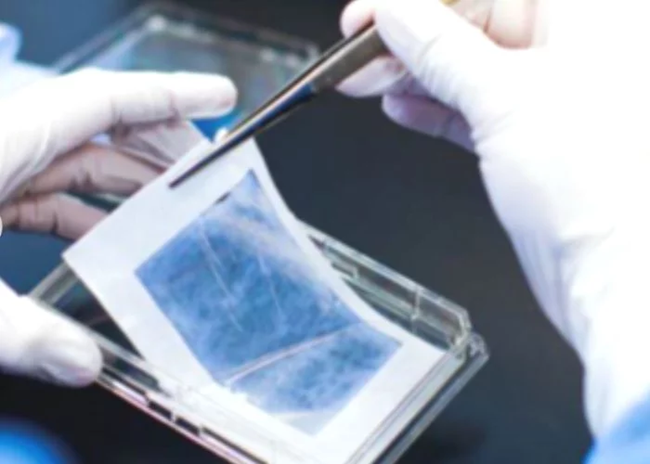
Image Credit: Scintica Instrumentation Inc
Following the prohibition of animal testing for beauty products, there is an increasing demand for alternative live tissue models. Research indicates that 3D bioprinted tissues may be used as a substitute to animal models for testing cosmetic products.
Tissues created through 3D bioprinting using human cells present more ethical and pertinent choices for the validation of aesthetic products.