The Indus Rodent Surgical Monitor is a sophisticated, all-in-one solution for surgical warming and vital signs monitoring tailored for preclinical research involving mice, rats, and other small animals.
This system delivers comprehensive, real-time data regarding the body temperature, ECG, heart rate, blood pressure, and respiration of the subjects. It features intelligent zone heating, operates with ultra-low noise, includes high-resolution ECG electronics, utilizes noninvasive electrodes, and provides a port for external needle electrodes for when subjects cannot be positioned in a prone or supine manner.
Standard setup consists of three components:
- Touchscreen Display Unit
- Heated Surgical Platform
- Temperature Probe
Optional components:
- Pressure Adapter Cable and Pressure Catheter
- External Needle Electrodes
- Pulse Oximetry Thigh Clip
Temperature
Core body temperature is assessed using a rectal probe and is controlled through the Heated Surgical Platform.
ECG
High-resolution multi-lead ECG is obtained using noninvasive paw or subcutaneous needle electrodes.
Heart rate
Heart rates ranging from 60 to 999 bpm are automatically computed based on the R peaks of the ECG signal.
Respiration
Accurately titrate anesthesia according to the respiration rate, which is assessed through electrical impedance.
Pressure
Assess the arterial and ventricular pressure with high fidelity in mice and rats by using a solid-state pressure catheter.
SpO2
Assess arterial blood oxygen levels non-invasively in mice and rats with a thigh clip sensor.
Features and benefits
Real time monitoring
Well-defined numeric panels and measurement waveforms enable the monitoring of essential parameters.
Versatile
Three sets of electrodes facilitate the handling of small mice, large rats, and various small animals in between.
Ultra-low signal noise
The improved design reduces interference, ensuring that the physiological data users receive is clean and accurate, enabling users to trust information acquired.
Easy documentation
A single image can capture animal ID, vital signs, study ID, researcher, date, time, and all filter settings.
Standalone data collection
Collect data, provide remarks, and access recordings on the tablet to swiftly obtain measurements and confirm experiment specifics.
Electrically isolated bio-amplifiers
Prevents interference and distortion of artifacts, facilitating the acquisition of clear, high-fidelity signals.
Seamless data export
Seamlessly connects with external software to provide enhanced analytics and optimized workflows.
Customizable presets
Establish ideal study conditions and maintain uniformity across subjects and collaborating laboratories.
Flexible
Expansion modules allow users to easily add functionality later as lab and study needs change.
Consistent thermal regulation
Built-in heating ensures temperature stability for the experimental animals, boosting reproducibility.
Electrically isolated bio-amplifiers
Prevents cross-talk and artifact distortion, enabling clear, high-fidelity signal acquisition.
Model parts and specifications
Touchscreen display unit
Customizable and transparent waveforms, along with numeric displays, offer insights for monitoring the physiological condition of subjects.
The system includes features for recording, playback, and exporting, facilitating easy data collection.
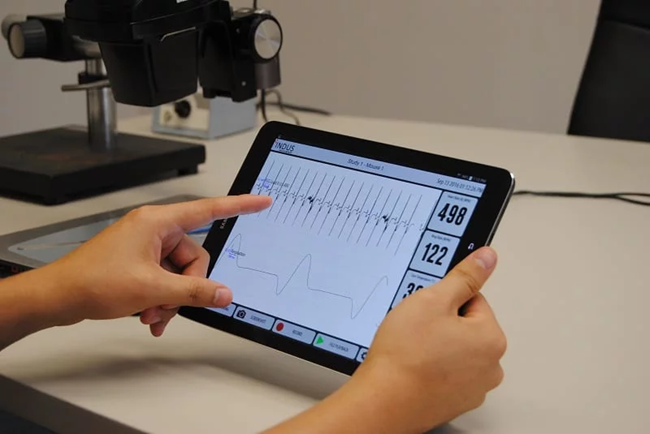
Image Credit: Scintica Instrumentation Inc
Source: Scintica Instrumentation Inc
| . |
. |
| Content |
High Resolution Color Display with Capacitive Touch |
| Size & Resolution |
12.7 inches; 1840 x 2944 pixels |
| Storage Capacity |
128 GB of Data Storage |
| Power Supply |
Universal Adapter (100-240 VAC) |
| Connection to the Heated Surgical Platform |
Wireless or optional USB-C |
Physiologic measurements
Source: Scintica Instrumentation Inc
| Range |
Measurement |
| Heart Rate (Lead I, II, II) |
30-960 BPM |
| Respiration Rate |
15-300 BrPM |
| Core Temperature |
25 - 50 °C |
| Pad Temperature |
25.0 - 43.5 °C |
| R-R Interval (Lead I, II, III) |
60 - 1000 ms |
| SpO2 * |
80 - 100 % |
| Pressure ** |
-50 - 300 mmHg |
| Waveform Display Options |
| ECG Lead I, II, III |
| ECG Lead aVL, aVR, aVF |
| Respiration |
| Respiration (from ECG) |
| Pulse Plethysmogram * |
| Pressure ** |
Heated surgical platform
Configurable and clear waveforms, along with numeric panels, offer information for monitoring the physiological status of subjects. Functions for recording, playback, and export to facilitate easy data collection included.
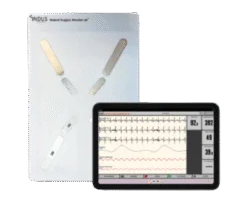
Image Credit: Scintica Instrumentation Inc
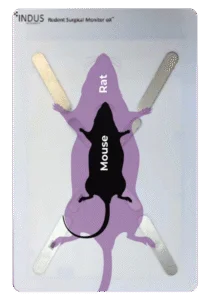
Image Credit: Scintica Instrumentation Inc
Source: Scintica Instrumentation Inc
| . |
. |
| Dimensions |
7.6 x 11.6 x 0.75 inches |
| Weight |
1.94 pounds |
| Heater Type |
Responsive with Multiple Zone Control |
| Heater Uniformity |
< 0.5 °C Across Active Area |
| Startup Time |
< 2 minutes from room temperature |
| Heater Set Temperature |
Adjustable, 25.0 - 43.5 °C by 0.1 °C |
| Power Supply |
Universal Adapter (100-240 VAC) |
| Noninvasive Electrodes |
Two sets of limb ECG contact electrodes; inner set for mouse, outer for rats or subjects of similar size |
| Optional External Electrodes |
3.5 mm 4-pole audio jack to four 13mm stainless steel needle electrodes |
Temperature probe
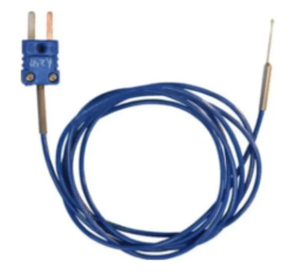
Image Credit: Scintica Instrumentation Inc
Each Rodent Surgical Monitor+ comes with one rectal temperature probe. Customers have the option to choose from probes designed specifically for neonatal mice, adult mice, or rats.
The sensor of the temperature probe is a Copper-Constantan Thermocouple, situated at the probe's tip. The temperature measurement and accuracy are within +/–0.1 °C.
RSM oX model
Additional oxygen saturation capabilities
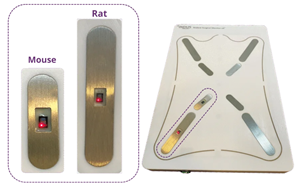
Image Credit: Scintica Instrumentation Inc
Patent-pending technology – Integrated PulseOx sensors are seamlessly incorporated into the platform through the embedded stainless-steel electrode.
Reduce noise and variability – Eliminate concerns regarding improper sensor placement, interference from fur during measurement, and noise caused by respiration or cable movement.
Optimal and stable measurement – Achieve reproducible measurements from a consistent location.
Optional accessories
Pressure Catheter Option
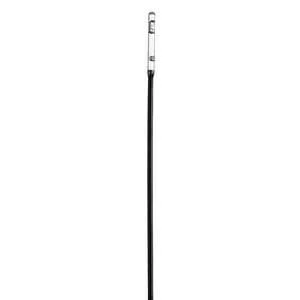
Image Credit: Scintica Instrumentation Inc
The Pressure Catheter Option encompasses a software and firmware upgrade, in addition to a catheter connection cable. When linked to an Indus pressure catheter, it is possible to conduct measurements of arterial and ventricular pressures.
This feature introduces an additional real-time continuous data stream to the Rodent Surgical Monitor+. The Indus high fidelity rodent pressure catheters are specifically engineered for application with mice and rats. These catheters are equipped with solid state sensors located at the tip, which measure pressures with exceptional precision.
The catheters are particularly suitable for arterial, venous, or ventricular pressures due to the solid state sensor’s capability to accurately detect minute and rapid fluctuations in pressure.
Pressure catheter specifications
Source: Scintica Instrumentation Inc
| . |
. |
| Available Sizes |
1.2 F and 1.6 F |
| Sensor Type |
Solid state sensor, mounted at the tip of the catheter; pressure membrane recessed for protection |
| Catheter Material |
Polymide tubing, providing balance of flexibility and rigidity |
| Pressure Resolution |
10 uV/mmHg; higher than the industry standard |
Pressure amplifier specifications
Source: Scintica Instrumentation Inc
| . |
. |
| Input Pressure Range |
-50 - 300 mmHg |
| High Pass Filter Settings |
None |
| Low Pass Filter Settings |
Can be set to Off, 30 Hz, 100 Hz, 200 Hz, 500 Hz, or 1000 Hz |
| Notch Filter Settings |
Can be set to Off, 50 Hz, or 60 Hz |
| Calibration |
Allows zero calibration and a high-point calibration |
Pulse Oximetery Option
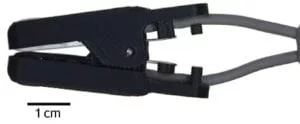
Image Credit: Scintica Instrumentation Inc
The Pulse Oximeter Option includes software and firmware updates, as well as a sensor clip. This feature allows users to monitor arterial blood oxygenation without using intrusive techniques. This adds a real-time continuous data stream to the Rodent Surgical Monitor+, giving useful information on anesthetic depth and ventilation efficacy.
Pulse oximetry has been required in hospital care for over a decade; the preclinical research community has taken note, and current NIH guidelines frequently recommend monitoring pulse oximetry throughout surgery and postoperative care to ensure proper anesthesia delivery and ventilation.
Cable specifications
Scintica Instrumentation Inc
| . |
. |
| Pulse Rate Range |
200-999 BPM |
| Pulse Rate Resolution |
1 BPM |
| SpO2 Range |
80 - 100 % |
| SpO2 Resolution |
1 % |
| Connector |
Built-In Connector |
| Available Sensors |
Thigh Clip (Mouse & Rat) |
4 or 8 Channel Analog Output Cable
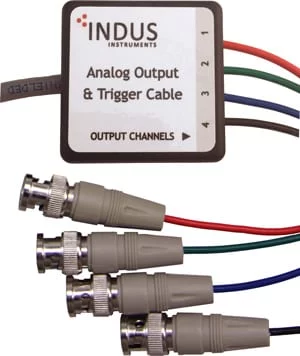
Image Credit: Scintica Instrumentation Inc
The 4 or 8 Channel Analog Output Cable allows users to obtain raw data from the Rodent Surgical Monitor+ in real time using nearly any data gathering system. The system has four or eight output channels, each of which may be configured for best data output.
The cable can also be used as an R-trigger for ultrasound imaging systems, a TTL trigger for high-speed twin camera image capture systems, and to send data to a variety of data collection systems. Each channel may be customized with its own filtering options.
Available signal outputs
Source: Scintica Instrumentation Inc
| . |
. |
| ECG Lead I, II, III |
ECG Lead II Trigger |
| Respiration Waveform |
Core Temperature |
| Pad Temperature |
Pulse Plethysmography (IR) |
| Pulse Plethysmography (R) |
Pressure |
Analog output specifications
Source: Scintica Instrumentation Inc
| . |
. |
| BNC Outputs |
4 or 8 Channels |
| Sample Rate |
4 kHz |
| DAC Resolution |
14-bit |
| Output Impedance |
75 ohms typical |
| Output Voltage |
± 5 V |
| Maximum Output Current |
30 mA short circuit current |
| Slew Rates |
1.8 V per microsecond |
| Settling Time |
5 µs typical |
| Linearity Error |
± 1 LSB |
| High Pass Filtering |
Can be set to Off, 0.2 Hz, 0.5 Hz, 1 Hz, 2 Hz, 5 Hz, or 10 Hz |
| Low Pass Filtering |
Can be set to Off, 1 Hz, 2 Hz, 5 Hz, 10 Hz, 20 Hz, 30 Hz, 100 Hz, 200 Hz, 500 Hz, or 1000 Hz. There is also a 2000 Hz hardware filter setting |
| Notch Filtering |
This filter suppresses cyclic 50 Hz or 60 Hz AC power line noise that can interfere with the instrumentation. |