Sponsored Content by BenchlingReviewed by Ify IsiborJul 14 2026
Therapeutic antibodies, also referred to as large molecules or biologics, rank among the most successful pharmaceutical products available today. These protein structures, shaped like a Y, attach to precise molecular targets, combating disease activity in a manner akin to the body's inherent defense against disease-causing agents such as bacteria, viruses, and toxins. The exceptional specificity of antibody discovery therapies, coupled with their capacity to offer significant advantages, renders these drugs highly efficacious.
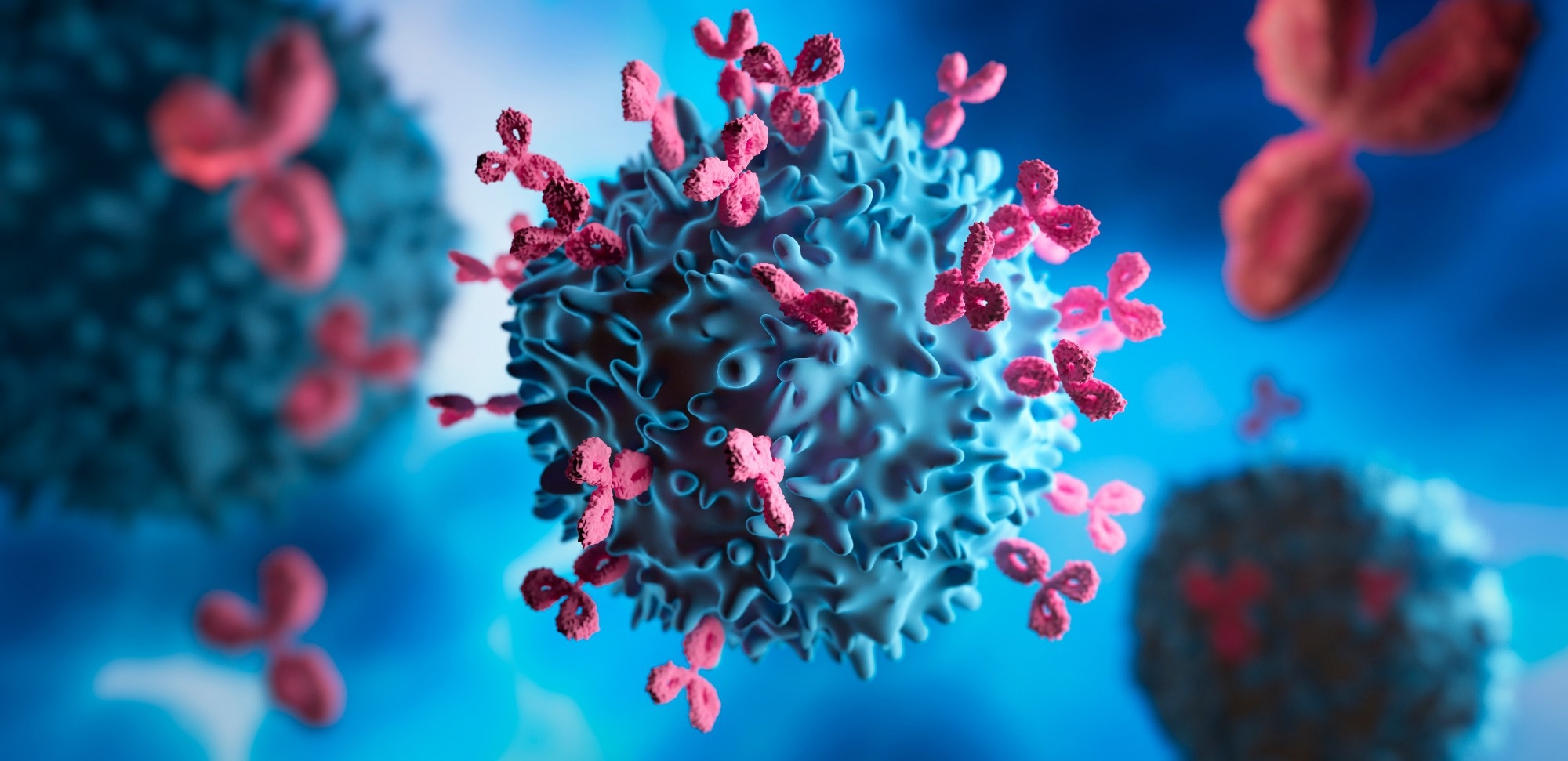
Image Credit:Shutterstock.com/peterschreiber.media
The foundational achievement in contemporary antibody therapeutics was the development of monoclonal antibodies in 1975 by Georges Köhler and César Milstein. Monoclonal antibodies are released by B cells and are designed to bind to a specific target or antigen.
In 1986, the FDA approved muromonab-CD3 (Orthoclone OKT3), the inaugural monoclonal antibody therapy, for the treatment of acute transplant rejection. However, due to muromonab-CD3 being generated in mice, the intervention provoked undesirable immunogenic responses in human recipients.
Since that time, antibody therapies have become both safer and more effective. For instance, humanized antibodies are adapted to individual disease progression and are more tolerable owing to their diminished immunogenicity.
Recombinant antibodies are instead produced in a laboratory environment rather than an animal, enhancing consistency, expandability, and design. Bispecific antibodies, a type of recombinant antibody, can bind to two targets simultaneously, potentially leading to improved therapeutic results.
Therapeutic antibodies function through diverse mechanisms. In managing cancer, for example, antibodies can aid in eliminating malignant cells or in flagging them for destruction by the immune system.
In autoimmune conditions, antibodies are employed to suppress aberrant immune system activity. Antibodies are also being used to address Alzheimer’s Disease by clearing toxic protein aggregates and reducing inflammation, thereby slowing cognitive decline.
The market for antibody discovery therapies is currently valued at over $250 billion, with projections indicating it will surpass $850 billion globally by 2032. Notwithstanding swift progress and market expansion, antibody discovery remains highly complex and challenging.
About Benchling
Benchling makes biotech research and development faster and more collaborative. Biotechnology has the potential to solve humanity’s most pressing challenges, such as disease, renewable energy, clean water, and hunger. The brightest minds are working on these problems but they are equipped with archaic tools. We aspire to fix this and increase the rate of scientific output with a web-based platform that allows researchers to design and run experiments, analyze data, and share results.
Hundreds of thousands of scientists all around the world use Benchling to do research. Whether they are at the world’s largest companies, the top research universities, or working on a startup in a garage, scientists use Benchling for the same reason: to be empowered, not encumbered, by their tools.
Sponsored Content Policy: News-Medical.net publishes articles and related content that may be derived from sources where we have existing commercial relationships, provided such content adds value to the core editorial ethos of News-Medical.net, which is to educate and inform site visitors interested in medical research, science, medical devices and treatments.