Sponsored Content by ServomexReviewed by Olivia FrostNov 9 2026
The manufacturing of prescription drugs, non-prescription drugs, and anesthetics is typically completed in several phases across different plant types.
Image Credit: berindo/Shutterstock.com
Pharmaceutical companies tend to classify plants where drugs are manufactured as ‘pharmaceutical plants’ and plants where specialty chemicals are prepared for use in pharmaceutical plants’ end products as ‘chemical plants’.
Many gas analysis applications can be found in pharmaceutical plants and specialty chemical plants.
Specialty chemicals contain several mixed ingredients, including solvents and powder, that are manufactured in a sealed tank reactor with a mixer via a batch process. Tank materials include stainless steel, glass-lined, and Hastelloy C due to the ingredients within the reactor often comprising highly corrosive compounds mixed with solvents.
The vapors that occupy the headspace between the top of the reactor and the liquid level are also highly flammable, requiring the use of a nitrogen purge to ensure the mixture of air and solvent vapors is maintained well below flammable levels.
The purge is typically intermittent following an initial fast purge of the vessel, typically repeated when the oxygen concentration reaches between 3% and 5%. This purging remains active until the concentration drops back to safe levels. Maintaining the oxygen concentration at low percentage levels ensures the process is operating safely.
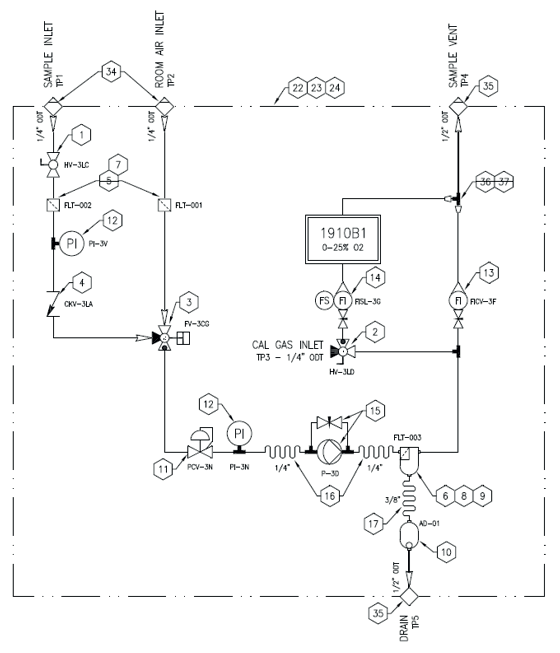
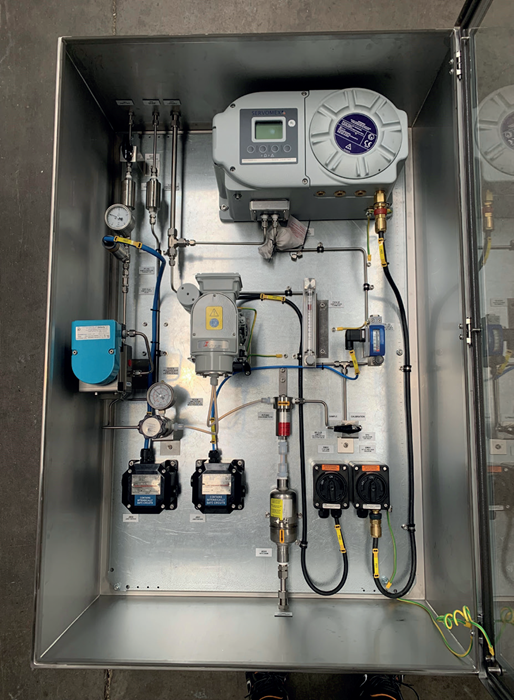
Typical Inerting Sampling System in Cabinet. Image Credit: Servomex
SERVOTOUGH Oxy 1900. Image Credit: Servomex
Vessel and centrifuge inerting applications
There is a risk of explosion within reaction vessels and centrifuges because there may be flammable solvent vapors present alongside potential ignition sources, for example, metal-on-metal sparking, static discharge, or hot spots resulting from mechanical wear.
Nitrogen is introduced to displace oxygen and generate a non-explosive atmosphere prior to the addition of solvents to ensure safe operation.
This can be checked with a portable analyzer before start-up, but exhaust gas is often monitored via fixed, continuous measurement analyzers because worn seals may result in air being drawn into a centrifuge or reactor while it is running. These units are typically hazardous area rated, for example, Class I Div 2 or ATEX Category 3.
Reliability and minimal false trips are key because false trips from an analyzer generally result in a centrifuge being stopped and flooded with nitrogen. It is rarely possible to restart this process once it has been stopped, meaning it will be necessary to manually remove the product inside. This is a highly undesirable task because it generally involves toxic, carcinogenic, and flammable solvent mixed with concentrated active pharmaceutical ingredients.
The analyzer must be compatible with the chemicals being used. For instance, a significant number of electrochemical sensors are poisoned by solvents, and there is a risk of changing background composition impacting thermal-conductivity-based analyzers.
Analyzers using paramagnetic cells (for example, the Servomex SERVOTOUGH Oxy 1900) are typically not significantly impacted by background gases. They can also be specified as solvent resistant because they are produced with inert materials and contain no epoxy.
A lower specification unit such as the Servomex SERVOTOUGH Oxy 1810 or SERVOPRO MultiExact 4100 may be specified where reactors are inerted to prevent oxidation for quality reasons rather than for safety purposes.
Similar applications also measure O2 in vent gas. Vent gas is primarily comprised of nitrogen, but some applications’ off-gas can contain high concentrations of hydrogen and hydrogen chloride; for example, the production of glucagon-like peptide 1 (GLP-1) medicines used for weight management and the treatment of type 2 diabetes.
Oxygen content is measured for both safety and process control in these settings, and it may be necessary for the analyzer system to be compatible with Safety Integrity Level (SIL) 2 installations, depending on the site’s functional safety requirements.
The analyzer panel may be fitted in a washdown area where water jets spray the panel occasionally. An IP66-rated analyzer (such as the Oxy 1900) or a suitable enclosure is required in this instance.
The Servomex solution
The SERVOTOUGH Oxy 1900 and its accompanying sample system are ideally suited to monitoring oxygen levels in reactors.
The Oxy 1900 analyzer features a non-depleting, fail-safe paramagnetic measuring cell, which is largely unaffected by changes in background gases and provides a rapid response, generally under six seconds.
The analyzer also features a solvent-resistant cell, which is not contaminated by solvent-laden samples. It is also extremely stable, only requiring calibration once every three months under normal operating conditions.
The Oxy 1900 can be utilized in areas classified as European ATEX / IECEx Ex II 2GD and US Class I, Division 1 (gas and dust hazards) without the use of a purge. It can also be validated and calibrated without requiring a ‘hot work permit’.
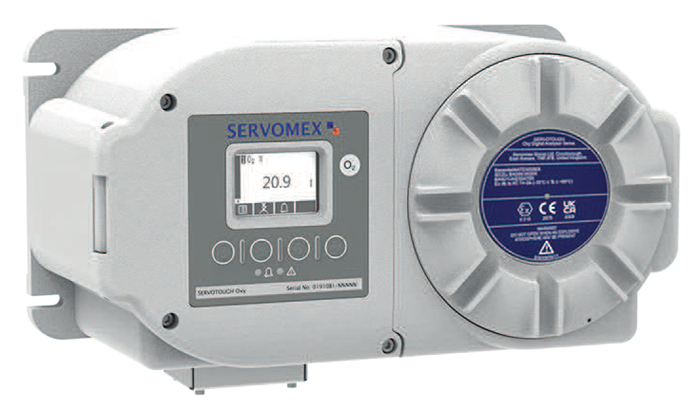
SERVOTOUGH Oxy 1900. Image Credit: Servomex
The Oxy 1900 boasts a robust IP66/NEMA 4X enclosure designed to protect the analyzer’s electronics from corrosive and/or dusty atmospheres. It also includes dry low-voltage contacts that can be employed as concentration alarms.
A PLC initiates the nitrogen purge when customer-programmed high oxygen concentration levels are reached, maintaining this until the oxygen concentration returns to safe levels. Activating the purge only when oxygen levels rise helps ensure safe operation while also lowering nitrogen consumption.
The key advantage of the Oxy 1900 over analyzers utilizing electrochemical sensors is that its measuring cell does not require programmed replacement due to its non-depleting technology. The analyzer’s 4 to 20 mA and fault alarm contact outputs can be configured to indicate a sensor fault in the event of a measuring-cell failure.
This failsafe feature ensures confidence that the cell is operating correctly. Its principle of operation means that electrochemical cells only produce a signal in the presence of O2. If no signal is produced, this can mean:
- The reactor is sufficiently purged, and there is no O2 present in the sample
- The cell has failed, potentially causing the operator to believe they are operating safely when they are not
The sample system must be designed to handle widely encountered aggressive components such as hydrochloric acid. It is generally manufactured from PTFE (Teflon) or Hastelloy C components to ensure reliable long-term operation with minimal downtime.
Reactors working with high levels of pharmaceutical powders may necessitate the use of a system with a sintered Hastelloy C probe alongside on-line nitrogen blowback to prevent probe clogging.
The system is offered in a NEMA 4X stainless steel or fiberglass enclosure with a corrosive gas purge to keep the enclosure free of potentially corrosive gases that may be present in the atmosphere.
EN 10204:2004 certificate 3.1 material traceability is a specific reactor purging requirement in pharmaceutical settings.
Anything that touches (or could potentially touch) the active pharmaceutical ingredient (API) may require full material traceability documentation, allowing the pharmaceutical company to confirm what has been in contact with the API in the event of an issue.
It is important to note that Servomex generally only provides material traceability for the sample wetted parts.
IQ / OQ / PQ requirements in pharmaceutical manufacturing
Most pharmaceutical applications require specific quality documentation to provide a clear, GMP-aligned overview of installation qualification (IQ), operational qualification (OQ), and performance qualification (PQ). These will typically include industry-specific expectations placed on equipment and analytical instrumentation.
Regulatory context
Pharmaceutical manufacturers must demonstrate that equipment utilized in GMP processes operates consistently, is fit for intended use, and remains in a state of control. IQ, OQ, and PQ form part of a lifecycle-based validation approach aligned with:
- FDA 21 CFR Part 211 (and Part 11 where computer-based systems apply)
- EU GMP Annex 15 (Qualification and Validation)
- Relevant pharmacopeia and data integrity expectations
Installation qualification (IQ)
IQ aims to confirm and document that equipment is correctly installed in line with manufacturer specifications, site requirements, and approved drawings.
Typical IQ activities include:
- Verification of correct installation location and environment, for example, utilities, humidity, and temperature
- Confirmation of correct gas/sample connections, power supply, and materials
- Verification of equipment configuration in line with approved design documents
- Recording of serial numbers, software, and firmware versions
- Availability of manuals and related certificates and validation documentation
- Verification of ancillary systems, for example, sample conditioning, heaters, and interfaces
- Confirmation of the calibration status of tools utilized during installation
This process will result in the generation of an approved IQ protocol and report that demonstrates that the system is ready for operational testing.
Operational qualification (OQ)
OQ aims to show that the equipment meets the user requirements specification (URS) and functions as intended across defined operating ranges.
Typical OQ activities include:
- Functional testing of measurement performance, including repeatability, accuracy, and response time
- Verification of heaters, temperature control, and operating setpoints
- Testing of alarms, safety functions, and interlocks
- Verification of software functionality, including configurations, user access, and data handling
- Execution of predefined test cases with defined and documented pass/fail criteria
This process results in the generation of an approved OQ protocol and report verifying that the system functions correctly prior to routine use.
Performance qualification (PQ)
PQ aims to confirm that the equipment performs reproducibly and reliably under genuine process conditions during routine GMP operation.
Typical PQ activities include:
- Demonstration of long-term repeatability and stability
- Operation using real production conditions or process streams
- Assessment of environmental influences and day-to-day variation
- Verifying the effectiveness of SOPs, maintenance, and calibration regimes
- Trending or statistical review where appropriate
This process results in the generation of an approved PQ report that confirms the system is suitable for ongoing GMP production use.
Lifecycle expectations
IQ/OQ/PQ must be part of a continuous lifecycle as opposed to a one-time exercise. It is important that equipment remains in a qualified state via calibration, maintenance, and change control. There may be a need for requalification following component replacement, repairs, or software/firmware changes, however.
IQ confirms correct installation, OQ confirms correct operation, while PQ confirms sustained performance in real pharmaceutical production.
Servomex is highly familiar with this documentation and can supply this as part of its analytical solution.
The company can offer suitable solutions for several other applications found on pharmaceutical sites, beyond the widely encountered inerting applications.
Nitrogen and oxygen production applications
Nitrogen is typically produced on-site via a PSA, VSA, or membrane plant. It can also be supplied as liquid and stored in tanks.
It is then analyzed for oxygen content to control the gas production plant or ensure the correct gas quality has been delivered from the supplier. This measurement is critical because the safety of every downstream process is put at risk if oxygen content is too high.
Additional oxygen is supplied for some reactions or biological processes. The purity of this oxygen must be measured, as variation could impact reaction rate, yield, and final product quality.
These gases may be controlled as ‘medical gases’ because they are used in a pharmaceutical plant, meaning they will need to meet the requirements of the US or European Pharmacopoeia.
The Servomex SERVOPRO MultiExact 4100 and SERVOPRO MonoExact DF310E instruments are supplied with Pharmacopoeia statements of compliance and are suitable for measuring oxygen purity and trace oxygen in nitrogen. These analyzers can also be combined with a suitable sampling system and software in order to produce ‘certificates of analysis’ for batches of gas.
Inerting applications in granulating and coating machines
Granulating and coating machines are at risk of explosion due to the presence of solvent vapors, so they are inerted with nitrogen in the same way as centrifuges. These systems benefit from a rapid response to increased oxygen levels in case of alarm conditions, and rapid recovery from air points to cut down time prior to using the unit following loading or maintenance.
These units are often located in hazardous areas, meaning they must be low maintenance, explosion-proof, and ideally able to be calibrated without a ‘hot work’ permit. The Servomex SERVOTOUGH Oxy 1900 meets these requirements.
Reactor and bioreactor monitoring applications
Biological reactors and fermenters can be monitored by analyzing the amount of O2, CO2, CH4, and sometimes methanol (CH3OH), present in the reactor headspace. Tracking gases allows conditions to be optimized, providing early warning of problems, for instance, the production of undesirable alcohol that poisons microorganisms.
The MultiExact 4100 is widely used for these applications due to its ability to measure a range of gases in a single analyzer.
Duct inerting, oxidizer control, and emissions applications
Waste gases from reactors, centrifuges, and coating machines are removed in order to reduce solvent emissions. This is commonly achieved via ducts that travel around a production plant. These ducts are purged with nitrogen gas or, less commonly, diluted with high volumes of air for safety purposes.
Three approaches can be taken to achieve nitrogen safety purging:
- Purge to zero O2 before adding N2 to maintain positive pressure
- Purge to zero O2 before adding N2 at fixed flow based on volume
- Continuously measure O2, only adding extra N2 as required
Methods a) and b) are straightforward but waste N2, while method c) successfully balances safety and efficiency. This approach is a variation on the inerting application already outlined, with the Oxy 1900 often utilized for this application.
Incinerator combustion control applications
Waste gases collected from centrifuges must be made safe for release to the atmosphere. Harmful organic vapors must be destroyed; incineration at high temperature is one of the most effective ways to do this.
The incinerator or ‘thermal oxidizer’ will burn the waste solvents using a fuel such as natural gas, either achieving this with or without catalytic assistance.
Oxygen and combustibles are measured in the incinerator to achieve an optimum fuel/air mix. Excess air wastes fuel, while insufficient air signifies incomplete destruction.
It is possible to close-couple these measurements using zirconia and catalytic sensors like the Servomex SERVOTOUGH FluegasExact 2700, where its ability to handle high temperatures between 850 °C and 1300 °C affords this instrument a significant advantage.
The use of TDLS technology, for example, via the Servomex SERVOTOUGH Laser 3 Plus, is also becoming increasingly common in incinerators due to its capacity for non-contact measurements, rapid response time, and reduced maintenance requirements.
Summary
Servomex has been at the forefront of pharmaceutical industry analysis for over 75 years, offering its customers the highest quality products and service.
Its maintenance-free paramagnetic oxygen measurement technology continues to be the standard for rapid, accurate, and safe oxygen measurements in safety applications throughout the pharmaceutical industry.
Servomex solutions
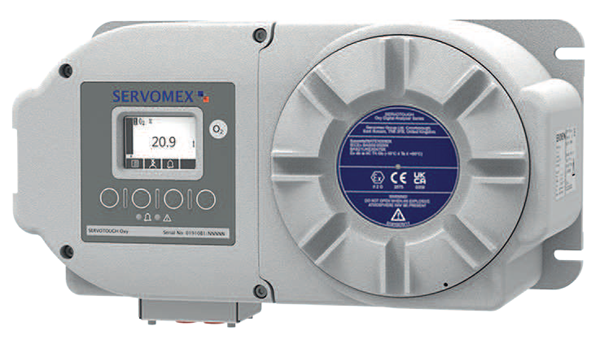
SERVOTOUGH Oxy 1900. Image Credit: Servomex
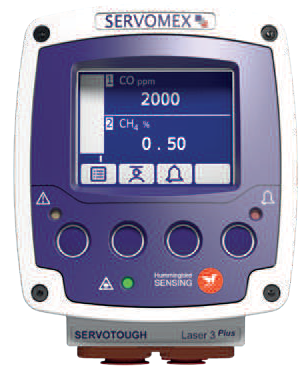
SERVOTOUGH Laser 3 Plus. Image Credit: Servomex
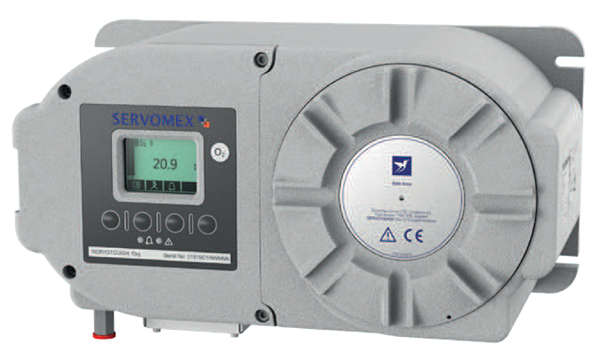
SERVOTOUGH Oxy 1810. Image Credit: Servomex
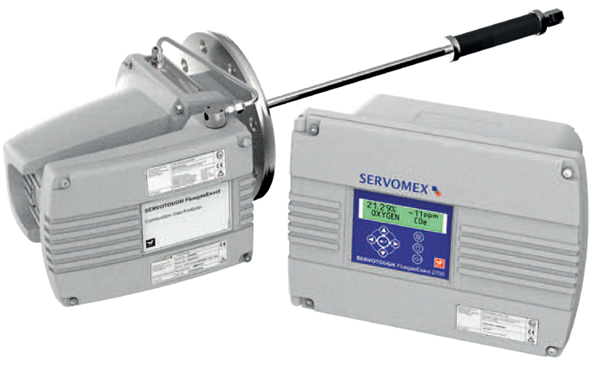
SERVOTOUGH FluegasExact 2700. Image Credit: Servomex
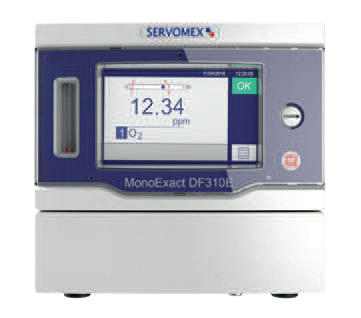
SERVOPRO MonoExact DF310E. Image Credit: Servomex
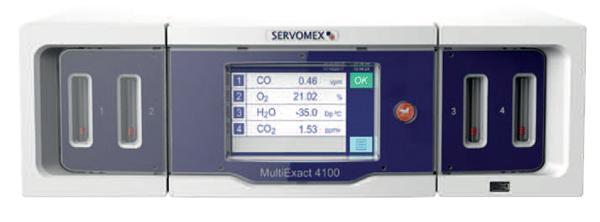
SERVOPRO MultiExact 4100. Image Credit: Servomex
Acknowledgments
Produced from materials originally authored by Servomex.
About Servomex
For more than 70 years, Servomex has been at the forefront of gas analysis innovation, helping customers around the world improve process efficiency, product quality, safety, and regulatory compliance.
As a global leader in gas measurement solutions, Servomex designs, manufactures, and supports a comprehensive range of gas analyzers and sensing technologies for industrial, environmental, semiconductor, healthcare, pharmaceutical, energy, and research applications. The company's portfolio includes solutions for oxygen, moisture, trace impurity, and multi-gas analysis, delivering accurate and reliable measurements even in the most demanding operating conditions.
What sets Servomex apart is its unique combination of technology expertise and sensor manufacturing capability. By developing and producing many of its own core sensing technologies, Servomex maintains complete control over performance, quality, and long-term reliability. This enables customers to benefit from market-leading accuracy, low cost of ownership, and dependable operation throughout the analyzer lifecycle.
Servomex supports customers globally through dedicated engineering, service, and application teams, providing expert guidance from specification and installation through to maintenance, calibration, and long-term operational support.
With a commitment to continuous innovation and customer success, Servomex helps industries worldwide achieve greater productivity, sustainability, and operational confidence through trusted gas analysis solutions.
Servomex is part of Spectris Ltd, the productivity-enhancing instrumentation and controls company. Spectris is a leading supplier of productivity-enhancing instrumentation and controls.
Sponsored Content Policy: News-Medical.net publishes articles and related content that may be derived from sources where we have existing commercial relationships, provided such content adds value to the core editorial ethos of News-Medical.net, which is to educate and inform site visitors interested in medical research, science, medical devices and treatments.