This article and associated images are based on a poster originally authored by Dr. Nellie Chourmouziadi Laleni, Dr. Jessica Watts, Dr. Agatha Rosenthal, Dr. John Stenson, Marta Janczuk-Richter, Eric Ennifar, Dominique Burnouff, and Isabelle Lebars and presented at ELRIG Drug Discovery 2026 in affiliation with Malvern Panalytical and CNRS.
This poster is being hosted on this website in its raw form, without modifications. It has not undergone peer review but has been reviewed to meet AZoNetwork's editorial quality standards. The information contained is for informational purposes only and should not be considered validated by independent peer assessment.

Selecting the right candidate requires understanding both molecular interactions and colloidal and thermal stability.
ITC and GCI provide complementary insights into binding affinity, thermodynamics, and kinetics, while the Zetasizer Core assesses hydrodynamic size, aggregation, and colloidal and thermal stability. Together, these technologies form a powerful biophysical toolkit to select stable, high-quality candidates and identify optimal formulations.
Select
Which candidate has the right properties?
Identify the most promising candidates by combining molecular interaction properties with solution stability.
How fast does it bind and how long for? Grating-coupled interferometry (GCI)
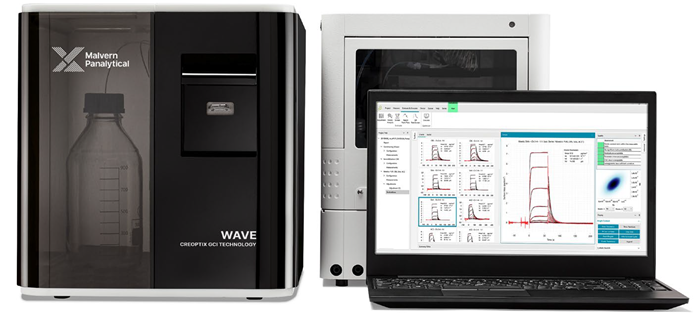
Image Credit: Image courtesy of Dr. Nellie Chourmouziadi Laleni et al., in partnership with ELRIG (UK) Ltd.
- Surface-based technique
- Binding affinity Ka, kinetics kon and koff
The waveRAPID method enabled determination of the binding affinity and on-/off-rate constants using a single concentration
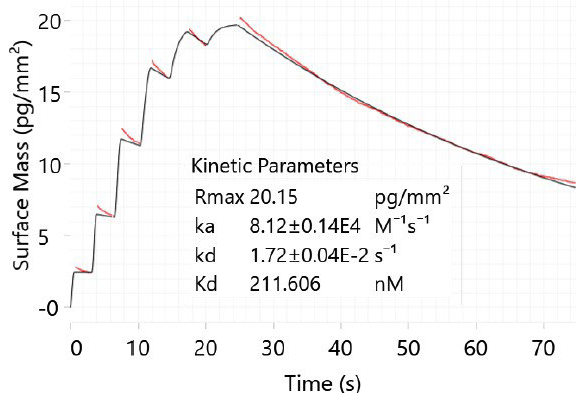
Image Credit: Image courtesy of Dr. Nellie Chourmouziadi Laleni et al., in partnership with ELRIG (UK) Ltd.
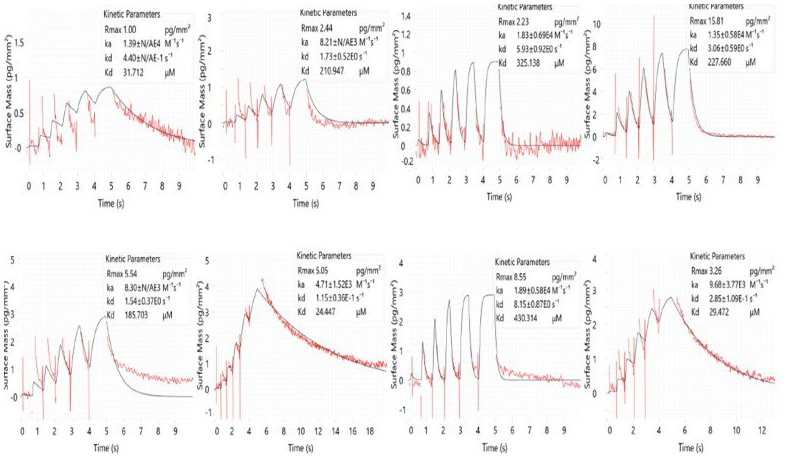
Image Credit: Image courtesy of Dr. Nellie Chourmouziadi Laleni et al., in partnership with ELRIG (UK) Ltd.
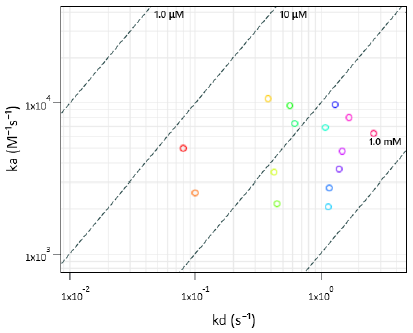
Image Credit: Image courtesy of Dr. Nellie Chourmouziadi Laleni et al., in partnership with ELRIG (UK) Ltd.
How does it bind and how strongly? Isothermal titration calorimetry (ITC)
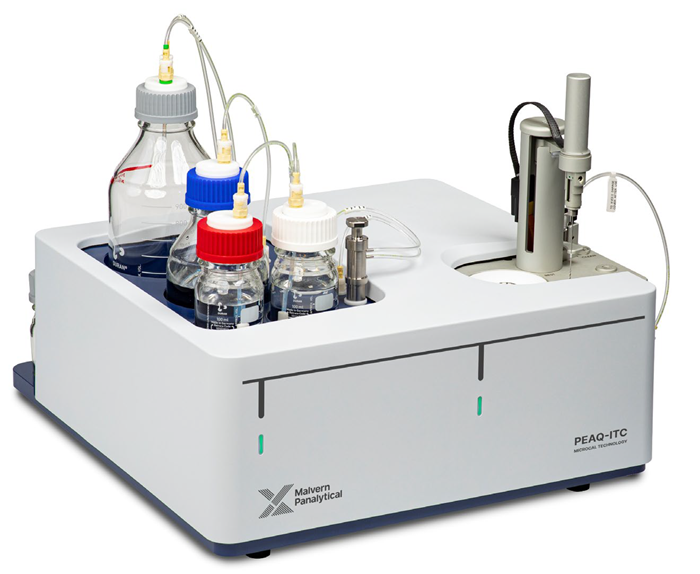
Image Credit: Image courtesy of Dr. Nellie Chourmouziadi Laleni et al., in partnership with ELRIG (UK) Ltd.
- In-solution technique
- Binding affinity Kd
- Thermodynamics ΔH, ΔS
- Stoichiometry N
ITC was used to understand the binding mechanism for structure-based drug design studies.
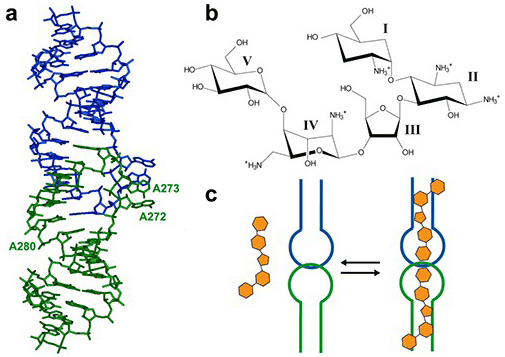
Image Credit: Image courtesy of Dr. Nellie Chourmouziadi Laleni et al., in partnership with ELRIG (UK) Ltd.
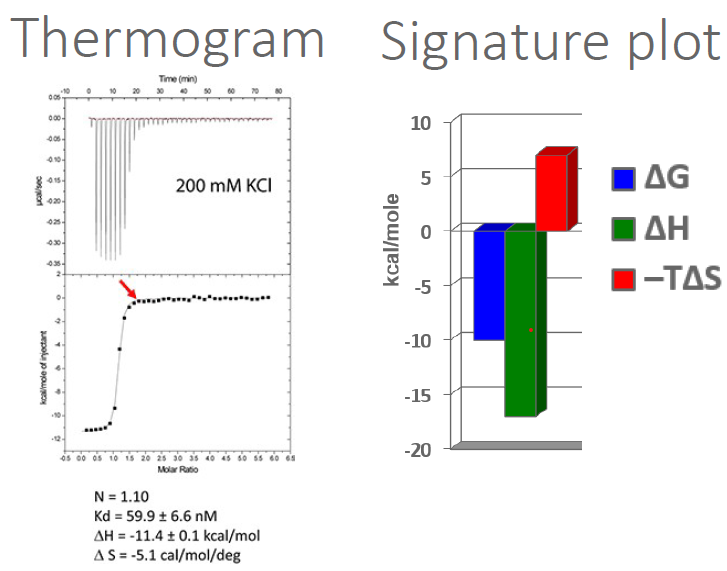
Image Credit: Image courtesy of Dr. Nellie Chourmouziadi Laleni et al., in partnership with ELRIG (UK) Ltd.
Is the candidate stable in solution? Zetasizer Core
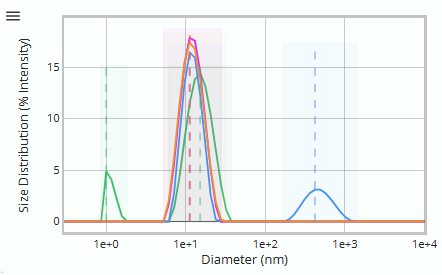
Image Credit: Image courtesy of Dr. Nellie Chourmouziadi Laleni et al., in partnership with ELRIG (UK) Ltd.
DLS was used to identify the formation of aggregates and less stable candidates.
Screen
Which formulation is most stable?
Systematically evaluate formulation conditions to identify those that maintain candidate stability and performance.
Where is the candidate most stable? Zetasizer Core
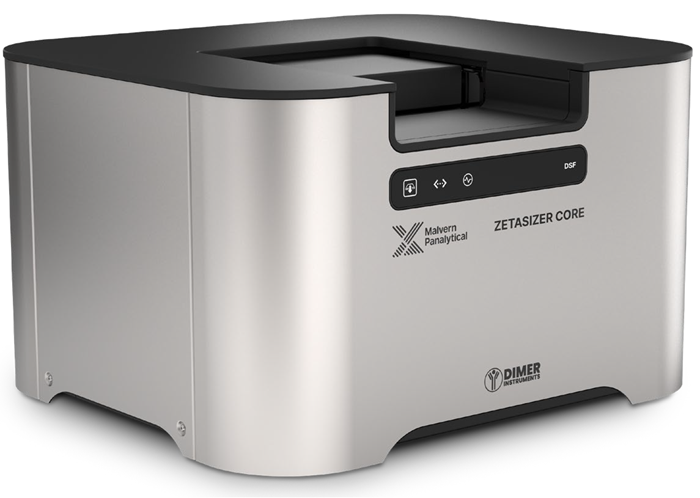
Image Credit: Image courtesy of Dr. Nellie Chourmouziadi Laleni et al., in partnership with ELRIG (UK) Ltd.
- Wellplate-based format
- HT-DLS
- SLS
- DSF
Monitors changes in hydrodynamic size, PI, and aggregation to assess candidate stability across formulation conditions.
Colloidal stability
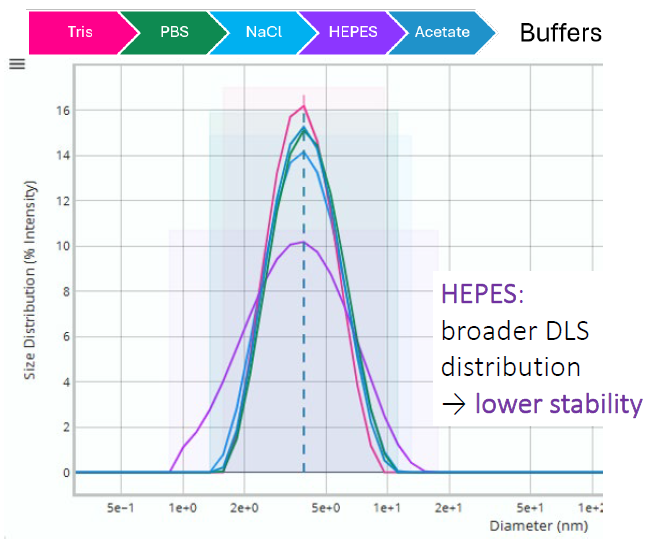
Image Credit: Image courtesy of Dr. Nellie Chourmouziadi Laleni et al., in partnership with ELRIG (UK) Ltd.
Thermal stability
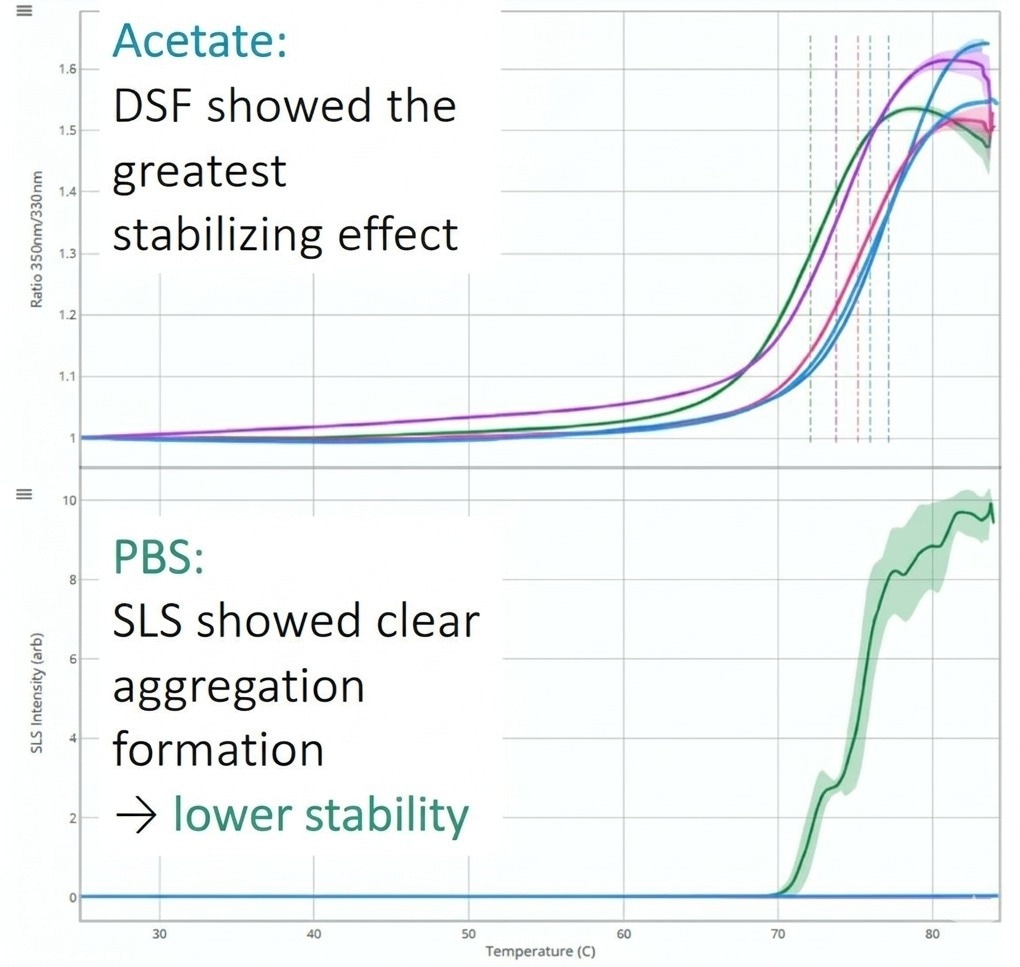
Image Credit: Image courtesy of Dr. Nellie Chourmouziadi Laleni et al., in partnership with ELRIG (UK) Ltd.
One workflow delivers three biophysical perspectives. Understand how the candidate binds and how it behaves.
Optimize
Which conditions support stability?
Confirm the robustness of the selected candidate and formulation under relevant conditions.
How can stability be improved? Zetasizer Core
Track changes in colloidal and thermal stability under stress conditions like acidic pH to support stability assessment for further steps such as process optimization and manufacturing.
Thermal stability
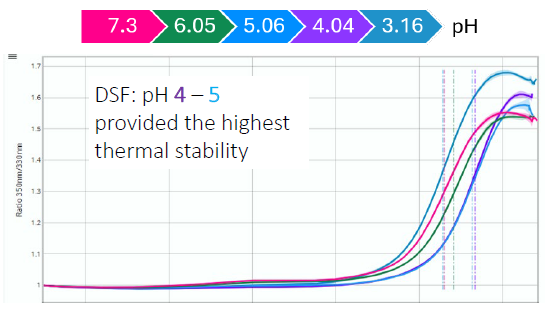
Image Credit: Image courtesy of Dr. Nellie Chourmouziadi Laleni et al., in partnership with ELRIG (UK) Ltd.
Colloidal stability
SLS: no significant aggregation during thermal stress was detected.
What additional insights can be acquired? Differential scanning calorimetry (DSC)
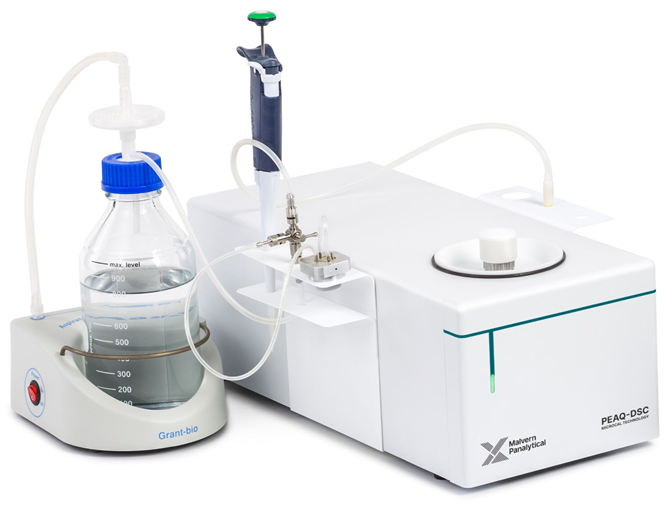
Image Credit: Image courtesy of Dr. Nellie Chourmouziadi Laleni et al., in partnership with ELRIG (UK) Ltd.
- Thermal transition temperature Tm
- Thermodynamics ΔH, ΔCp
- High-order structure HOS
DSF and DSC provide complementary insights into thermal stability and unfolding behavior, helping to optimize formulations and identify conditions that maximize protein stability.
Conclusion
Combining ITC, GCI, Zetasizer Core, DSF, and DSC provides a comprehensive view of molecular interactions, colloidal and thermal stability, helping users select the right candidate, identify the most stable formulation, and confirm a robust lead.
About Malvern Panalytical
Malvern Panalytical, together with Micromeritics Instrument Corporation and SciAps, represents a powerful and highly complementary combination of market-leading technologies. We bring together decades of scientific expertise to deliver advanced analytical solutions that measure the chemical, physical, and structural properties of materials - from proteins and polymers to batteries, catalysts, semiconductors, and minerals.
- Malvern Panalytical specializes in particle characterization, X-ray diffraction (XRD), X-ray fluorescence (XRF), and molecular interaction analysis.
- Micromeritics is a global leader in surface area and porosity analysis, particle characterization, and density measurement solutions.
- SciAps delivers portable, high-performance XRF and Raman analyzers for field-based elemental and materials analysis.
With more than 92,000 systems installed worldwide and operations across North America, Europe, and Asia, our technologies help customers accelerate innovation, optimize processes, and ensure quality across industries including pharmaceuticals, advanced materials, energy storage, chemicals, metals, mining, and environmental science.
As part of Spectris plc, we are committed to sustainability, customer support excellence, and enabling a cleaner, healthier, and more productive world.
About ELRIG (UK) Ltd.
The European Laboratory Research & Innovation Group (ELRIG) is a leading European not-for-profit organization that exists to provide outstanding scientific content to the life science community. The foundation of the organization is based on the use and application of automation, robotics and instrumentation in life science laboratories, but over time, we have evolved to respond to the needs of biopharma by developing scientific programmes that focus on cutting-edge research areas that have the potential to revolutionize drug discovery.
Comprised of a global community of over 12,000 life science professionals, participating in our events, whether it be at one of our scientific conferences or one of our networking meetings, will enable any of our community to exchange information, within disciplines and across academic and biopharmaceutical organizations, on an open access basis, as all our events are free-of-charge to attend!
Our values
Our values are to always ensure the highest quality of content and that content will be made readily accessible to all, and that we will always be an inclusive organization, serving a diverse scientific network. In addition, ELRIG will always be a volunteer led organization, run by and for the life sciences community, on a not-for-profit basis.
Our purpose
ELRIG is a company whose purpose is to bring the life science and drug discovery communities together to learn, share, connect, innovate and collaborate, on an open access basis. We achieve this through the provision of world class conferences, networking events, webinars and digital content.
Sponsored Content Policy: News-Medical.net publishes articles and related content that may be derived from sources where we have existing commercial relationships, provided such content adds value to the core editorial ethos of News-Medical.net, which is to educate and inform site visitors interested in medical research, science, medical devices and treatments.
Last Updated: Oct 12, 2026
 Analytical strategies that support OSD formulation: A new whitepaper from Malvern Instruments