Introduction
The nutritional profile of dairy-identical fats
Do precision-fermented fats support cardiometabolic health?
Less land, less water, fewer emissions
Precision fermentation in modern food design
Research gaps
Conclusions
References
Further reading
Can engineered microbes truly recreate dairy fat while improving sustainability and health outcomes, or does the science still lag behind the innovation?
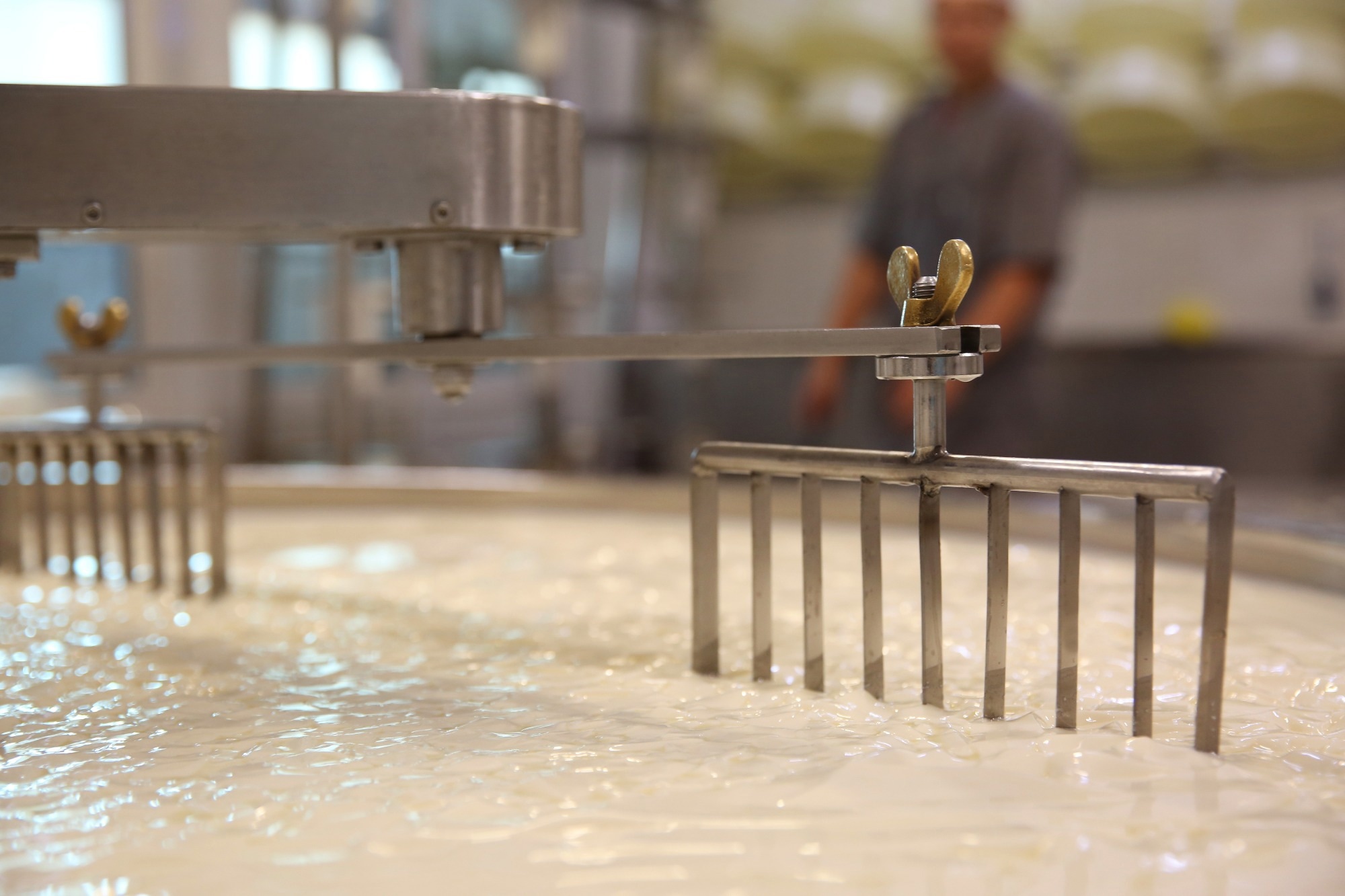 Image Credit: New Africa / Shutterstock.com
Introduction
Precision-fermented, dairy-identical fats are lipids produced using advanced microbial fermentation processes, rather than traditional animal agriculture. During precision fermentation, selected microorganisms, such as yeasts or fungi, are engineered and cultivated to synthesize fats that structurally and functionally resemble those in conventional dairy products.
Precision fermentation is a specialized form of microbial biotransformation in which specific metabolic pathways are optimized to produce targeted food ingredients, including proteins, enzymes, vitamins, and structured lipids.1,2 Precision fermentation enables targeted fat production with high consistency and reduced environmental impact. Unlike conventional food fermentation, precision fermentation often relies on metabolic engineering to express defined biosynthetic pathways, thereby distinguishing it both technologically and under regulatory frameworks.1,2 This article discusses the technology involved in precision fermentation, as well as the nutritional profile, health effects, sustainability benefits, and food applications of fermented fat products.
The nutritional profile of dairy-identical fats
Precision-fermented, dairy-identical fats are designed to closely resemble the fatty-acid architecture of conventional dairy fat while allowing greater control over lipid composition. Engineered yeast and fungi can produce a mix of fats like palmitic, stearic, and oleic acids that are essential components of dairy-like products.
Microbial lipid biosynthesis during fermentation involves coordinated carbohydrate and fatty-acid metabolic pathways, which can be directed to modulate fatty-acid chain length, degree of saturation, and triglyceride assembly.2 Fermentation-driven lipid pathways produce small bioactive lipids and lipid-derived metabolites that contribute to the flavor profile and oxidation stability of these products. Certain microbial processing techniques can also be utilized to adjust the proportion of saturated and unsaturated fatty acids to enhance nutritional quality without affecting sensory characteristics.1,2
Precision-fermented fats retain similar melting, texture, and breakage characteristics to traditional fats, which are largely defined by their triglyceride structure and fatty-acid composition. Fermentation can also reduce or reorganize individual saturated fatty acids without compromising functional performance. Unlike dairy substitutes, which often use coconut or palm oil, precision-fermented fats are more structurally and nutritionally similar to dairy fat.1,2
Fermented foods, including fermented dairy and plant-based alternatives developed through microbial fermentation, have been widely investigated for their potential effects on cardiometabolic health. A systematic review of 68 human studies (14 controlled PICO trials, 37 non-controlled PIO interventions, and 17 observational studies) concluded that evidence linking fermented dairy intake with improvements in blood lipids is neither convincing nor sufficient under EFSA criteria.3 Various intervention trials have reported minor changes in total cholesterol, low-density lipoprotein cholesterol (LDL-C), or LDL-C to high-density lipoprotein (HDL-C) ratios, especially after consumption of yogurt or kefir.
Across controlled trials, most studies reported no statistically significant changes in total cholesterol, LDL-C, HDL-C, or triglycerides, and findings were inconsistent across products and populations. Studies examining the impact of fermented dairy products on insulin sensitivity and fasting glucose are similarly variable, reflecting heterogeneity in study design, duration, comparator selection, and product characterization.3
Fermented foods possess antioxidant properties, with several studies reporting lower levels of inflammatory markers, including C-reactive protein and pro-inflammatory cytokines; however, these findings were secondary outcomes in many trials and were not consistently replicated across populations and products. Importantly, current human evidence relates to conventional fermented dairy products, and no long-term clinical trials have specifically evaluated cardiometabolic outcomes of precision-fermented, dairy-identical fats. More rigorously designed and long-term human studies are required to clarify the magnitude and consistency of these health effects.3
 Image Credit: Unai Huizi Photography / Shutterstock.com
Less land, less water, fewer emissions
Microbial and precision fermentation are associated with sustainability advantages as compared to conventional dairy production. According to current reviews, fermentation-based systems may reduce reliance on livestock-derived inputs and allow ingredient production within controlled bioreactor environments.1,2
Comparatively, fermentation-based production occurs in enclosed stainless-steel bioreactor systems, where engineered microorganisms are cultivated under specific temperature, acidity, oxygenation, and nutrient conditions. While quantitative life-cycle assessments are product-specific and are not comprehensively addressed in the cited reviews, precision fermentation is generally described as requiring fewer land and water inputs than livestock-based systems.1,2
Some fermentation platforms can utilize plant-derived sugars and, in certain cases, food-processing by-products as substrates, supporting resource-efficiency strategies discussed in sustainability-focused reviews.1,2 Collectively, fermentation-based approaches provide a potential pathway toward more sustainable dairy alternatives by reducing the environmental burden of production systems.
Precision fermentation in modern food design
Fermentation-based technologies are widely used in the formulation of diverse food products, particularly dairy alternatives, bakery goods, spreads, and functional foods. Microbial and precision fermentation in dairy alternatives help enhance flavor/texture and nutritional quality, while minimizing the use of additives.
Fermentation in the bakery has historically been used to refine dough, enhance flavor, and extend shelf life. More recently, precision fermentation has been used to enable the targeted production of fats, proteins, enzymes, and other high-value compounds that closely mimic dairy functionality. Spreads and other margarine-like products are similarly produced with fermented lipids and bioactive substances to obtain desired texture and stability characteristics without excessive reliance on tropical saturated vegetable fats.1,2
Advances in metabolic engineering and process optimization further support precision fermentation by enabling strain selection and controlled biosynthesis of specific lipid profiles tailored for food design applications. Regulatory and labeling considerations remain critical to market adoption, as fermented and precision-fermented products must meet food safety standards and comply with novel food approval regulations.1,2
Research gaps
Despite growing interest in fermented and precision-fermented dairy and dairy-alternative products, the long-term health effects of these products in humans remain unclear. To date, most human data have come from short-duration intervention studies and observational studies with heterogeneous designs, limited sample sizes, and inconsistent outcome measures.
Application of EFSA’s health-claim evaluation framework in the systematic review identified limitations in food characterization, bioavailability data, mechanistic plausibility, and safety documentation as major methodological weaknesses. As a result, the overall quality and consistency of the evidence are inadequate to support conclusive health claims, underscoring the need for long-term, well-controlled randomized clinical trials.3
Safety considerations also require further investigation as fermentation technologies diversify. Whereas traditional fermented foods have been consumed for decades, novel fermentation approaches, particularly precision fermentation using engineered microorganisms, may entail different allergenicity, unintended metabolic effects, and long-term exposure considerations.1,2
Addressing these unresolved questions through standardized methodologies and long-term human studies will be critical to clarify health implications and support evidence-based dietary guidance for fermented and precision-fermented foods.1,3
Conclusions
Precision-fermented, dairy-identical fats represent a promising innovation at the intersection of food technology, nutrition, and sustainability. By replicating the structural and functional properties of conventional dairy fats through microbial fermentation, these lipids offer a viable alternative with reduced environmental impact and greater compositional flexibility. However, current human clinical evidence supporting cardiometabolic effects remains limited to conventional fermented dairy products, and direct evidence for precision-fermented fats is currently unavailable.3
References
- Boukid, F., Hassoun, A., Zouari, A., et al. (2023). Fermentation for Designing Innovative Plant-Based Meat and Dairy Alternatives. Foods 12(5). DOI: 10.3390/foods12051005. https://www.mdpi.com/2304-8158/12/5/1005
- Sawant, S. S., Park, H., Sim, E., et al. (2025). Microbial Fermentation in Food: Impact on Functional Properties and Nutritional Enhancement - A Review of Recent Developments. Fermentation 11(1). DOI: 10.3390/fermentation11010015. https://www.mdpi.com/2311-5637/11/1/15
- Yilmaz, B., Alvanoudi, P., Kalogeropoulou, A., et al. (2025). Fermented dairy product consumption and blood lipid levels in healthy adults: a systematic review. Frontiers in Nutrition 12. DOI: 10.3389/fnut.2025.1651134. https://www.frontiersin.org/journals/nutrition/articles/10.3389/fnut.2025.1651134/full
Further Reading
Last Updated: Feb 26, 2026