Introduction
Targeting the biological drivers of PD
How GLP-1 drugs may protect dopaminergic neurons
Early evidence of neuroprotection
Clinical trial evidence
Insights from population studies
Limitations and remaining challenges
References
Can medicines developed for diabetes protect dopamine-producing neurons? Laboratory discoveries and clinical trials examine how targeting metabolism and inflammation could influence Parkinson’s disease.
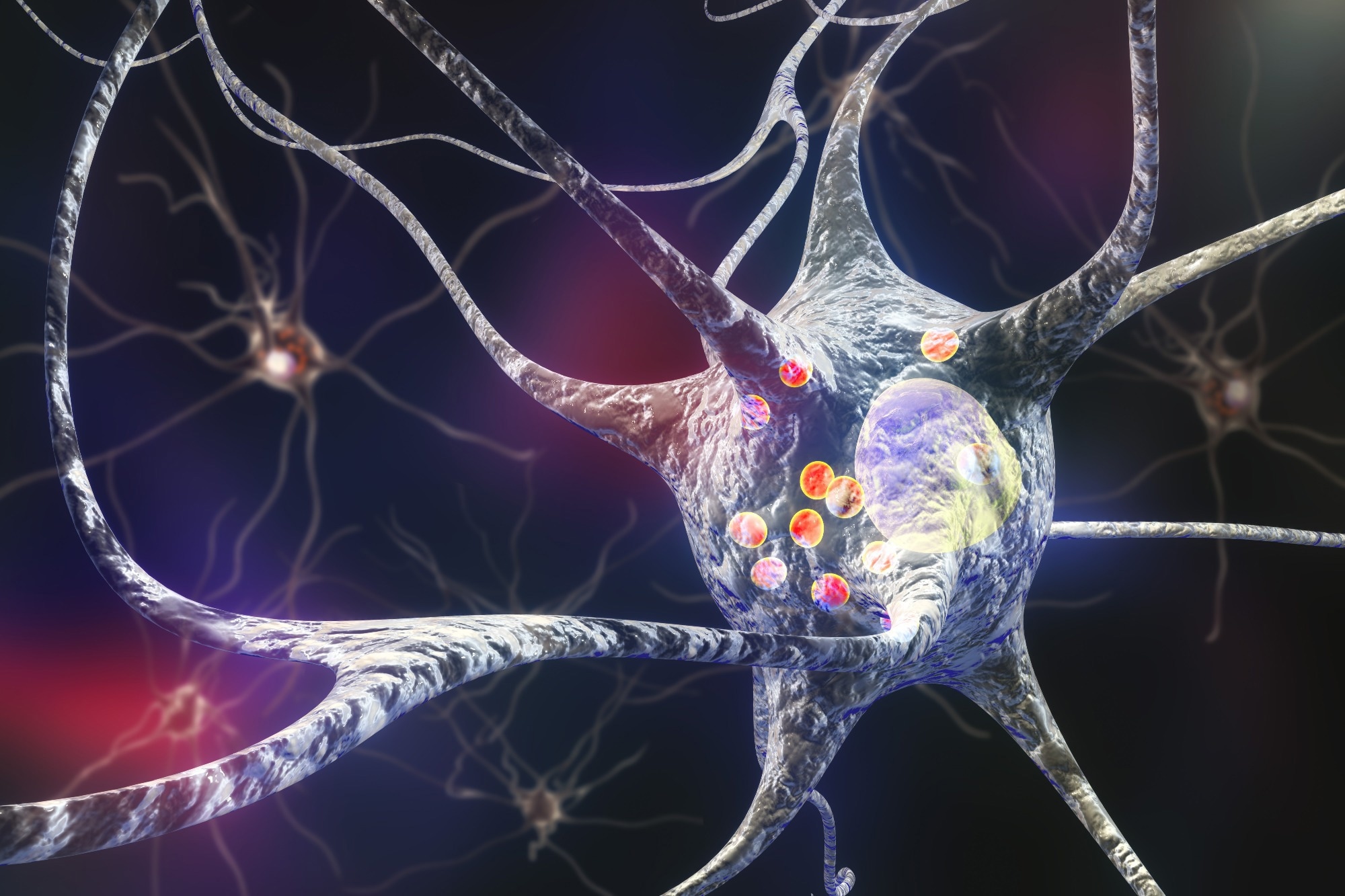 Image Credit: Kateryna Kon / Shutterstock.com
Introduction
Parkinson’s disease (PD) is a progressive neurodegenerative disorder with no approved disease-modifying therapies. Growing evidence links metabolic dysfunction, insulin resistance, mitochondrial impairment, and oxidative stress to chronic neuroinflammation and PD pathogenesis, suggesting therapeutic potential in targeting these pathways.
Glucagon-like peptide-1 (GLP-1) receptor agonists (RAs), initially developed for type 2 diabetes and now widely used for diabetes and obesity, are being explored for neuroprotective effects. Research is examining their possible role in PD, including mechanisms, clinical evidence, safety, and future therapeutic prospects. Neuroprotection in experimental models has not established disease-modifying efficacy in people with PD.1–4
Targeting the biological drivers of PD
GLP-1 receptors are distributed throughout the central nervous system (CNS), with neuronal expression reported in regions including the neocortex and hippocampus, as well as localization to cell bodies, dendrites, and presynaptic terminals.1 Activation of these receptors by endogenous GLP-1 produced in both the gastrointestinal tract and brain supports crucial neuronal functions including synaptic transmission, neuronal excitability, and synaptic plasticity.
Preclinical studies suggest that GLP-1 RAs can reduce neuroinflammation by reducing microglial activation and inflammatory cytokine production while limiting oxidative stress and apoptosis, effects that may support neuronal survival.1,4
GLP-1 RAs may also improve mitochondrial function and energy metabolism, both of which are impaired in PD. In experimental models, these mitochondrial effects have been associated with greater adenosine triphosphate (ATP) production and lower oxidative stress, potentially improving neuronal resilience.1
Another proposed target is impaired brain insulin signaling, one of several metabolic abnormalities linked to oxidative stress, mitochondrial dysfunction, and α-synuclein pathology in PD. Improving this signaling may help maintain neuronal energy homeostasis, providing a metabolic rationale for investigating GLP-1 RAs.1,4
How GLP-1 drugs may protect dopaminergic neurons
GLP-1 RAs influence several key pathological mechanisms involved in PD and have shown promising neuroprotective effects in preclinical studies. These include effects on dopaminergic neurons, the nerve cells that produce dopamine. Their loss in the substantia nigra, a midbrain region involved in movement control, contributes to PD motor symptoms.
Preclinical studies also suggest that activating the GLP-1 receptor may reduce α-synuclein aggregation, a protein closely linked to PD pathology and neuronal dysfunction.1,4 Experimental studies also propose protective mechanisms that include activating cellular survival pathways and autophagy, the process by which cells remove damaged components. These actions may help clear abnormal proteins and dysfunctional mitochondria; however, their contribution to clinical outcomes remains uncertain.1
Early evidence of neuroprotection
Researchers have observed the neuroprotective effects of GLP-1 RAs, including reduced reactive oxygen species (ROS) generation, inflammation, and dopaminergic neuron apoptosis, in both in vitro and in vivo models. These experiments provide a biological rationale for clinical testing, but experimental models cannot fully reproduce the complexity or prolonged course of human PD.1,4
Experimental models treated with GLP-1 RAs have also shown functional improvements, including better motor performance and dopaminergic neurotransmission, as compared to untreated controls. These changes have occurred alongside reduced neuroinflammatory responses and greater neuronal survival, findings consistent with neuroprotective effects in experimental PD models. Importantly, these observations do not demonstrate that treatment can restore neurons already lost in patients.1
Clinical trial evidence
Clinical trials have evaluated GLP-1 RAs in PD, with mixed results. Some early exenatide studies and the phase 2 lixisenatide trial reported favorable motor signals, while trials of other agents, including NLY01, did not show consistent efficacy. The lixisenatide trial enrolled 156 people with early PD and reported less worsening of ON-state motor scores during 12 months of treatment.
Motor function was assessed using the Movement Disorder Society-sponsored revision of the Unified Parkinson’s Disease Rating Scale (MDS-UPDRS) Part III. Still, it remains unclear whether these changes reflect symptomatic effects, disease modification, or study-specific effects.1–4
The larger phase 3 exenatide trial enrolled 194 participants and tested weekly treatment for 96 weeks. The results did not show a significant benefit over placebo on the primary motor outcome and did not establish disease modification.1–3 Notably, the Lancet issued an expression of concern for this trial in June 2026, warranting caution when interpreting the trial.5
Pooled analyses have not shown a consistent class-wide improvement in motor outcomes. Two 2026 reviews each included five trials involving 708 participants and found no significant overall motor benefit.
Clinical efficacy remains uncertain, and trials generally tolerated treatment, but gastrointestinal adverse events and weight loss occurred more often than with placebo. The Raza meta-analysis found increased nausea, vomiting, constipation, and weight loss. Diarrhea was also reported, but the pooled increase did not reach statistical significance. Weight loss may warrant particular attention in people with PD who are already vulnerable to frailty or poor nutritional status.1,3
 Image Credit: Pixel-Shot / Shutterstock.com
Insights from population studies
Observational and epidemiological studies suggest that people with type 2 diabetes who receive GLP-1 RAs have a lower observed incidence of PD than those treated with other glucose-lowering medications. These findings suggest a possible protective association, but they do not establish that GLP-1 RAs delay or prevent PD. They also cannot establish treatment efficacy in people who already have the disease.1,4
Epidemiological studies are generally observational and subject to confounding variables related to patients, diabetes severity, treatment selection, lifestyle, and other medications. Additional mechanistic and clinical studies are needed to determine whether GLP-1 RAs prevent PD or modify disease progression.1,4
Limitations and remaining challenges
Differences in study design, sample size, treatment duration, disease stage, dose, and the specific GLP-1 receptor agonist may contribute to inconsistent clinical findings. Brain exposure also varies between agents, and favorable results for one drug do not establish efficacy for the class as a whole. The small number of trials limits the reliability of indirect treatment comparisons. Long-term clinical data also remain limited, making it difficult to determine whether these agents can alter disease progression.1–4
Future research should identify which patient populations are most likely to benefit, test whether GLP-1 RA therapy is more effective during the early or prodromal stages of PD, and determine which doses and treatment durations provide the greatest therapeutic benefit. Longer follow-up and outcome measures that can distinguish symptomatic improvement from true disease modification will also be needed. The supplied evidence does not support routine prescribing of GLP-1 RAs solely to treat PD outside research settings.2–4
References
- Ibrahim, R., Kambal, A., & Abdelmajeed, M. A. (2025). Glucagon-Like Peptide-1 Receptor Agonists in Neurodegenerative Diseases: A Comprehensive Review. Cureus 17(9). DOI: 10.7759/cureus.92441. https://www.cureus.com/articles/384101-glucagon-like-peptide-1-receptor-agonists-in-neurodegenerative-diseases-a-comprehensive-review#!/
- Ali, M., Sharma, A., Paruchuri, A., et al. (2026). Efficacy of GLP-1 receptor agonists in Parkinson’s disease: a systematic review and exploratory network meta-analysis of randomized controlled trials. Neurological Sciences 47, 432. DOI: 10.1007/s10072-026-08929-1. https://link.springer.com/article/10.1007/s10072-026-08929-1
- Raza, H., Nizam, B., Padaniya, A., et al. (2026). Efficacy and safety of glucagon-like peptide 1 receptor agonists in Parkinson disease: A systematic review and meta-analysis. Brain and Behavior 16(4). DOI: 10.1002/brb3.71344. https://onlinelibrary.wiley.com/doi/10.1002/brb3.71344
- Helal, M. M., AbouShawareb, H., Abbas, O. H., et al. (2025). GLP-1 receptor agonists in Parkinson’s disease: an updated comprehensive systematic review with meta-analysis. Diabetology & Metabolic Syndrome 17, 352. DOI: 10.1186/s13098-025-01888-1. https://link.springer.com/article/10.1186/s13098-025-01888-1
- The Editors of The Lancet. (2026). Expression of Concern: Exenatide once a week versus placebo as a potential disease-modifying treatment for people with Parkinson’s disease in the UK: a phase 3, multicentre, double-blind, parallel-group, randomized, placebo-controlled trial. The Lancet 407(10548), 2588. DOI: 10.1016/S0140-6736(26)01241-9. https://www.thelancet.com/journals/lancet/article/PIIS0140-6736(26)01241-9/fulltext
Further Reading
Last Updated: Oct 15, 2026