Introduction
Sepsis and the gut: The hidden connection
How sepsis disrupts the intestinal barrier
Plant-based nutrition: Feeding the microbiome
Dietary fiber and experimental sepsis susceptibility
Can nutrition strengthen sepsis resilience?
References
Further reading
From intestinal microbes to the liver’s pathogen-clearing cells, researchers are investigating whether nutrition can influence the body’s response to severe infection.
 Image Credit: Anusorn Nakdee / Shutterstock.com
Introduction
This article discusses emerging research on the relationship between sepsis, intestinal hyperpermeability, and dietary patterns. Animal studies suggest that dietary fiber and microbial metabolites can support intestinal and systemic immune defenses; however, clinical evidence that plant-rich diets prevent sepsis or improve survival remains insufficient.1,6,7
Sepsis and the gut: The hidden connection
Sepsis is defined as life-threatening organ dysfunction caused by a dysregulated host response to infection.1,2 It is a leading cause of death in hospital intensive care unit (ICU) settings.1
Sepsis treatment addresses infection and associated organ dysfunction, including pulmonary and cardiovascular complications.1,2 Research also indicates that the gastrointestinal (GI) tract actively contributes to sepsis progression.2
The GI tract functions as a highly selective biological interface that balances nutrient absorption with maintenance of intestinal barrier integrity.2,3 The intestinal barrier limits the passage of trillions of luminal microbes and their products into underlying tissues and systemic circulation.2,3
In healthy hosts, interactions between the mucosal immune system and gut microbiome support intestinal homeostasis.1,2 Critical illness and associated treatments, particularly antibiotics, can reduce microbial diversity. Concurrently, a "pathobiome" may emerge, characterized by the expansion of potentially pathogenic bacteria, particularly Staphylococcus and Enterococcus species.1,2,4
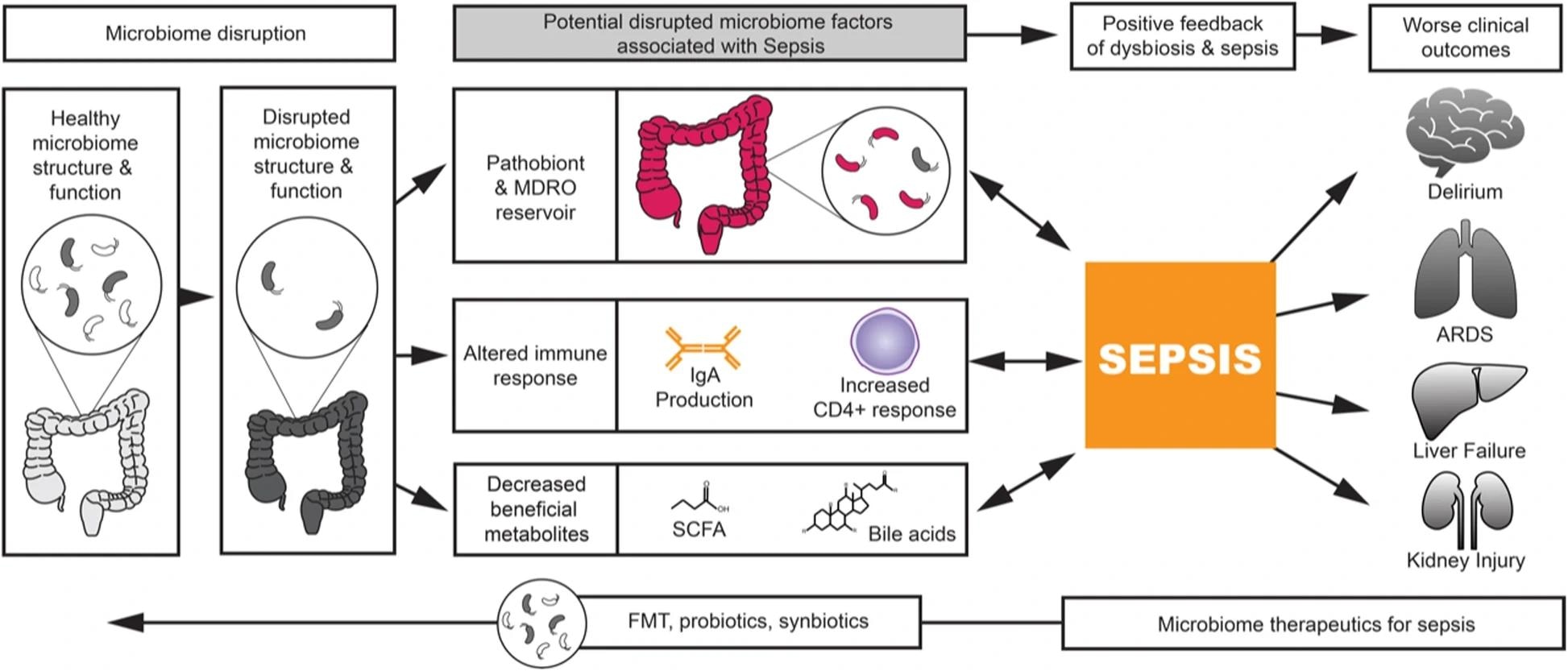
Conceptual illustration of the pathway between gut microbiome disruption and sepsis. Gut microbiome alteration predisposes to selection for pathobionts (potentially pathogenic bacteria that can reside in the gut microbiome), immune dysregulation, and decreased production of short-chain fatty acids, beneficial products produced by the gut microbiome. These changes can lower the threshold for sepsis development. Sepsis and treatment with antibiotics can drive worsening microbiome disruption in a vicious cycle, contributing to ongoing end-organ dysfunction. ARDS, acute respiratory distress syndrome; FMT, fecal microbiota transplant; MDRO, multi-drug resistant organism; SCFA, short-chain fatty acid. 1
How sepsis disrupts the intestinal barrier
Sepsis can disrupt host-microbe symbiosis by compromising the intestinal barrier's physical integrity. Inflammatory signaling, increased epithelial cell death, and reduced epithelial renewal contribute to this disruption.2
In animal models, sepsis alters the abundance and localization of tight junction proteins, which regulate passage between adjacent intestinal cells. Reported changes include reduced occludin and claudin-5, increased pore-forming claudin-2, and model-dependent reductions in zonula occludens-1 (ZO-1).2 Activation of myosin light chain kinase can also increase intestinal permeability by promoting contraction of the peri-junctional actin-myosin ring and disrupting the regulation of paracellular passage between enterocytes.2
This intestinal hyperpermeability can permit microbial products, including the pathogen-associated molecular pattern lipopolysaccharide (LPS), and sometimes viable microbes to cross the epithelium into the mesenteric lymph nodes or circulation.2,6 Microbial translocation is one proposed contributor to distant organ injury; gut-derived inflammatory mediators can also act through mesenteric lymph.2,6
The liver provides a further defense against blood-borne pathogens. In mice, gut microbiota-derived D-lactate reaches the liver through the portal vein and supports bacterial capture and killing by resident macrophages called Kupffer cells. This intravascular immune defense is distinct from the intestinal epithelial barrier. Whether dietary changes can produce comparable protection in humans remains unknown.5
Could the gut hold secrets for surviving sepsis?
Plant-based nutrition: Feeding the microbiome
A functioning intestinal microbial community helps resist colonization by enteric pathogens. Fermentable dietary fibers and other microbiota-accessible carbohydrates provide substrates for bacterial fermentation in the colon.1,2
The biochemical conversion of these substrates yields short-chain fatty acids (SCFAs), predominantly acetate, propionate, and butyrate, which help maintain epithelial integrity and immune homeostasis.1,2,6 Butyrate, for example, is a source of energy for colonocytes. Its metabolism increases oxygen consumption, helping stabilize the transcription factor hypoxia-inducible factor 1, which regulates genes involved in barrier function.1
SCFAs also influence host immune function through several mechanisms, including histone deacetylase (HDAC) inhibition. Butyrate can promote colonic Foxp3+ regulatory T-cell differentiation and reduce pro-inflammatory signaling. These regulatory cells help limit excessive immune responses, providing a mechanistic explanation for some anti-inflammatory effects of microbial metabolites.1,2
These observations provide a rationale for investigating dietary approaches that support the microbiome. Clinical trials are needed to determine whether these mechanisms translate into lower sepsis incidence or improved patient outcomes.1-3,6
Dietary fiber and experimental sepsis susceptibility
Dietary composition can alter the gut microbiome, and low-fiber diets provide fewer substrates for some commensal bacteria. Sepsis-associated dysbiosis can include expansion of potentially pathogenic organisms, including members of the phylum Proteobacteria. The extent to which habitual low-fiber or highly processed diets contribute to this pattern in patients with sepsis remains uncertain.1,2,6
Microbiome disruption may influence intestinal permeability and inflammatory responses before infection. Much of the evidence connecting these mechanisms to sepsis susceptibility comes from animal experiments, limiting conclusions about habitual dietary patterns in humans.1,6
One experiment compared low-, normal-, and high-cellulose diets in mice for two weeks before cecal ligation and puncture or endotoxin injection. Cecal ligation and puncture produces infection-associated sepsis, whereas endotoxin injection models an inflammatory response without live infection.7
High-cellulose feeding improved survival and reduced inflammatory responses. Antibiotic treatment abolished the survival benefit after cecal ligation and puncture, supporting a microbiota-dependent effect. Because cellulose is a nonfermentable fiber, these findings cannot be attributed directly to SCFA production or generalized to whole plant-rich diets.7
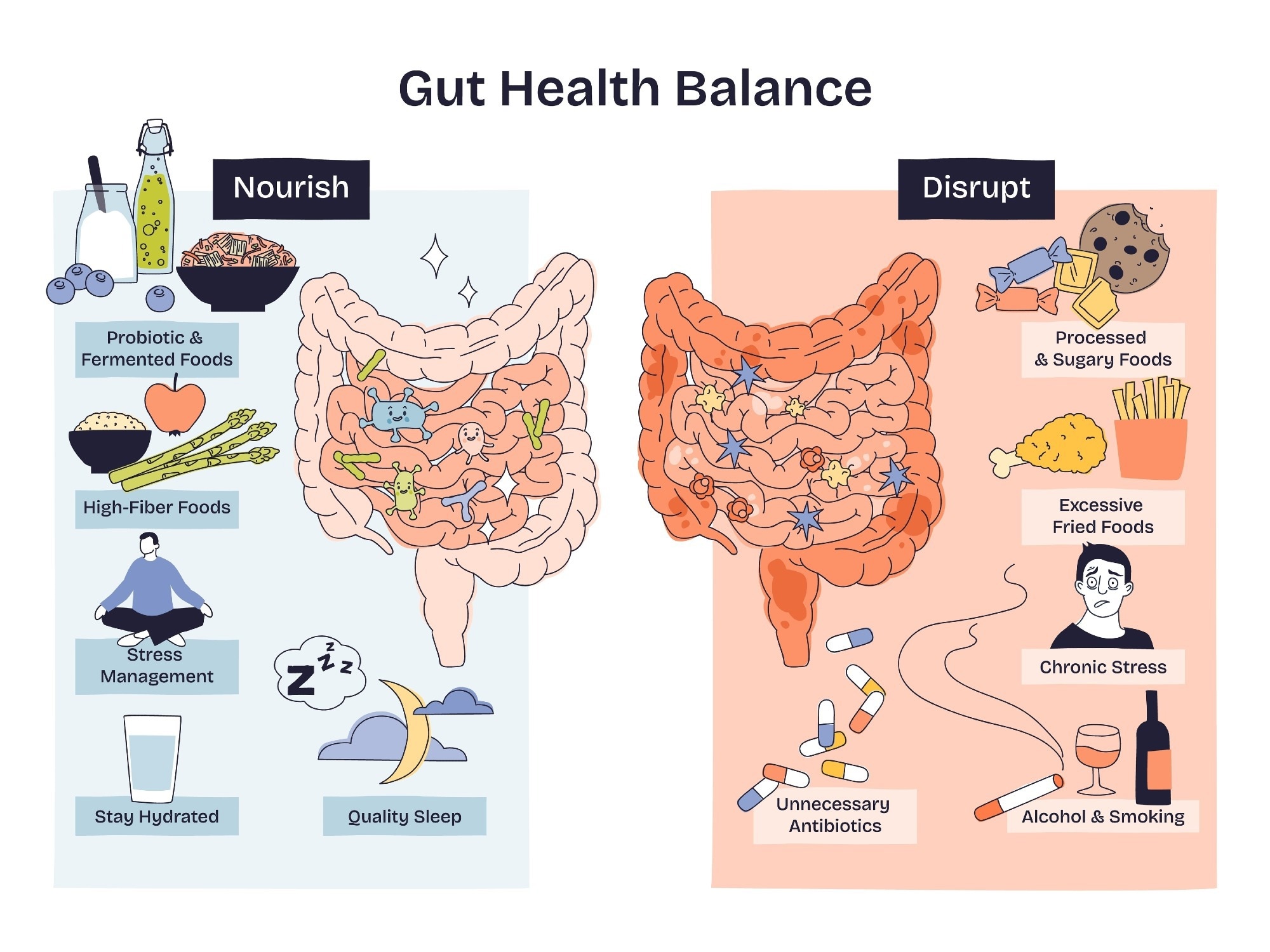 Image Credit: VectorMine / Shutterstock.com
Can nutrition strengthen sepsis resilience?
During established critical illness, nutritional support addresses immediate feeding needs and complications, a different clinical question from habitual diet before infection.1,8 Early enteral nutrition (EEN), for example, refers to the initiation of enteral feeding within 48 hours of admission to the intensive care unit (ICU).8
In a systematic review of adults with sepsis or septic shock, low-certainty evidence suggested EEN was associated with fewer days of mechanical ventilation and lower organ dysfunction scores. A survival benefit remained unproven because estimates for in-hospital and 28-day mortality were imprecise, and early feeding was associated with more frequent diarrhea.8 Feeding decisions require assessment of clinical stability and gastrointestinal tolerance.8
Evidence for fiber supplementation addresses a different outcome. A meta-analysis of hospitalized adults receiving enteral nutrition found that fiber reduced feeding-related diarrhea, with favorable results for partially hydrolyzed guar gum (PHGG) and mixed soluble/insoluble fiber. These findings concern diarrhea prevention; benefits for intestinal barrier repair, sepsis prevention, and survival require separate evaluation.10
Researchers have also studied probiotics and synbiotics in critically ill populations; however, results vary across preparations and patient groups. A meta-analysis reported fewer cases of ventilator-associated pneumonia, but its pooled estimate for sepsis incidence was compatible with either benefit or harm. Live probiotics can also cause bloodstream infections in vulnerable patients; therefore, routine use in sepsis requires further evidence of safety and benefit.1,4
Nutrition and microbial metabolites remain active areas of sepsis research. Future trials need to distinguish effects on feeding tolerance and infection risk from effects on organ dysfunction and survival, while identifying which patients can safely benefit from each intervention.1,3,8-10
References
- Adelman, M. W., Woodworth, M. H., Langelier, C., et al. (2020). The gut microbiome's role in the development, maintenance, and outcomes of sepsis. Critical Care 24(1). DOI: 10.1186/s13054-020-02989-1. https://link.springer.com/article/10.1186/s13054-020-02989-1
- Fay, K. T., Ford, M. L., & Coopersmith, C. M. (2017). The intestinal microenvironment in sepsis. Biochimica et Biophysica Acta (BBA) - Molecular Basis of Disease 1863(10); 2574–2583. DOI: 10.1016/j.bbadis.2017.03.005. https://www.sciencedirect.com/science/article/pii/S0925443917300819
- Klingensmith, N. J., & Coopersmith, C. M. (2023). Gut Microbiome in Sepsis. Surgical Infections, 24(3), 250- 257. DOI: 10.1089/sur.2022.420. https://journals.sagepub.com/doi/abs/10.1089/sur.2022.420
- Guarino, M., Di Ciaula, A., Portincasa, P., & De Giorgio, R. (2025). Narrative review on microbiota and sepsis: the host's betrayal? Internal and Emergency Medicine 21, 607- 61919. DOI: 10.1007/s11739-025-04215-8. https://link.springer.com/article/10.1007/s11739-025-04215-8
- McDonald, B., Zucoloto, A. Z., Yu, I., et al. (2020). Programming of an Intravascular Immune Firewall by the Gut Microbiota Protects against Pathogen Dissemination during Infection. Cell Host & Microbe 28(5); 660-668.e4. DOI: 10.1016/j.chom.2020.07.014. https://www.cell.com/cell-host-microbe/fulltext/S1931-3128(20)30410-8
- Niu, M. & Chen, P. (2021). Crosstalk between gut microbiota and sepsis. Burns & Trauma, 9. DOI: 10.1093/burnst/tkab036. https://academic.oup.com/burnstrauma/article/doi/10.1093/burnst/tkab036/6410339
- Morowitz, M. J., Di Caro, V., Pang, D., et al. (2017). Dietary Supplementation With Nonfermentable Fiber Alters the Gut Microbiota and Confers Protection in Murine Models of Sepsis. Critical Care Medicine 45(5); e516-e523. DOI: 10.1097/ccm.0000000000002291. https://journals.lww.com/ccmjournal/abstract/10.1097/ccm.0000000000002291~dietary-supplementation-with-nonfermentable-fiber-alters-the
- Grillo-Ardila, C. F., Tibavizco-Palacios, D., Triana, L. C., et al. (2024). Early Enteral Nutrition (within 48 h) for Patients with Sepsis or Septic Shock: A Systematic Review and Meta-Analysis. Nutrients 16(11); 1560. DOI: 10.3390/nu16111560. https://www.mdpi.com/2072-6643/16/11/1560
- Lou, J., Cui, S., Huang, N., et al. (2024). Efficacy of probiotics or synbiotics in critically ill patients: A systematic review and meta-analysis. Clinical Nutrition ESPEN 59; 48-62. DOI: 10.1016/j.clnesp.2023.11.003. https://www.sciencedirect.com/science/article/pii/S2405457723022015
- Kaewdech, A., Sripongpun, P., Wetwittayakhlang, P., & Churuangsuk, C. (2022). The effect of fiber supplementation on the prevention of diarrhea in hospitalized patients receiving enteral nutrition: A meta-analysis of randomized controlled trials with the GRADE assessment. Frontiers in Nutrition, 9. DOI: 10.3389/fnut.2022.1008464. https://www.frontiersin.org/journals/nutrition/articles/10.3389/fnut.2022.1008464/full
Further Reading
Last Updated: Nov 1, 2026