Introduction
The public health impact of alcohol use
Health benefits of reducing alcohol intake
Evidence-supported strategies
Physiological withdrawal considerations
References
Further reading
This encyclopaedic article synthesizes epidemiological, clinical, and behavioral evidence to evaluate Dry January as a public health intervention for reducing alcohol consumption. It integrates metabolic, mental health, and withdrawal-risk data to guide safe and effective participation.
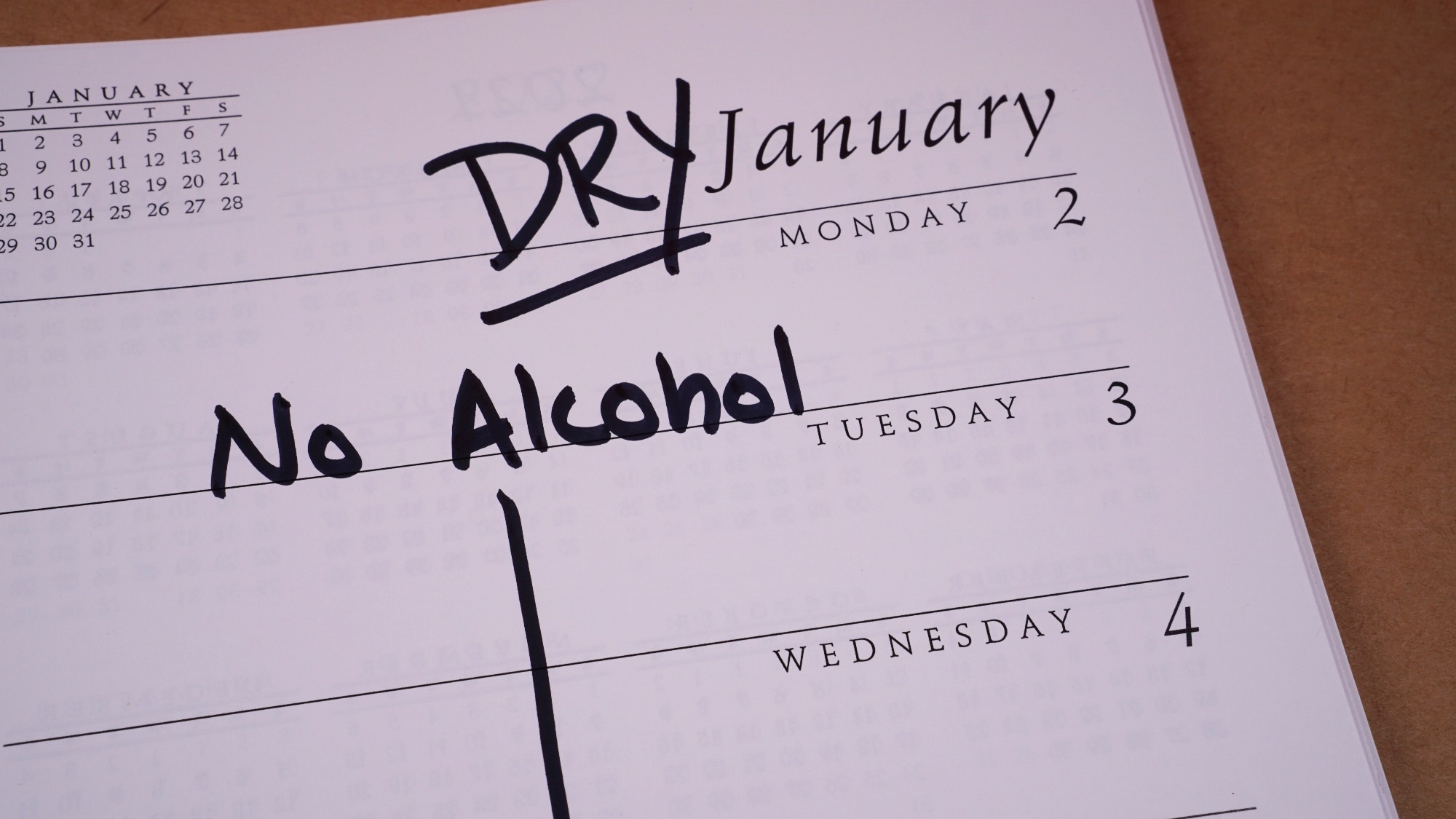 Image Credit: MKPhoto12 / Shutterstock.com
Introduction
‘Dry January’ is a month-long voluntary abstinence from alcohol that was initially developed and implemented by the charity organization Alcohol Change United Kingdom. Dry January has evolved from a localized social challenge into a clinically relevant and globally practiced behavioral intervention.1
The public health impact of alcohol use
According to 2024 data from the United States Centers for Disease Control and Prevention (CDC), excessive alcohol use was responsible for approximately 178,000 deaths annually in the U.S., while shortening the lives of those who die by an average of 26 years.2 In fact, the 2024 Global Status Report by the World Health Organization (WHO) reports that alcohol consumption contributed to 2.6 million deaths worldwide in 2019, representing 4.7 % of all global deaths.3
In light of the global burden associated with alcohol consumption, the ‘sober curious’ movement emerged in the late 2010s to encourage individuals to consciously modulate their relationship with alcohol, with participation in temporary abstinence challenges like Dry January remaining robust. For the 2025 Dry January season, Alcohol Change UK reported that over 200,000 registered participants monitored their progress using dedicated tools such as the Try Dry app and successfully completed the month-long challenge.1
Health benefits of reducing alcohol intake
Metabolic and cardiovascular health
In a pivotal prospective study of moderate-to-heavy drinkers, one month of alcohol abstinence resulted in a 25.9% reduction in insulin resistance based on homeostatic model assessment of insulin resistance (HOMA) scores and a 6.6% decrease in systolic blood pressure. A significant reduction of 41.8 % and 73.9 % in cancer-related growth factors such as vascular endothelial growth factor (VEGF) and epidermal growth factor (EGF), respectively, was also observed.4
A 2025 cohort study of 57,691 Japanese adults found that alcohol cessation in moderate-to-heavy drinkers was associated with a statistically significant increase in low-density lipoprotein (LDL) cholesterol of 6.53 mg/dL and a decrease in high-density lipoprotein (HDL) cholesterol by 5.65 mg/dL. This suggests that, while alcohol cessation confers broad health benefits, lipid profiles should be monitored during early abstinence due to potentially transient adverse changes.5
Why do Dry January? A doctor's view
Video credit: BalanceNE/Youtube.com
Mental health outcomes
Chronic alcohol exposure is associated with neuroadaptive changes in reward-related pathways, including alterations in dopaminergic signaling that contribute to impaired mood regulation and reduced reward sensitivity during drinking and early abstinence.
Prospective cohort evidence suggests that the 31-day duration of Dry January is sufficient to observe meaningful improvements in psychological well-being, even if full neurobiological normalization may extend beyond this period.
In these cohorts, study participants reported significantly higher scores on the Warwick-Edinburgh Mental Well-being Scale (WEMWBS) compared with continuing drinkers. This improvement is commonly attributed to relief from anxiety, improved sleep quality, and enhanced perceived control over drinking behavior rather than acute neurochemical restoration alone.6
Evidence-supported strategies
Behavioral approaches
Motivational interviewing (MI) is particularly effective in primary care settings. A 2024 controlled clinical trial reported that MI interventions resulted in an absolute risk reduction (ARR) of 16.46 % in risky alcohol consumption after 12 months, corresponding to a number needed to treat (NNT) of six. These findings support MI as a scalable, evidence-based strategy for reducing harmful drinking during and beyond abstinence challenges.7
Substitution techniques
L-theanine, a bioactive amino acid found primarily in green tea, significantly mitigated alcohol-induced intestinal injury and oxidative stress in preclinical mouse models, suggesting a potential role in supporting gut barrier recovery during alcohol reduction.8
Conversely, Kava (Piper methysticum), while demonstrating anxiolytic properties, has been consistently associated with hepatotoxicity, particularly in concentrated supplement forms. Its use during early abstinence, when hepatic recovery is underway, is therefore clinically inadvisable.9
Digital tools
A 2024 observational study reported that use of the text message–based moderation platform ‘Sunnyside’ was associated with a 33 % reduction in total alcohol consumption over 12 weeks. The intervention’s effectiveness was attributed to adaptive, real-time messaging that supports self-monitoring and habit disruption rather than abstinence alone.10
 Image Credit: Kmpzzz / Shutterstock.com
Physiological withdrawal considerations
The American Society of Addiction Medicine (ASAM) guidelines strongly advise that individuals with a history of alcohol withdrawal seizures, delirium tremens, or other indicators of severe or complicated withdrawal should not abruptly stop drinking without medical supervision.
ASAM further emphasizes that the Clinical Institute Withdrawal Assessment of Alcohol (CIWA-Ar) is a validated severity monitoring tool rather than a diagnostic instrument, and that scores of 10 or greater indicate at least moderate withdrawal requiring close monitoring and often pharmacologic management.
Patients presenting with CIWA-Ar scores of 19 or higher, marked autonomic hyperactivity, or a history of complicated withdrawal are recommended for inpatient or closely monitored Level 2 withdrawal management settings to reduce the risk of seizures, delirium, and cardiorespiratory complications.11
References
- Alcohol Change UK. (2025). The Dry January® story. https://alcoholchange.org.uk/help-and-support/managing-your-drinking/dry-january/about-dry-january/the-dry-january-story. Accessed 12 December 2025.
- Centers for Disease Control and Prevention. (06 August 2024). Data on Excessive Alcohol Use. https://www.cdc.gov/alcohol/excessive-drinking-data/index.html. Accessed 12 December 2025.
- World Health Organization. (25 June 2024). Global status report on alcohol and health and treatment of substance use disorders. https://www.who.int/publications/i/item/9789240096745. Accessed 12 December 2025.
- Mehta, G., Macdonald, S., Cronberg, A., et al. (2018). Short-term abstinence from alcohol and changes in cardiovascular risk factors, liver function tests and cancer-related growth factors: a prospective observational study. BMJ Open 8(5). DOI:10.1136/bmjopen-2017-020673.
- Suzuki, T., Fukui, S., Shinozaki, T., et al. (2025). Lipid profiles after changes in alcohol consumption among adults undergoing annual checkups. JAMA Network Open, 8(3).
- de Visser, R. O., & Piper, R. (2020). Short- and longer-term benefits of temporary alcohol abstinence during 'Dry January'. Alcohol and Alcoholism 55(4).
- Pérula-Jiménez, C., et al. (2024). Effectiveness of a Motivational Interviewing-Based Intervention. Healthcare 12(19).
- Tan, S., et al. (2025). L-Theanine Mitigates Acute Alcoholic Intestinal Injury. Nutrients 17(4).
- Soares, R. B., et al. (2022). An Updated Review on Kava. Journal of Clinical Medicine 11(14).
- Vadhan, N. P., et al. (2024). Self‐reported alcohol consumption during participation in a text messaging‐based platform. Alcohol, Clinical and Experimental Research 48(9).
- American Society of Addiction Medicine. (2020). The ASAM Clinical Practice Guideline on Alcohol Withdrawal Management.
Further Reading
Last Updated: Jan 8, 2026