Introduction
Why GLP-1 Therapies Hold Promise for MASH
What Clinical Trials Reveal About GLP-1 Therapies
Targeting Liver Fibrosis and Metabolic Dysfunction Together
Dual and Triple Agonists Expand MASH Research
Promising Results Leave Key Questions Unanswered
The Next Steps Toward More Effective MASH Care
References
Further reading
Can treatments targeting appetite and glucose regulation also change the course of fatty liver disease? Clinical trials examine how these drugs alter liver inflammation and scarring.
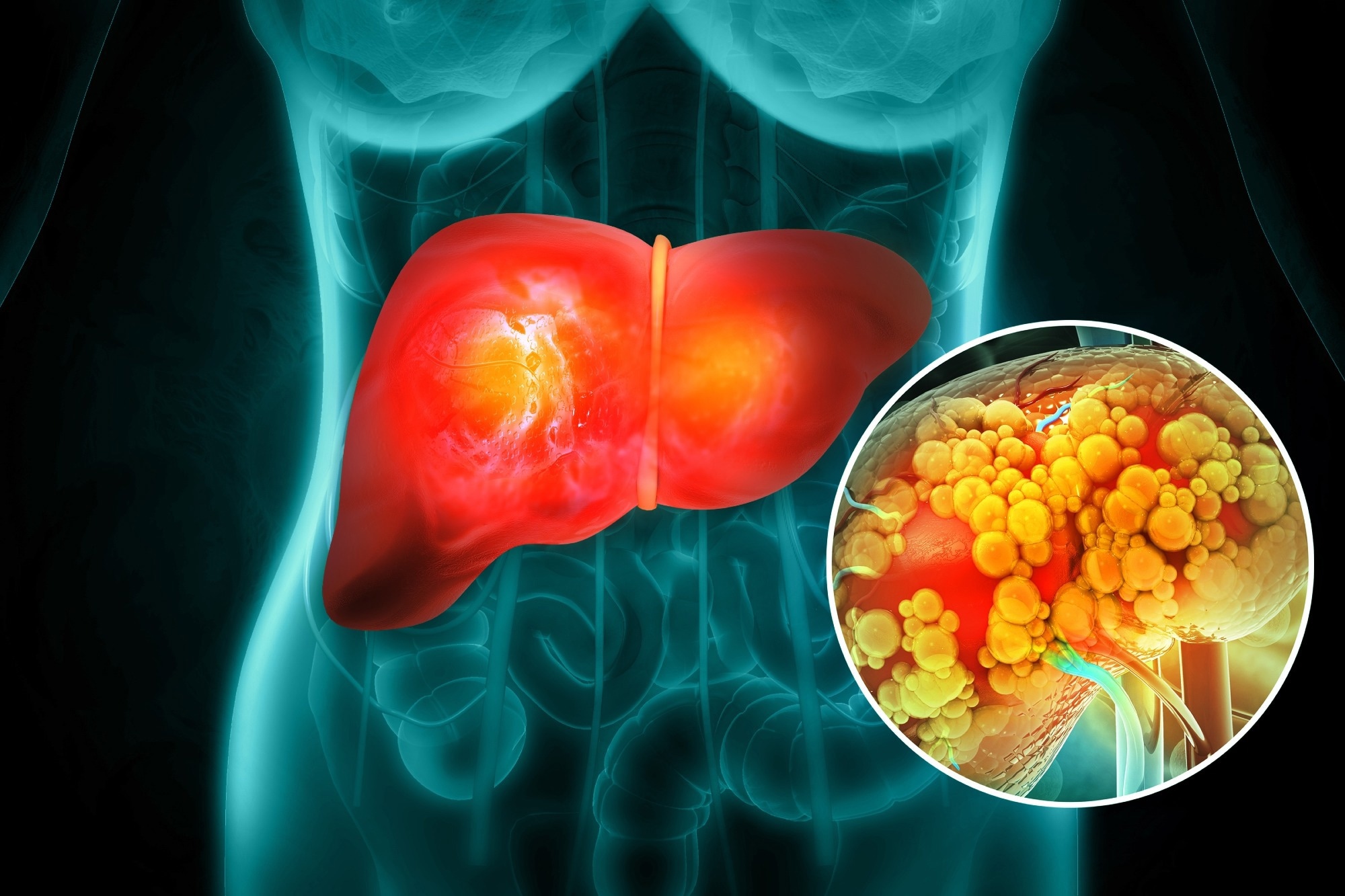 Image Credit: Crystal Light / Shutterstock.com
Introduction
Metabolic dysfunction-associated steatohepatitis (MASH), formerly nonalcoholic steatohepatitis (NASH), is the inflammatory form of metabolic dysfunction-associated steatotic liver disease (MASLD), linked to obesity, insulin resistance, and metabolic dysfunction. Glucagon-like peptide-1 (GLP-1) receptor agonists have demonstrated therapeutic benefits through their effects on body weight, glucose regulation, and liver histology.1,2,3
MASH is characterized by excessive hepatic fat accumulation, inflammation, and hepatocellular ballooning, a form of liver cell swelling and injury, with or without fibrosis. It develops through interacting metabolic and inflammatory processes, including insulin resistance, lipid accumulation, and cellular injury. As fibrosis advances, the risk of serious liver-related complications increases.1,2,3
MASH is closely associated with obesity, type 2 diabetes mellitus, insulin resistance, dyslipidemia, hypertension, and other cardiometabolic risk factors. MASLD, which includes MASH, is a multisystem disease affecting hepatic and extrahepatic health. Cardiovascular disease contributes substantially to morbidity and mortality in people with MASLD.1,3
MASLD may progress from simple steatosis to MASH, which can worsen to advanced fibrosis, compensated or decompensated cirrhosis, liver failure, and hepatocellular carcinoma. This progression is variable and does not occur in every patient. Collectively, these clinical consequences highlight the importance of therapies that target both the underlying metabolic dysfunction and liver pathology.1,2,3
Why GLP-1 Therapies Hold Promise for MASH
GLP-1 receptor agonists are being used and investigated for MASH because they target the metabolic abnormalities that drive disease progression. GLP-1 receptor activation increases glucose-dependent insulin secretion and promotes satiety, thereby slowing gastric emptying. These actions support weight loss and improved glucose regulation, in addition to the hepatic benefits of lower insulin resistance.2,3,4
Weight loss is a primary mechanism by which GLP-1 receptor agonists improve MASH. Reduced adiposity and improved metabolic control can decrease liver fat and the metabolic stress associated with liver injury.
Experimental research also suggests anti-inflammatory and antifibrotic pathways. Some hepatic benefits may occur partly independently of weight loss, though this does not establish direct action through GLP-1 receptors on human hepatocytes. The contribution of these direct effects remains uncertain.1,3,4
What Clinical Trials Reveal About GLP-1 Therapies
Evidence from randomized controlled trials supports improvements in several histological, metabolic, and imaging outcomes in patients with MASLD or MASH; however, these results vary by drug, comparator, and disease stage. Furthermore, clinical trials assess the proportion of patients achieving MASH resolution without worsening liver fibrosis, rather than establishing faster resolution. A separate endpoint assesses improvement in fibrosis without worsening MASH.2,3,4
In the 72-week ESSENCE analysis, semaglutide 2.4 mg once weekly produced MASH resolution without worsening fibrosis in 62.9% of participants, compared with 34.3% receiving placebo. Fibrosis improved without worsening MASH in 36.8% and 22.4% of participants, respectively. Participants had biopsy-confirmed MASH with stage F2 or F3 fibrosis, corresponding to moderate and advanced fibrosis.3
Although earlier analyses had insufficient biopsy evidence to establish a fibrosis benefit, the ESSENCE study strengthened these observations, particularly for semaglutide. Together, these findings support drug-specific conclusions more strongly than an assumption that every GLP-1 receptor agonist provides the same histological benefit.3,4
Recent meta-analyses of randomized controlled trials indicate that GLP-1 receptor agonists increase the likelihood of improving liver fibrosis by at least one stage without worsening MASH and promote histological resolution of steatohepatitis. Importantly, observed benefits in noncirrhotic fibrosis cannot be extrapolated to cirrhosis, as a 48-week semaglutide trial in compensated MASH-related cirrhosis did not demonstrate improved fibrosis or MASH resolution compared with placebo. Compensated cirrhosis refers to cirrhosis without overt complications of decompensation.2,3
GLP-1 receptor agonists help manage diabetes and obesity by promoting weight loss, improving glycated hemoglobin (HbA1c) levels, and lowering liver enzymes such as alanine aminotransferase (ALT) and aspartate aminotransferase (AST). Notably, these enzymes indicate liver injury; therefore, their reductions do not, on their own, establish fibrosis regression or improved liver function. Changes in liver fat on imaging also need to be distinguished from biopsy-confirmed changes in inflammation or fibrosis.2,3,4
Diabetes status requires similarly careful interpretation, as clinical trials have enrolled people with and without type 2 diabetes. The small subgroup without type 2 diabetes in the 2026 meta-analysis showed no statistically significant benefits in weight or fibrosis. Still, these results do not establish that treatment is ineffective in people without diabetes or that diabetes predicts a greater response.2,3
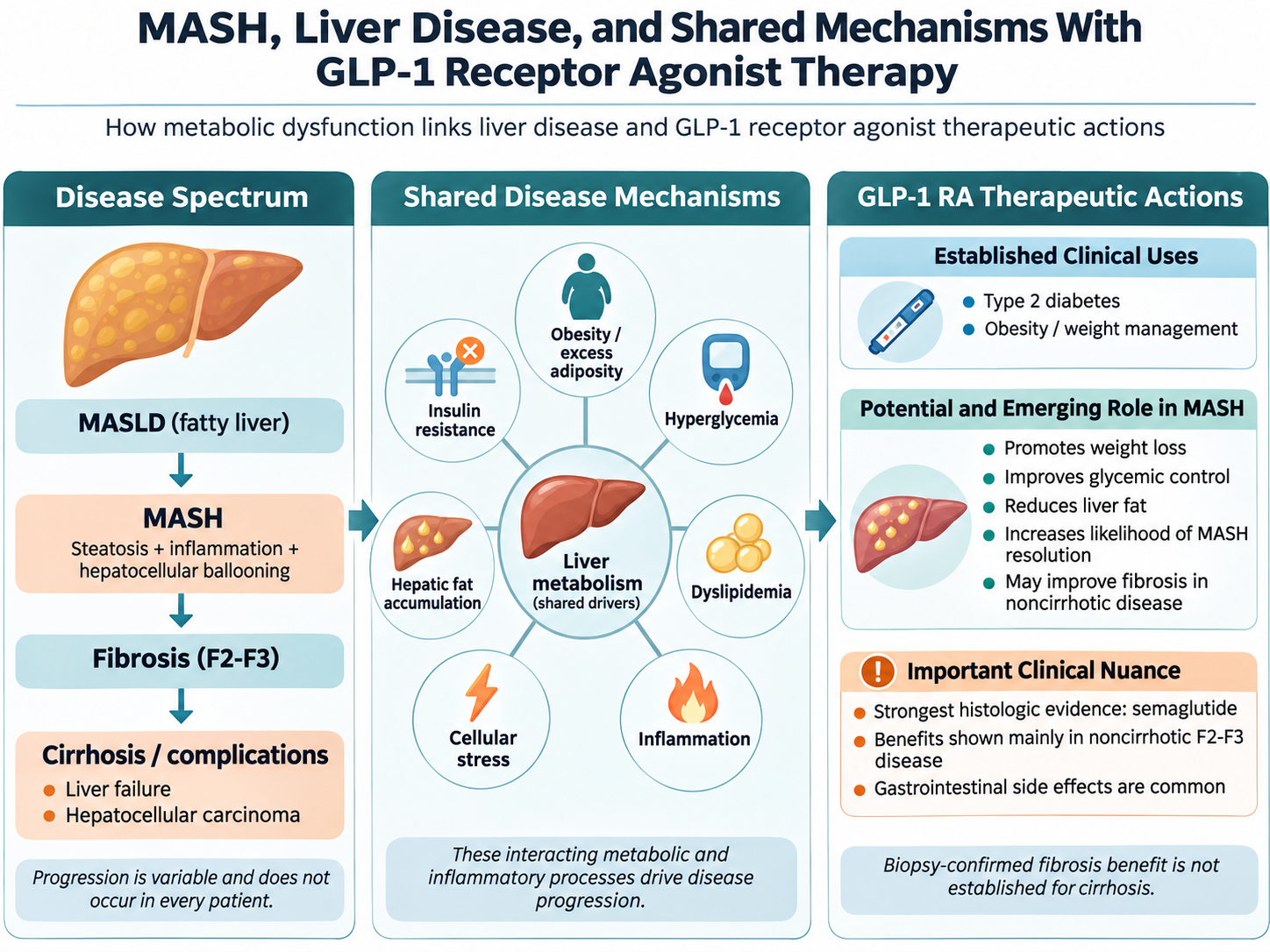
Image Credit: ChatGPT
Dual and Triple Agonists Expand MASH Research
The therapeutic approach to MASH is changing, as trials evaluate metabolic and liver-directed medications. In August 2025, the United States Food and Drug Administration (FDA) granted accelerated approval to Wegovy (semaglutide) injection for adults with noncirrhotic MASH and moderate-to-advanced fibrosis (stages F2–F3), alongside a reduced-calorie diet and increased physical activity. This approval was based on improvements in MASH and fibrosis, though continued approval may depend on confirmation of clinical benefit.6
Recent research has also expanded beyond single GLP-1 receptor agonists to include dual and triple receptor agonists that target multiple metabolic pathways simultaneously. Tirzepatide activates glucose-dependent insulinotropic polypeptide (GIP) and GLP-1 receptors, whereas survodutide activates glucagon and GLP-1 receptors, and retatrutide activates all three.
Some subgroup analyses report larger effects with dual receptor agonists on body weight and hepatic outcomes. These comparisons draw on different trials and a small number of studies; therefore, they do not establish superiority over single-receptor agents in MASH. Head-to-head trials are needed to determine their relative hepatic efficacy.2
Promising Results Leave Key Questions Unanswered
Several questions remain about the long-term use of GLP-1 receptor agonists for MASH. Published randomized controlled trials differ substantially in design, patient population, treatment duration, inclusion criteria, and primary outcome measures, making direct comparisons between studies difficult. Variation in drug doses and comparators also affects interpretation.1,2,3,4
GLP-1 receptor agonists can reduce liver fat and help resolve MASH; however, available evidence does not establish reductions in cirrhosis complications or liver-related mortality. Current evidence comes primarily from phase 2 and phase 3 studies with follow-up too short to resolve many clinical outcome questions. Histological improvement is a useful endpoint, but confirming fewer complications requires longer clinical follow-up. 1,3,4
Safety and tolerability also affect treatment use. GLP-1 receptor agonists increase gastrointestinal adverse events, including nausea, vomiting, diarrhea, and constipation. Gradual dose escalation, patient education, and monitoring can help manage tolerability.2,5
 Image Credit: Freshystock / Shutterstock.com
The Next Steps Toward More Effective MASH Care
Future research needs to establish whether improvements in liver histology translate into fewer clinical complications. The planned 240-week ESSENCE assessment addresses longer-term liver-related outcomes. Investigators are also assessing combination therapies that target complementary metabolic and fibrotic pathways, as well as dual and triple receptor agonists that may provide additional hepatic and metabolic benefits.
Priorities include direct treatment comparisons, sustained benefits, safety, and identifying responses across fibrosis stages and diabetes status. Overall, lifestyle measures and cardiometabolic risk management remain part of MASH care.1,2,3
References
- Udaikumar, J., Nimmagadda, R., Lella, V. V., et al. (2025). The Comparative Safety and Efficacy of Resmetirom and Semaglutide in Patients with Metabolic Dysfunction-Associated Steatotic Liver Disease (MASLD): A Systematic Review. Pharmacoepidemiology 4(3). DOI: 10.3390/pharma4030014. https://www.mdpi.com/2813-0618/4/3/14
- Tornea, D. A., Goldis, C., Isaic, A., et al. (2026). The effect of GLP-1 agonists on patients with metabolic-associated steatotic liver disease: A systematic review and meta-analysis. Pharmaceutics 18(1). DOI: 10.3390/pharmaceutics18010086. https://www.mdpi.com/1999-4923/18/1/86
- Mantovani, A., Morandin, R., Fiorio, V., et al. (2025). Glucagon-like peptide-1 receptor agonists improve MASH and liver fibrosis: A meta-analysis of randomized controlled trials. Liver International. 45(9). DOI: 10.1111/liv.70256 https://onlinelibrary.wiley.com/doi/10.1111/liv.70256
- Potter, K. J., Phinney, J., Kulai, T., & Munro, V. (2025). Effects of GLP-1 receptor agonist therapy on resolution of steatohepatitis in nonalcoholic fatty liver disease: A systematic review and meta-analysis. Journal of the Canadian Association of Gastroenterology 8(2); 47–57. DOI: 10.1093/jcag/gwae057. https://academic.oup.com/jcag/article/8/2/47/7989366
- Huang, X., Wu, M., Huang, B., & Zhang, Y. (2025). Gastrointestinal adverse events associated with GLP-1 receptor agonists in metabolic dysfunction-associated steatotic liver disease (MASLD): A systematic review and meta-analysis. Frontiers in Medicine 12. DOI: 10.3389/fmed.2025.1509947. https://www.frontiersin.org/journals/medicine/articles/10.3389/fmed.2025.1509947/full
- U.S. Food and Drug Administration. (2026). Wegovy prescribing information. MASH indication, accelerated approval, and requirements to confirm clinical benefit. https://www.accessdata.fda.gov/drugsatfda_docs/label/2026/218316s007lbl.pdf
Further Reading
Last Updated: Nov 19, 2026