Introduction
How normal taste works
What is dysgeusia?
How chemotherapy disrupts taste
Underlying mechanisms
What patients experience
Management strategies
Limitations and research gaps
Conclusions
References
Further reading
Chemotherapy can change how food tastes and smells, which can reduce appetite, worsen nutrition, and lower quality of life during cancer treatment. This article explains how these changes occur, what patients commonly experience, and which supportive strategies may help, given the limited evidence for treatment.
 Image Credit: Drawlab19 / Shutterstock.com
Introduction
Chemotherapy-induced taste alteration (CITA) is one of the most common sensory side effects of cancer treatment, yet it often receives far less attention than nausea, fatigue, or pain. By disrupting taste perception, CITA can significantly affect appetite, nutrition, quality of life, and a patient’s tolerance of ongoing therapy.
How normal taste works
Human taste perception relies on about 5,000 taste buds that are distributed across the tongue on fungiform, foliate, and circumvallate papillae.3 Taste signals collected by taste buds are transmitted through the facial (VII), glossopharyngeal (IX), and vagus (X) nerves to the solitary tract nucleus in the brainstem, ultimately projecting to the gustatory cortex.3
Each taste bud houses 50-100 taste receptor cells (TRCs), which are commonly described as type I glial-like cells, type II receptor cells, type III presynaptic cells, and type IV basal progenitor cells.3,4 Whereas type I cells maintain ionic homeostasis, type II cells utilize G-protein coupled receptors to detect sweet, bitter, and umami through gustducin-linked signaling pathways, whereas type III presynaptic cells detect acidic stimuli and release serotonin.3,4
What is dysgeusia?
Patients undergoing systemic chemotherapy often experience dysgeusia, which describes any qualitative distortion of taste sensation. By contrast, ageusia refers to complete taste loss, whereas hypogeusia and hypergeusia describe reduced and increased taste sensitivity, respectively.2,3
Parageusia, which describes incorrect taste perception, as well as phantogeusia or the perception of a metallic or bitter taste in the absence of any stimulus, are other forms of dysgeusia.3 Patients also experience parosmia or distorted smell, which further complicates flavor perception and quality of life outcomes.2,3
Chemotherapy-induced taste alteration (CITA) is a highly prevalent, yet grossly underreported, side effect of cancer treatment characterized by the distortion, reduction, or loss of taste, often leading to anorexia and malnutrition.1 CITA affects between 17.6% and 93% of all systemic chemotherapy patients, with emerging evidence indicating that this treatment complication is associated with poorer nutritional intake, more symptom burden, and worse quality of life.1,2 In many patients, however, these complaints reflect a combination of altered taste, smell disturbance, dry mouth, mucositis, nausea, and food aversion rather than an isolated gustatory deficit.2,3,4
How To Deal With Taste Differences During Chemotherapy
How chemotherapy disrupts taste
Most conventional chemotherapeutic agents preferentially target cells with high growth rates and rapid physiological activity. Thus, the high mitotic rate of type IV basal cells makes the gustatory system an unintentional target for antimitotic chemotherapeutic agents.3
Chemotherapies like cyclophosphamide and platinum-based compounds can damage rapidly dividing type IV taste bud progenitor cells by disrupting DNA replication and cell division. As the turnover of mature taste receptor cells is impaired, taste disturbance can emerge early during treatment and may persist across repeated chemotherapy cycles.3,5,8
Platinum-based chemotherapeutics like cisplatin and oxaliplatin are particularly neurotoxic, with a reported dysgeusia incidence of 50% in one small pilot study of platinum-containing regimens versus 22.5% with non-platinum regimens.5 Taxanes, which are a separate class of plant-derived chemotherapy drugs like paclitaxel and docetaxel, are also associated with high dysgeusia rates, and docetaxel has been reported to cause more dysgeusia than CMF-based therapy in older breast cancer cohorts.7 Comparatively, anthracyclines, paclitaxel, carboplatin, and docetaxel have all been linked with substantial taste disturbance in observational work.7
Underlying mechanisms
The Sonic Hedgehog (Shh) signaling pathway, a fundamental regulator of gustatory homeostasis, is exclusively expressed in type IV basal cells.6 Evidence for direct Shh-pathway disruption comes most clearly from hedgehog-pathway inhibition rather than standard cytotoxic chemotherapy alone, thereby supporting the broader idea that impaired taste-cell renewal can reduce taste sensitivity.6
Cancer patients routinely report elevated levels of pro-inflammatory cytokines, especially interferon γ (IFN-γ), tumor necrosis factor α (TNF-α), and interleukin 6 (IL-6). Pro-inflammatory cytokines are established promoters of TRC cell apoptosis and may also contribute to impaired taste signaling.3
Metallic taste is commonly reported during chemotherapy, but its biology is likely multifactorial and not yet fully defined.2,3,7 Proposed explanations include treatment-related oral changes, altered saliva, inflammation, and retronasal sensory effects.2,3,7
Cytotoxic chemotherapeutic drugs alter salivary flow and composition, potentially impairing the solubilization of tastants. They may also contribute to broader oral and gastrointestinal changes that indirectly distort flavor perception.2,3
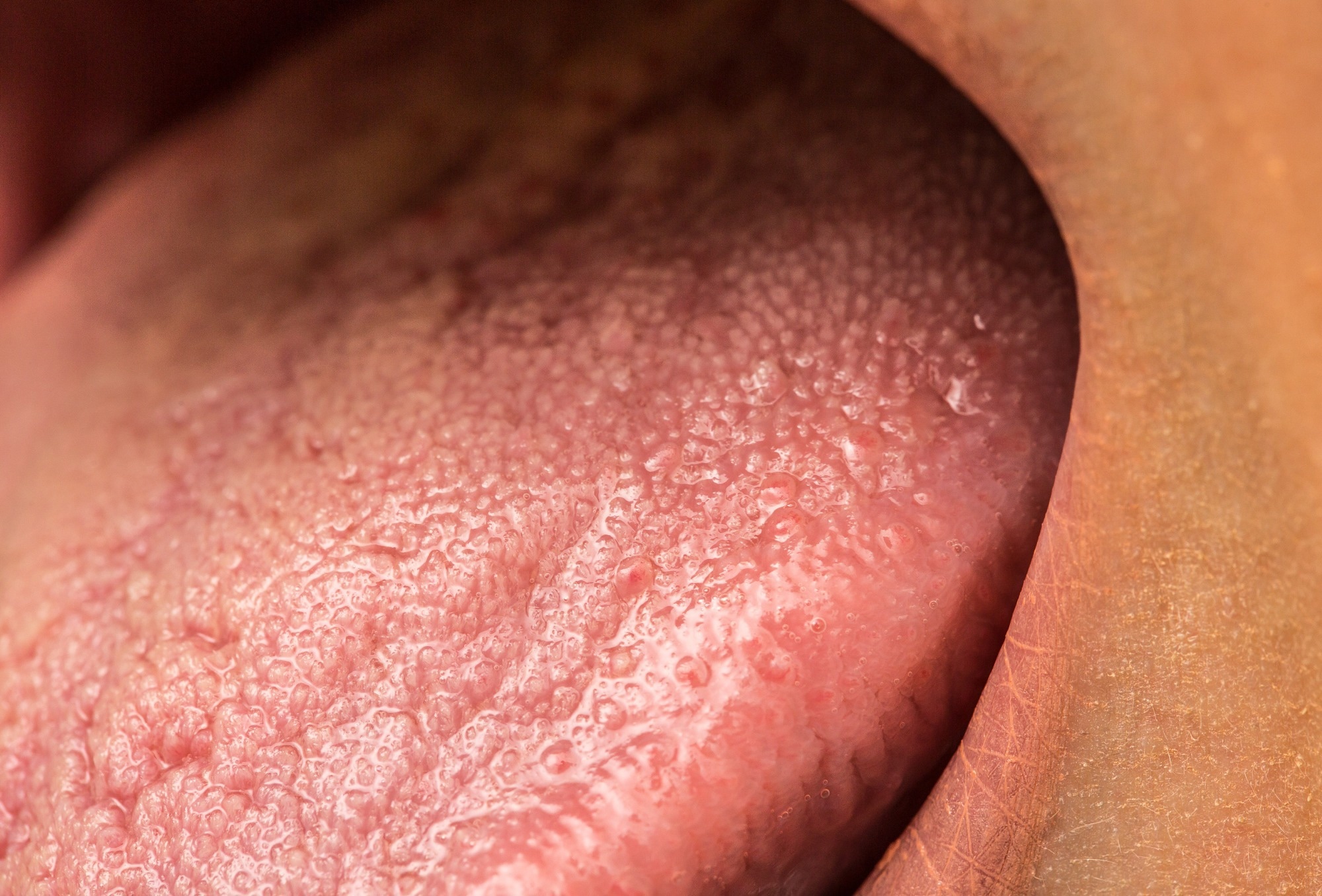 Image Credit: srulik / Shutterstock.com
What patients experience
Oncological patients with confirmed CITA diagnoses frequently report food tasting like ‘cardboard,’ ‘sandpaper,’ or ‘chemicals.’ According to the CITA scale, over 75% of these patients experience physical or neurobiological distortions where food is perceived as overly bitter or metallic.8
Following treatment cessation, most chemotherapy patients experience a gradual restoration of taste over time. However, a small subset of patients report permanent impairment, particularly those who received concurrent radiotherapy.3,7
Taste dysfunction has been linked to significant food aversions and a greater risk of cancer cachexia.9 Taste alterations are significantly correlated with increased nausea and profound appetite loss that exacerbates the risk of malnutrition.8 Large observational data also suggest that dysgeusia clusters with anorexia, nausea, vomiting, diarrhea, constipation, and oral mucositis during systemic treatment.1
Management strategies
Conventional management strategies primarily focus on symptomatic relief and nutritional support, which include dietary adjustments, pharmacological interventions, and clinical support. Early and individualized nutritional counseling are widely considered essential for maintaining weight and improving treatment tolerance.10
Current evidence supports a pragmatic, multimodal approach rather than a single proven treatment. Personalized nutritional counseling, flavor enhancement, and taste/smell training have shown promise, while zinc supplementation remains mixed and has not been consistently effective across studies.5,7,10 Clinicians also commonly recommend practical strategies such as texture changes and maintaining good hydration during meals, but robust randomized evidence is still limited.2 Because the literature remains heterogeneous, supportive care usually needs to be individualized according to the patient’s dominant symptoms, treatment type, and nutritional risk.2,7,10
Limitations and research gaps
One of the most prevalent limitations in CITA research is its reliance on subjective self-reports rather than objective psychophysical testing, such as taste strips. This subjectivity complicates the grading of toxicities under the Common Terminology Criteria for Adverse Events (CTCAE).8
Consequently, reviews underscore the urgent need for standardized assessment tools and large-scale randomized controlled trials to evaluate the safety and efficacy of pharmacological agents and supportive interventions before their routine clinical deployment.2,3,8,10 Future studies should also distinguish more clearly between true taste dysfunction and broader flavor disturbances driven by smell loss, xerostomia, or mucosal injury.2,3,4
Conclusions
With a prevalence of up to 93% and a clear link to increased mortality and malnutrition, CITA represents a critical priority for supportive oncology.2 Although estimates vary widely across studies and assessment methods, chemotherapy-related taste change is common and clinically important, but the evidence base for treatment remains heterogeneous, making early recognition, dietary support, and individualized symptom management especially important.1,2,7,10
References
- Silva, P. G., Barreto, G. A. V., Carlos, A. C. A. M., et al. (2024). Dysgeusia increases the risk for death and other side effects during antineoplastic systemic treatment for solid tumors: a cross-sectional study. Medicina Oral Patología Oral y Cirugia Bucal, e398–e407. DOI: 10.4317/medoral.26389. https://pmc.ncbi.nlm.nih.gov/articles/PMC11175576/
- T. Galaniha, L., & A. Nolden, A. (2024). Taste Alterations: Clinicians’ Perspective on Cancer Patient Outcomes and Management Strategies. Journal of Cancer Treatment and Diagnosis 8(1); 8–16. DOI: 10.29245/2578-2967/2024/1.1207. https://www.cancertreatmentjournal.com/articles/taste-alterations-clinicians-perspective-cancer-patient-outcomes-management-strategies.html
- Murtaza, B., Hichami, A., Khan, A. S., et al. (2017). Alteration in Taste Perception in Cancer: Causes and Strategies of Treatment. Frontiers in Physiology 8. DOI: 10.3389/fphys.2017.00134. https://www.frontiersin.org/journals/physiology/articles/10.3389/fphys.2017.00134/full
- NIH/NIDCD. (31 July 2023). Taste disorders. National Institute on Deafness and Other Communication Disorders. https://www.nidcd.nih.gov/health/taste-disorders. Accessed 06 April 2026
- Nagata, S., Korematsu, S., Suenaga, T., et al. (2023). Evaluation of Chemotherapy-induced Dysgeusia in Patients With Gastrointestinal Cancer: A Pilot Study. In Vivo 37(4); 1894-1900. DOI: 10.21873/invivo.13283. https://iv.iiarjournals.org/content/37/4/1894
- Yang, H., Cong, W., Yoon, J. S., & Egan, J. M. (2014). Vismodegib, an antagonist of hedgehog signaling, directly alters taste molecular signaling in taste buds. Cancer Medicine 4(2); 245-252. DOI: 10.1002/cam4.350. https://onlinelibrary.wiley.com/doi/10.1002/cam4.350
- Pellegrini, M., Merlo, F. D., Agnello, E., et al. (2023). Dysgeusia in Patients with Breast Cancer Treated with Chemotherapy - A Narrative Review. Nutrients, 15(1), 226. DOI: 10.3390/nu15010226. https://www.mdpi.com/2072-6643/15/1/226
- Kurt, B., & Öksüzoğlu, B. Ö. Ç. (2025). Factors Influencing Chemotherapy-Induced Taste Alterations in Cancer Patients Receiving Cisplatin Treatment: A Path Analysis. Cancer Control 32. DOI: 10.1177/10732748251363323. https://journals.sagepub.com/doi/10.1177/10732748251363323
- Mazzoleni, B., Ferrari, G., Lopane, D., et al. (2024). Management of dysgeusia in chemotherapy patients: A systematic review protocol. Clinical Nutrition Open Science 55; 215–222. DOI: 10.1016/j.nutos.2024.04.003. https://www.sciencedirect.com/science/article/pii/S2667268524000329
- Spencer, A. S., de Silva Dias, D., Capelas, M. L., et al. (2021). Managing Severe Dysgeusia and Dysosmia in Lung Cancer Patients: A Systematic Scoping Review. Frontiers in Oncology 11. DOI: 10.3389/fonc.2021.774081. https://www.frontiersin.org/journals/oncology/articles/10.3389/fonc.2021.774081/full
Further Reading
Last Updated: Apr 22, 2026