Introduction & Sustainable Protein Context
Nutritional Composition & Amino Acid Profile
Muscle Strength & Recovery Evidence
Cardiometabolic Effects in Preclinical Research
Processing Challenges, Allergens, & Food Safety
Conclusions
References
Further reading
From silk production to protein supplements, silkworm pupae are drawing scientific attention for their nutritional composition and the biological activity of their peptides.
 Image Credit: nicemyphoto / Shutterstock.com
Introduction & Sustainable Protein Context
Entomophagy, the consumption of edible insects, includes the established use of silkworm (Bombyx mori) pupae as food in several Asian countries.1,4 The silkworm is an economically important lepidopteran insect best known for silk production.
While silkworm pupae are sometimes discarded as waste or used in animal feed or manure, they also have a history of human consumption. Current research examines their use in protein-rich food ingredients, rather than treating them solely as a waste stream.1
Silk reeling leaves the silkworm pupa as a byproduct from which silkworm pupa protein (SPP) can be extracted, typically through alkali extraction and acid precipitation. Limitations of these methods include wastewater generation and changes in protein conformation that can affect emulsifying and foaming properties. Organic solvents may also be used separately, including for defatting; however, their use is distinct from alkali extraction and acid precipitation.1
Other extraction approaches include ultrasound- and microwave-assisted extraction and ionic liquid methodologies, which can improve extraction yield or alter functional properties under particular experimental conditions. These findings do not establish that every method preserves native protein structure or produces a food-safe ingredient without further assessment.1
Collectively, these processing approaches support research into SPP’s potential as a functional food ingredient. Direct human comparisons with animal (whey) and plant (soy) proteins are still needed before comparable sports nutrition benefits can be claimed.1,7
Eating Vietnam’s Most Exotic Insect!!
Nutritional Composition & Amino Acid Profile
Silkworm pupae are protein-rich, though reported concentrations vary with species, diet, analytical method, and processing. Bombyx mori pupae have been reported to contain 55.6% protein on a dry-weight basis, comprising up to 18 amino acids, including those required from the diet.3,4
A nutritional review reports an amino acid score of 100 and a protein digestibility-corrected amino acid score of 86 for silkworm pupae. Importantly, these reported values should not be treated as universal scores for all powders or isolates.
SPP also contains branched-chain amino acids (BCAAs) like leucine, isoleucine, and valine, which are relevant to muscle nutrition.4 Leucine content has been reported at 6.2 and 8.3 g/100 g protein in Bombyx mori and mulberry silkworm preparations, respectively, with corresponding isoleucine values of 3.4 and 5.7 g/100 g protein, and valine values of 4.7 and 5.6 g/100 g protein. The higher isoleucine and valine values cited for other silkworm species should not be assigned to Bombyx mori.3
Whole silkworm pupae also contain polyunsaturated fatty acids (PUFAs), including α-linolenic acid, as well as exoskeletal chitin, iron, zinc, and B-complex vitamins. Defatting and protein isolation can change this nutrient profile, so an isolate may contain substantially less lipid or chitin than the whole powder.
Chitosan is a derivative of chitin, and its presence in a finished product requires characterization. Reported mineral content alone does not establish high human bioavailability.4
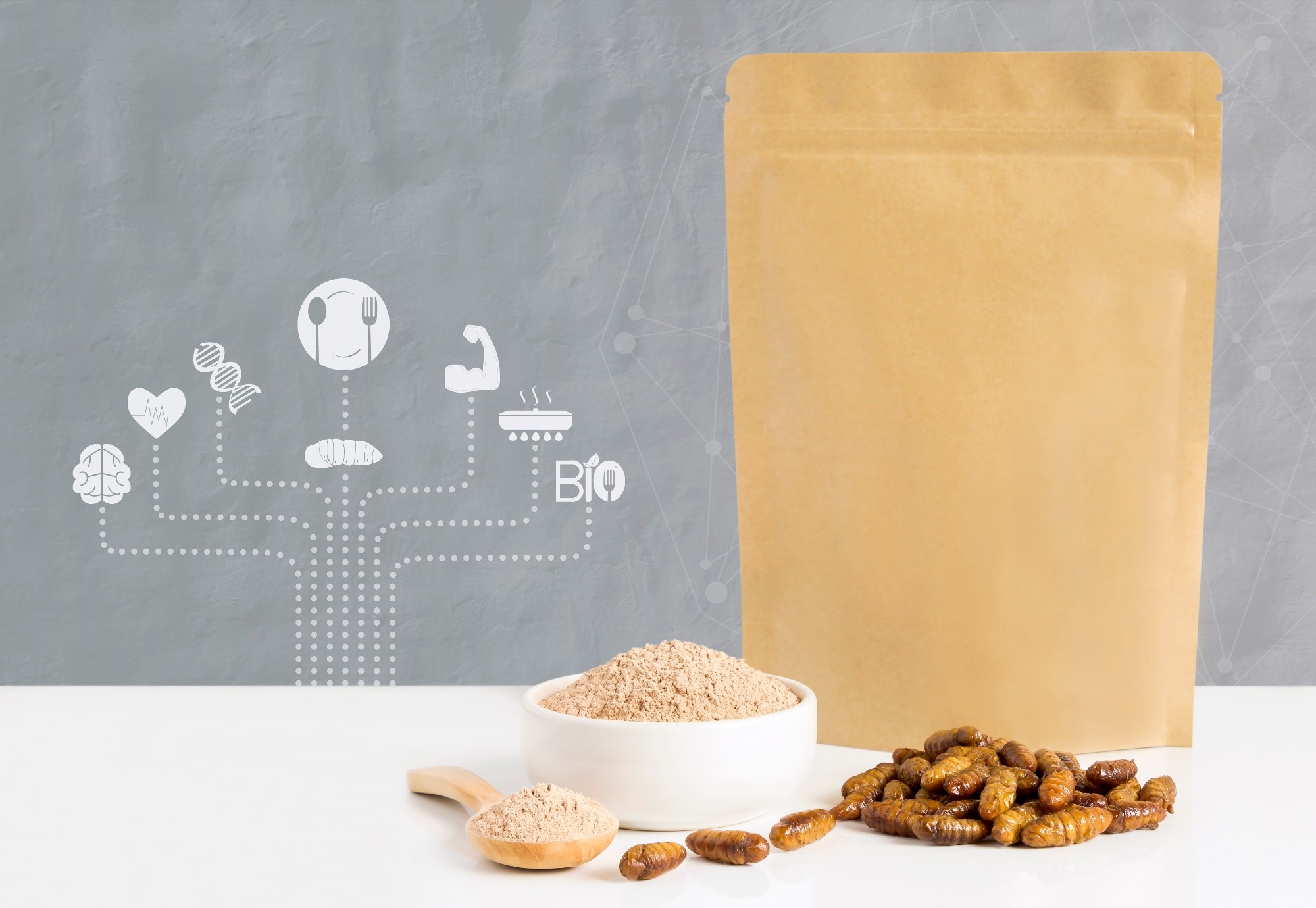 Image Credit: nicemyphoto / Shutterstock.com
Muscle Strength & Recovery Evidence
Although in vitro digestion studies examine protein breakdown and the release of bioactive material, they do not establish rapid gastrointestinal absorption kinetics or post-exercise plasma amino acid responses in humans.5,9
Preclinical in vitro experiments in mouse-derived C2C12 myoblasts demonstrated that a fraction of SPP hydrolysates increased markers of muscle differentiation, including MyoD, myogenin, and myosin heavy chain. The hydrolysate also promoted myogenic differentiation without observed cytotoxicity under the tested conditions. This supports further investigation, but does not demonstrate muscle repair or recovery in people.5
In a randomized, double-blind, placebo-controlled trial involving 54 middle-aged and older adults with relatively low skeletal muscle mass, 12 weeks of SPP extract supplementation and low-intensity exercise improved handgrip strength as compared to placebo. The primary outcome of knee extension/flexion strength did not improve relative to placebo, and no between-group benefits were observed for muscle mass, creatine kinase, creatinine, or quality of life.
This human trial provides limited evidence for a specific strength outcome, rather than established treatment of sarcopenia. Its abstract and methods report inconsistent daily extract doses, which should be clarified before citing a supplementation regimen.7
The available evidence does not establish that SPP consumption accelerates post-exercise recovery, reduces creatine kinase or lactate dehydrogenase after exercise in humans, or maintains a more favorable nitrogen balance than other protein supplements. The human trial was not an acute exercise recovery study and found no between-group reduction in creatine kinase.5,7
Enzymatic hydrolysis of SPP is one method for generating biologically active peptides like GAMVVH, a hexapeptide, and ASL. ASL is a tripeptide that exhibits angiotensin-converting enzyme (ACE) inhibitory activity in laboratory studies, while molecular docking suggests interactions with the ACE binding pocket. These findings support further investigation of blood pressure effects but do not demonstrate antihypertensive efficacy in humans.1
SPP hydrolysates also show antioxidant activity in laboratory assays, including scavenging of ABTS and DPPH radicals. Changes in these assays, including after simulated gastrointestinal digestion, do not establish reduced oxidative stress or disease risk in humans.3,9
In preclinical in vivo studies, different pupal preparations, including powder, hydrolysates, and oils, have shown effects on blood glucose or lipid metabolism. Reported mechanisms include inhibition of α-glucosidase, an enzyme involved in carbohydrate digestion. Findings for pupal oil or other fractions cannot be attributed automatically to SPP, and human efficacy remains unconfirmed.1,3
Researchers have also investigated chitin and its derivative chitosan for their effects on gut microbiota. Potential prebiotic applications have been proposed; however, these findings should be distinguished from demonstrated intestinal benefits of commercially available SPP powders or isolates.1
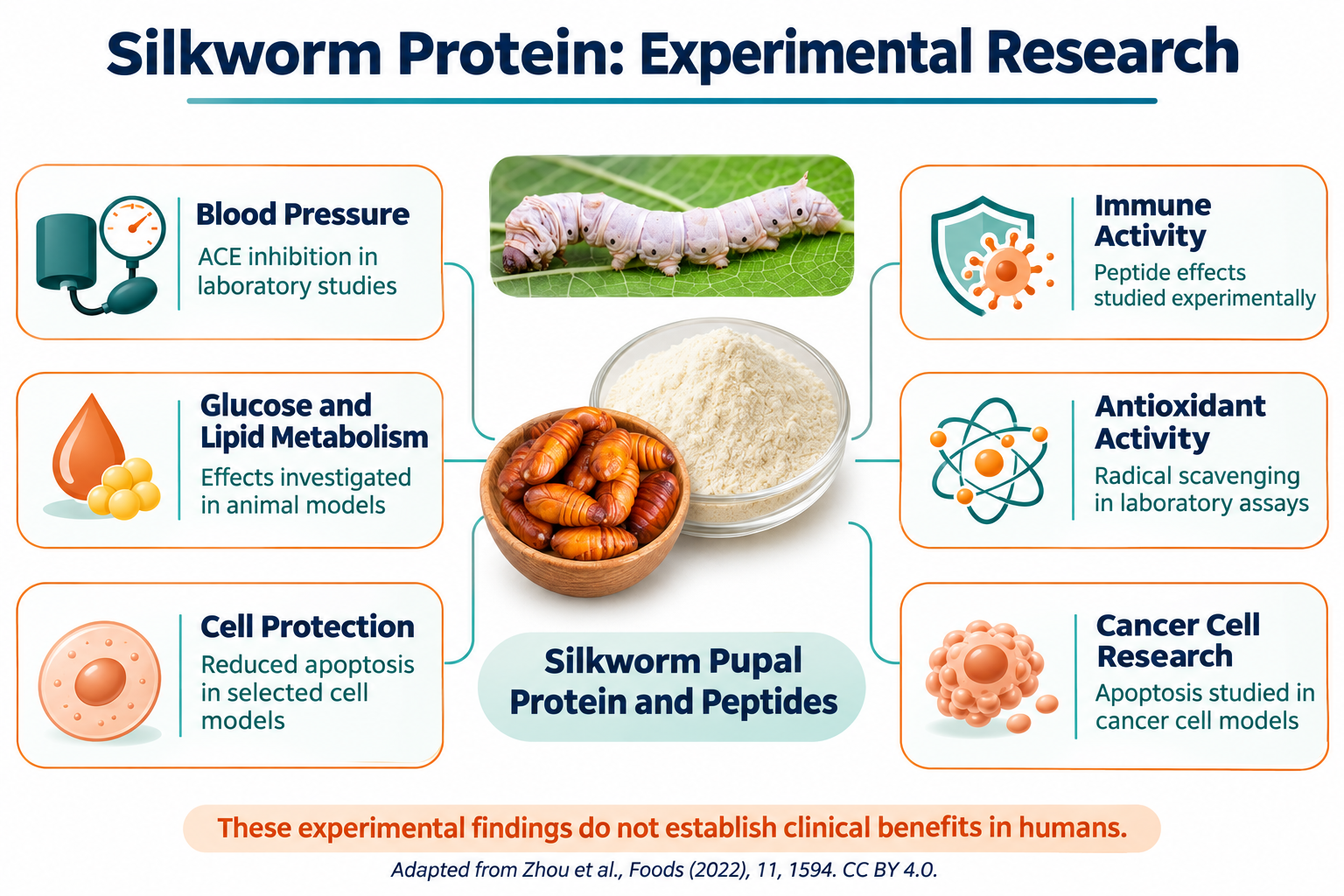 Function and physiological mechanisms of silkworm pupae proteins.3
Processing Challenges, Allergens, & Food Safety
Food safety, sensory properties, and allergenicity constrain SPP ingredient development. Furthermore, protein-rich composition alone does not establish product safety.1,8
Silkworm pupae can cause type I immunoglobulin E (IgE)-mediated allergic reactions; notably, this is an allergic process, not autoimmunity. Tropomyosin and arginine kinase are relevant insect pan-allergens, and cross-reactivity with crustaceans and house dust mites is a concern. Other silkworm allergens have also been described, and sequence similarity alone cannot predict whether an individual will have a clinical reaction.8
Silkworm pupae can have undesirable flavors, and their lipid content increases the risk of oxidation. Protein solubility and other functional properties vary with preparation, motivating research into defatting, microbial fermentation, and targeted enzymatic hydrolysis.1,9
Fermentation with Lactiplantibacillus plantarum Z4, for example, improved emulsion stability and altered antioxidant and allergenicity-related assay responses before and after simulated gastrointestinal digestion. These findings support further processing research, as reduced IgE-related responses in experimental assays do not establish safety for people with silkworm or shellfish allergy.9
Conclusions
Silkworm pupae provide a protein-rich byproduct for food research, and their amino acid composition supports investigation as a nutritional ingredient. Cell experiments and a small human trial provide preliminary muscle-related findings, but improved human muscle protein synthesis, post-exercise recovery, and cardiometabolic outcomes remain unproven.3-5,7
Further development requires standardized product composition, control of allergens and contaminants, and larger human trials with clearly defined outcomes. Fermentation can change functional properties and laboratory measures of allergenicity; however, clinical safety and benefit require separate evaluation.1,7-10
References
- Ding, X., Wang, J., Dai, J., et al. (2026). Silkworm pupae as emerging bioresources for food, health, and biomedical applications: composition, functionality, and challenges. Applied Food Research 6(2);102446. DOI: 10.1016/j.afres.2026.102446. https://www.sciencedirect.com/science/article/pii/S2772502226007845
- Wu, X., et al. (2023). Silkworm pupa protein and its peptides: Preparation, biological activity, applications in foods, and advantages. Trends in Food Science & Technology 139; 104129. DOI: 10.1016/j.tifs.2023.104129. https://www.sciencedirect.com/science/article/pii/S0924224423002443
- Zhou, Y., Zhou, S., Duan, H., et al. (2022). Silkworm Pupae: A Functional Food with Health Benefits for Humans. Foods, 11(11), 1594. DOI: 10.3390/foods11111594. https://www.mdpi.com/2304-8158/11/11/1594
- Hăbeanu, M., Gheorghe, A., & Mihalcea, T. (2023). Nutritional Value of Silkworm Pupae (Bombyx mori) with Emphasis on Fatty Acid Profile and Their Potential Applications for Humans and Animals. Insects 14(3), 254. DOI: 10.3390/insects14030254. https://www.mdpi.com/2075-4450/14/3/254
- Kang, H., Park, J., & Auh, J. (2023). Effects of Protein Hydrolysate from Silkworm (Bombyx mori) pupae on the C2C12 Myogenic Differentiation. Foods 12(15), 2840. DOI: 10.3390/foods12152840. https://www.mdpi.com/2304-8158/12/15/2840
- Tang, Z., Liu, H., Liu, Q., et al. (2025). The Rheb-mTORC1 Coordinates Cell Cycle Progression and Endoreplication in Bombyx mori. Insects, 16(7), 647. DOI: 10.3390/insects16070647. https://www.mdpi.com/2075-4450/16/7/647
- Choi, J. I., Kweon, H. Y., Lee, Y. L., et al. (2023). Efficacy of Silkworm Pupae Extract on Muscle Strength and Mass in Middle-Aged and Older Individuals: A Randomized, Double-Blind, Placebo-Controlled Trial. The Journal of Nutrition, Health and Aging 27(7); 578–585. DOI: 10.1007/s12603-023-1942-9. https://www.sciencedirect.com/science/article/pii/S1279770723002609?via%3Dihub
- De Marchi, L., Wangorsch, A., & Zoccatelli, G. (2021). Allergens from Edible Insects: Cross-reactivity and Effects of Processing. Current Allergy and Asthma Reports 21(5). DOI: 10.1007/s11882-021-01012-z. https://link.springer.com/article/10.1007/s11882-021-01012-z
- Yang, J., Zhang, L., Zhou, S., et al. (2026). Modification of Functional, Antioxidant, and Anti‐Allergic Properties of Fermented Silkworm Pupae Protein During In Vitro Gastrointestinal Digestion. Food Science & Nutrition 14(8). DOI: 10.1002/fsn3.72248. https://onlinelibrary.wiley.com/doi/10.1002/fsn3.72248
- EFSA Panel on Nutrition, Novel Foods and Food Allergens (NDA), et al. (2021). Safety of dried yellow mealworm (Tenebrio molitor larva) as a novel food pursuant to Regulation (EU) 2015/2283 [JB]. EFSA Journal 19(1). DOI: 10.2903/j.efsa.2021.6343. https://efsa.onlinelibrary.wiley.com/doi/10.2903/j.efsa.2021.6343
Further Reading
Last Updated: Nov 17, 2026