From cosmetics and synthetic clothing to airborne pollution, researchers examine how everyday exposure to tiny plastic particles could affect the skin and whether certain populations face greater risks.
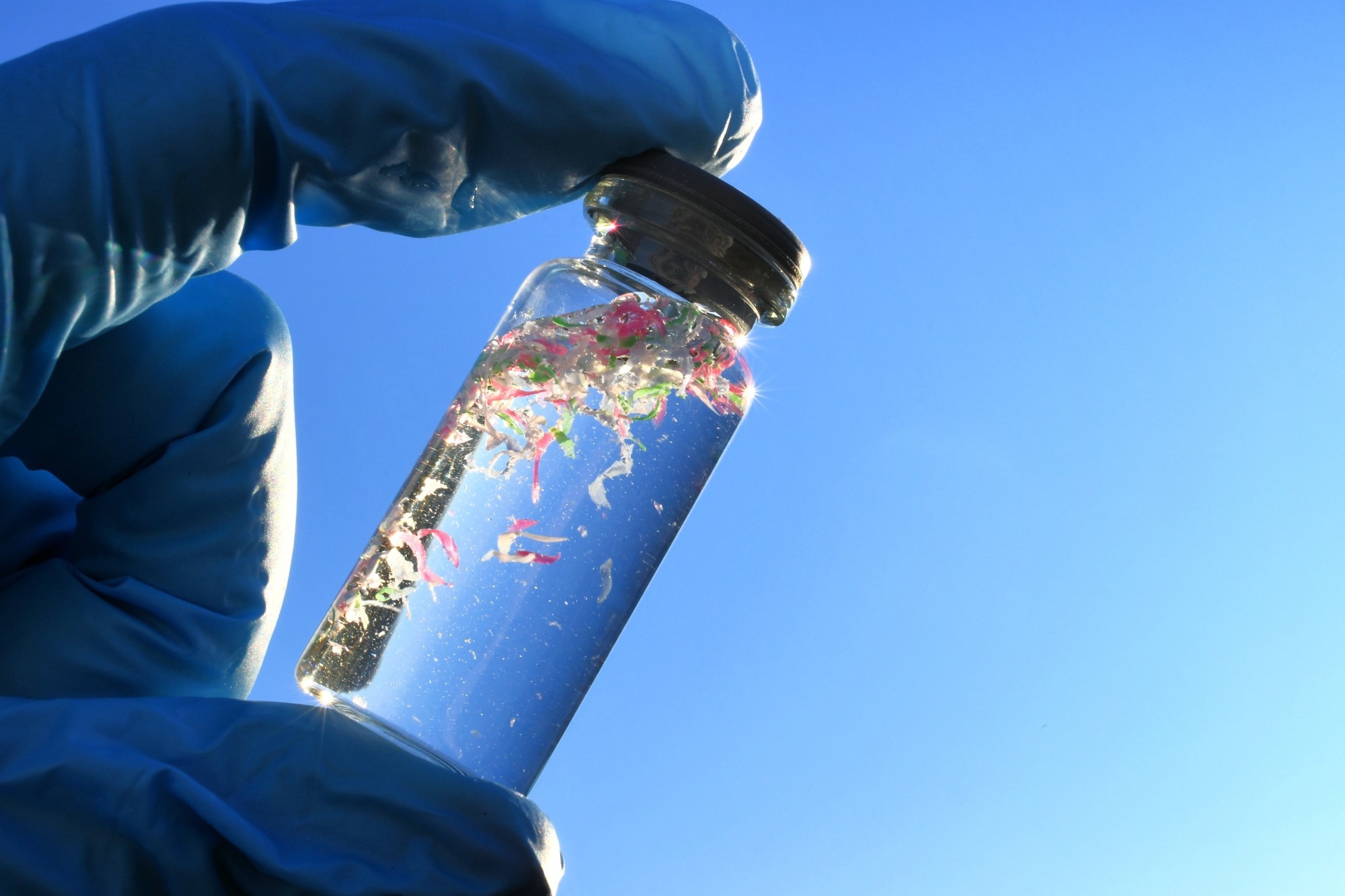
Study: Small Plastic Particles and the Skin: Microplastics, Nanoplastics, and Issues of Environmental Exposure, Dermatologic Implications, and Global Policy. Image Credit: MargJohnsonVA
The term microplastics was introduced in 2004, and since then, these particles have been detected in various parts of the body, including human blood, lung, and placental tissue. In a recent narrative review published in the American Journal of Clinical Dermatology, researchers examined existing evidence on how these particles reach the skin and whether they contribute to skin disease.
The researchers were affiliated with Rutgers Robert Wood Johnson Medical School, Yale School of Medicine, Vanderbilt University Medical Center, and the Perelman School of Medicine at the University of Pennsylvania, USA.
Background
Microplastics are plastic particles smaller than 5 millimeters, and nanoplastics are smaller than 1 micrometer. They form when larger plastic items break down, but some are also manufactured at tiny sizes for use in products such as exfoliating scrubs. Textiles, packaging, and personal care products release these particles into soil, air, and water. Plastic production is expected to triple by 2060, so human exposure to microplastics is also expected to rise.
The skin is a major point of contact because most personal care products are applied topically. While many countries restrict microbeads, many leave-on products and polymer ingredients fall outside these restrictions. Whether these particles can cross intact skin or contribute to dermatological diseases remains unclear.
About the study
The researchers used structured literature searches in three databases: Scopus, PubMed, and Web of Science. Search terms covered personal care products, pollution, and dermatology, as well as microplastics, nanoplastics, skin absorption, and cutaneous exposure. The searches were restricted to English-language papers published between 2000 and 2026.
The review included peer-reviewed original research and translational studies in toxicology and dermatology. The work had to examine how people are exposed to small plastic particles, whether particles enter the skin or hair follicles, their potential clinical effects, or whether human data carried policy relevance for dermatology. The team excluded studies that relied only on nonhuman models without relevance to people, general environmental surveys, and commentaries with no primary data.
The authors considered evidence from laboratory work on skin cells, experiments on human and pig skin samples, and computer modeling. The review distinguished the effects of the particles themselves from the effects of substances and organisms they can carry.
The review also covered ingredient labeling, regulations in the United States (US), South Korea, and the European Union, and international plastics treaty negotiations.
Key findings
Small plastic particles are widespread and can reach the skin through several everyday routes, but the evidence did not establish that they cause skin disease in people. Evidence of skin penetration and adverse cellular effects came primarily from laboratory experiments, with computer modeling providing further information on potential penetration pathways. Particles found on the skin or in hair follicles have not necessarily entered living skin tissue or the bloodstream.
Microplastics in personal care products
A 2024 analysis of 2,379 personal care items found plastic particles in 16% of them, and a 2025 study identified microparticle contamination in 22 commercial skin cleansers. The latter study estimated skin exposure without measuring actual penetration or absorption. While many cosmetics contain polymers such as polyethylene and polymethyl methacrylate, a polymer ingredient does not always mean plastic particles are present.
Percentage of tested personal care products containing microplastics
| Product type |
Prevalence |
Positive/tested |
| Facial scrubs |
26.5%
|
296/1,115 |
| Foot scrubs |
13.6%
|
6/44 |
| Body scrubs |
10.2%
|
37/362 |
| Toothpaste |
7.1%
|
11/154 |
| Soaps |
3.5%
|
22/620 |
|
0% 10% 20% 30%
|
|
Note: Across 38 studies, 390 of 2,379 personal care products (16.4%) contained microplastics. The table shows selected product categories. Percentages represent detection frequency among tested products, rather than particle concentrations, current market prevalence, or absorption through the skin. Source: Kukkola, A., Chetwynd, A. J., Krause, S., & Lynch, I. (2024). Beyond microbeads: Examining the role of cosmetics in microplastic pollution and spotlighting unanswered questions. Journal of Hazardous Materials, 476, 135053. DOI: 10.1016/j.jhazmat.2024.135053.
Skin penetration and cellular damage
Experiments showed that particles can stick to the skin surface and collect in hair follicles. In human skin samples pretreated to facilitate follicular penetration, small particles 40 nanometers in size entered epidermal immune cells called Langerhans cells, whereas much larger ones remained near the surface.
Particles also moved deeper when the skin's protective outer layer was experimentally removed. Computer modeling suggested that sweat-induced clumping of nanoplastics could reduce their ability to penetrate this protective layer.
In cultured skin cells, nanoplastics triggered oxidative stress, inflammatory responses, reduced cell viability, and early signs of cellular senescence, a state in which cells stop dividing. The doses tested may exceed everyday human exposure.
Potential links to inflammatory skin disease
Plastics can carry endocrine-disrupting chemicals, metals, and microbes, and some of these chemicals worsened inflammation in laboratory skin models of hidradenitis suppurativa, an inflammatory skin disease. Whether plastic particles themselves contribute to conditions such as atopic dermatitis or psoriasis has yet to be established.
Plastic particles may aggravate existing dermatitis through mechanical irritation or barrier disruption, but their role as independent skin allergens remains unproven.
Environmental studies show that microplastics can support microbial growth and harbor microbes, including antimicrobial-resistant bacteria and fungi. Whether this alters the human skin microbiome remains unclear.
Vulnerable populations
Textile workers in Dhaka faced roughly three times the estimated airborne microplastic exposure of urban adults, though the figures did not quantify skin exposure or absorption.
Infants may be particularly vulnerable because their protective outer skin layer is 20 to 30% thinner than that of adults. One small study found roughly tenfold higher concentrations of polyethylene terephthalate (PET) microplastics in infant feces than in adult feces. These measurements do not establish absorption through the skin.
Lower-income communities near waste sites may also experience environmental microplastic concentrations three to five times higher than urban averages.
Regulatory gaps
US microbead restrictions primarily target rinse-off products, while the European Union has introduced broader restrictions and reporting requirements for synthetic polymer microparticles. Cosmetic ingredient labels rarely specify particle size, shape, or physical form, making exposure difficult to assess.
International negotiations to establish a legally binding treaty addressing plastic pollution remained unresolved at the time of the review.
Conclusion
The review identified small plastic particles as an environmental exposure of potential concern for skin health, especially for people with damaged skin barriers, inflammatory skin disease, or heavy workplace exposure.
The authors could not establish causal links to skin disease and proposed patient education, advocacy for clearer labeling, and more dermatological research to measure how particles settle on the skin and whether they can penetrate it and enter the body.
Targeted exposure assessment and counseling may be appropriate in high-exposure settings, though current evidence does not support their routine use in dermatological care.
The authors reported no organizational funding for the review. Several disclosed professional or financial relationships with pharmaceutical or cosmetic companies, including L'Oréal.
Source:
Journal reference:
- Tan, I. J., Bassir, F., Nelson, C. A., Parker, E. R., & Rosenbach, M. (2026). Small plastic particles and the skin: Microplastics, nanoplastics, and issues of environmental exposure, dermatologic implications, and global policy. American Journal of Clinical Dermatology. DOI: 10.1007/s40257-026-01092-5. https://link.springer.com/article/10.1007/s40257-026-01092-5