From thrill-seeking personalities to stress-induced cravings, four decades of research explore the psychology behind our appetite for heat and what happens in the mind when we bite into a chili pepper.
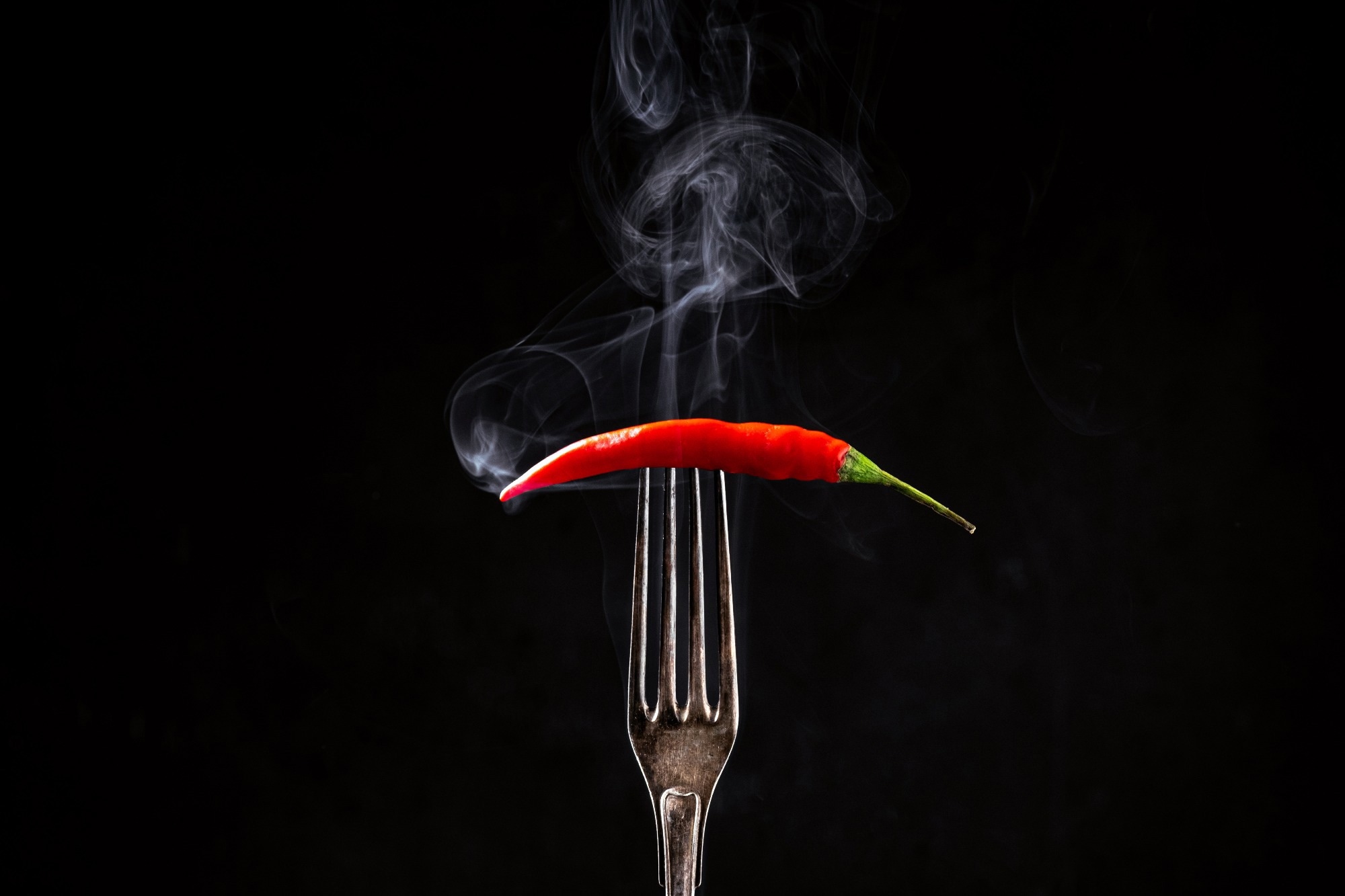
Study: Spicy Food and Psychological Processes: A Systematic Review of Bidirectional Associations and Possible Mechanisms. Image Credit: Andrei Iakhniuk / Shutterstock
The burning sensation of a chili pepper can be painful, yet people worldwide love it. In a systematic review published in the journal Foods, researchers examined more than four decades of evidence on how spicy food and psychological processes may shape one another.
Scientists from Anyang Normal University, Hainan Normal University, and Southwest University in China conducted the research, drawing on expertise in education and psychology.
Why people enjoy the burn
Spiciness is a sensation of oral heat, distinct from the five basic tastes, produced when capsaicin, a major pungent compound in chili peppers, activates transient receptor potential vanilloid 1 (TRPV1) receptors on sensory nerve endings. Even so, many people find the burn thrilling, a pattern often described as benign masochism, where a safe brush with discomfort becomes pleasurable.
Biology and upbringing both play a part. Twin research suggests that genes and surroundings shape how pleasant the burn feels; hormonal differences have been linked to spicy food intake, and cultural food practices and repeated childhood exposure can build a liking over time. Age, sex, geography, and socioeconomic conditions also appear to matter.
More recent work suggests the relationship may run in reverse, since eating spicy food can briefly alter risk-taking, emotion, and social judgment.
Examining four decades of research
The team examined human research to understand the bidirectional relationship between spicy food consumption and psychological factors. They searched four databases for peer-reviewed articles in English or Chinese published up to July 31, 2026. Search terms paired words for spiciness and chili compounds with words for personality, emotion, thinking, and food preferences.
Eligible studies involved eating spicy food, tasting capsaicin, viewing spicy food words or images, or measuring habits such as how often someone ate spicy food or how much they liked or craved it. The included studies focused on psychological factors, and studies of pain alone, topical capsaicin, animals, or purely sensory, medical, or commercial outcomes were excluded.
Because the studies varied widely in design and measurement, the findings were summarized narratively without a statistical meta-analysis. The results were grouped by psychological area, and habits or personal differences were separated from responses to tasting or viewing spicy cues. The authors also built an evidence map showing how reports were distributed across psychological domains and relationship types. The methodological quality of all included studies was assessed using the Mixed Methods Appraisal Tool (MMAT), which applies criteria for each study design.
Spicy food, personality, and behavior
Sensation seeking, a personality trait characterized by the pursuit of novelty and excitement, showed the most consistent positive association with spicy food preference and consumption. Sensitivity to reward, or how strongly someone responds to pleasurable outcomes, was more consistently linked to how often people ate spicy food than to how much they liked it. Wariness toward unfamiliar foods and strong disgust reactions were correlated with a weaker taste for heat.
Temporary emotional and motivational states also appeared to influence food choices. In one experiment, acute stress increased the desire for spicy food, and a survey of young women found that craving for spicy foods was lowest at moderate stress levels. Eating spicy chicken was associated with lower perceived stress during recovery, but participants were assigned to food groups according to their existing preferences.
In a randomized crossover experiment, adding cayenne pepper to a meal raised satisfaction and, an hour later, perceived energy without changing general mood. Participants also felt fuller and reported less desire for salty and spicy foods and more desire for sweet and fatty foods. Higher spice levels could increase negative emotions, particularly among infrequent consumers.
In separate experiments, people who ate spicy food showed more aggression-related thinking, rejected unfair offers more often in a money game, chose riskier options in a gambling task, and felt more powerful. The evidence linking spice preferences to behavioral risk-taking was less consistent.
Participants also selected a wider variety of items several minutes after eating spicy food. Spicy words and images elicited aggressive thoughts without any tasting, suggesting a possible role for learned social meanings. Cultural practices and language may help explain why people associate spiciness with courage, anger, or power.
Red colors, angular shapes, and high-pitched sounds were also associated with spiciness, and some sensory cues altered perceived heat during tasting. Two weeks of repeated exposure to low doses of capsaicin reduced subsequent oral burning, providing evidence of sensory adaptation.
The evidence on mental health and cognitive function was limited. Frequent spicy eating was linked to more depression and anxiety symptoms in Chinese university students. Several cross-sectional studies linked higher spicy food intake to better cognitive scores, whereas a 15-year cohort study found that people with higher chili intakes had poorer scores and reported more memory decline.
Of the 58 reports included in the review, most were cross-sectional questionnaire surveys and laboratory experiments, and only one used a long-term cohort design. The authors cautioned that many studies inadequately accounted for other factors that could influence the results or used samples that might not represent the wider population.
Can eating spicy food change personality?
The review identified associations between personality traits, temporary emotional states, and spicy food preferences and choices. Experiments indicated that eating it or encountering related cues could temporarily change emotional reactions, social judgments, and behavior.
The authors proposed a model of mutual influence involving bodily arousal, learned social meanings, sensory adaptation, and self-perception. Whether these processes reinforce future spicy food choices or produce lasting psychological changes remains untested.
Source:
Journal reference:
- Li, Z., Liu, W., & Chen, H. (2026). Spicy Food and Psychological Processes: A Systematic Review of Bidirectional Associations and Possible Mechanisms. Foods, 15(22), 4104. DOI: 10.3390/foods15224104. https://www.mdpi.com/2304-8158/15/22/4104
 Why do we turn to comfort food? A survey of 1,203 adults offers clues