Long working hours, rising food costs, and the convenience of ultra-processed meals are changing how people eat. A new review examines why the traditional Mediterranean lifestyle is becoming increasingly difficult to maintain.
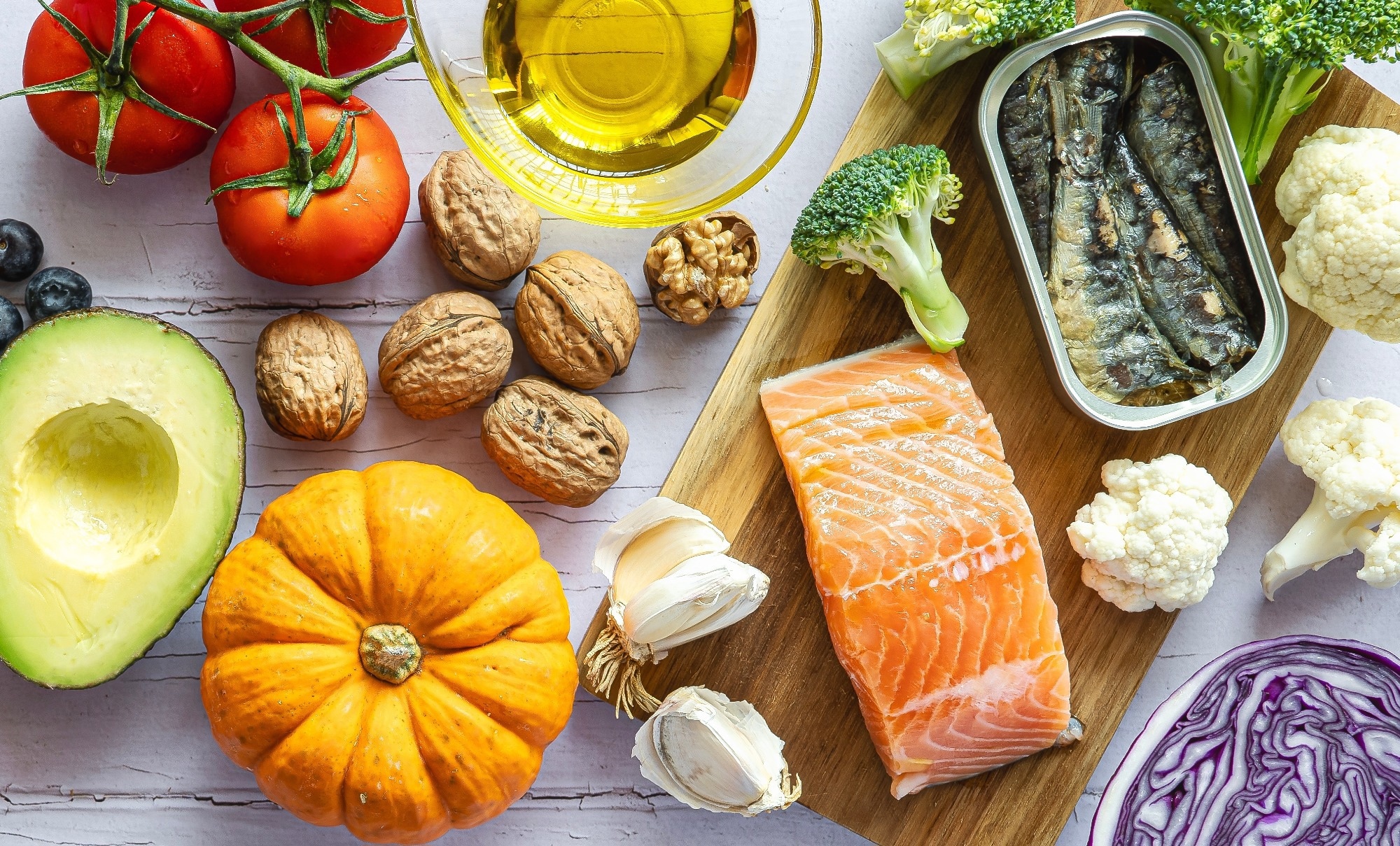
The Mediterranean Diet vs. 21st Century Lifestyle: A Review. Image Credit: Pacorpi / Shutterstock
Global obesity rates have more than doubled since 1990, and statistics from 2022 indicate that roughly 2.5 billion adults are living with overweight. In a recent narrative review published in the journal Applied Sciences, a team of researchers examined the challenges of adhering to the Mediterranean diet and considered strategies for adapting it to 21st-century urban lifestyles.
The Mediterranean diet
The Mediterranean diet is widely regarded as one of the healthiest eating patterns in the world. It centers on fruits, vegetables, olive oil, legumes, nuts, and whole grains, with modest amounts of fish, dairy, and eggs but little alcohol or red meat. The authors describe traditional wine consumption as a cultural practice, not a health recommendation. Populations that followed it in the mid-20th century were reported to have longer life expectancy and lower rates of chronic illness, including cardiovascular diseases and cancer, with other aspects of Mediterranean living also potentially contributing.
Since the 1960s, adherence to the Mediterranean diet has declined substantially, particularly among urban, younger, and lower-income groups. Long working hours, less time to cook, and inexpensive ultra-processed foods have pushed many people toward ready-to-eat products, some of which contain excess sugar, fat, and sodium but few micronutrients. These shifts also coincide with rising rates of obesity, metabolic disorders, and cardiovascular disease.
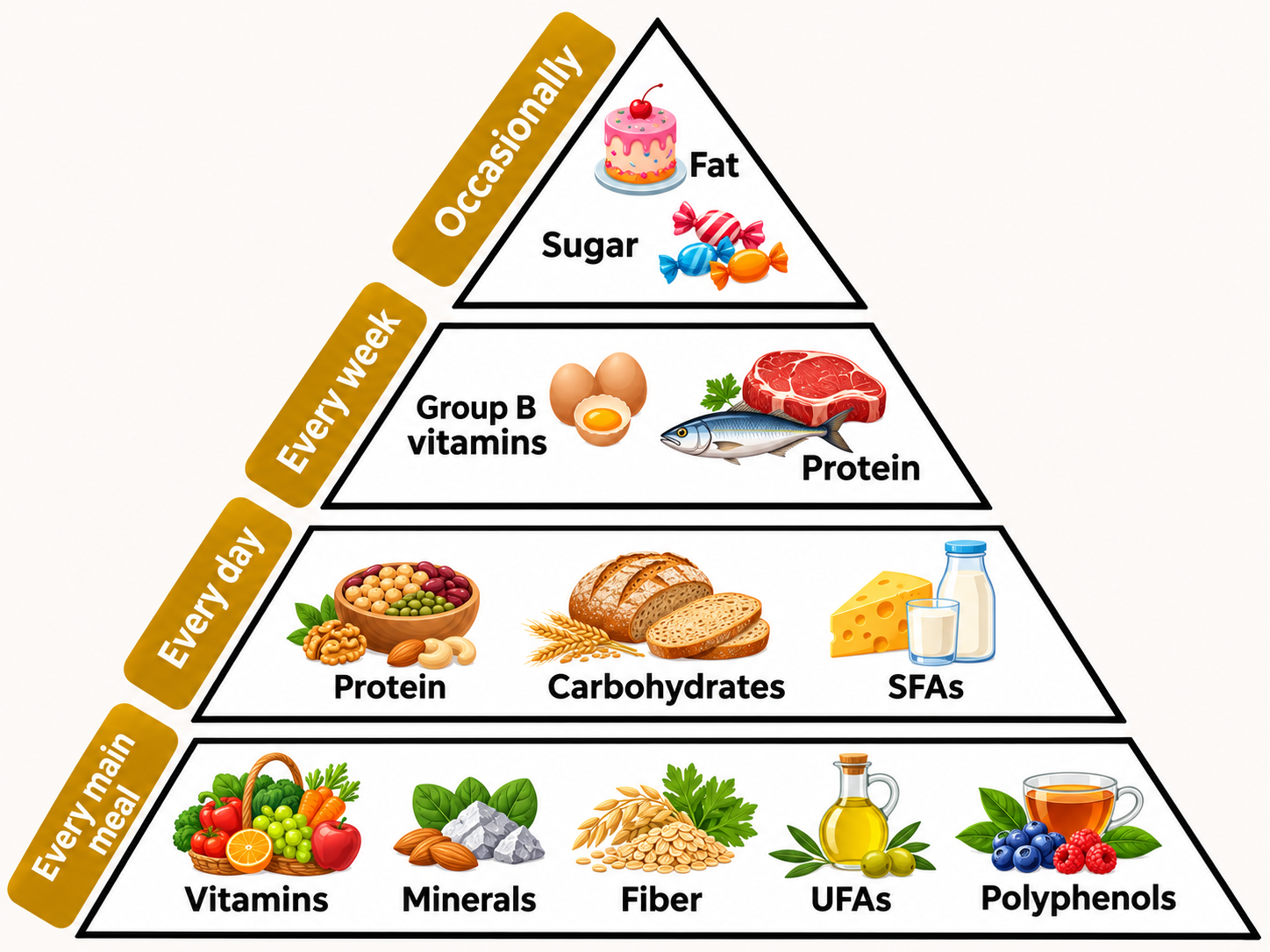
Pyramid of the Mediterranean diet with the main macro- and micronutrients.
The current study
Scientists from Bragança Polytechnic University, the University of Vigo, the Galicia Sur Health Research Institute, and the Polytechnic University of Guarda in Portugal and Spain conducted the study. They reviewed existing research to identify the challenges of adapting the Mediterranean diet to contemporary living and propose strategies to incorporate the Mediterranean way of eating into the modern diet.
The authors searched PubMed, Web of Science, ScienceDirect, and Google Scholar from October 2024 to December 2025. Search terms covered the Mediterranean diet, lifestyle, and adherence, as well as topics such as 21st-century lifestyles, nutrition transition, ready-to-eat foods, and ultra-processed foods. Terms were used individually and in relevant combinations, depending on the review’s scope.
The searches focused on peer-reviewed scientific articles in English, with emphasis on work from the previous 10 years, while older publications were also considered. Papers were selected based on how well their full text matched the review objectives. The final reference list held 116 sources, including online resources, book chapters, and journal articles. The authors did not use predefined exclusion criteria or a systematic screening protocol, leaving the selection open to bias.
The authors grouped the selected literature by topic. These covered the core foods of the Mediterranean diet and their nutritional contributions, the social and physical activity habits of the Mediterranean lifestyle, and adherence assessment with tools such as the MEDLIFE Index. The authors also gathered World Health Organization data on noncommunicable disease mortality in several Mediterranean countries between 1960 and 2020. Further sections examined food environment interventions in workplaces and schools, the formulation of ready-to-eat products, the use of agri-food byproducts, and strategies to promote physical activity.
Major findings
The review found evidence that modern urban living, characterized largely by limited time, reduced physical activity, and a food supply built around convenience, has made the traditional Mediterranean way of eating harder to sustain. The authors argued that targeted food and lifestyle strategies could help improve adherence. They also identified communal meals and everyday movement as features of the traditional Mediterranean lifestyle.
Lower adherence was reported among smokers, people under high stress, urban residents, those with low physical activity, and people with lower incomes. Healthy diets were also out of reach for around 3 billion people, while one cited comparison put ultra-processed foods at $0.55 per 100 calories, versus $1.45 for unprocessed foods. The authors also cautioned that increases in noncommunicable disease mortality in several Mediterranean countries could reflect population aging and other risk factors, rather than dietary changes alone.
Previous interventions that changed the food environment reported improvements in dietary adherence. In a workplace study, 96 male workers who ate Mediterranean canteen lunches for 12 months saw their Mediterranean diet score rise from 4.8 to 7.4, and the proportion with metabolic syndrome fell from 24% to 15.6%.
In another trial, 485 firefighters in the United States received supermarket discounts, free samples, online education, and chef demonstrations, with the researchers reporting a 10% improvement in Mediterranean diet adherence. A school program in Cyprus among 150 sixth graders, involving food tasting and cooking lessons, also improved nutritional knowledge and diet quality scores. Most interventions were evaluated in supported workplace or school settings, limiting conclusions about their effectiveness across broader populations.
Food formulation studies examined in the review showed that ready-to-eat foods could be formulated with improved nutritional profiles while maintaining acceptable taste and shelf life; for example, a multigrain snack with a 67:16:17 carbohydrate, protein, and fat ratio. Its carbohydrate and fat proportions fell outside the Mediterranean diet ranges cited by the authors. Most of those examples used non-Mediterranean ingredients, so their main relevance was demonstrating techniques that could be adapted using Mediterranean ingredients. The effects of such products on affordability and long-term adherence have not been established.
Studies cited in the review described how emerging green extraction technologies, such as supercritical fluid and ultrasound-assisted extraction, can efficiently recover bioactive compounds from plant residues. These extracts can be incorporated into functional foods, such as a protein-rich ready-to-drink beverage with blueberry pomace polyphenols.
Conclusions
The review concluded that, while the Mediterranean diet remained a strong model for reducing chronic disease risk, modern routines and food systems present challenges in adhering to the diet. The authors presented nutritionally balanced Mediterranean-style canteen meals, education programs, opportunities for walking and cycling, and Mediterranean-inspired ready-to-eat foods as potential strategies to support adherence, while acknowledging that many interventions were tested in supported settings and that long-term evidence for new food formulations is limited. Together, these approaches may help make healthy eating more accessible to people living fast-paced urban lives today.
Source:
Journal reference:
- Lopes, J. K., de Oliveira, I., Perez-Vazquez, A., Bartolomeu, R. F., Roriz, C. L., Prieto, M. A., & Carocho, M. (2026). The Mediterranean Diet vs. 21st Century Lifestyle: A Review. Applied Sciences, 16(21), 10902. DOI:10.3390/app162110902, https://www.mdpi.com/2076-3417/16/21/10902
 Why do we turn to comfort food? A survey of 1,203 adults offers clues