Can an intensive diet and exercise program reverse the course of type 2 diabetes in younger adults? A clinical trial spanning Canada and the UK investigates whether substantial weight loss and structured physical activity can improve blood sugar control while protecting muscle health.
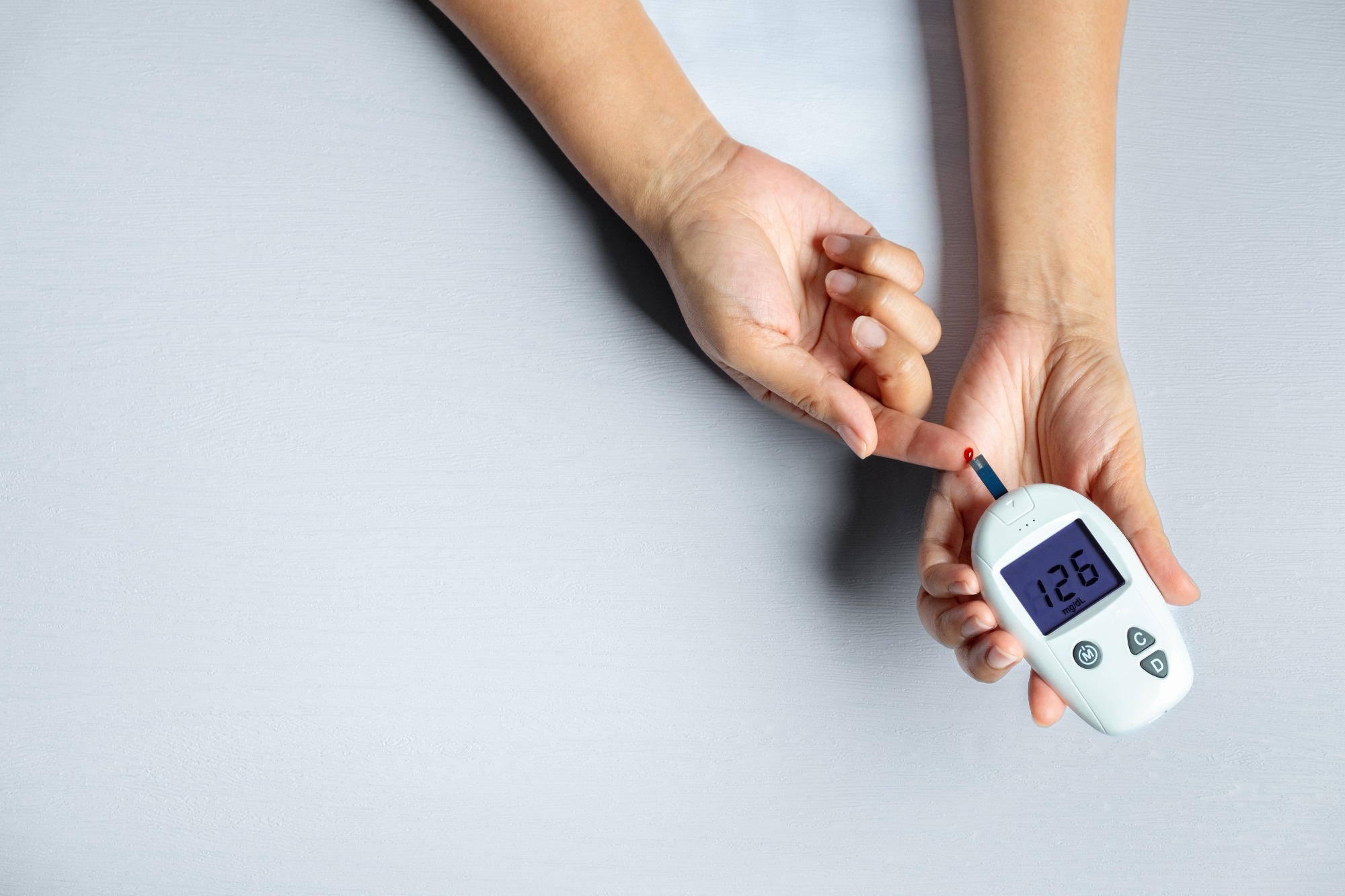
Study: Low energy diet plus supervised exercise vs. usual care alone in people with early-onset type 2 diabetes (RESET for Remission): a randomised, open-label, blinded-endpoint efficacy trial. Image Credit: Me dia / Shutterstock
Early-onset type 2 diabetes affected an estimated 3.8% of adults aged 20 to 39 worldwide in 2021. Researchers writing in The Lancet Regional Health Americas tested whether a low-energy diet with supervised exercise could induce remission in early-onset type 2 diabetes patients living with obesity.
Early-onset diabetes
Early-onset type 2 diabetes (EOT2D), where patients are diagnosed at 45 years or younger, follows a more aggressive course than diabetes diagnosed later in life. Blood sugar control deteriorates rapidly, and the risk of complications and early death is higher. Its prevalence is increasing.
For younger patients whose education and career plans may be disrupted by the disease, the goal is to achieve remission, where blood sugar levels are maintained below the diagnostic threshold without medication. While metabolic surgery can achieve remission, its invasive nature presents challenges. Some weight loss drugs lack evidence on decades-long use and are unsuitable during pregnancy or when planning conception.
Meal replacement low-energy diets (LED) are the best-established nonsurgical option, with remission rates above 45% at one year in earlier trials. However, remission is not well studied in EOT2D cases, and no remission trial has paired a low-energy diet with supervised exercise.
About the study
In this study, researchers from Canada and the United Kingdom (U.K.) conducted a randomized, open-label trial with blinded outcome assessment, known as RESET for Remission. Three centers took part, located in Leicester in the U.K. and in Montreal and Edmonton in Canada. The team enrolled adults aged 18 to 45 years who had been diagnosed with type 2 diabetes within the previous six years and who lived with obesity.
The study specified that participants could not use insulin or weight loss medication, and those with cardiovascular disease or stage 3 or more severe chronic kidney disease were excluded. Before randomization, candidates completed a run-in period that involved wearing an accelerometer for five days and recording food intake for four days. An independent statistician generated a web-based randomization sequence that assigned participants 1:1 to usual care or the intervention, balanced by country and sex. Usual care participants continued routine treatment from their own clinicians.
The intervention lasted 24 weeks. During the first 12 weeks, the participants followed a diet of 800 to 900 kilocalories per day, with an additional 200 to 250 kilocalories recommended on exercise days. The first two weeks used total meal replacement products, and later weeks allowed one food-based meal daily. Glucose-lowering and blood pressure medicines were stopped at the start, except where blood pressure treatment was required for albuminuria, and physicians reintroduced them when clinically needed. Exercise physiologists supervised two weekly sessions from week 3, progressing to about one hour each, split evenly between aerobic and resistance training, and participants completed a third aerobic session independently. During weeks 13 to 24, dietitians and exercise physiologists guided a gradual shift to a weight maintenance diet and independent exercise.
Major findings
The study found that a combined low-energy diet and supervised exercise program induced remission in more than half of adults with EOT2D over 24 weeks, far exceeding the rate seen with usual care. Remission, defined as HbA1c below 6.5% without glucose-lowering medication for at least 12 weeks, occurred in 27 of 50 participants (54%) in the intervention group and 2 of 46 (4%) in the control group. At 12 weeks, 58% of participants receiving the program were in remission, and by 24 weeks, all 14 participants who lost at least 10% of their body weight were in remission, although this finding involved a small subgroup.
The intervention group lost 7.5 kilograms more than controls, and fat mass fell by 16.5% relative to the control group, while changes in muscle volume and fat-free mass did not differ significantly between groups. Liver and pancreatic fat decreased, and fat stored inside muscle also declined. Compared with controls, handgrip strength improved by 7.6%, and fitness relative to body weight improved by 10.3%, although changes in absolute aerobic capacity did not differ significantly between groups.
Relative to usual care, systolic and diastolic blood pressure fell by 4 and 5 mmHg, respectively, while resting heart rate fell by 5 beats per minute. At 24 weeks, hypertension remission occurred in 56% of intervention participants with hypertension at baseline versus 27% of controls. Cardiac MRI showed favorable changes in left ventricular structure, although measures of diastolic function did not differ significantly between groups. Depressive symptoms, diabetes-related distress, and self-rated health also improved, but the overall health utility index showed no statistically significant between-group difference.
No serious adverse events occurred. Of the 50 intervention participants, 43 reported at least one adverse event, compared with 6 of 46 controls, mostly constipation, headache, dizziness, and fatigue that resolved with time. Musculoskeletal pain and physical injuries were also reported.
For a growing population at risk of early complications, these results support the feasibility of a structured remission program under supervised trial conditions. Overall, 90% of participants attended final assessments, while those receiving the intervention attended a median of 17 of 20 supervised exercise sessions. However, only 40% of intervention participants met the full adherence criteria.
The authors noted that the trial lacked a diet-only group, so they could not determine whether supervised exercise increased remission rates or independently contributed to fitness and muscle benefits. The small, selected study population and unequal clinical contact between groups also limited interpretation of some findings. Because follow-up ended at 24 weeks, the duration of remission remains unknown.
Conclusion
The study showed that combining a low-energy diet with supervised aerobic and resistance exercise produced high remission rates in adults with EOT2D. It also reduced body fat, largely preserved fat-free mass and muscle volume relative to usual care, and improved body-mass-adjusted fitness. The researchers concluded the clinically supervised approach was feasible and effective compared with usual care over 24 weeks, but recommended larger, longer trials comparing the diet alone with the diet plus exercise to identify the added benefit of exercise.
Source:
Journal reference:
- Dasgupta, K., Boulé, N. G., Henson, J., Redman, E., Chan, D., McCarthy, M., Rosa, D., Arsenyadis, F., Chevalier, S., Rees, J. L., Lim, J., Rowlands, A., Hadjiconstantinou, M., Da Costa, D., Gregg, E. W., Cowley, A., Friedrich, M. G., Prado, C. M., Sherman, M., … Yates, T. (2026). Low energy diet plus supervised exercise vs. usual care alone in people with early-onset type 2 diabetes (RESET for remission): A randomised, open-label, blinded-endpoint efficacy trial. The Lancet Regional Health - Americas, Article 101664. DOI:10.1016/j.lana.2026.101664, https://www.thelancet.com/journals/lanam/article/PIIS2667-193X(26)00294-2
 Electronic implant lowers blood glucose and reduces weight in mice