Could a daily handful of peanuts help the aging brain? A 16-week clinical trial reveals potentially beneficial changes in insulin responses across memory-related brain regions, offering new clues about how diet may influence cognitive health.
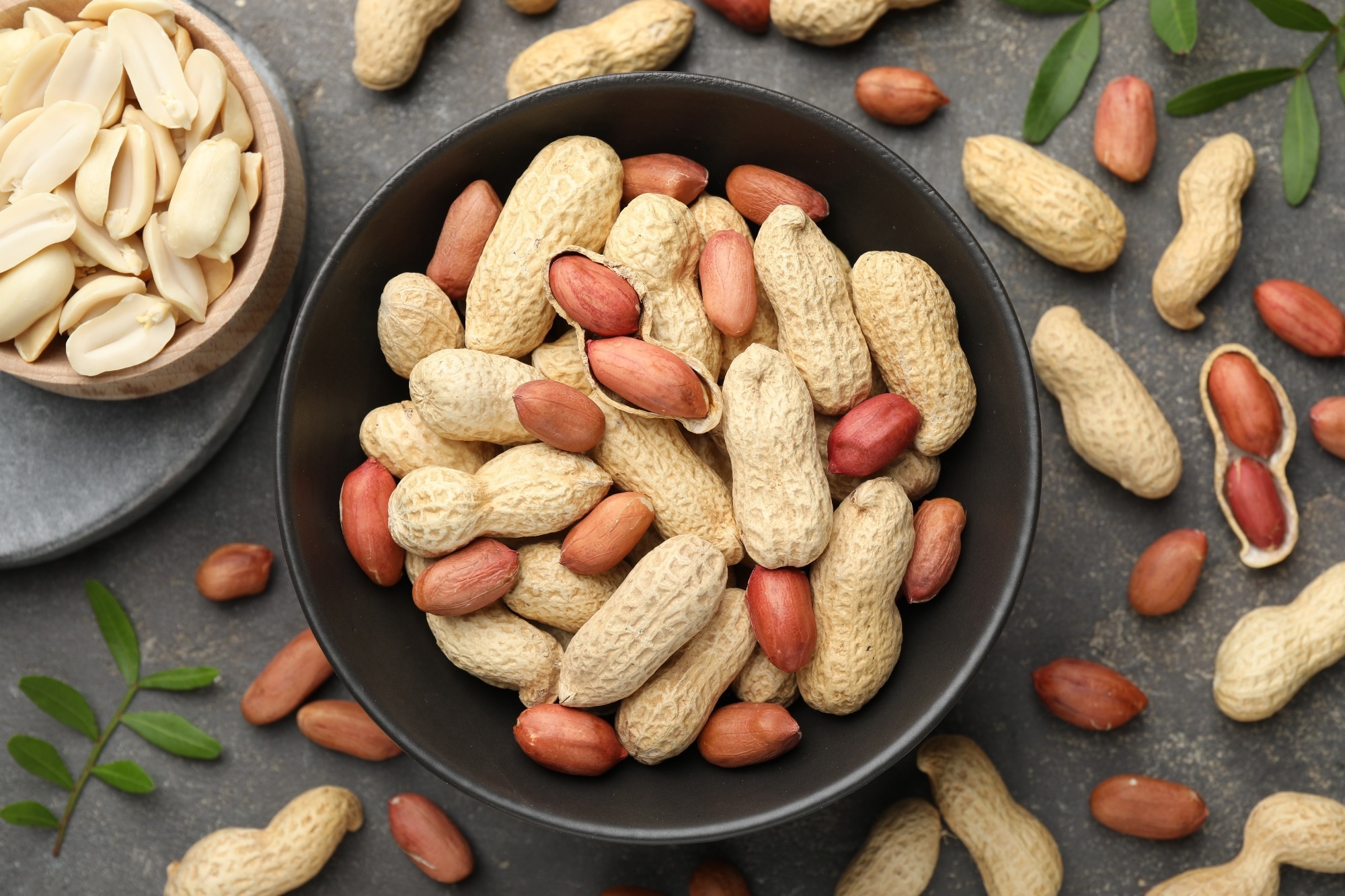 Study: Daily consumption of unsalted, skin-roasted peanuts beneficially affects regional brain insulin responsiveness in older adults: results of a longer-term randomized controlled trial. Image credit: New Africa/Shutterstock.com
A recent Food & Function study investigated whether changes in brain insulin responsiveness could help explain previously reported improvements in memory in older adults following daily consumption of unsalted, skin-roasted peanuts.
Brain insulin responsiveness and its modulation
Brain insulin responsiveness refers to how specific brain regions adjust neuronal activity in response to insulin. Although most glucose uptake in the brain occurs independently of insulin, the hormone has a critical, region-specific role in shaping neuronal circuits that govern cognition, appetite, and energy balance.
The hippocampus, prefrontal cortex, fusiform gyrus, and hypothalamus are especially rich in insulin receptors and play central roles in cognitive and metabolic regulation. Disrupted insulin signaling in these regions has been associated with cognitive decline and metabolic imbalance.
Impaired brain insulin responsiveness is increasingly recognized as an important pathophysiological feature associated with type 2 diabetes and neurodegenerative or age-related cognitive disorders, including Alzheimer's disease.
Lifestyle factors, including diet and exercise, can alter brain insulin responsiveness. Short-term consumption of high-calorie, high-fat foods can diminish brain insulin signaling, whereas aerobic exercise may enhance it in individuals with overweight or obesity.
Including nuts such as peanuts in the diet is generally encouraged for health. Recent studies suggest that daily consumption of skin-roasted peanuts can improve brain vascular function and memory in older adults. However, whether these cognitive benefits are linked to changes in brain insulin responsiveness from long-term peanut intake remains to be clarified.
Examining the effects of daily consumption of unsalted, skin-roasted peanuts on brain insulin responsiveness
The current randomized, single-blind, controlled crossover study analyzed whether 16 weeks of daily unsalted, skin-roasted peanut consumption could alter brain insulin responsiveness in older adults. Participants completed both a 16-week peanut intervention and a 16-week no-peanut control period, separated by an eight-week washout, with the order randomized.
Participants aged 60–75 years with a body mass index (BMI) of 20–35 kg/m² were enrolled if they had stable weight, no major metabolic or cardiovascular conditions, were not allergic to peanuts, were left-handed, were current or recent smokers, and did not use medications or supplements that could affect outcomes. Standard metabolic and blood pressure criteria were applied, while those with substance abuse, magnetic resonance imaging (MRI) contraindications, or recent trial participation were excluded.
During the intervention, participants consumed 60 g of skin-roasted peanuts daily, a dose selected for feasibility and previous evidence of vascular and cognitive benefits. Prepackaged sachets were provided for convenience. In the control period, participants abstained from peanuts and other nuts. Participants were also advised to avoid certain nuts and seeds with comparable nutrient profiles throughout the study. Study visits occurred at baseline, week 8, and week 16 of each period, following overnight fasting and abstention from alcohol and vigorous exercise. Blood samples were obtained at each visit.
At the end of each period, brain insulin responsiveness was assessed using arterial spin labeling MRI to measure cerebral blood flow before and 30 minutes after intranasal insulin administration (160 international units [IU] via nasal spray). Responsiveness was defined as the change in cerebral blood flow (CBF) following insulin. These insulin-induced CBF changes served as an indirect measure of regional brain insulin responsiveness rather than a direct assessment of neuronal insulin signaling.
Brain insulin responsiveness and cognitive performance
A total of 36 participants were randomized to begin with either the peanut intervention or the control period. Of these, 15 women and 16 men, with a mean age of 67 years and a BMI of 26.7 kg/m², completed the trial. Peanut intake was well tolerated overall, with excellent compliance. No protocol violations or study-related serious adverse events were reported. One unrelated serious adverse event was reported during the control period. One participant withdrew because of gastrointestinal discomfort following peanut consumption.
Anthropometric measures, including waist circumference and body fat percentage, remained stable throughout the study. The peanut intervention significantly increased total energy intake and shifted nutrient composition toward higher unsaturated fat and fiber, with reductions in carbohydrate, saturated fat, and cholesterol intake. Protein consumption was unchanged.
Analysis of brain responsiveness demonstrated that, after the peanut intervention, a distinct cluster in the right hemisphere, primarily encompassing the lingual gyrus, hippocampus, and parahippocampal gyrus, exhibited a significantly lower CBF response to intranasal insulin compared with the control period. This finding indicates a localized reduction in the insulin-induced CBF response, which the researchers interpreted as a potentially beneficial change in regional brain insulin responsiveness.
In memory-related regions such as the hippocampus, insulin can promote inhibitory neuronal signaling, potentially reducing neuronal activity and associated blood flow. The researchers suggested that a lower insulin-induced CBF response may therefore reflect more efficient or better-regulated neuronal activity. However, CBF is only an indirect measure of neuronal responses, and the physiological significance of these changes remains uncertain.
No other significant clusters were identified in the whole-brain analysis, and insulin-induced CBF responses did not differ significantly between intervention periods at the global, gray matter, cortical, or subcortical level. Furthermore, there was no statistically significant correlation between changes in regional brain insulin responsiveness and the observed improvements in verbal recognition memory. Notably, verbal recognition memory performance had improved following peanut consumption, as previously reported from the same trial. However, the absence of a significant correlation does not establish that these cognitive benefits occurred independently of changes in brain insulin responsiveness. The researchers cautioned that the study was not powered to detect such associations, and biological variability, measurement variability, and potentially nonlinear relationships may have obscured a connection.
The researchers also proposed that several nutrients and bioactive compounds in peanuts, including L-arginine, unsaturated fatty acids, fiber, and polyphenols, could contribute to the observed brain responses. L-arginine is a precursor of nitric oxide, which plays a role in neuronal signaling and blood flow regulation. However, the study did not directly investigate these mechanisms or establish which peanut components were responsible.
Peanut consumption did not significantly change intrahepatic lipid (IHL) content, with mean values remaining similar between intervention and control periods. Peanut intake also did not significantly affect the measured markers of glucose homeostasis, lipid metabolism, or low-grade systemic inflammation. Fasting plasma glucose, fasting insulin, and HOMA-IR were similar between the peanut and control periods, with minimal differences and no statistical significance.
Total cholesterol, low-density lipoprotein (LDL) cholesterol, and high-density lipoprotein (HDL) cholesterol also did not change significantly with the intervention. However, triglyceride (TAG) concentrations were significantly lower during the peanut intervention at week 8, but this effect was not sustained at week 16. Because these metabolic outcomes were exploratory and were not adjusted for multiple comparisons across outcomes, the transient triglyceride finding should be interpreted cautiously.
High-sensitivity C-reactive protein (hsCRP), an inflammation marker, did not differ significantly between periods. These results indicate that while peanut intake temporarily lowered triglycerides, it did not have significant effects on other metabolic or inflammatory markers.
An important limitation was the absence of an energy- and macronutrient-matched control food. Because participants partly added peanuts to their habitual diets without prescribed food replacements, the observed brain responses could reflect peanut consumption, accompanying changes in energy intake and dietary composition, or both. Furthermore, the study involved only 31 generally healthy older adults, limiting the generalizability of the findings to individuals with diabetes, established cognitive impairment, or other major health conditions.
Overall, the findings suggest that consuming 60 g of unsalted, skin-roasted peanuts daily for 16 weeks may beneficially alter insulin responsiveness in brain regions involved in memory. However, the study did not establish whether these changes directly contributed to improved cognitive performance. Further research with appropriate dietary controls is needed to clarify the underlying mechanisms, identify the responsible peanut components, and determine the clinical relevance of these regional brain responses.
 Premature menopause linked to higher heart disease risk and insulin levels