Introduction
Why nutrition advice often falls short
What is culinary medicine?
How cooking skills influence health
Culinary medicine in clinical practice
Teaching future healthcare professionals
Challenges and future directions
Conclusions: Bringing nutrition science into everyday practice
References
Further reading
What happens when dietary advice becomes a cooking lesson? Teaching kitchens offer a setting to examine how food-preparation skills connect nutrition science to everyday patient care.
 Image Credit: Josep Suria / Shutterstock.com
Introduction
Culinary medicine combines nutrition science with practical cooking education to help patients prepare meals that support health. It also teaches healthcare professionals to translate dietary recommendations into practical advice.3,4
Why nutrition advice often falls short
Recent reviews highlight a gap between nutrition education in medical training and the practical preparation of nutritious meals.3,4,7 Diet is a modifiable risk factor for chronic non-communicable diseases, yet traditional medical education provides limited and inconsistent formal training in nutrition.1,4
Physicians may lack the training and confidence to provide individualized nutrition counseling. Brief, generic recommendations to eat healthier can overlook the practical, behavioral, and socioeconomic barriers that patients, especially those experiencing poverty or food insecurity, encounter daily. 1-3
Culinary medicine is a multidisciplinary approach to making dietary recommendations easier to apply. The field combines nutrition science, hands-on cooking skills, and behavior change strategies.3,4
This direct translation of clinical nutrition into the physical act of cooking helps patients apply dietary advice in everyday life.3
What is culinary medicine?
Culinary medicine is an evidence-based, interprofessional field that combines culinary arts, nutrition science, and medical education to prevent and manage diet-related diseases.3 It complements dietetics and lifestyle medicine by linking practical food-preparation skills to dietary care, with physicians, chefs, and registered dietitian nutritionists contributing different expertise.3,4,9
Culinary medicine draws on several disciplines, including medicine, dietetics, professional culinary arts, behavioral science, and public health. This collaborative approach aims to make dietary advice scientifically sound, culturally relevant, and appealing to eat.3,4
 Image Credit: Inside Creative House / Shutterstock.com
How cooking skills influence health
At the cellular level, nutrient availability can influence metabolic pathways involved in systemic inflammation, oxidative stress, and cellular senescence.5 Key examples of these pathways include the mechanistic target of rapamycin (mTOR), adenosine monophosphate (AMP)-activated protein kinase (AMPK), and sirtuins.5 This dietary-intervention research includes cell and animal experiments and does not establish that culinary medicine changes these pathways in patients.5
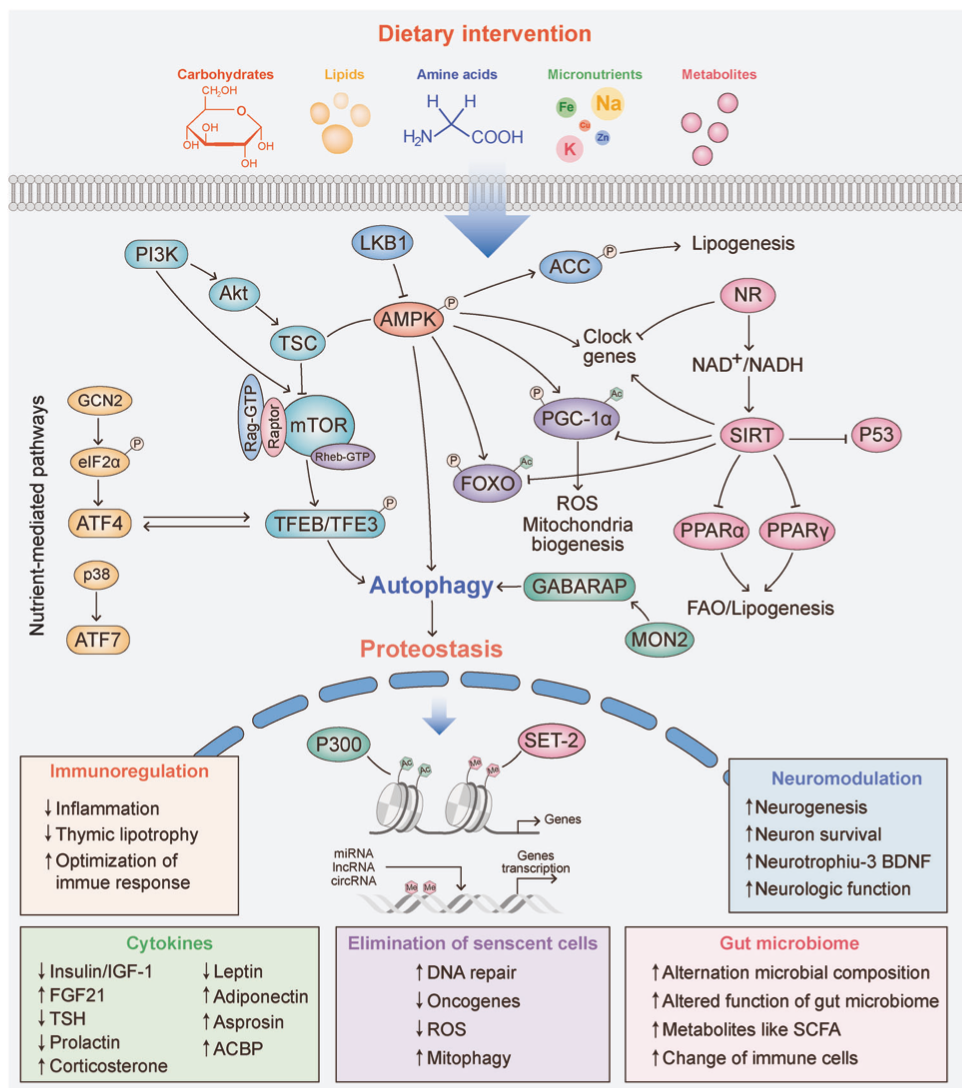
Molecular and effector mechanisms of dietary intervention. Dietary intervention engages by alterable consumption of numerous nutrients, including carbohydrates, lipids, amino acids, micronutrients, and metabolites. Nutrient signals under diverse dietary interventions lead to activation of multiple biochemical pathways. As a result, these pathways involve in downstream effectors like cytokines secretion, immunoregulation, gut microbiome homoeostasis, elimination of senescent cells, and neuromodulation.5
Population surveys indicate that only a small fraction of adults meet the recommended daily intake of fruits and vegetables.6 For example, estimates based on self-reported 2019 data from 49 U.S. states and the District of Columbia indicate that only 12.3% of adults met fruit recommendations, whereas 10% met national vegetable recommendations.6
Culinary medicine programs have been linked to improved overall diet quality and increased vegetable consumption. These programs teach patients to use healthy ingredients at home; however, outcomes vary by program and study design.3,8
Cooking confidence and food literacy may support long-term dietary behaviors, but patients also face barriers such as limited time, high costs, and limited food access.2,3 Cooking education should accompany strategies that address the broader socioeconomic and environmental factors influencing food security. 2,3
The evidence for culinary medicine includes educational studies and smaller patient interventions. Scoping reviews report improvements in medical students’ nutrition knowledge and counseling confidence, but these findings do not establish improved patient health outcomes.4,7
In one nonrandomized pilot study investigating a virtual cooking curriculum combined with food prescriptions in patients with type 2 diabetes (T2D), biometric analyses included 33 participants in the combined-program group and 75 receiving food prescriptions alone.8
Within the combined-program group, participants’ hemoglobin A1c (HbA1c) levels fell by an estimated 0.96 percentage points. The difference in HbA1c change between groups was not statistically significant, and blood pressure and body mass index did not change significantly.8
Participants receiving cooking education reported increased fruit and vegetable intake and greater cooking confidence. These findings support further research but do not establish an added glycemic benefit from cooking education.8
Culinary medicine in clinical practice
In clinical environments, culinary medicine can support dietary care for conditions such as obesity, T2D, and cardiovascular disease (CVD).3 This practice helps patients translate dietary recommendations into practical meal preparation, with registered dietitian nutritionists contributing dietary assessment and individualized counseling.3
Culturally appropriate, individualized dietary guidance is part of culinary medicine, though its independent contribution to clinical outcomes remains uncertain.3,8 Programs can adapt recipes to patients’ food preferences, cultural heritages, and financial realities.3,8
Multidisciplinary care models can combine culinary medicine with shared medical appointments. During these group visits, patients receive routine medical evaluations and interactive culinary education, with opportunities for peer support and behavior change. Financial feasibility depends on staffing, attendance, and reimbursement arrangements.3
Culinary Medicine at Yale's Teaching Kitchen
Teaching future healthcare professionals
Medical schools, residency programs, and some nursing schools have introduced culinary medicine curricula.3,4 These programs often incorporate teaching kitchens, and scoping reviews report improvements in trainees’ nutrition knowledge and confidence in discussing nutrition with patients.4,7 This culinary education complements traditional biochemical nutrition training by providing opportunities to practice dietary counseling.3,4,7
Expert consensus panels have proposed core competencies for lifestyle medicine and nutrition education. The 2024 nutrition consensus statement recommended 36 competencies covering nutrition knowledge, assessment, communication, treatment, and referral. The 2022 lifestyle medicine update explicitly included culinary medicine. These recommendations guide training but do not demonstrate that practitioners have acquired the skills.1,9
Challenges and future directions
Published analyses identify implementation challenges for culinary medicine. Small sample sizes, heterogeneous intervention designs, and variable outcome measures often constrain current research, making broad standardization difficult.4,7,8 Limited follow-up and reliance on self-reported outcomes also restrict conclusions.4,7,8
Logistical barriers include facility costs, faculty expertise, and healthcare reimbursement, particularly in under-resourced communities.3,4 Portable cooking equipment and community facilities can provide alternatives to purpose-built teaching kitchens, while virtual teaching kitchens have offered an additional delivery option.
Food is Medicine programs providing healthy ingredients can complement cooking education by addressing food access. The 2024 implementation review examined programs providing unprepared foods; its findings should not be extended directly to medically tailored meal delivery.2,3
Conclusions: Bringing nutrition science into everyday practice
Through hands-on teaching kitchens and virtual platforms, culinary medicine can help patients apply dietary advice and improve healthcare professionals’ nutrition knowledge and counseling confidence. 3,4,7 Evidence for sustained clinical benefits remains limited. Larger controlled studies with longer follow-up are needed to distinguish the effects of cooking education from food provision and other care.7,8
References
- Eisenberg, D. M., Cole, A., Maile, E. J., et al. (2024). Proposed Nutrition Competencies for Medical Students and Physician Trainees. JAMA Network Open 7(9). DOI: 10.1001/jamanetworkopen.2024.35425. https://jamanetwork.com/journals/jamanetworkopen/fullarticle/2824217
- Houghtaling, B., Short, E., Shanks, C. B., et al. (2024). Implementation of Food is Medicine Programs in Healthcare Settings: A Narrative Review. Journal of General Internal Medicine 39(14); 2797–2805. DOI: 10.1007/s11606-024-08768-w. https://link.springer.com/article/10.1007/s11606-024-08768-w
- Wood, N. I., Stone, T. A., Siler, M., et al. (2023). Physician-Chef-Dietitian Partnerships for Evidence-Based Dietary Approaches to Tackling Chronic Disease: The Case for Culinary Medicine in Teaching Kitchens. Journal of Healthcare Leadership 15; 129-137. DOI: 10.2147/jhl.s389429. https://www.dovepress.com/physician-chef-dietitian-partnerships-for-evidence-based-dietary-appro-peer-reviewed-fulltext-article-JHL
- Newman, C., Yan, J., Messiah, S. E., & Albin, J. (2023). Culinary Medicine as Innovative Nutrition Education for Medical Students: A Scoping Review. Academic Medicine 98(2), 274- 286. DOI: 10.1097/acm.0000000000004895. https://academic.oup.com/academicmedicine/article/98/2/274/8344624
- Wu, Q., Gao, Z., Yu, X., & Wang, P. (2022). Dietary regulation in health and disease. Signal Transduction and Targeted Therapy 7(1). DOI: 10.1038/s41392-022-01104-w. https://www.nature.com/articles/s41392-022-01104-w
- Lee, S. H., Moore, L. V., Park, S., et al. (2022). Adults Meeting Fruit and Vegetable Intake Recommendations - United States, 2019. MMWR. Morbidity and Mortality Weekly Report 71(1); 1-9. DOI: 10.15585/mmwr.mm7101a1. https://www.cdc.gov/mmwr/volumes/71/wr/mm7101a1.htm?s_cid=mm7101a1_w
- Tan, J., Atamanchuk, L., Rao, T., et al. (2022). Exploring culinary medicine as a promising method of nutritional education in medical school: a scoping review. BMC Medical Education 22(1). DOI: 10.1186/s12909-022-03449-w. https://link.springer.com/article/10.1186/s12909-022-03449-w
- Sharma, S. V., McWhorter, J. W., Chow, J., et al. (2021). Impact of a Virtual Culinary Medicine Curriculum on Biometric Outcomes, Dietary Habits, and Related Psychosocial Factors among Patients with Diabetes Participating in a Food Prescription Program. Nutrients 13(12); 4492. DOI: 10.3390/nu13124492. https://www.mdpi.com/2072-6643/13/12/4492
- Lianov, L. S., Adamson, K., Kelly, J. H., et al. (2022). Lifestyle Medicine Core Competencies: 2022 Update. American Journal of Lifestyle Medicine, 16(6), 734- 739. DOI: 10.1177/15598276221121580. https://journals.sagepub.com/doi/10.1177/15598276221121580
Further Reading
Last Updated: Oct 20, 2026