Introduction
Glass: Low Chemical Migration and Product Differences
Food-Grade Stainless Steel: Durability and Metal Migration
Ceramic & Earthenware: Glaze Quality and Heavy Metal Risks
Plastics: Endocrine Disruptors, Leaching, and Microplastics
Limitations and Research Gaps
Conclusions
References
Further reading
What enters your drink beyond the beverage itself? Explore the science of chemical migration, hidden material exposures, and the factors that influence the safety of the containers we use every day.
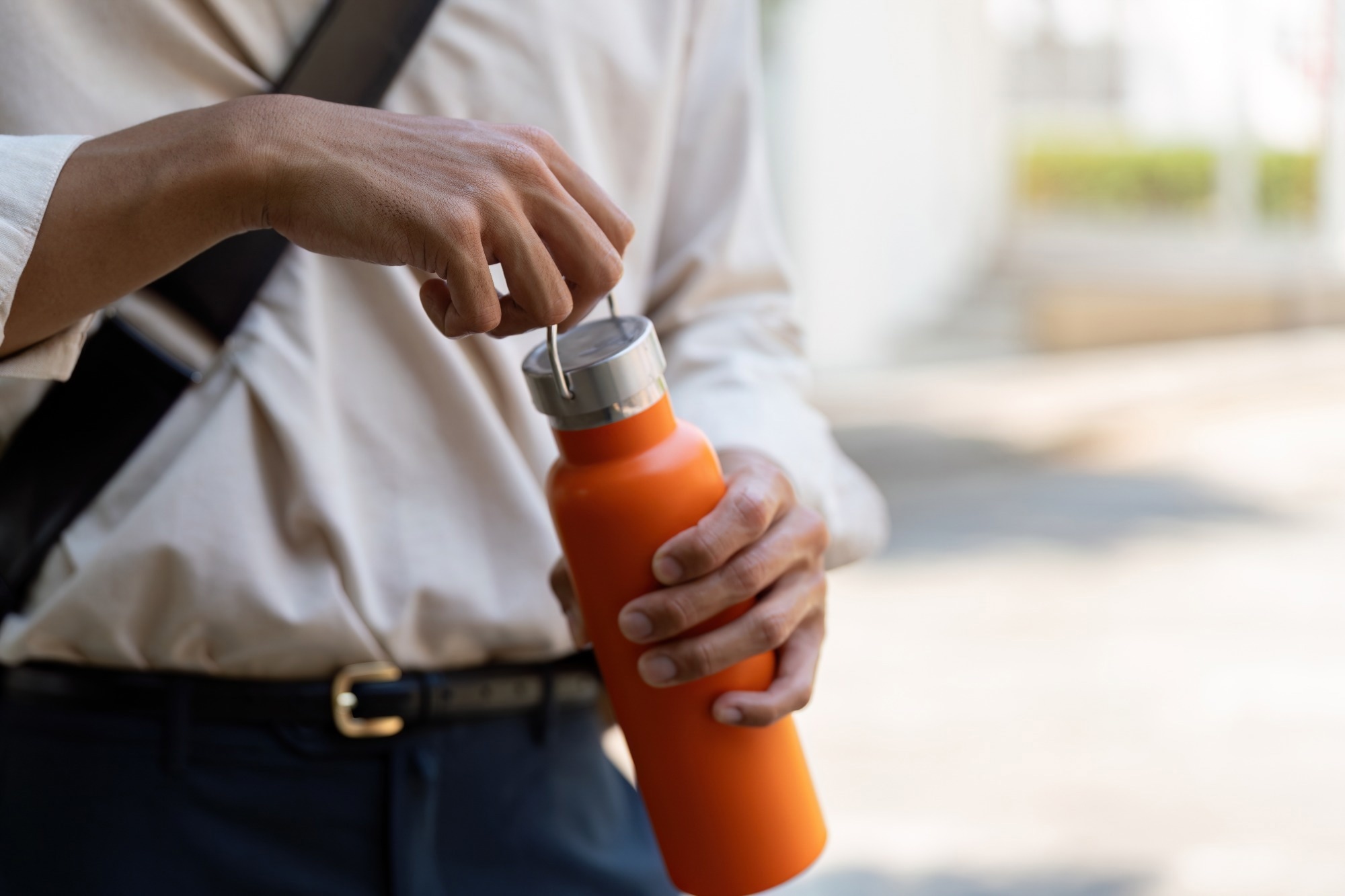 Image Credit: Natee Meepian / Shutterstock.com
Introduction
The selection of daily drinkware can affect exposure to endocrine-disrupting chemicals (EDCs), plastic particles, and heavy metal migration. Material composition, surface decoration, beverage chemistry, temperature, and contact time influence migration, though the contribution of drinkware to total chronic exposure remains uncertain.2,3
Contact between liquid media and container surfaces can allow migration or chemical leaching, defined as the transfer of substances from a container into its contents. Higher temperatures and longer contact times can increase migration, while acidic solutions can promote metal release from some products.
Examining these contaminants in a food simulant, a test liquid representing particular food characteristics, demonstrates migration under those conditions. Although detection in human samples supports exposure, identifying its source requires separate evidence. Health risk assessment also requires information about dose and toxicity.2,3,4,6
Glass: Low Chemical Migration and Product Differences
Glass has long been considered a relatively inert food packaging material. Despite very low chemical migration from glass, silica and alkali components can leach; therefore, low migration should not be interpreted as absolute chemical inertness.3
Borosilicate glass and conventional soda-lime glass are less likely to release metals into food. This supports attention to product composition, while evidence comparing health outcomes between these glass subtypes remains limited.4
The distinction between plain glass and decorated or lead-containing glass is directly relevant to chemical exposure. Crystal glass and decorated glass are potential sources of metal migration, with some of the highest releases occurring at decorated drinking rims.4
Glass is non-porous and blocks gases, odors, and liquids, supporting its use for food storage. When evaluating a finished container, low migration should be assessed from the glass body, decorations, and other food-contact components.2,3,4
Glass's primary limitation is its physical fragility, which creates breakage hazards during daily portability. Weight is another disadvantage to consider alongside chemical migration.3
When physical durability is required, food-grade stainless steel is an alternative to glass. Grades 304 and 316 are commonly used in the food and beverage industry; both are corrosion-resistant, depending on conditions and the composition of the contact surface relevant to metal release.6
The safety of these vessels cannot be inferred from alloy grade alone. Grade 304 contains 18-20% chromium and 8-12% nickel, while grade 316 contains 16-18% chromium and 4-10% nickel. The 18/8 and 18/10 designations describe nominal chromium and nickel proportions and should not be treated as interchangeable grade identifiers.6
Both grades derive corrosion resistance from a protective chromium oxide surface layer. Investigations of nickel and chromium migration demonstrate measurable leaching during prolonged cooking of acidic tomato sauce in contact with stainless steel.
In one study, researchers tested three stainless steel reference materials in chip form and a commercial grade 316 saucepan. The experiments used cooking times of 2-20 hours, and longer cooking generally increased metal release. The surface area in contact with the food also influenced migration. These conditions differ from ordinary drinking and cannot directly quantify exposure from a steel water bottle.6
Metal leaching decreased after repeated use and stabilized after about six cooking cycles; however, it did not disappear. The authors identified potentially relevant dietary exposure, particularly for individuals sensitive to nickel. The observed decrease is linked to repeated cooking cycles; thus, its relevance to repeated beverage use requires direct testing.6
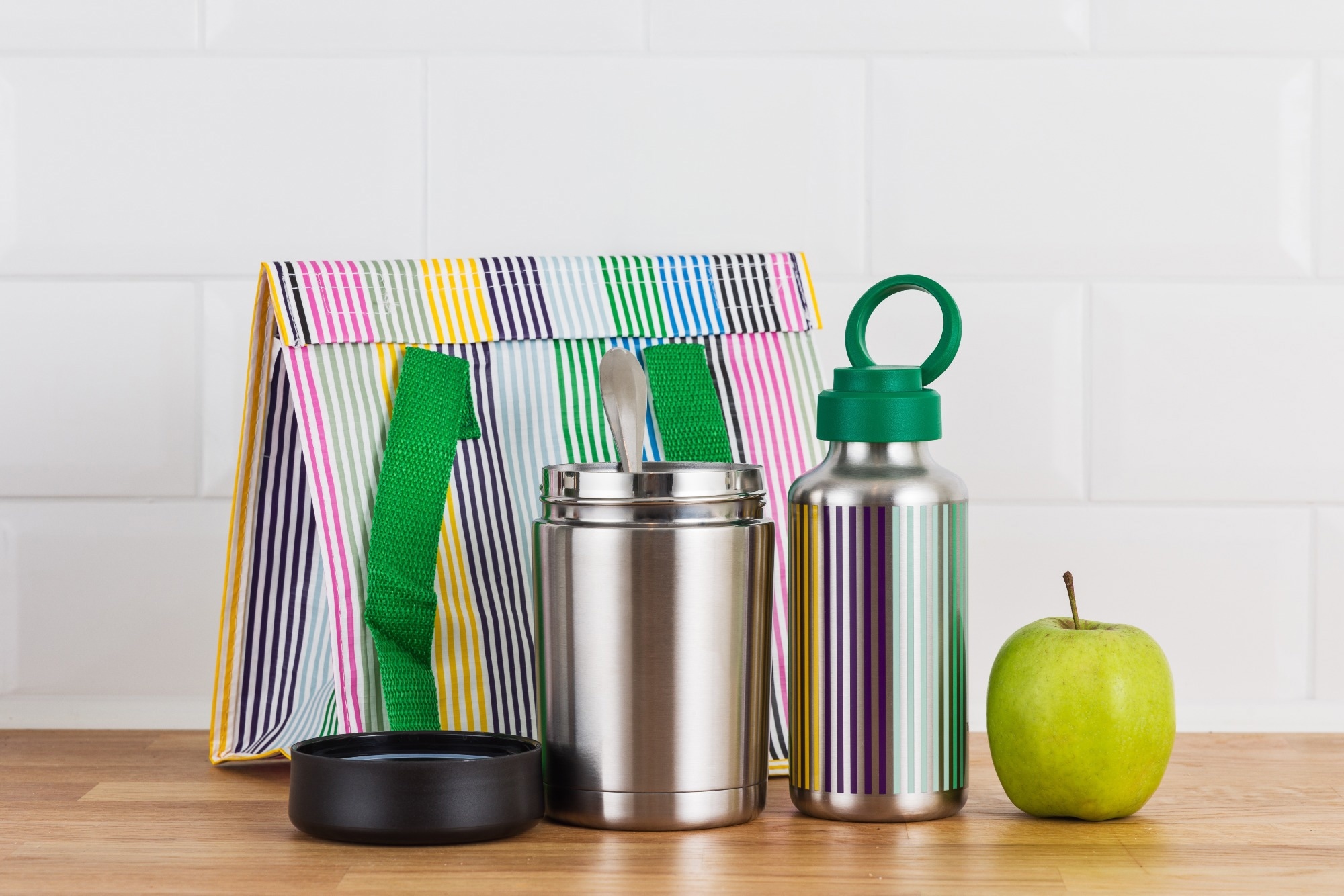 Image Credit: Valentin Valkov / Shutterstock.com
Ceramics and earthenware are among the earliest materials used to make food and beverage storage containers. Their safety profile depends on composition, firing, and surface decoration. Lead and cadmium migration is a documented concern for some products, while many tested items release little or no detectable amounts of these metals.4
In one study, researchers analyzed 1,273 ceramic and glassware samples from a Polish market using 4% acetic acid for 24 hours at approximately room temperature. Lead and cadmium release was usually below analytical detection limits, and applicable legal migration limits were rarely exceeded. Decorated drinking rims raised separate concerns, as some released substantial amounts of these metals, which may reflect significant gaps in legal requirements covering rim migration.4
The study also identified concerns about lead and cadmium exposure from certain food contact materials, particularly products with decorated drinking rims. Its exposure calculations suggested that permitted migration levels could approach or exceed health reference doses.
Importantly, real consumer exposure may be lower than estimates based on the laboratory extraction conditions. For ceramic drinkware, these findings make the beverage-contact surface and drinking rim relevant to product assessment.4
 Image Credit: Tatiana Diuvbanova / Shutterstock.com
Plastics: Endocrine Disruptors, Leaching, and Microplastics
Plastics used for food and beverage storage differ in chemical composition and migration behavior. Polyethylene terephthalate (PET), polypropylene (PP), and copolyesters such as Tritan require assessment by formulation and intended use, as findings for one polymer or product cannot establish the safety of all plastic drinkware.1,3,9
Synthetic polymers can contain residual monomers, additives, processing aids, and contaminants, with identities and concentrations that vary by product. In one study of 25 plastic food contact samples from Bangladesh, researchers detected migration of metals including lead, cadmium, chromium, mercury, and antimony under laboratory test conditions.3,7
Heat or ultraviolet light exposure can alter chemical migration from some plastics. As a result, chemical migration and the physical shedding of microplastics are separate processes that require different measurements.1,3,9
The European Food Safety Authority (2023) lowered the tolerable daily intake for bisphenol A (BPA) by a factor of 20,000, from 4 micrograms to 0.2 nanograms per kilogram of body weight per day. The assessment used immune system effects as its most sensitive endpoint and compared the new threshold with dietary exposure estimates from its 2015 assessment. Notably, this threshold concerns BPA across dietary sources and does not assign a toxicity rating to every plastic product.8
Studies of "BPA-free" plastics indicate that the label alone does not establish the absence of estrogenic activity, the ability to activate estrogen-related responses in the assay used. In one study, researchers tested 14 thermoplastic resins in human cell assays. Four, including three Tritan resins, released chemicals with estrogenic activity under tested conditions, whereas ultraviolet exposure increased release from Tritan. Ten other resins had no detectable estrogenic activity in those assays.9
The release of chemicals with estrogenic activity in cell assays identifies a potential hazard. Notably, this resin study did not assess clinical effects in people using finished bottles or microplastic shedding from daily twisting, shaking, or scrubbing.9
Plastic polymers have been detected in carotid artery plaques, fatty deposits in the arteries supplying the brain, with observed associations between their presence and subsequent myocardial infarction, stroke, or death from any cause. Since this study was conducted among patients undergoing surgery and exposure sources were unmeasured, causation remains unresolved, and these findings cannot attribute cardiovascular harm to plastic drinkware.10
Are BPA-Free Plastic Water Bottles Really Safer For Your Health? | Talking Point | Full Episode
Limitations and Research Gaps
Differences in study design constrain current safety evaluations of food contact materials. Migration tests also vary in temperature, contact time, and food simulant, limiting extrapolation to daily beverage use.1-10
Assessments of "BPA-free" plastic alternatives cover selected formulations and biological endpoints. Non-intentionally added substances, which are chemicals introduced through processes such as manufacturing or degradation, as well as chemicals without adequate hazard data, must be investigated. Moreover, chemical detection in human samples alone cannot identify contributions from food packaging, drinkware, or other exposure sources.2,9
Analytical limitations also complicate interpreting microplastics and nanoplastics in human tissues. Standardized measurements and studies assessing exposure sources are needed to link specific drinkware products to long-term health outcomes.10
Conclusions
Glass generally shows low chemical migration, while stainless steel offers durability but can release measurable metals under certain conditions. Ceramic safety depends on glaze and decoration, and plastic safety varies by formulation and use. These distinctions support a comparison based on intended use and product characteristics, with uncertainty about a universally safest material.3,4,6,9
A practical choice should account for the finished product, beverage acidity, temperature, contact time, and individual metal sensitivity. Plain glass avoids the decoration-related risks documented in some glassware; however, its weight and breakability matter for portability. Stainless steel offers durability, with metal sensitivity warranting attention.
Ceramic drinkware should be scrutinized for glaze and rim decorations, while plastic products require assessment of formulation and intended temperature and use conditions. These trade-offs provide a more defensible basis for selection than a fixed four-material ranking.3,4,6,9
References
- Pizzorno, J. (2024). Plastic Food Container Safety. Integrative Medicine: A Clinician's Journal 23(2); 6–10. https://pmc.ncbi.nlm.nih.gov/articles/PMC11193405/
- Geueke, B., Parkinson, L. F., Groh, K. J., et al. (2025). Evidence for widespread human exposure to food contact chemicals. Journal of Exposure Science & Environmental Epidemiology 35(3); 330–341. DOI: 10.1038/s41370-024-00718-2. https://www.nature.com/articles/s41370-024-00718-2
- Seref, N., & Cufaoglu, G. (2025). Food Packaging and Chemical Migration: A Food Safety Perspective. Journal of Food Science, 90(5), e70265. DOI: 10.1111/1750-3841.70265. https://ift.onlinelibrary.wiley.com/doi/10.1111/1750-3841.70265
- Rebeniak, M., Wojciechowska-Mazurek, M., Mania, M., et al. (2014). Exposure to lead and cadmium released from ceramics and glassware intended to come into contact with food. Roczniki Państwowego Zakładu Higieny 65(4), 301-309. https://roczniki.pzh.gov.pl/pdf-182336-102835?filename=Exposure+to+lead+and.pdf
- Seifzadeh, M., Koochakian Sabour, A., & Raoufi, A. (2025). Investigation of the Effects of Plastic, Pottery, and Wooden Containers on the Microbial, Chemical, Sensory Quality, and Shelf Life of Sturgeon (Acipenseridae) Gut Sauce. Food Science & Nutrition, 13(8), e70748. DOI: 10.1002/fsn3.70748. https://onlinelibrary.wiley.com/doi/10.1002/fsn3.70748
- Kamerud, K. L., Hobbie, K. A., & Anderson, K. A. (2013). Stainless Steel Leaches Nickel and Chromium into Foods during Cooking. Journal of Agricultural and Food Chemistry 61(39); 9495-9501. DOI: 10.1021/jf402400v. https://pubs.acs.org/jafcau/article-abstract/61/39/9495/1355461/Stainless-Steel-Leaches-Nickel-and-Chromium-into?redirectedFrom=fulltext
- Eti, S. A., Islam, M. S., Shourove, J. H., et al. (2023). Assessment of heavy metals migrated from food contact plastic packaging: Bangladesh perspective. Heliyon, 9(9), e19667. DOI: 10.1016/j.heliyon.2023.e19667. https://www.cell.com/heliyon/fulltext/S2405-8440(23)06875-5
- EFSA Panel on Food Contact Materials, et al. (2023). Re‐evaluation of the risks to public health related to the presence of bisphenol A (BPA) in foodstuffs. EFSA Journal, 21(4), 6857. DOI: 10.2903/j.efsa.2023.6857. https://efsa.onlinelibrary.wiley.com/doi/10.2903/j.efsa.2023.6857
- Bittner, G. D., Denison, M. S., Yang, C. Z., et al. (2014). Chemicals with estrogenic activity can be released from some bisphenol A-free, hard, and clear thermoplastic resins. Environmental Health, 13, 103. DOI: 10.1186/1476-069x-13-103. https://link.springer.com/article/10.1186/1476-069X-13-103
- Marfella, R., Prattichizzo, F., Sardu, C., et al. (2024). Microplastics and Nanoplastics in Atheromas and Cardiovascular Events. New England Journal of Medicine 390(10); 900-910. DOI: 10.1056/nejmoa2309822. https://www.nejm.org/doi/full/10.1056/NEJMoa2309822
Further Reading
Last Updated: Nov 19, 2026