Introduction
Recent breakthroughs in xenotransplantation
Genetic engineering strategies in xenotransplantation
Immunological barriers to xenotransplantation
Risks and challenges
Future directions
References
Further reading
Gene-edited pig organs are moving xenotransplantation from experimental promise toward clinical reality, but the path to routine use depends on safety, durability, and public trust.
 Image Credit: SewCreamStudio / Shutterstock.com
Introduction
Despite organ transplantation representing one of the most valuable advancements in modern medicine, the global landscape of transplant medicine is currently defined by a profound imbalance between the rising incidence of end-stage organ failure and the finite supply of human allografts. Recent advances in gene editing technologies and immunosuppressive therapies have positioned xenotransplantation as one of the most promising solutions to this global healthcare crisis. Rather than replacing human donation, current clinical programs frame xenotransplantation as an additional potential source of organs for carefully selected patients with limited access to conventional allotransplantation.2
Recent breakthroughs in xenotransplantation
Xenotransplantation is defined as the transplantation, implantation, or infusion of live cells, tissues, or organs from a non-human animal source into a human recipient.1 The modern era of xenotransplantation began in 1964, when Keith Reemtsma performed chimpanzee-to-human kidney transplants, with one recipient surviving nine months.2
Subsequent high-profile cases, including James Hardy's 1964 chimpanzee heart transplant and the 1984 "Baby Fae" baboon heart case, highlighted the potential of non-human primates. However, follow-up investigations revealed that phylogenetic proximity is insufficient to overcome the persistent immunological divide between human recipients and primate donors.1 Non-human primates are now generally disfavored as organ sources because of ethical concerns, infectious risk considerations, limited availability, and slower breeding compared with pigs.1
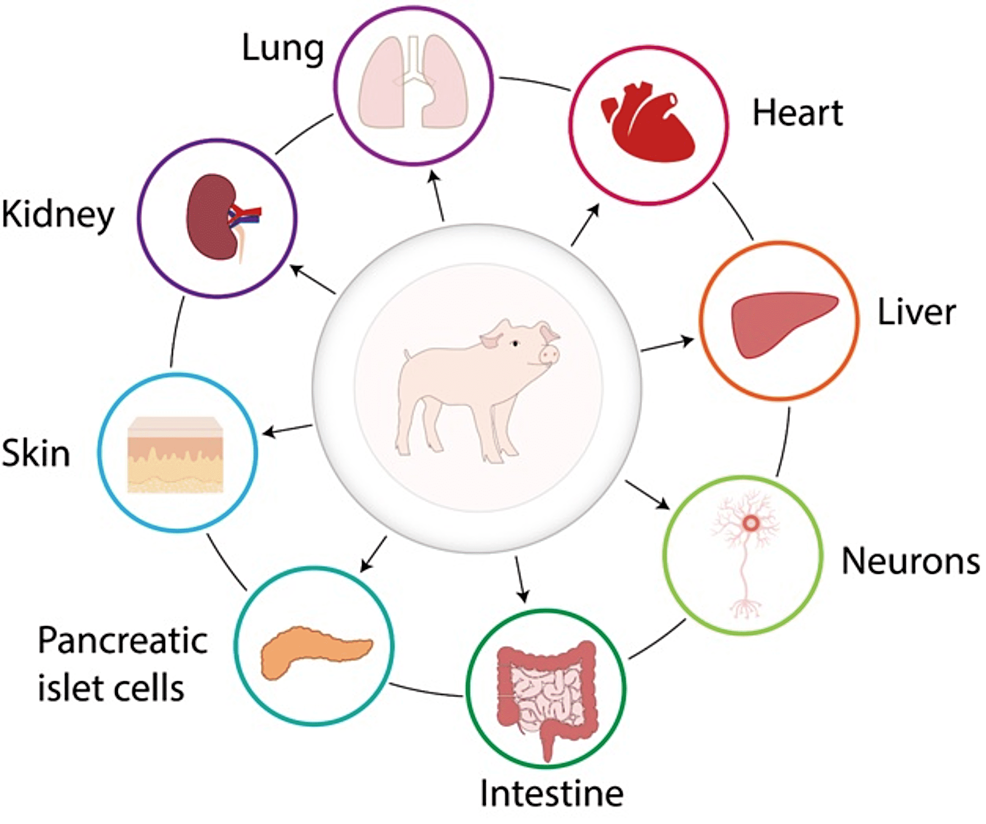
These are the different organs that can be used in xenotransplantation. Pigs' organs are suitable for xenotransplant, especially the heart.1
By the early 2020s, significant progress was made in the field of xenotransplantation, as exemplified by David Bennett Sr., who survived for 60 days in 2022 after receiving a 10-gene-edited (10-GE) porcine heart, retaining normal biventricular function until his death.1 In 2024, a 62-year-old patient with end-stage kidney disease received a gene-edited porcine kidney and initially achieved urine production and creatinine clearance, although the recipient later died after discharge, and the case remained a single-patient experience.5
More recent pig-to-human kidney xenotransplantation reports have described longer survival intervals, including a reported 271-day case, but these remain early clinical experiences rather than evidence of routine long-term durability.6
Concurrently, Chinese researchers reported early function of a gene-edited miniature pig kidney in a 69-year-old female recipient, suggesting that specific combinations of knock-ins may support prolonged function with fewer total genetic modifications.6
Xenotransplantation: When People Get Animal Parts
Genetic engineering strategies in xenotransplantation
Decades of research have shown that pigs are the optimal donor species for xenotransplantation due to their rapid maturation, with organs reaching human-sized proportions within six months, as well as their high breeding potential.1 Pigs also offer practical advantages because their anatomy and physiology are broadly compatible with human organ requirements, and breeding herds can be maintained under controlled biosecure conditions.2 Current pig-derived "UKidney" models predominantly utilize 10 specific gene modifications, four of which are porcine gene knockouts and six human gene knock-ins.7
Key knockouts target the carbohydrate antigens α-1,3-galactose (GGTA1), Neu5Gc (CMAH), and Sd(a) blood group (B4GALNT2) to eliminate xeno-antigens that contribute to hyperacute rejection.2 Additional inserted human transgenes encode complement regulatory proteins 46 (CD46) and CD55 to reduce endothelial injury, as well as coagulation regulators like thrombomodulin (TBM) and endothelial protein C receptor (EPCR) to prevent thrombotic microangiopathy.8
The discovery of clustered regularly interspaced short palindromic repeats (CRISPR-Cas9) technologies has revolutionized modern xenotransplantation by enabling multiplexed edits to donor organs.6 In the 69-GE porcine kidney, modifications in immune and growth genes were achieved while simultaneously inactivating all 62 copies of porcine endogenous retrovirus (PERV) native to the swine genome, thereby reducing a theoretical retroviral-transmission risk rather than eliminating broader infection risks such as PCMV/PRV or other latent porcine pathogens.6,9
Immunological barriers to xenotransplantation
Despite significant progress in genetic engineering and immunosuppressive management, several scientific, infectious, and ethical barriers limit widespread clinical adoption of xenotransplantation. Chronic rejection, for example, remains a persistent complication that often manifests as progressive interstitial fibrosis and proteinuria over several months.2
Clinical evaluations of patients following xenotransplantation reveal that immunological responses occur in three distinct phases, beginning with hyperacute rejection (HAR) mediated by pre-formed antibodies within minutes. Over several weeks, acute antibody-mediated rejection (AMR) occurs, followed by cellular rejection with T-cell and natural killer cell infiltration.2 Innate immune activation, complement injury, platelet activation, and coagulation dysregulation can also damage the xenograft endothelium and contribute to thrombotic microangiopathy.8
To circumvent these potentially lethal complications, clinicians have transitioned away from standard calcineurin inhibitor regimens to co-stimulation blockade protocols targeting the CD40/CD154 pathway, as these approaches significantly extend graft survival in primate models.6 However, optimal maintenance immunosuppression in humans remains unsettled and must balance rejection prevention against infection and malignancy risks.2,9
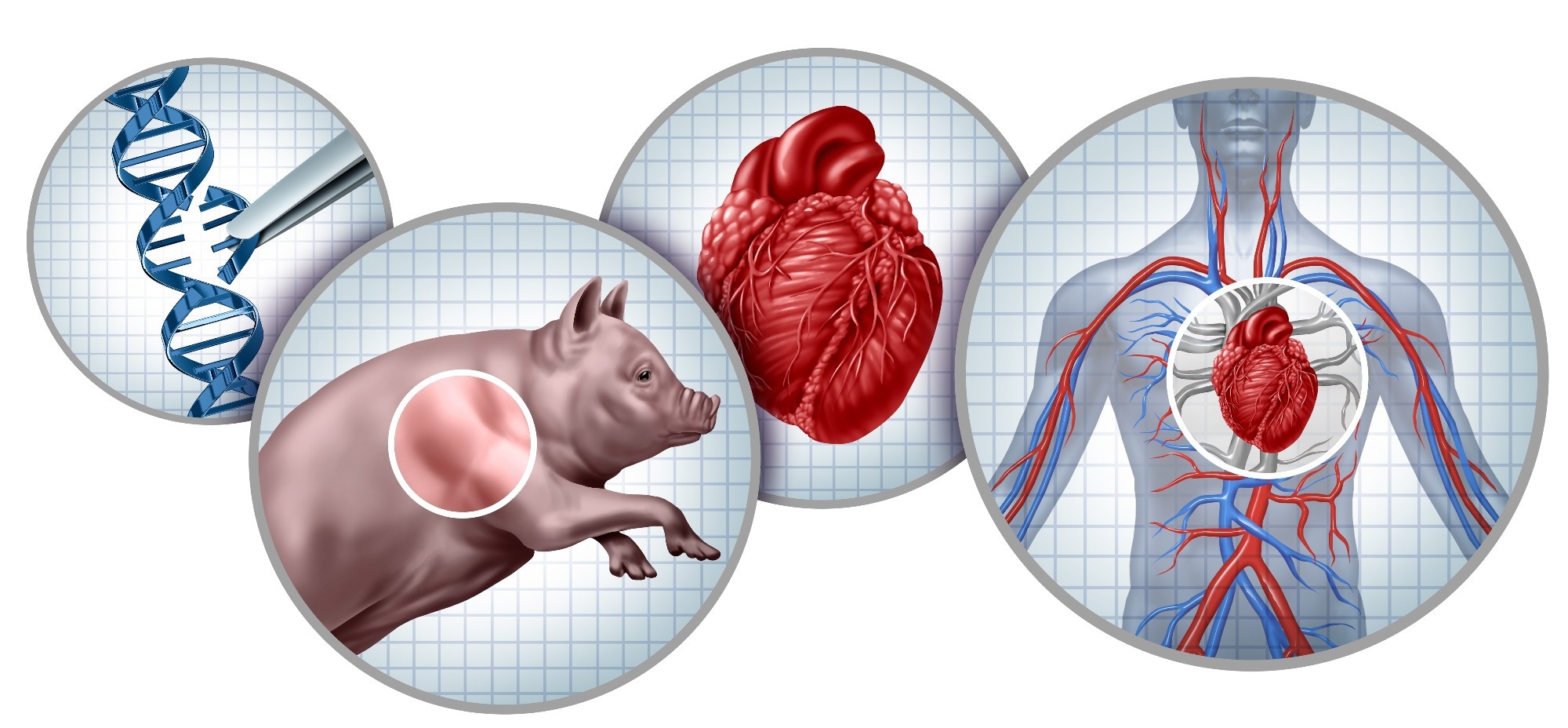 Image Credit: Lightspring / Shutterstock.com
Risks and challenges
The potential transmission of animal-derived infectious pathogens is another concern, particularly porcine cytomegalovirus/roseolovirus (PCMV/PRV). To mitigate the risk of viral contamination, donor organs are procured exclusively from designated pathogen-free (DPF) facilities, where animals are maintained under strict biosecurity measures.2 Infectious-disease guidance also emphasizes donor screening, recipient surveillance, archiving of biologic samples, and long-term monitoring because novel or latent porcine pathogens may be difficult to detect before transplantation.9
Importantly, xenotransplantation provokes ethical debates, with a growing number of animal rights groups arguing that pigs are intellectually complex beings that should not be used as biological factories.1 These concerns are countered by the utilitarian position of the global medical community, provided that donor animals are housed and sacrificed under strict humane conditions sanctioned by international standards.8 Regulatory frameworks also require transparent informed consent, public-health oversight, and traceability of recipients because infectious risks could extend beyond the individual patient.8,9
Future directions
Emergent research explores the potential of interspecies chimerism, wherein human induced pluripotent stem cells (iPSCs) are injected into porcine embryos to grow partially humanized organs.1 These approaches could enhance tissue integration and long-term graft survival while reducing dependence on lifelong immunosuppression.
Moreover, the EXPAND trial (NCT06878560) is currently evaluating the 10-GE UKidney in a multicenter clinical program designed to support a Biologics License Application (BLA) with the FDA. Because this is a formal clinical trial rather than an individual compassionate-use procedure, it may provide more systematic evidence on patient selection, safety monitoring, and graft performance. If successful, this trial could provide the foundation for widespread approval and standardized regulation in the field.7 However, broader adoption will still depend on reproducible graft survival, scalable pathogen-free breeding, validated manufacturing controls, and post-transplant surveillance systems.2,8,9
References
- Wadiwala, I. J., Garg, P., Yazji, J. H., et al. (2022). Evolution of Xenotransplantation as an Alternative to Shortage of Donors in Heart Transplantation. Cureus. DOI: 10.7759/cureus.26284. https://www.cureus.com/articles/102367-evolution-of-xenotransplantation-as-an-alternative-to-shortage-of-donors-in-heart-transplantation#!/
- Anderson, D. J. & Locke, J. E. (2024). Strategies for Operationalizing Xenotransplantation. Current Transplantation Reports 11(4); 251-258. DOI: 10.1007/s40472-024-00455-3. https://link.springer.com/article/10.1007/s40472-024-00455-3
- Global Observatory on Donation and Transplantation. (2025). 2024 Global Report on Donation and Transplantation Activities. World Health Organization.
- United States Renal Data System. (2023). 2023 USRDS annual data report: Epidemiology of kidney disease in the United States (Vol. 2, Chapter 7: Transplantation). National Institutes of Health, National Institute of Diabetes and Digestive and Kidney Diseases. https://usrds-adr.niddk.nih.gov/2023/end-stage-renal-disease/7-transplantation. Accessed 04th May 2026
- Kawai, T., Williams, W. W., Elias, N., et al. (2025). Xenotransplantation of a Porcine Kidney for End-Stage Kidney Disease. New England Journal of Medicine 392(19); 1933-1940. DOI: 10.1056/nejmoa2412747. https://www.nejm.org/doi/10.1056/NEJMoa2412747
- Tao, P. & Zhou, K. (2025). Recent progress in pig-to-human kidney xenotransplantation. Frontiers in Immunology 16. DOI: 10.3389/fimmu.2025.1735113. https://www.frontiersin.org/journals/immunology/articles/10.3389/fimmu.2025.1735113/full
- United Therapeutics Corporation. (2025). United Therapeutics Corporation Announces First Transplant in EXPAND Clinical Trial of UKidney in Patients with End-Stage Renal Disease. https://ir.unither.com/press-releases/2025/11-03-2025-120022270. Accessed May 4, 2026
- Hawthorne, W. J., et al. (2025). International Xenotransplantation Association (IXA) Position Paper on the History, Current Status, and Regulation of Xenotransplantation. Transplantation 109(8); 1301-1312. DOI: 10.1097/tp.0000000000005373. https://journals.lww.com/transplantjournal/fulltext/2025/08000/international_xenotransplantation_association.16.aspx
- Fishman, J. A., Denner, J., & Scobie, L. (2025). International Xenotransplantation Association (IXA) Position Paper on Infectious Disease Considerations in Xenotransplantation. Transplantation 109(8); 1296-1300. DOI: 10.1097/tp.0000000000005371. https://journals.lww.com/transplantjournal/abstract/2025/08000/international_xenotransplantation_association.15.aspx
Further Reading
Last Updated: Jun 4, 2026