In this interview, News Medical speaks with Rhea Stringer, Electron Microscopist at the John Innes Centre, about the role of electron microscopy in biological imaging. Rhea discusses how advanced sample preparation technologies and a growing demand for volume electron microscopy are shaping new possibilities in plant and microbial research.
Can you briefly introduce yourself and tell us about your role?
My name is Rhea Stringer, and I work at the John Innes Centre in Norwich. I’m part of the bioimaging platform specializing in electron microscopy. We offer imaging services for internal researchers and external collaborators, working with various plant and microbial samples. My background is in volume electron microscopy, which I helped establish here through an Institutional Development Grant. That’s still my focus, but my role has expanded over time to cover a broad range of EM techniques.
What kind of research or work do you focus on in your lab?
Our lab supports various research projects, primarily in plant and microbial science. We focus on providing high-quality imaging using light and electron microscopy, depending on the researchers' needs. My work often involves preparing samples and optimizing imaging workflows - particularly for volume electron microscopy, which is increasingly in demand. It’s a niche area, particularly within plant science, so it’s exciting to be at the forefront of that development.
Mastering EM Sample Preparation: Rhea Stringer’s Insights from the John Innes Centre
What are some of your biggest challenges in your daily lab work?
I’d say the biggest challenge, which I actually find quite exciting, is dealing with new or unfamiliar sample types. Sometimes researchers come to us with a question or a biological structure we haven’t imaged before, and that means we need to develop new protocols. It can be challenging, but I enjoy the problem-solving aspect. It keeps things interesting and pushes us to keep learning and improving.
Which of Leica Microsystems products are you currently using in your lab and how have these tools impacted your work or improved your workflow?
We use a lot of Leica equipment for sample preparation in electron microscopy. For instance, we have the EM tissue processor, which is automated and great for consistent results. The EM CPD300 for critical point drying samples. Alternatively, for cryo-fixation, we have the EM ICE and the EM AFS2 for progressive low-temperature embedding or freeze-substitution. We also use the EM ACE600, which has a sputter coater and e-beam. For glow discharging and carbon coating, we use the EM ACE200. We also have the EM KMR3 Glass Knife Maker, and for sectioning and array tomography, we have the UC7 and ARTOS 3D ultramicrotomes. The whole Leica system helps streamline our workflow and makes everything smoother and more efficient.
Can you share a specific example where Leica Microsystems product made a real difference?
Our most impactful capability for plant research lies in the integrated use of the EM ICE and the EM AFS2 system. Plant cells are notoriously difficult to prepare conventionally, as chemical fixatives often struggle to penetrate the thick cell walls, and large vacuoles can swell and rupture upon dehydration, leading to severe structural artifacts. The EM ICE resolves this by cryo-immobilizing the sample under high pressure within milliseconds, effectively trapping the cell in a near-native state without the need for chemical permeabilization. This method reliably preserves critical, transient structures.
Following freezing, the EM AFS2 allows for gentle, automated processing to replace the vitreous water with embedding resin at extremely low temperatures. This integrated, artifact-free approach is essential for obtaining quality data on plant development, cell signalling, and biotic/abiotic stress responses.
Is there anything else you'd like to share about your experience with Leica Microsystems?
Honestly, it’s been a really positive experience. The equipment is reliable, easy to use, and fits well into our workflows. But what really stood out was the support we’ve received from Leica. The engineers are approachable, knowledgeable, and genuinely helpful. They’ve provided excellent hands-on training, which makes a huge difference when adopting new techniques or troubleshooting issues.
What advice would you give to other labs considering Leica Microsystems solutions?
I’d say just go for it - and if you’re unsure about anything, ask questions. Everyone I’ve dealt with at Leica has been friendly, honest, and helpful. They don’t push you to buy something that’s not right for your lab. Instead, they really focus on finding the best solution for your needs, and that kind of support is invaluable.
What excites you most about the future of your work or the field you're in?
Volume electron microscopy is still evolving, especially in plant science, my main area. It’s exciting because there’s so much to explore - new samples, organisms, and datasets. Even in just the three years I’ve been doing this work, the field has progressed rapidly. I’m looking forward to developing new techniques and seeing where it all goes.
About Rhea Stringer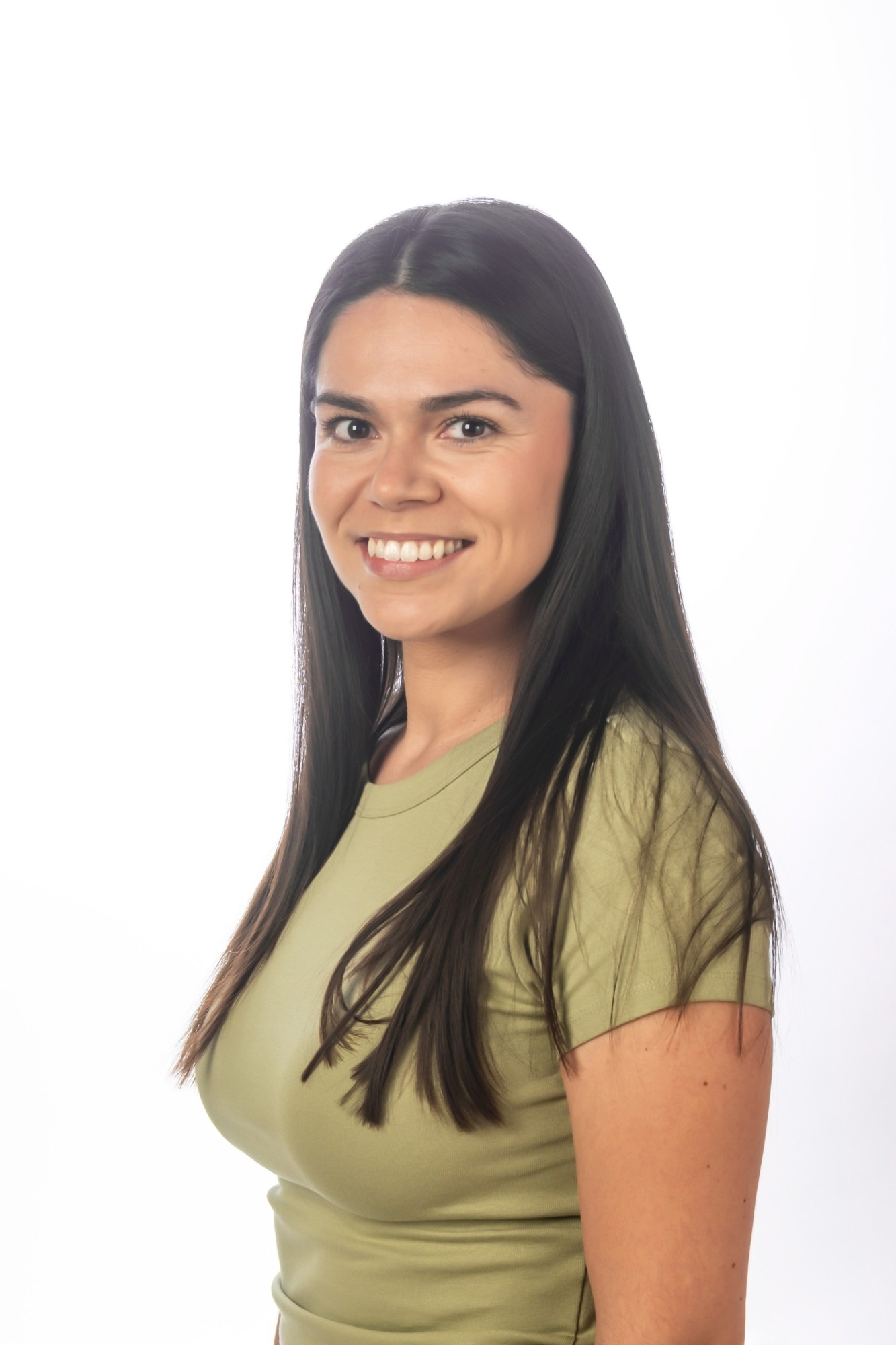
Rhea Stringer is an Electron Microscopist at the John Innes Centre, one of the UK’s leading plant and microbial science research institutes. She plays a key role in the Centre’s bioimaging platform, supporting both internal and external researchers in their use of electron microscopy. Rhea’s focus lies in volume electron microscopy - a field that continues to evolve and expand, particularly within plant science. Her work involves advanced sample preparation, imaging workflows, and technique development using state-of-the-art Leica instrumentation.
Rhea earned her undergraduate degree in Animal Sciences from Canterbury Christ Church University. Following her studies, she began her career as an animal technician and later became involved in using an ultramicrotome for sectioning wax-embedded brains for imaging. Her hands-on skills in sample handling, combined with a steady technique and a drive for continuous learning, led her to a role at the John Innes Centre. Through her work in microscopy services, Rhea contributes to a broad range of scientific studies that rely on high-resolution imaging to uncover the cellular architecture of plant and microbial samples. She is passionate about training others, refining EM protocols, and pushing the limits of what can be visualized through electron microscopy.
About Leica Microsystems GmbH
Leica Microsystems develops and manufactures microscopes and scientific instruments for the analysis of microstructures and nanostructures.
Widely recognized for optical precision and innovative technology, the company is one of the market leaders in compound and stereo microscopy, digital microscopy, confocal laser scanning and super-resolution microscopy with related imaging systems, electron microscopy sample preparation, and surgical microscopy.
 World's first Microhub makes spatial context accessible for all