Balloon sampling has now confirmed that mosquitoes migrating high above West Africa often carry transmissible pathogens, a finding that could reshape how we track and manage vector-borne diseases.
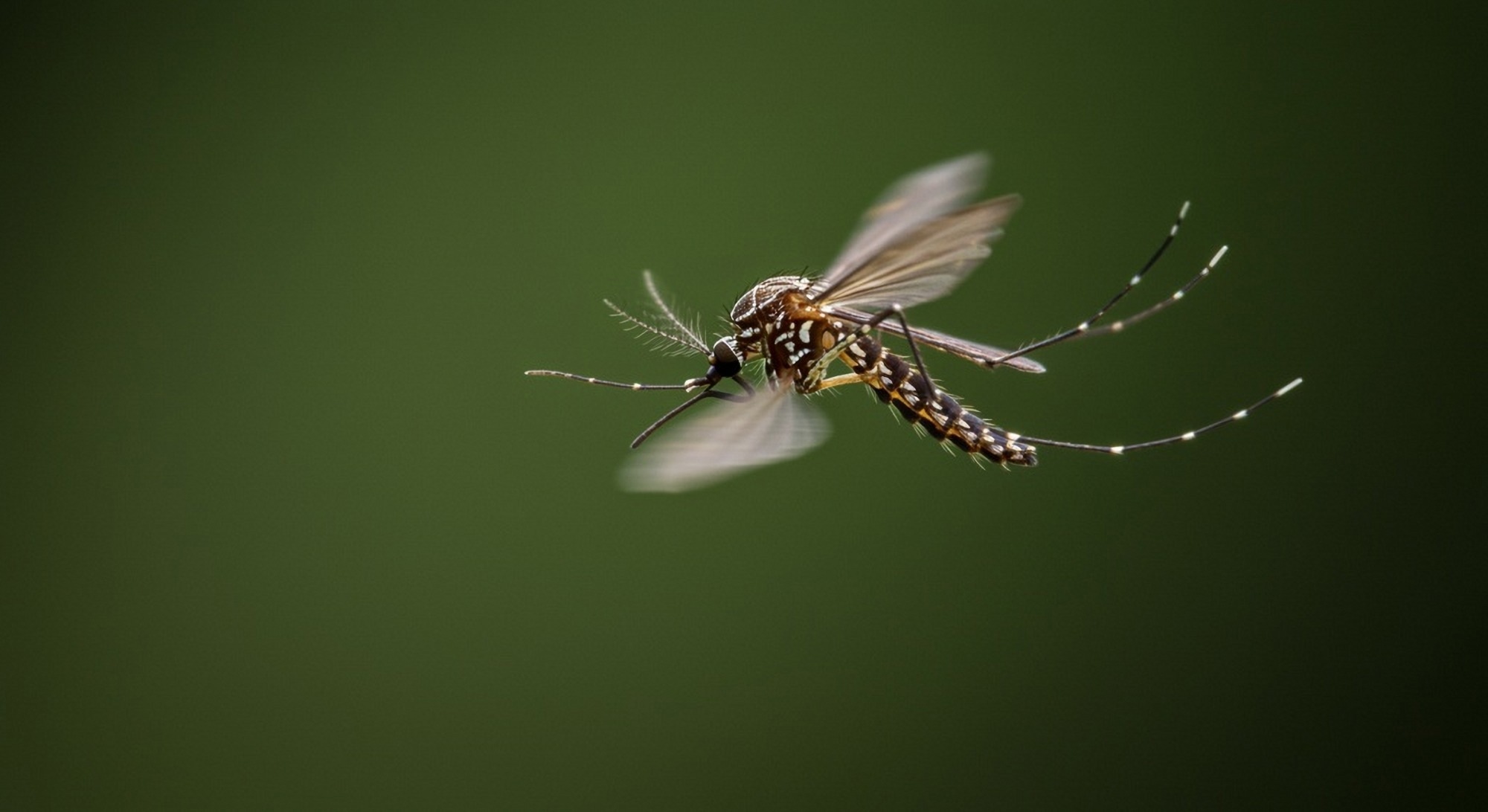 Study: Pathogens spread by high-flying wind-borne mosquitoes. Image credit: Shutterstock AI/Shutterstock.com
In a recent study in PNAS, researchers tested whether mosquitoes migrating at high altitudes carry infectious pathogens.
They found that high-flying mosquitoes were frequently infected and often already infectious with 21 mosquito-borne pathogens. These included the West Nile virus, dengue, several avian Plasmodium species, and multiple filarial nematodes.
High-altitude mosquito flights remained an unproven threat
Long-distance wind-borne migration of insects is a well-established phenomenon, often spanning hundreds of kilometers in a single night and involving large quantities of biomass. Mosquitoes and other insects that act as vectors, pests, or beneficial species are known to participate in these flights.
However, for tropical mosquitoes specifically, major knowledge gaps remain regarding the ecological and epidemiological implications of these migrations. Prior research has suggested that mosquitoes can travel at high altitudes and may spread pathogens over long distances, but this hypothesis has rested mainly on indirect meteorological or epidemiological correlations rather than direct detection of infected mosquitoes in the air column.
Recent African field studies have shown that many mosquito species fly regularly between 40 and 290 m above ground, often during disease transmission seasons. These migrants are dominated by gravid females that have fed on vertebrate hosts, suggesting previous exposure to pathogens. Many of these species have been implicated as vectors of viruses, protozoa, or helminths, raising the possibility that infectious mosquitoes may be transported to new areas by upper-level winds.
DNA barcoding revealed 61 species at altitude
The researchers collected mosquitoes using nets suspended from helium balloons positioned between 120 and 290 m above ground level in Ghana and Mali. Sampling occurred over 191 nights between 2018 and 2020.
A total of 1,247 mosquitoes were captured, of which 1,017 female specimens were screened for infection. Species identification was performed using mitochondrial cytochrome c oxidase subunit I (COI) barcode sequencing, allowing classification into 61 species across 10 genera.
To detect infection, the team conducted pan-genus polymerase chain reaction (PCR) assays targeting major groups of mosquito-borne pathogens: flaviviruses, alphaviruses, Plasmodium spp., and filarial nematodes.
Both abdominal and head–thorax tissues were tested to distinguish mere exposure (pathogen genetic material in the abdomen from a blood meal) from disseminated infection (pathogen present in the thorax, indicating spread beyond the gut and potential transmission competence). Whole-body samples were used when dissection was not possible.
Positive samples underwent Sanger sequencing or metagenomic analysis to confirm pathogen identity and detect additional viruses or parasites. Infection prevalence was assessed overall and by species. The study also evaluated coinfection patterns and compared infection rates in the abdominal versus thoracic regions to infer likely vector competence and potential for transmission during or after long-distance migration.
One in eight mosquitoes carried at least one pathogen
High-altitude sampling yielded a diverse assemblage of mosquito species dominated by Culex, Aedes, and Anopheles. Of the 994 mosquitoes identified to species, 61 distinct species were represented, including known vectors of malaria and arboviruses. Females comprised the majority, and nearly half were gravid, consistent with previous blood feeding and increased likelihood of pathogen exposure.
Pathogen screening revealed substantial infection rates. Overall, 8 % of mosquitoes tested positive for Plasmodium species, 3.5 % for flaviviruses, and 1.6 % for filarial nematodes. Abdominal infections were more common than head–thorax infections, as expected, but disseminated infections (those indicating likely transmissibility) were found in multiple species. Approximately 6.3 % of mosquitoes carried disseminated infections across all pathogen groups, including several dominant high-altitude species.
In total, 21 vertebrate-infecting pathogens were detected. These included 15 avian Plasmodium species, the West Nile virus, the orthobunyavirus M’Poko virus, dengue virus (PCR-detected but not sequence-confirmed), and three filarial nematodes. Nineteen of the 21 detected pathogens were primarily associated with wild birds or sylvatic hosts, indicating that high-altitude mosquito-borne transmission may be especially relevant to wildlife pathogen cycles.
Notably, coinfection patterns did not deviate from random expectations. Overall, 12.7 % of mosquitoes carried at least one pathogen, and 15 species harbored disseminated infections, indicating a potential transmission capability.
Airborne mosquitoes could disperse diseases across regions
This study provides the first direct evidence that mosquitoes migrating at high altitudes commonly carry, and a smaller but significant proportion are already infectious with, multiple vertebrate pathogens. These findings support long-standing but previously unproven hypotheses that wind-borne mosquito migration contributes to the long-distance dispersal of pathogens.
The detection of disseminated infections in dominant aerial species suggests that long-range movement may help maintain sylvatic cycles and seed new outbreaks far from original host populations.
Strengths of this analysis include large-scale, multi-year aerial sampling; molecular pathogen screening across multiple taxonomic groups; and confirmation via sequencing or metagenomics. Limitations include modest sample sizes for some species, the inability to assess actual transmission after landing, and the exclusion of some pathogen groups.
Nonetheless, the evidence strongly indicates that high-altitude mosquito traffic represents an underrecognized component of pathogen ecology. Because most detected pathogens were sylvatic, this mechanism may play a larger role in the dispersal of wildlife pathogens than in the direct transmission of human disease, although the potential for spillover remains. The study concludes that incorporating aerial mosquito migration into surveillance and control strategies is critical for understanding and managing vector-borne disease risks.
Download your PDF copy now!
Journal reference:
-
Bamou, R., Dao, A., Yaro, A.S., Kouam, C., Ergunay, K., Bourke, B.P., Diallo, M., Sanogo, Z.L., Owusu-Asenso, C.M., Akosah-Brempong, G., Pambit-Zong, C.M., Krajacich, B.J., Faiman, R., Pacheco, M.A., Escalante, A.A., Weaver, S.C., Nartey, R., Chapman, J.W., Reynolds, D.R., Linton, Y., Lehmann, T. (2025). Pathogens spread by high-flying wind-borne mosquitoes. PNAS 122(48): e2513739122. DOI: 10.1073/pnas.2513739122. https://www.pnas.org/doi/10.1073/pnas.2513739122
 Leicester's cardiovascular research hub shines spotlight on life-saving innovations