Scientists at Purdue University are using the WELLJET dispenser stacker from INTEGRA Biosciences to increase the speed, consistency and scale of drug screening for rare and neglected parasitic diseases. Integrating automated liquid handling into their workflows has allowed the research team to standardize complex screening assays, improve reproducibility and significantly increase throughput.
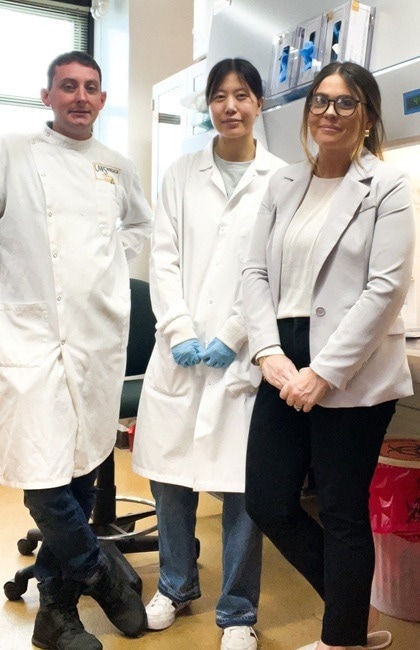
Image Credit: Purdue University
Drug discovery for neglected amoebic infections remain limited, despite the severe and often fatal outcomes associated with these diseases. Dr. Christopher A. Rice, Assistant Professor at Purdue University, leads a research group focused on free-living amoebae that cause life-threatening brain infections and debilitating ocular disease like Acanthamoeba keratitis (AK). “These parasites are responsible for some of the deadliest infections we know, yet awareness, diagnostics and treatment options lag far behind,” Chris explained. “Our aim is to identify safer, more effective therapies that improve the quality of life and give patients a better chance of survival.”
Standardization at scale is critical to the team’s drug discovery work, particularly for screening large compound libraries across multiple amoeba species. Since setting up the lab in 2022, the Rice Research Group has screened half a million compounds in just 2 years using automated liquid handling.
The WELLJET dispenser stacker has allowed us to scale up our screening pipeline. We can now process large compound libraries efficiently while maintaining consistency across experiments. Using the same drug batches, stocks, concentrations and protocols across experiments reduces inter-assay variability, enabling us to generate directly comparable datasets.”
Dr. Christopher A. Rice, Assistant Professor, Purdue University
The efficiency of automation can help to advance research into diseases that have historically received limited attention. “Our goal is to improve outcomes for patients with AK, and to give those affected by these brain infections a higher chance of survival,” Chris said. “If we can develop safer, more selective drugs and understand resistance patterns earlier, we can help to change outcomes for diseases that are currently almost always fatal.”
 Insilico Medicine releases frontier AI models for drug discovery