Diatron, a STRATEC brand specializing in the development, manufacturing, and marketing of hematology and clinical chemistry analyzers and related reagents for human and veterinary use, expands the capabilities of its Aquila, Aquarius 3, and Abacus 5 hematology analyzers with six advanced hematological indices.
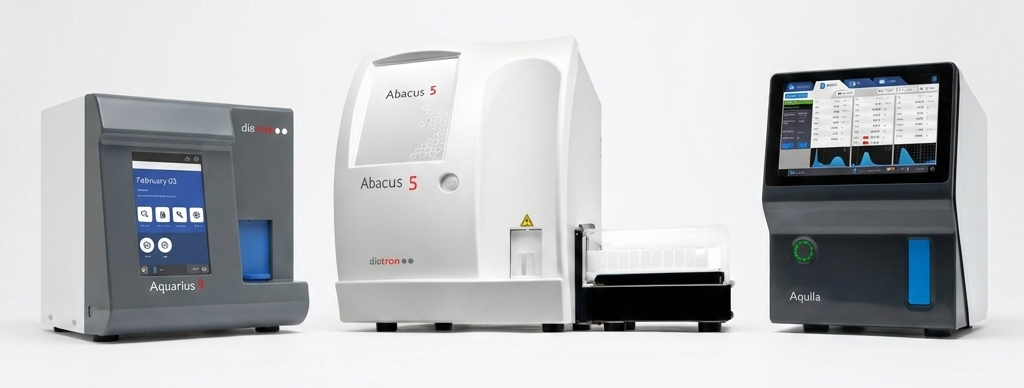 Image Credit: Diatron
Unlock enhanced insights directly from routine CBC tests
The new RUO (Research Use Only) indices - Neutrophil-to-Lymphocyte Ratio (NLR), Platelet-to-Lymphocyte Ratio (PLR), Monocyte-to-Lymphocyte Ratio (MLR), Mentzer Index, Red Cell Distribution Width Index (RDWI), and Green & King Index - provide laboratories with deeper insights directly from routine Complete Blood Counts without extra costs or workflow burden.
Why these parameters matter
NLR, PLR & MLR – Inflammatory & immune status biomarkers*
NLR, PLR, and MLR are widely described in the literature as markers that reflect immune and inflammatory status. In research settings, they can offer non-invasive insight into systemic inflammation, infection severity, and immune activation. They have been investigated across different research areas, including infections, cardiovascular disease, oncology, and autoimmune conditions. Published studies have reported associations between:
- Elevated NLR and outcomes such as infections, cancer prognosis, and cardiovascular risk
- PLR and pro-inflammatory or pro-thrombotic states
- MLR and chronic inflammation, such as tuberculosis and autoimmune diseases
Mentzer Index, RDWI, Green & King Index – Differentiation of microcytic anemias*
The Mentzer Index, RDWI, and Green & King Index have been described in the literature as tools to support the differentiation between Iron Deficiency Anemia (IDA) and Beta-Thalassemia Trait (BTT). By combining key CBC parameters, these indices can facilitate investigations into diagnostic strategies and algorithms in hematology research.
*These parameters are not available in the USA
Operational benefits
The integration of these indices delivers meaningful operational advantages. Avoiding manual calculation, they are automatically calculated from existing Complete Blood Count, and they integrate seamlessly into routine workflows and do not require additional samples.
These indices can support retrospective and prospective studies, method comparison and validation projects, and enable exploratory research into new risk scores and algorithms.
They enhanced CBC insights without increasing consumable usage or adding workflow steps, while boosting laboratory and researcher awareness to enable timely, well-informed decisions.
These advanced RUO indices are particularly valuable in resource-limited settings, where access to specialized testing or high-cost assays may be restricted.
Seamless integration on diatron analyzers
The Aquila, Aquarius 3, and Abacus 5 present these indices through intuitive software interfaces, making additional research indices instantly accessible without added complexity. With decades of expertise, continuous innovation, and a global support network, Diatron empowers organizations to deliver actionable insights from routine tests.
 Diatron to exhibit new 5-part differential hematology analyzer with reticulocytes at Medica 2019