You’ve described nanobiology as a field that could drive a “Fifth Industrial Revolution.” What do you mean by “programmable biological matter?”
Biological materials refer to the fundamental building blocks used by living systems, particularly proteins, nucleic acids, and lipids. In our work, nucleic acids are often described as the “code of life”; lipids are crucial for separating living from non‑living processes, such as in cell membranes; and proteins are perhaps the most sophisticated components, best known for catalyzing complex reactions as enzymes. These components naturally operate at the nanoscale and already perform remarkably sophisticated tasks inside cells.
When we talk about “programmable” biological matter, we mean that we can deliberately design and assemble these biological materials into structures that perform functions we choose in advance. For example, we may engineer an enzyme capable of catalyzing an industrial reaction for which no natural equivalent exists, or design a system that only activates under specific conditions, such as exposure to light.
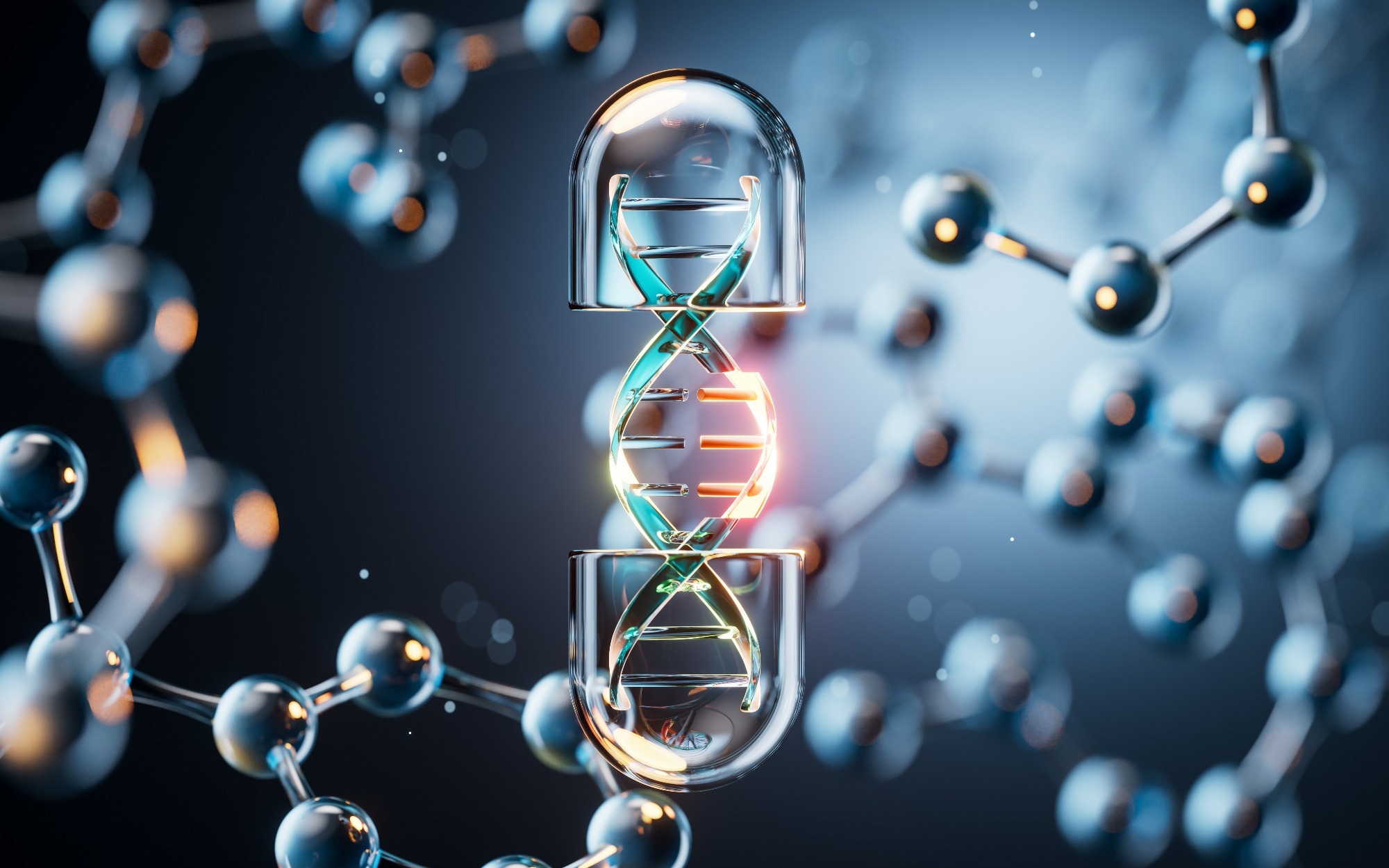 Image credit: Vink Fan/Shutterstock.com
DNA gyrase has been central to your research for many years. What key insights has your work revealed about this molecular motor, and how could those discoveries influence next-generation therapeutics?
DNA gyrase is a fascinating enzyme because it performs highly coordinated mechanical movements in order to twist DNA. Understanding exactly how it executes those motions provides important insight into how complex biological nanomachines function in nature.
One of the major challenges in building artificial biological machines is creating systems that move in controlled and predictable ways. By studying gyrase in detail and effectively constructing a “movie” of its motions, we can learn fundamental principles about nanoscale mechanics and molecular coordination.
Importantly, gyrase is also a major antibacterial target. Understanding its structural dynamics helps identify new opportunities for therapeutic intervention, including entirely new binding sites that differ from those targeted by existing antibiotics. That creates the possibility of designing drugs for which no pre-existing resistance exists, not only against bacteria but potentially against malaria as well, since gyrase-like enzymes are also present in the malarial parasite.
With antimicrobial resistance continuing to rise globally, how realistic is it that gyrase-targeting therapies based on your structural work could eventually reach the clinic?
It is still early days for us in terms of antibiotic development. Our approach focuses on regions of gyrase that existing antibiotics do not target, meaning bacteria have not yet evolved resistance mechanisms against those sites. Of course, with prolonged use, we can expect resistance to eventually emerge because that is an unavoidable consequence of evolutionary pressure.
It is also important to remember that scientific success alone is not enough. Even drugs that are safe and effective may never reach patients if they are too expensive or impractical to manufacture. As researchers, our aim is to develop ideas that not only work in principle but are as robust and practicable as possible.
Your TRAP-cage nanostructure attracted major attention for its unusual geometry and stability. What makes it different from natural viral capsids, and why is that important for therapeutics?
Protein cages are attractive because they provide a way to package and protect therapeutic molecules while still allowing precise control over when and where those molecules are released. Although they resemble viral capsids in shape, they contain no genetic material, cannot replicate, and are entirely non-infectious.
TRAP-cage is particularly interesting for several reasons. Its architecture is fundamentally different from the highly symmetrical geometries typically seen in natural capsids. It is built from ring-shaped protein assemblies composed of eleven identical subunits, which, mathematically, are not ideal building blocks for forming closed, regular structures. However, proteins are flexible rather than rigid, which allows the system to accommodate small geometric mismatches and assemble into a highly ordered cage with an unusual snub-cube-related architecture.
Another defining feature is its stability. TRAP‑cage can withstand temperatures above 100 °C, extreme pH conditions, and chemical denaturants. At the same time, we can trigger it to fall apart on demand. That combination is highly desirable: you want a carrier that is robust enough to survive handling and the extracellular environment, but not so inert that it can never release its cargo.
Unlike most natural and artificial protein complexes, TRAP‑cage lacks the usual dense networks of hydrophobic interactions and salt bridges. Instead, the rings are connected by a single type of bond, repeated many times, effectively serving as molecular staples. In our first-generation cages, these were gold‑mediated coordination bonds, producing structures that were extraordinarily robust but could be reversibly disassembled under reducing conditions. Because the cytoplasm of cells is reducing, this immediately suggested a container that could protect therapeutic cargo outside the cell and release it once inside.
Having a single, well‑defined linker also makes the system easier to program. We have since designed cages that fall apart in mildly acidic environments, such as endosomes or tumor microenvironments, or in response to light, creating a versatile toolbox for applications across therapeutics and biotechnology.
TRAP LC movie1
Video credit: Bionanoscienceandbiochemis6228/Youtube.com
Your group has visualized TRAP-cages opening in real time using high-speed AFM. How did seeing this process at the single-particle level influence development strategies at nCage Therapeutics?
Seeing is believing! We already had indirect evidence that these otherwise very stable cages could disassemble under mildly reducing conditions, but direct visualization gave us confidence that the disassembly behavior was genuine and controllable at the single-particle level. That has strongly influenced how we think about tuning release kinetics, trigger sensitivity, and delivery timing for therapeutic applications.
It also reinforced the idea that these systems can be engineered in highly programmable ways, which is central to their real‑world therapeutic applications.
Your team is also advancing DNA origami technologies, including systems such as DNA-constrained nanodiscs and liposome “bubble blowers.” What applications do you envision for these platforms?
It is difficult to predict exact applications at this stage. One major limitation is still cost: bespoke DNA strands remain relatively expensive to produce. That said, one development we believe could be particularly important is what we call “DNA Topogami”, which allows DNA modules to be linked together in highly stable configurations. This significantly expands what DNA origami systems can do.
In particular, it enables the development of stable DNA assemblies that can act as responsive molecular switches, sensing a trigger and producing a useful outcome, such as initiating the production of a desired protein. We see strong potential for this approach as a tool in in vitro biotechnology and synthetic biology workflows.
AI is now becoming deeply integrated into protein engineering and structural biology. How has AI-driven molecular design changed what is possible in your research?
One of the most impactful developments has been the emergence of computationally designed protein binders. With modern AI‑driven design approaches, it is now possible. assuming you know how to use the tools properly, to design small, soluble proteins that bind specifically to other proteins, small molecules, or nucleic acid targets. This is something that would previously have taken years of trial and error, if it was possible at all.
If those targets are molecules involved in disease, the potential implications for developing new medicines are obvious.
nCage Therapeutics is translating your academic discoveries into real-world applications. What milestones have convinced you that the platform can compete with viral vectors and lipid nanoparticles?
While I cannot share too many details, our vaccine program is currently the most advanced area, and one of the key findings has been the very strong, highly consistent immune responses generated by antigens displayed on the TRAP-cage platform.
More recently, we have also demonstrated that these vaccine constructs can simultaneously carry internal cargoes, opening up the possibility of multifunctional vaccines.
Our drug delivery program is at an earlier stage, but the idea of enclosing a toxic therapeutic inside a highly stable cage that can be targeted to specific cells and only release its payload once inside has obvious advantages for delivering high doses while minimizing side effects. We believe this could become a very exciting area in the near future.
Your keynote at the BioAI Summit explores AI and bionanomachines. Where do you currently see the greatest real-world impact of AI in nanoscale biological engineering?
The field is moving so quickly that anything I say risks becoming outdated almost immediately. That said, the most obvious and widely felt impact of AI has been in protein structure prediction. Taking an amino‑acid sequence of a protein or protein complex with no known structure and generating a reliable structural model using tools such as AlphaFold has become routine, and for many proteins, the results are remarkably good.
That does not mean everything is solved. Predictions are still less reliable for large, multi‑component assemblies, for dynamics, and for allosteric effects. Compared to where we were just a few years ago, however, the progress has been extraordinary. Areas that remain more aspirational include the de novo design of molecular machines with complex, responsive motions that depend on environmental cues or interactions with other molecules.
Finally, what do you personally value most about events such as the BioAI Summit?
What I find most valuable is the way chance encounters really highlight the continuing importance of in‑person meetings. We have met potential collaborators and partners whose enthusiasm was clearly sparked by seeing our work presented in person. Those conversations are often where ambitious ideas start to feel genuinely achievable, and they make the hard preparatory work and the tiring travel away from home worthwhile.
Where can readers find more information?
About the researcher
Jonathan Heddle received his DSc (Habilitation) from the Institute of Biochemistry and Biophysics, Polish Academy of Sciences, his PhD in Biochemistry from the University of Leicester, and a BPharm (Hons) from the University of Nottingham, United Kingdom.
He carried out research at the John Innes Center, UK, and spent over a decade in Japan engaged in academic teaching and investigational research, where he was responsible for laboratories at the Tokyo Institute of Technology and RIKEN, Japan’s largest comprehensive scientific research institution. Jonathan served as an Extraordinary Professor at the Malopolska Center of Biotechnology (MCB) at Jagiellonian University in Krakow, Poland.
Jonathan has more than 20 years of experience in researching natural and artificial bionanomachines and has made significant contributions to the understanding of DNA gyrase, an important antibacterial target. He has played a major role in designing novel artificial structures from DNA and proteins, including nanorobotic DNA boxes, protein nanotubes, and protein cages. He is also a founder and CSO of nCage Therapeutics, a spinout from his academic work that is developing novel protein structures and therapeutics, notably next-generation vaccines and drug delivery systems.
Jonathan was awarded the Leverhulme Trust International Professorship to set up the Center for Programmable Biological Matter at Durham University. His group's research focus is on understanding and building natural and artificial biological nanomachines. They are interested in using biochemical, biophysical, and structural biology tools to understand complex machine-like enzymes and to apply these tools to investigate the function of artificial nanosystems built from protein, nucleic acid, and lipid components.
 New gene-editing platform gives doctors control over cell therapies