By tracing the genetic tools microbes use to establish and maintain a foothold in the gut, researchers uncovered distinct ecological strategies and explored how these patterns change in inflammatory bowel disease.
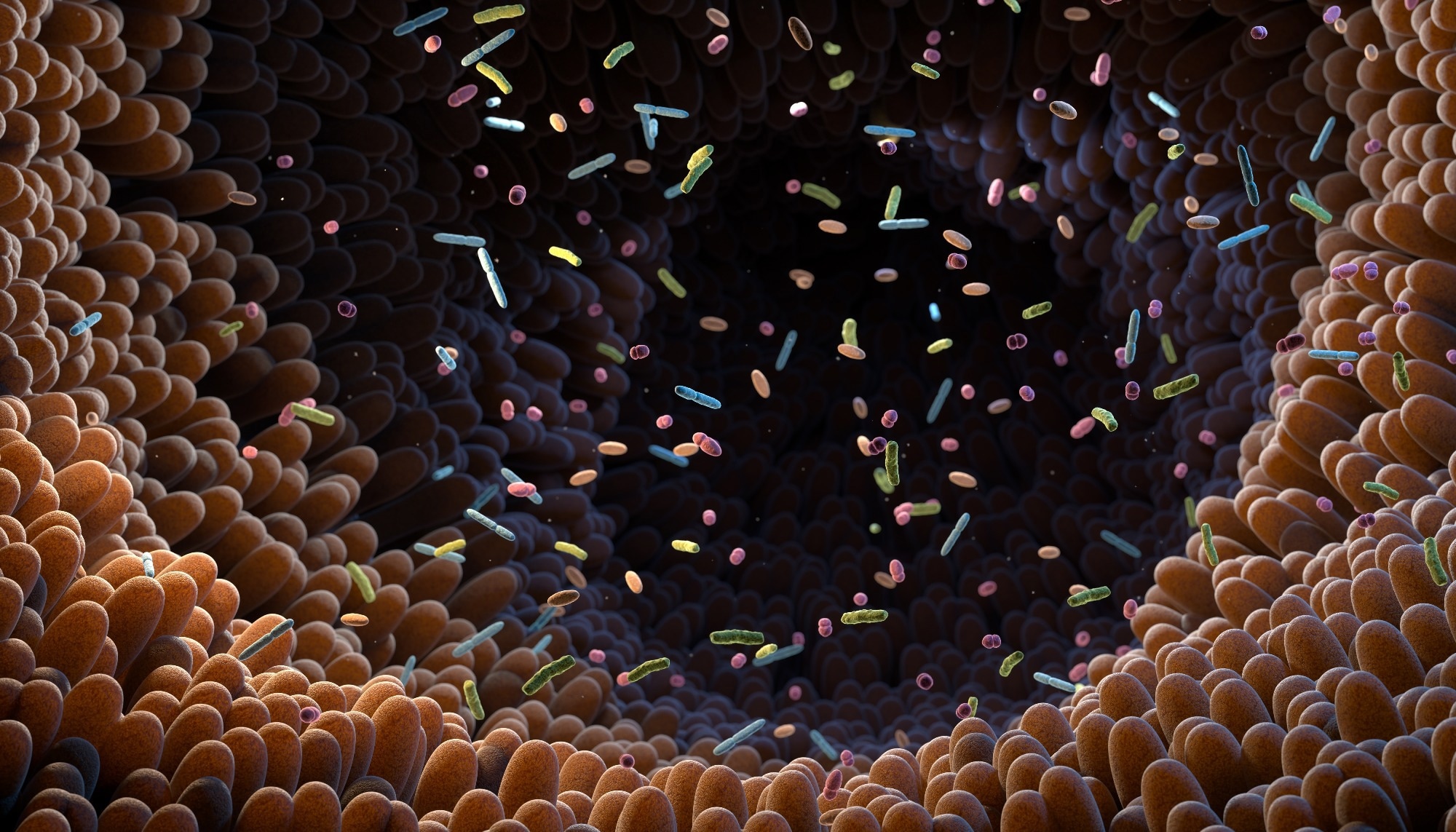
Study: An atlas of colonization factors in the human gut microbiome reveals ecological strategies and inflammatory bowel disease signatures. Image Credit: Tatiana Shepeleva / Shutterstock
In a recent study published in the journal Nature Communications, researchers developed an integrated atlas of colonization factors (CFs) in the gut microbiome.
The human gut microbiota represents a complex ecological community that co-evolved with the host. Experimental studies have identified CFs, genetic determinants that enable microbes to establish and persist in intestinal niches, in select commensals and pathogens. These studies have found that colonization is contingent on diverse genetic functions associated with adhesion, stress tolerance, nutrient acquisition, niche adaptation, and signaling.
A previous genotype-habitat association study identified more than 27,000 genes associated with colonization and organized them into 79 CF families. While that study established a framework for identifying genetic determinants of colonization, several questions remain unanswered. For instance, whether CF family combinations form colonization-associated strategies across microbial lineages and the relevance of CF repertoires to community remodeling associated with disease have yet to be determined.
The study and findings
In the present study, researchers built an atlas of CFs in the gut microbiome. First, they integrated a curated set of 27,096 reference CF proteins with the Unified Human Gastrointestinal Genome (UHGG) and Protein (UHGP) catalogs. Sequence similarity searches identified 78,579 CF homologs in UHGP, which matched 7,536 reference CF proteins across 79 CF families. Mapping the CF homologs to UHGG identified 7.05 million CF genes in 289,022 genomes from 4,716 species.
Next, the team constructed a species-level CF family matrix and aggregated it with higher taxonomic levels to characterize CF family distributions. Firmicutes, Actinobacteriota, Firmicutes_A, Proteobacteria, Firmicutes_C, and Fusobacteriota had some of the richest CF repertoires at the phylum level, each containing more than 50% of all CF families. Notably, seven CF families, CF0_0, CF5, CF7, CF11, CF17, CF38, and CF43, were found in more than 70% of surveyed phyla, reflecting broad conservation.
Further, there was marked heterogeneity in the breadth of CF family repertoires at finer taxonomic levels. For instance, taxa in the Firmicutes_A phylum showed the greatest breadth. Moreover, the Blautia_A, Clostridium, and Enterocloster genera showed a higher CF family repertoire breadth than taxa from many other lineages. Next, the team investigated whether CF family combinations can delineate colonization-related functional strategies.
Three distinct clusters of microbial species were identified using partitioning around medoids (PAM) clustering. CF families enriched in cluster 1 were dominated by transport processes and metabolic activities, which support a putative metabolism-oriented colonization strategy. CF families in cluster 2 were functionally associated with environmental sensing, stress tolerance, and redox homeostasis, suggesting a putative colonization strategy centered around stress resistance.
CF families enriched in cluster 3 were associated with quorum sensing, carbohydrate uptake, and transport, indicating a putative communication-mediated strategy. Although CF repertoires showed lineage-associated organization, this taxonomic and phylogenetic structuring was not unusually strong compared with matched protein-family backgrounds. Next, the CF framework was applied to inflammatory bowel disease (IBD). To this end, 2,858 human fecal metagenomic samples from 10 IBD cohorts were curated. Using the 78,000+ CF homologs identified earlier as the reference, the relative abundance of CF homologs was quantified across samples.
CF family abundance profiles were dominated by a small number of recurrent CF families, with CF5 and CF0_0 families being the most abundant, followed by CF31, CF4, and CF35. The hierarchy of these families was broadly consistent across disease subtypes and cohorts. IBD-related dysbiosis was associated with recurrent decreases in CF gene diversity, though these decreases were neither universal nor consistently statistically significant, and the magnitude and statistical strength of these alterations varied across disease subtypes and cohorts.
These alterations could be mapped to specific colonization-associated functions and microbial carrier species, with IBD-biased CF families linked to inflammation-related carrier lineages and healthy control (HC)-biased CF families supported by broader commensal-related carrier lineages. Further, the researchers identified a 46-CF family signature associated with IBD status, including 16 HC-enriched and 30 IBD-enriched CF families.
Random forest classifiers based on these 46 CF families and all 79 CF families yielded comparable areas under the receiver-operating characteristic curve (AUROCs) of 0.833 and 0.838, suggesting that the 46-family signature retained the discriminatory capacity captured by the entire CF repertoire. Feature-compression analyses generated a smaller feature set of 13 CF families, which achieved a marginally lower AUROC of 0.824 than the 46- or 79-CF family signatures. However, higher-dimensional species- and genus-level taxonomic models performed better, indicating that the compact CF panel is better viewed as an interpretable representation of IBD-associated dysbiosis than as a replacement for taxonomic models.
The researchers also analyzed 808 metatranscriptomic samples from two IBD cohorts to examine CF activity. CF-family expression broadly tracked genomic abundance, although some families were expressed more or less strongly than their abundance would predict. Disease-associated expression patterns also varied between cohorts, suggesting that transcriptional changes were concentrated in specific CF families rather than reflecting a broad loss of CF transcriptional activity.
Conclusions
Collectively, the study developed an integrative atlas of over 7.05 million CF homologs across ~0.29 million genomes from 4,716 species in the human gut microbiota. Analyses indicated that the CF repertoires formed a broadly distributed and lineage-associated layer of microbial colonization potential. The findings also revealed selective remodeling of specific colonization-related functions and microbial carrier lineages in IBD-related dysbiosis, rather than wholesale disruption of the CF repertoire. However, the disease associations were observational, reference genome coverage remains incomplete, and causal roles for CFs in IBD-associated dysbiosis will require functional and animal-model validation.
Journal reference:
- Meng JX, Li WD, Tao WF, et al. (2026). An atlas of colonization factors in the human gut microbiome reveals ecological strategies and inflammatory bowel disease signatures. Nature Communications. DOI: 10.1038/s41467-026-76763-2, https://www.nature.com/articles/s41467-026-76763-2
 Gut bacteria metabolites directly extend the lifespan of host flies