Researchers compared first-time and experienced ayahuasca users to see how prior exposure relates to mood, stress, spirituality, substance use, and beliefs about consciousness.
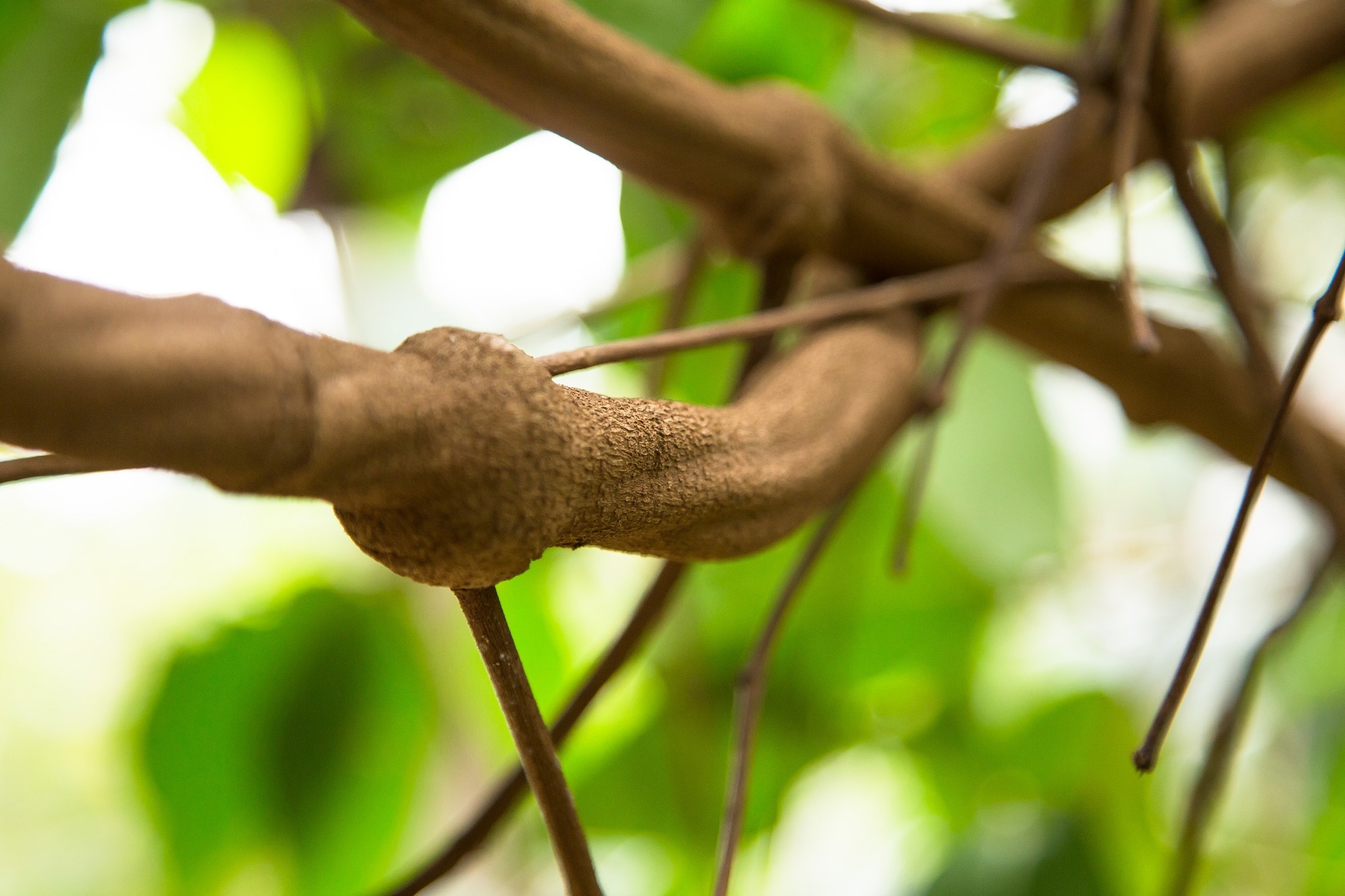
Close-up of Banisteriopsis Caapi vines, one of the Ayahuasca plants. Study: Prior ayahuasca experience is associated with improved mental health: observational data from ritualistic settings. Image Credit: Hans Denis Schneider / Shutterstock
Prior exposure to ayahuasca, an Amazonian brew, is associated with lower psychological distress and better spiritual wellbeing, according to a new study published in the journal npj Mental Health Research.
Background
Ayahuasca is an Amazonian brew prepared from the leaves of Psychotria viridis and the vine of Banisteriopsis caapi. It has been used for centuries by Indigenous peoples of the Amazon for spiritual, social, and medicinal purposes.
Ayahuasca contains N,N-dimethyltryptamine (DMT), a psychoactive alkaloid that acts as a 5-HT2A serotonin receptor agonist, along with monoamine oxidase inhibitors that prevent DMT from being metabolized in the gut, thereby enabling its psychoactive effects.
Ayahuasca has been linked to mental health benefits, with the strongest evidence supporting its antidepressant effect. Observational studies have also consistently reported reductions in substance use and craving. Apart from psychological benefits, ayahuasca has been associated with changes in metaphysical beliefs and spiritual experiences.
The current study aimed to further enrich the existing evidence by including first-time ayahuasca users, a population that has been relatively understudied in previous studies. Including first-time users in the study population provides an opportunity to compare people with no prior exposure to experienced users, reduce sampling bias, and obtain a more comprehensive overview of the experience.
Study design
The analyzed sample included 808 Brazilian adults who planned to attend an ayahuasca ceremony. Based on prior ayahuasca experience, they were categorized as naïve participants (first-time users), participants with low-to-moderate experience (1 to 20 previous uses), and participants with high experience (21 or more previous uses).
All participants completed a survey to provide information on substance use, depression, anxiety, stress, spiritual wellbeing, aberrant salience, and metaphysical beliefs about one week before their upcoming ayahuasca use.
Key findings
The assessment of substance-use behaviors revealed lower alcohol-use scores in the high-experience group compared to the other two groups and lower tobacco use than in the low-to-moderate-experience group, but the tobacco difference was no longer statistically significant after adjustment for sociodemographic factors.
For psychiatric outcomes, depression scores were higher in the naïve group compared to the low-to-moderate- and high-experience groups, while the low-to-moderate group also scored higher than the high-experience group. Anxiety was also higher in the naïve group compared to the high-experience group. In the stress assessment, both naïve and low-to-moderate-experience groups scored higher than the high-experience group.
For aberrant salience, defined as attitudes and life experiences related to perceiving special meanings in trivial events or unusual psychological states, the naïve group scored lower than both the low-to-moderate- and high-experience groups.
Spiritual wellbeing scores were highest in the high-experience group, followed by the low-to-moderate-experience group and the naïve group.
For metaphysical beliefs related to the nature of consciousness and reality, both low-to-moderate- and high-experience groups scored higher than the naïve group.
Study significance
The study found that greater prior experience with ayahuasca was associated with generally lower psychological distress, better spiritual wellbeing, lower reported alcohol use, and stronger metaphysical beliefs.
The main pattern remained similar after adjustment for age, gender, sexual orientation, education, marital status, and income. Analyses using alternative experience thresholds also produced highly consistent results.
The largest group difference was observed for spiritual quality of life, with the highest scores in high-experience individuals. This finding is consistent with previous studies reporting higher spiritual quality of life and changes in spiritual experiences among ayahuasca users. Still, this association may be bidirectional, meaning that individuals with better quality of life may be more likely to consume ayahuasca, which could influence the findings.
For depression, a graded association was observed, with progressively lower depressive symptoms across the naïve, low-to-moderate- and high-experience groups. Proposed mechanisms from previous research that may contribute to ayahuasca's antidepressant effects include improvement of emotional processing through serotonergic pathways, promotion of neuroplasticity through glutamatergic signaling, and increased expression of neurotrophic factors such as brain-derived neurotrophic factor.
High-experience participants reported lower alcohol use than naïve and low-to-moderate-experience participants. Proposed explanations for possible anti-addictive effects include monoamine oxidase inhibition and modulation of serotonergic and glutamatergic signaling pathways.
For aberrant salience, both low-to-moderate- and high-experience users scored higher than naïve users. No significant difference was observed between the two experienced groups. These findings suggest that prior ayahuasca experience may be associated with a modest early shift in the perception of salience, with no additional difference between the low-to-moderate- and high-experience groups.
For metaphysical beliefs, both low-to-moderate- and high-experience users reported stronger metaphysical beliefs than naïve users. The small effect size and cross-sectional design mean these differences should be interpreted cautiously because they may reflect pre-existing characteristics rather than changes associated with ayahuasca exposure.
Because of the cross-sectional design, the study could not determine the causality of the observed associations. The number of participants in the naïve group was much lower than in the other groups, which may have influenced the findings.
The study included only Brazilian adults, which may restrict the generalizability of its findings to other populations. All outcomes were based on self-report measures and may be subject to response bias. The discriminant analysis correctly classified about 46% of cases, indicating substantial overlap between the groups and limited ability to distinguish individuals based on these measures.
Future larger-scale, longitudinal research is needed to further investigate ayahuasca’s potential therapeutic benefits and its role in shaping psychological and cognitive outcomes.
Journal reference:
- Cruz, L. V., Longo, M. S., Rodrigues, R., Sanchez, T. A., & Mograbi, D. C. (2026). Prior ayahuasca experience is associated with improved mental health: Observational data from ritualistic settings. Npj Mental Health Research. DOI: 10.1038/s44184-026-00235-0. https://www.nature.com/articles/s44184-026-00235-0
 Parental loss doubles children's risk of mental health disorders