For Northern life sciences companies, the AI conversation is changing. The question is no longer whether the technology matters, but where it can deliver measurable commercial value and whether smaller businesses have the capital, data and skills to put it to work.
Few have a better view of that shift than Geoff Davison, CEO and Founder of Bionow, whose network spans more than 300 life sciences organisations across the North of the UK and beyond. Following Bionow’s BioAI 2026 summit, he talks about the move from experimentation to adoption, what investors really want from AI-enabled companies and whether the technology can help close the UK’s long-standing regional life sciences divide or risk widening it.
You launched the BioAI Summit, held at northern innovation hub Alderley Park, in 2025. What did companies tell you that convinced you the North needed its own AI forum for life sciences?
Companies repeatedly told us that AI had moved beyond future discussion and become a current business challenge. Organisations asked how they could apply AI to their development programs, data management, diagnostics platforms and manufacturing processes, but many felt a gap between the hype and practical implementation.
The North has an incredibly strong life sciences base, with world-class research, innovative SMEs and growing health data assets, yet there wasn't a dedicated local forum bringing together AI specialists, investors, industry leaders and researchers to focus specifically on the needs of our regional ecosystem. We launched the BioAI Summit to create that space. The aim was always to move the conversation from theory to real-world adoption, collaboration and commercial outcomes.
Across your 300+ members, how would you rate AI adoption among life sciences SMEs in the North today? How many are really using AI in areas such as discovery, development, diagnostics or manufacturing? What's still holding the rest back?
Adoption is certainly growing, but it's not yet universal. I would say we're moving from the experimentation phase into genuine implementation. A growing proportion of our members are actively using AI in drug discovery, diagnostics, clinical data analysis, and operational efficiency, while many others are still assessing where it can create value.
The barriers are fairly consistent. Access to the right skills remains a challenge. Data quality and availability are major factors. Regulation is another consideration, particularly in healthcare-related applications. For many SMEs, resource constraints mean they need a clear return on investment before committing significant time and capital.
What is encouraging is that attitudes have shifted. Two years ago the question was: "Should we be looking at AI?" Today it's: "How do we deploy it effectively?" That's a much more mature discussion.
More trials and more complex science are creating huge volumes of data. Where do you see the clearest near-term uses for AI among your members, such as trial design, bioinformatics, image analysis or automation? And which of these will matter most commercially over the next two to three years?
The immediate opportunities are around extracting value from data more efficiently. Bioinformatics, image analysis, biomarker discovery and patient stratification are all areas where AI is already demonstrating meaningful impact.
In the shorter term, I think clinical trial optimisation and advanced analytics will generate significant commercial value because they directly address cost, timelines and success rates. Companies are under constant pressure to develop products faster and more efficiently. Anything that improves decision-making and reduces risk throughout the development process will attract attention from management teams and investors alike.
Automation is another area to watch closely, particularly where AI can support laboratory workflows and manufacturing efficiency.
You often call funding the biggest structural challenge for Northern life sciences firms. From your seat on investment committees, is AI changing how investors assess early-stage businesses, for example on data assets, IP or scalability? What do founders most often underestimate here?
AI is definitely influencing investor thinking, but investors still back strong businesses rather than buzzwords. What has changed is the level of interest in proprietary datasets, scalable platforms and the ability to generate insights that create competitive advantage.
One thing founders sometimes underestimate is the importance of demonstrating how AI translates into commercial value. Investors want to understand what is unique, what is defensible and how it creates a route to revenue. Simply stating that a business uses AI is not enough. The strongest companies can clearly articulate how their technology improves outcomes, lowers costs or accelerates development.
How is AI affecting how attractive and understandable Northern companies look to UK and international investors, and which AI-enabled business models are drawing the most interest?
AI is helping many companies tell a stronger growth story. Investors are naturally attracted to businesses that can scale efficiently and use data as a strategic asset. AI can enhance both.
The models generating the most interest tend to combine deep scientific expertise with unique data resources and strong intellectual property. Investors are particularly interested when AI is enabling better diagnostics, more efficient drug discovery, precision medicine, or improved healthcare delivery.
What remains important is that these businesses are solving real problems. The commercial opportunity still comes first.
You started as a bench scientist in liposomal drug delivery and went on to found two diagnostics spin-outs from the University of Manchester. Looking back, what do you wish had existed in data, tools or support when you built Biorite and Advanced Biomedical, and how far does today’s AI actually meet those needs?
When we were building those companies, better access to data, faster analysis tools and more structured support around commercialisation would have been enormously valuable. We spent a lot of time manually gathering information, validating opportunities and navigating development pathways.
Today's AI tools can significantly reduce that burden. They can accelerate research, support market intelligence and help identify patterns that would previously have taken weeks or months to uncover.
That said, AI doesn't replace experience, judgment or entrepreneurial resilience. It provides better tools, but you still need capable people making informed decisions.
Bionow is now as much a practical support network as a networking platform, from collective purchasing to accelerator programmes. Where is the biggest opportunity to build AI into that support itself, for instance to help members with funding, partners, regulation or market intelligence?
One area with huge potential is helping members navigate increasingly complex information landscapes. Whether that's funding opportunities, regulatory requirements, partnership identification or market intelligence, AI can help surface relevant information much more efficiently.
We're particularly interested in how we can use technology to help members access the right support at the right time. For SMEs operating with limited resources, saving time can be just as valuable as saving money.
The North–South divide comes up often in UK policy debates. From what you see, is AI narrowing the gap between Northern SMEs and the London–Cambridge–Oxford clusters, or could it widen the gaps in talent, infrastructure and investment if left unchecked?
Potentially, yes, but it isn't guaranteed. AI creates opportunities because it enables companies to access expertise, insights and capabilities regardless of geography. The North has significant strengths in health innovation, advanced manufacturing, data science and research excellence. AI can help amplify those advantages.
However, if investment, talent and infrastructure continue to concentrate in a limited number of locations, the gap could just as easily widen. That's why building strong regional networks and encouraging collaboration remains so important. Of course, we are always flying the flag for the North to highlight the need to focus investment on key areas of strength outside the Golden Triangle.
The 2026 Summit built on a first edition that drew more than 100 attendees around “bridging life sciences and AI.” From 2025 to 2026, how have the questions people ask changed, and what does that tell you about how the sector’s thinking on AI is maturing?
The biggest shift has been from curiosity to implementation. Last year, many discussions focused on understanding AI's potential and exploring future possibilities. This year, people are asking much more specific questions. They want to know what works, what delivers value, how to manage data effectively, how to address regulatory considerations and how to secure investment.
That's a very positive sign because it indicates that the sector is moving beyond exploration and toward operational adoption.
As host, what makes the Bionow BioAI Summit different from bigger, more general AI or life sciences conferences? What do delegates and speakers gain in collaborations, commercial insight or investment that they couldn’t easily find elsewhere, and how do you expect that to grow?
What makes the Bionow BioAI Summit distinctive, along with many of our regional events, is its focus on practical outcomes and meaningful connections.
We bring together life sciences innovators, AI specialists, investors, healthcare leaders and support organisations in an environment where conversations can quickly become collaborations. The event is deliberately designed to be accessible, inclusive, relevant and commercially focused.
Rather than discussing AI in the abstract, we're focused on how it can be applied to real challenges facing life sciences organisations today. Delegates leave with new contacts, new ideas and practical opportunities to move projects forward.
As the ecosystem continues to mature, I expect the BioAI Summit to become an increasingly important platform for collaboration, investment and innovation across the North and beyond.
About Dr. Geoff Davison
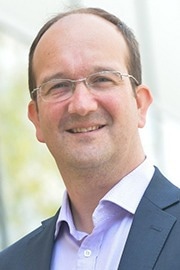
Dr. Geoff Davison is the CEO and Founder of Bionow, a leading life sciences membership organisation that supports researchers, innovators and businesses across the North of England.
With a background in biochemistry and drug delivery research, he has worked as both a scientist and entrepreneur, helping to develop and commercialize innovative healthcare technologies.
Geoff now works closely with industry, academia, healthcare organisations and investors to drive collaboration, innovation and growth across the life sciences sector. He is a Fellow of the Royal Society of Biology and serves on investment committees supporting the growth of emerging technology and life sciences businesses.
 New funding backs pioneering research to make brain cancer treatment more effective