The diagnosed prevalent cases of ulcerative colitis (UC) in the seven major markets (7MM) are projected to reach over 2.36 million by 2035. Driven by an expanding patient base, this upward epidemiological trajectory highlights a rising burden on healthcare systems. Stable incidence growth underscores the critical need for advanced clinical approaches to manage long-term disease prevalence and patient outcomes, says GlobalData, a leading intelligence and productivity platform.
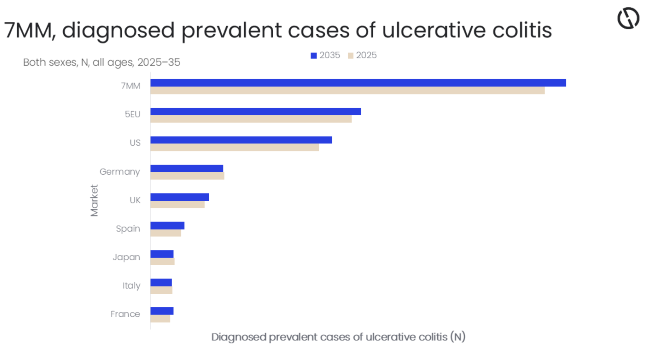
Image Credit: GlobalData Pharmaceutical Intelligence Center
GlobalData’s latest report, “Ulcerative Colitis Epidemiology Forecast to 2035,” reveals that the diagnosed incident cases of UC are projected to increase at an AGR of 0.26% from 190,044 in 2025 to 194,968 in 2035.
The US will have the highest number of diagnosed prevalent cases of UC in the 7MM, with approximately 1.03 million, whereas Italy will have the fewest diagnosed prevalent cases with approximately 123,789 in 2035.
In 2025, the US accounted for approximately 43% of all diagnosed prevalent cases of UC in the 7MM due to its large population. In the 5EU, Germany accounted for the highest number of diagnosed prevalent cases of UC, with approximately 421,764, and 19% of all 5EU diagnosed prevalent cases of UC.
In 2025, approximately 89% of diagnosed prevalent cases of UC in the 7MM were individuals ages 30 years and older. In the 7MM, approximately 46% of diagnosed prevalent cases of UC in adults were mild UC. Approximately 53% of diagnosed prevalent cases of UC based on anti-TNF responsiveness were TNF-non-responding.
Most UC cases are diagnosed between the younger ages of 15 and 30 years, affecting primarily the working-age productive population. Additionally, a high burden of comorbidities further reduces the quality of life. Diet and lifestyle remain vital risk factors for both developing UC and triggering flares.”
Antara Bhattacharaya, Associate Project Manager, Pharma – Epidemiology, GlobalData
According to the report, a greater proportion of the diagnosed prevalent cases of UC in adults, in the 7MM were mild. However, a greater proportion of the diagnosed prevalent cases of UC were TNF-non-responding.
Bhattacharya concludes: “Bridging this gap will require a multifaceted clinical and pharmaceutical approach focused on early diagnosis, therapy based on biomarker profiling, broader access to specialist care, and clinical trials for alternative therapeutic targets. This will require extensive research for deeper knowledge of disease etiology, leading to disease-modifying therapies. This could meaningfully reduce disease severity and flares and significantly improve patient outcomes.”
 Antifungal medication may reduce inflammatory bowel disease symptoms