As rising temperatures reshape mosquito-borne disease risks worldwide, researchers reveal why dengue is expanding while malaria has historically declined, and how urbanization, disease control, and socioeconomic conditions are driving their contrasting trajectories.
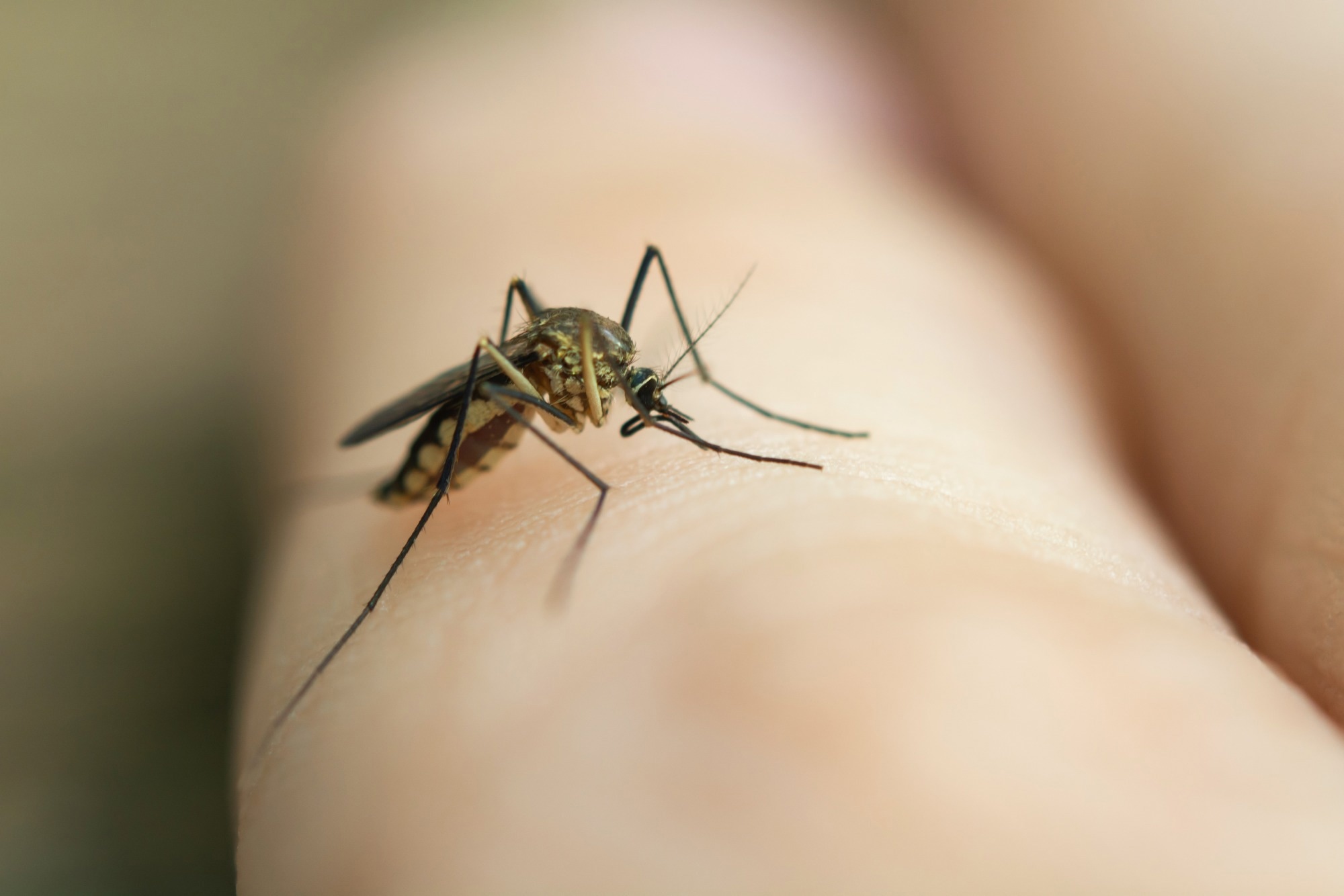 Study: How climate change affects mosquito-borne infectious disease: The different trajectories of malaria and dengue. Image credit: Achira22/Shutterstock.com
A recent Science Advances narrative review examined existing research to analyze how climate change influences the spread and control of malaria and dengue, and to examine the reasons behind their differing global trends.
Mosquito-borne diseases: malaria and dengue
Malaria causes an estimated 282 million cases and 610,000 deaths each year, mostly in Africa, and is transmitted by female Anopheles mosquitoes. Plasmodium falciparum causes the most severe cases in Africa. Plasmodium vivax, more common in the Americas and Southeast Asia, can remain dormant in the liver and cause relapses. In endemic regions, repeated exposure can lead to partial immunity against severe disease.
Dengue is a mosquito-borne viral infection common in tropical and subtropical areas, spread by female Aedes mosquitoes. The virus has four serotypes and usually causes a short-lived infection. Many cases are asymptomatic, making transmission difficult to track. One modeling study estimated 390 million infections each year, with 96 million symptomatic. Immunity to dengue is mainly serotype-specific, and reinfection with a different serotype increases the risk of severe disease. Transmission of both diseases depends on complex interactions among pathogens, mosquitoes, and human hosts.
How does climate influence disease transmission?
Malaria and dengue can persist even in less favorable climates. Historically, malaria was common in temperate regions, with mosquitoes surviving winters indoors. Some mosquito species and their eggs can withstand drought or cold, remaining dormant until conditions improve. This resilience allows malaria and dengue to survive beyond their typical climate zones, and climate change may further expand mosquito ranges into new areas.
Climate not only shapes mosquito populations, but also affects the pathogens they transmit and the hosts they infect. The following sections outline how major climate factors influence malaria and dengue transmission.
Temperature
Temperature is the most extensively studied climate factor for mosquito-borne diseases. As cold-blooded insects, mosquitoes generally develop and survive better as temperatures rise, up to a species-specific optimum. Both Anopheles gambiae (malaria) and Aedes aegypti (dengue) develop faster and bite more frequently in warmer conditions, and higher temperatures speed up parasite and virus development inside mosquitoes, boosting transmission potential.
Models suggest malaria transmission potential peaks at around 25°–28°C, while dengue transmission is optimized at approximately 26°–29°C, before declining at higher temperatures. These relationships are nonlinear and can vary with local conditions, while hot weather may discourage use of protective measures.
Temperature fluctuations add complexity: small daily swings can increase dengue infection rates in mosquitoes under experimental conditions, while larger seasonal temperature variations may support outbreaks in cooler regions.
Precipitation
Rainfall determines where mosquitoes can breed. Anopheles mosquitoes, which transmit malaria, favor stagnant water, so malaria cases often increase during rainy seasons, especially in rural areas. Aedes aegypti, the dengue vector, breeds in artificial containers common in cities.
Both excessive rainfall and drought can increase disease risk: heavy rain may wash away eggs and larvae, while drought creates stagnant pools or prompts increased water storage, creating breeding sites. These relationships vary by location and may involve delayed effects. For malaria, drought-related reductions in transmission can also reduce population immunity, increasing vulnerability to outbreaks when normal rainfall returns.
Humidity
Mosquitoes are highly sensitive to dehydration and require adequate humidity to survive. High humidity increases mosquito activity, egg production, and lifespan, and relative humidity levels of 55–80% have been identified as suitable for completion of the malaria parasite's life cycle. In contrast, low humidity raises mosquito mortality and dries out breeding containers, particularly impacting species like Aedes albopictus.
Extreme weather events can further intensify disease risks by damaging housing, displacing populations, and disrupting healthcare. Following Cyclone Idai in Mozambique, affected households faced an almost threefold higher risk of malaria infection, while Pakistan experienced a fivefold increase in malaria cases after devastating floods in 2022. Extreme rainfall also contributed to Peru's major dengue outbreak in 2023, illustrating how climate-related disasters can amplify transmission through multiple pathways.
Social and structural drivers of disease risk
While climate defines the potential range for mosquito-borne diseases, nonclimate factors such as human and vector behavior, immunity, land use, urbanization, migration, insecticide resistance, health system capacity, and conflict ultimately determine actual risk. Globalization and increased mobility facilitate the spread of both mosquitoes and infected people, further influencing disease dynamics.
Socioeconomic status is particularly influential: malaria and dengue disproportionately affect poorer populations with limited access to healthcare, although the relationship between poverty and dengue transmission varies across settings. When risk models incorporate gross domestic product (GDP) and other social indicators, the projected number of people at risk drops significantly.
Integrated approaches that combine climate, social, and health variables suggest that malaria incidence in Africa could actually decline by 2050, even in the face of climate change. However, one such projection assumes a midrange climate scenario and continued intervention coverage, with population growth potentially keeping total malaria cases relatively stable despite declining incidence. Accurately predicting and controlling these diseases requires a thorough understanding of such nonclimate factors.
Urbanization also affects the two diseases differently. Expanding cities provide abundant artificial breeding sites for dengue-carrying Aedes mosquitoes, while often reducing the natural habitats favored by malaria vectors. However, the spread of the urban-adapted malaria mosquito Anopheles stephensi in Africa complicates this pattern, creating new risks for urban malaria transmission.
Shifting boundaries: expanding threat of mosquito-borne diseases
Climate change has moderately expanded areas suitable for malaria transmission but has sharply increased climate-defined dengue transmission potential, with a 12% rise for Ae. aegypti and 49% for Ae. albopictus between 1951–1960 and 2015–2024. Over the same period, climatically suitable areas for malaria transmission increased by just 2.0% for P. falciparum and 1.8% for P. vivax. These changes reflect climatic suitability rather than observed infection rates.
Dengue now reaches higher altitudes and temperate regions, with outbreaks and local transmission reported in Brazil, the Asia-Pacific, the southern US, and France, associated with rising temperatures and longer mosquito seasons. Malaria’s spread is less predictable, shaped by immunity, human behavior, and climate.
Major climate cycles like the El Niño–Southern Oscillation (ENSO), particularly its El Niño phase, are associated with increased transmission of both diseases, especially in Southeast Asia and Latin America. Areas with unstable transmission are most vulnerable.
By 2070, one modeling study projected that an additional 4.7 billion people could live in areas at risk of either malaria or dengue compared with 1970–1999, as warming extends transmission seasons and expands geographic ranges. This projection reflects potential exposure rather than expected infections, with actual risk depending on local conditions and disease control measures. Dengue risk is projected to rise in temperate and high-altitude regions, while malaria risk may stabilize or decline in some tropical zones.
Diverging trends and future outlook
While climate change is expanding the potential range for mosquito-borne diseases, global malaria has declined substantially over the past century, thanks to sustained interventions and improvements in socioeconomic conditions and healthcare. However, recent upticks in certain regions highlight that these gains remain fragile, requiring continued investment and vigilance to prevent resurgence. Global malaria incidence fell from 79 to 59 cases per 1,000 people at risk between 2000 and 2015, before rising to 64 in 2024.
Conversely, dengue is rising rapidly worldwide, driven by urbanization, globalization, population growth, increasing climatic suitability, and expanding mosquito habitats. Improved diagnostic capacity has also contributed to reported increases.
Differences in disease control help explain these contrasting trends. Malaria has benefited from decades of effective antimalarial treatments, insecticide-treated bed nets, and indoor spraying. Dengue has fewer established control options, partly because Aedes mosquitoes typically bite during the day, making bed nets less effective. Although dengue vaccines and innovative mosquito-control approaches, including Wolbachia-based strategies, are emerging, their widespread impact remains limited or uncertain.
The future burden of malaria and dengue will depend on climate, urbanization, and population growth, but can be limited by integrated prevention, robust surveillance, and innovative tools such as vaccines and novel vector control. Achieving lasting progress requires climate mitigation alongside targeted social and health strategies for adaptive, comprehensive responses to evolving risks.
 Monash study urges coordinated action to fight mosquito-borne diseases