Could traditional Japanese seaweeds influence the bacteria living in our gut? Researchers examined three edible species to investigate how their dietary fibers interact with intestinal microbes, microbial metabolites, and immune cells.
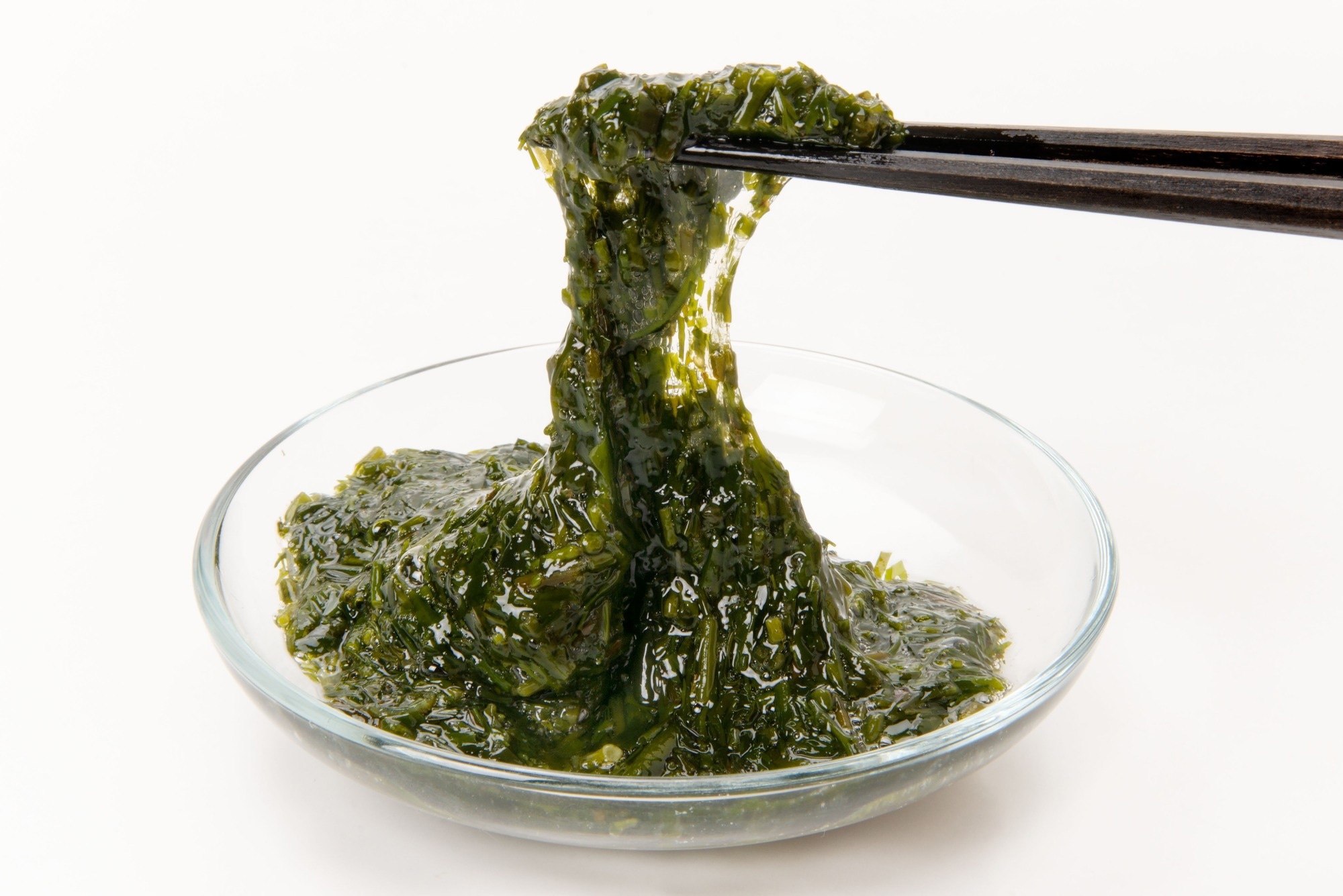
Image Credit: Caito / Shutterstock
In a recent study published in the journal Nutrients, researchers from Fukui Prefectural University, Ishikawa Prefectural University, and Toyama Prefectural University in Japan investigated the prebiotic effects of three Japanese edible seaweeds on gut microbiota, short-chain fatty acid (SCFA) levels, and intestinal immune responses in mice, alongside a preliminary human study involving one seaweed species.
Background
Seaweed, a traditional food in Japanese cuisine, contains fiber, minerals, and various bioactive compounds. A previous study involving approximately 80,000 Japanese participants linked seaweed consumption to a lower risk of cardiovascular disease. Gut microorganisms influence nutrient metabolism, immune response, and inflammation. Certain dietary fibers can act as prebiotics, supporting the growth of beneficial intestinal bacteria. The mechanisms through which seaweed polysaccharides influence intestinal microorganisms remain incompletely understood. Further human studies are needed to establish their metabolic benefits.
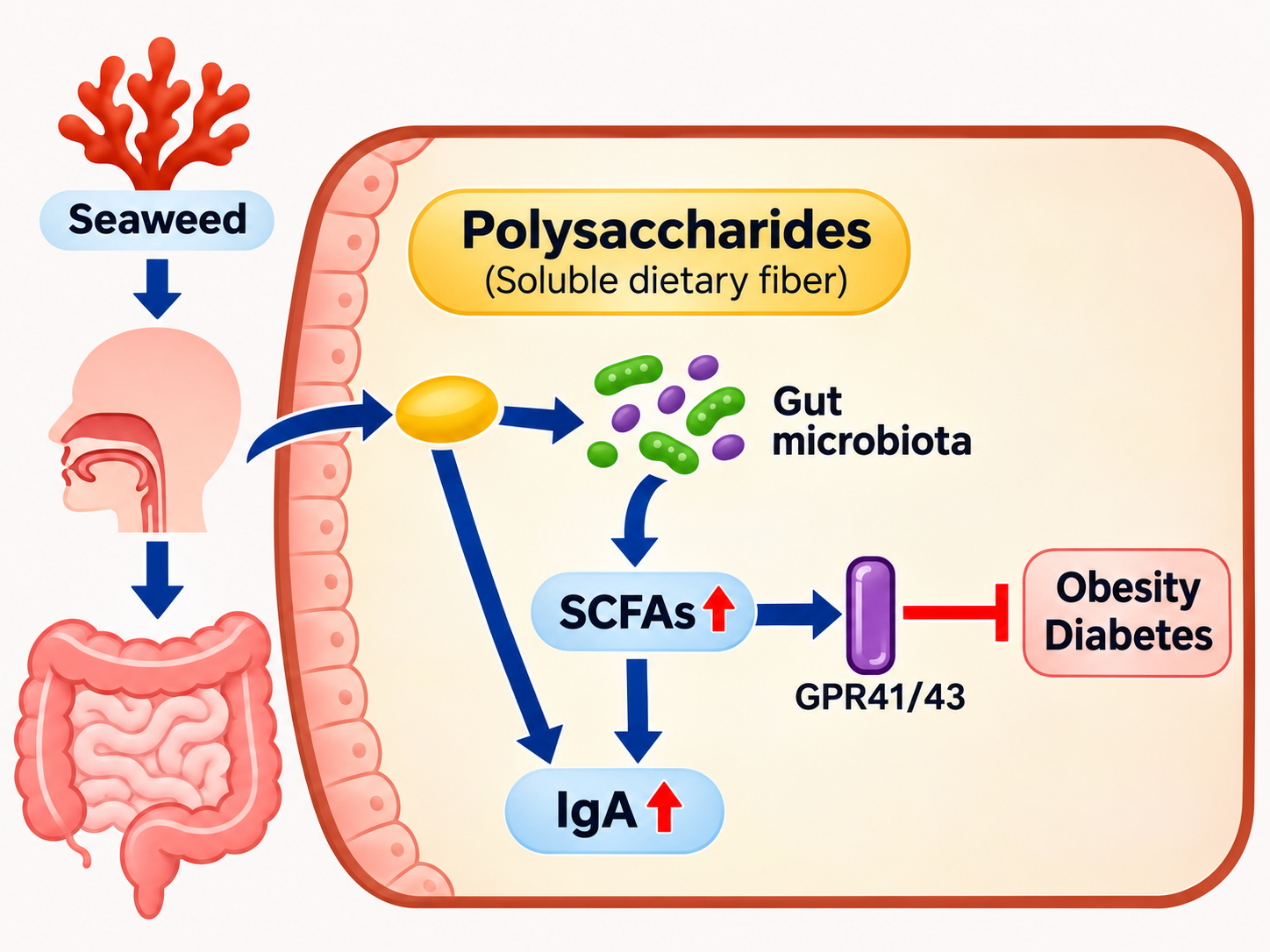
Health benefits of seaweed-derived polysaccharides. When seaweed polysaccharides (water-soluble dietary fiber) are ingested, they reach the large intestine undigested in the small intestine, where gut bacteria break them down and utilize them. This increases the production of short-chain fatty acids (SCFAs) by specific gut bacteria, thereby increasing IgA production. On the other hand, polysaccharides can also increase IgA production directly, without involving SCFAs. SCFAs have various beneficial effects in the large intestine and are involved in suppressing the progression of obesity and diabetes by enhancing energy production and suppressing fat accumulation via specific receptors (GPR41/43). The upward-pointing red arrow indicates an increase.
About the study
The researchers investigated three edible Japanese seaweeds: Campylaephora hypnaeoides (Ch), Sargassum horneri (Sh), and Gloiopeltis furcata (Gf). The collected seaweeds were washed, dried at room temperature for two weeks, and ground into powder. Their polysaccharides were extracted, purified, and characterized.
Thirty-two six-week-old male BALB/c mice were randomly assigned to four groups of eight. The control group received a standard AIN-93M diet, while the remaining groups received diets containing 5% of one of the three seaweed powders. The mice consumed their assigned diets for eight weeks. The researchers collected stool samples and analyzed gut bacterial composition using 16S rRNA gene sequencing. They also estimated SCFA and immunoglobulin A (IgA) concentrations in the feces. Separately, the researchers tested purified seaweed polysaccharides on mouse Peyer's patch cells and cultured human intestinal bacteria.
In the human trial, healthy volunteers consumed approximately 30 g of boiled Sh daily for 3 weeks. Stool samples were analyzed before and after the intervention to assess changes in gut microbiota composition. The study was open-label, with no control group, and participants followed their usual diets apart from the addition of seaweed. Statistical analysis compared the groups and assessed before-and-after data.
Study results
All three seaweed species significantly altered the composition of gut microbiota in mice after eight weeks of consumption. The interventions reduced microbial diversity, as indicated by lower Shannon index and evenness values compared with controls. Sh and Gf also decreased species richness. Further analysis showed that the gut bacterial communities differed between seaweed-fed mice and controls. The health implications of reduced microbial diversity remain uncertain.
Ch increased the relative abundance of Bacteroidota and Verrucomicrobiota phyla, but decreased Firmicutes. Gf increased Verrucomicrobiota and decreased Firmicutes, while Sh produced no significant changes at the phylum level. Analysis of major bacterial groups revealed common changes across the three interventions. The seaweed-enriched diets increased the relative abundance of Akkermansia, Alloprevotella, Faecalibaculum, and uncultured Muribaculaceae bacteria. Conversely, Alistipes, uncultured Lachnospiraceae, and the Lachnospiraceae NK4A136 group decreased significantly.
The interventions also altered intestinal metabolites, increasing fecal concentrations of acetate, propionate, and butyrate. Ch produced the strongest response, significantly increasing all measured SCFAs compared with controls. Ch and Gf also increased fecal IgA levels at weeks five and eight, whereas Sh showed no clear effect. In separate laboratory experiments, polysaccharides extracted from all three seaweeds significantly stimulated IgA secretion by mouse Peyer's patch cells at concentrations of 50 or 250 μg/mL. These laboratory findings suggest that seaweed polysaccharides may directly stimulate intestinal immune cells without relying on microbial SCFA production.
Laboratory experiments involving 25 human intestinal bacterial species showed that Ch-derived polysaccharides significantly promoted the growth of five, including three Bifidobacterium species and two lactic acid bacteria, Lactiplantibacillus plantarum and Limosilactobacillus reuteri.
Of the 83 healthy adults initially enrolled, 74 were included in the final analysis. After three weeks of taking 30 g of boiled Sh daily, the participants showed a significant decrease in the Firmicutes-to-Bacteroidota ratio (F/B ratio). Reported effects included more frequent bowel movements in 18 participants, loose stools in 19, abdominal bloating in seven, and self-reported weight loss in three. Participants could report multiple symptoms, and none of these reported effects required discontinuation of the trial. Weight measurements were optional, and the study did not establish a weight-loss benefit.
The reduction in the F/B ratio indicates a change in bacterial composition, but this measure alone cannot establish improved gut health or metabolic function.
Conclusions
The findings indicate that three Japanese edible seaweeds can alter gut microbiota composition and increase fecal SCFA levels in mice, while two also increased fecal IgA levels. While Ch exhibited the strongest increase in fecal SCFA levels, polysaccharides extracted from all three seaweeds significantly stimulated IgA secretion by cultured mouse intestinal immune cells. Sh consumption also reduced the F/B ratio in humans after three weeks.
These findings support the potential of seaweed polysaccharides as prebiotics. The human investigation was exploratory, lasted only three weeks, and lacked a placebo-controlled comparison. It also did not measure whether changes in gut bacteria translated into improvements in metabolic health. Further controlled clinical studies assessing metabolic outcomes are necessary to establish their effectiveness in preventing metabolic diseases.
Source:
Journal reference:
- Murakami, S., Sakane, Y., Hirazawa, C., Yamamoto, Y., Kadoya, T., Takahashi, S., Numauchi, H., Laqi, A., Ito, T., Baba, Y., Matsuzaki, C., & Furuasawa, Y. (2026). Japanese Edible Seaweeds Modulate the Gut Microbiota in Mice and Humans: Prebiotic Effects of Seaweed Polysaccharides. Nutrients, 18(22), 3860. DOI: 10.3390/nu18223860, https://www.mdpi.com/2072-6643/18/22/3860
 Study redefines picobirnavirus as a bacteria hunting virus