A comprehensive review of human studies reveals that kefir can alter certain gut and oral bacteria. However, inconsistent results and small trials mean its true health impact remains an open scientific question.
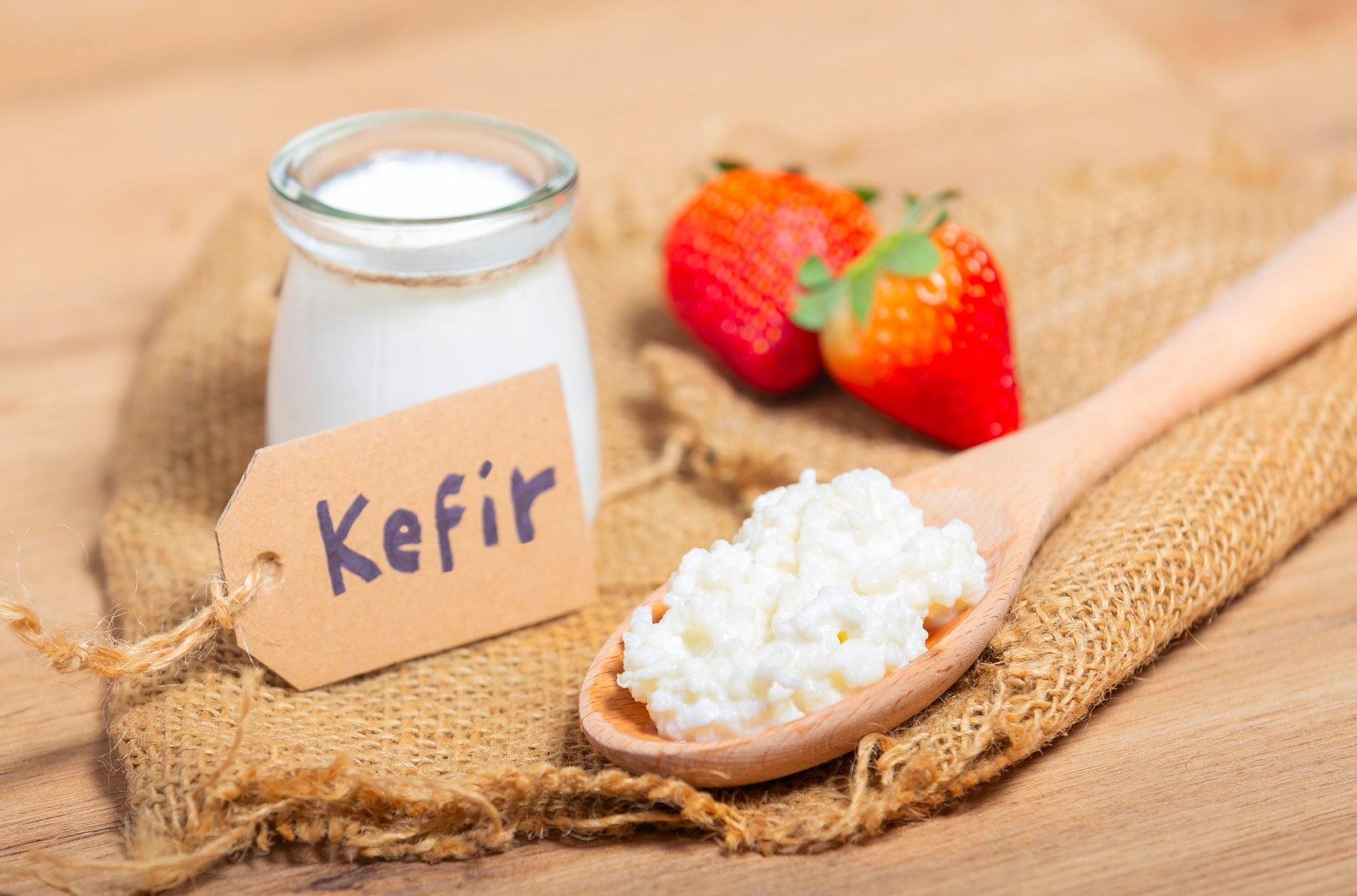 Study: The Effects of Kefir on the Human Oral and Gut Microbiome. Image credit: xamnesiacx84/Shutterstock.com
Scientists have recently reviewed the existing literature on the effects of kefir consumption on health and published their findings in Nutrients. Kefir consumption may be associated with alterations in the balance of the microbiota within specific niches, which could support digestive, immune, and metabolic health.
Exploring kefir: From tradition to science
Kefir is a probiotic milk drink that traces its origins to the Caucasus Mountains, dating back more than 3,000 years. It is made with kefir grains, which are complex, symbiotic clusters of lactic acid bacteria (LAB), acetic acid bacteria (AAB), and yeast held together in a polysaccharide matrix. When added to milk, these grains trigger a fermentation process that thickens the milk and gives it a slight sour taste. Although kefir is primarily made from cow’s milk, it can also be prepared from goat or sheep milk and soymilk.
Commercially, kefir is produced by inoculating milk with kefir grains at a ratio of 1:30 to 1:50; then fermenting for up to 24 hours at room temperature. After filtering out the grains, the newly produced kefir can be consumed immediately or stored at low temperatures for later use.
The health benefits of kefir largely depend on the substrate used for fermentation. A key challenge in kefir research is its inherent compositional variability, which can vary significantly across numerous factors, including starter-grain microbiota, fermentation time, and temperature. These variables shape the final blend of microbial species, their relative abundances, and the levels of bioactive metabolites in the beverage.
In kefir research, findings from one study may not directly translate to another, as different kefir preparations can affect the oral microbiome in distinct ways. Therefore, evidence regarding changes in the gut and oral microbiome after kefir consumption can vary widely.
Microbes in kefir and their health implications
LAB, such as Lentilactobacillus kefiri, Leuconostoc mesenteroides, and Lactococcus lactis, ferment milk substrates by metabolizing lactose and producing lactic acid. In addition to lactic acid, these microbes generate bacteriocins, cathelicidin, carbon dioxide, acetaldehyde, and hydrogen peroxide, which have the potential to attenuate or eliminate common enteric pathogens.
L. kefiri and L. mesenteroides can survive passage through the gut and adhere to the epithelial lining, which is an essential trait of effective probiotics. Once in the gut, these species exhibit antibacterial and antifungal activities. Notably, L. kefiri can bind toxic metals and mycotoxins, highlighting its potential for emergency toxicology applications. L. mesenteroides produces linoleic acid, which has antiatherogenic, anti-inflammatory, and anticarcinogenic effects. L. lactis is often referred to as a 'cell factory' due to its demonstrated potential for delivering therapeutics and vaccines.
The proportion and presence of each bacterial species in kefir can vary significantly depending on region, substrate, and manufacturer.
AAB, including Acetobacter fabarum, Acetobacter lovaniensis, Acetobacter orientalis, Gluconobacter oxydans, and Gluconobacter liquefaciens, have also been identified in kefir. Acetic acid and its metabolites produced by these bacteria can increase ileal motility, enhance colonic blood flow, and help maintain epithelial homeostasis.
Yeasts such as Saccharomyces cerevisiae, Kluyveromyces marxianus, and Kluyveromyces lactis are present in kefir. These yeasts produce ethanol and carbon dioxide, giving kefir its distinct flavor and mild effervescence. Numerous studies indicate that Saccharomyces cerevisiae var. boulardii possesses antimicrobial, antioxidant, anticarcinogenic, and anti-inflammatory properties, which may help support conditions like irritable bowel syndrome and Crohn’s disease.
Kefir consumption alters gut and oral microbiome
Previous studies have shown varied effects after kefir consumption. For example, some healthy adults exhibited a slight, non-significant increase in Lactococcus raffinolactis, whereas those with metabolic syndrome or IBD showed increases in Actinobacteria and Lactobacillus, respectively. In critically ill patients, kefir raised the Gut Microbiome Wellness Index despite reduced diversity. Women with PCOS experienced a significant rise in Bacilli abundance and displayed statistically significant improvement in physical function and mental health scores compared to pre-treatment.
Kefir consumption alters the abundance of LAB in the gut microbiome, which may contribute to changes in gut and systemic health outcomes. For instance, research revealed that participants with metabolic syndrome in the kefir group, even a minor increase in Lactobacillales, exhibited positive changes in fasting insulin, TNF-α, IFN-γ, and blood pressure within groups.
Kefir consumption reduced salivary Streptococcus mutans levels, an important cause of dental caries in both adults and children. However, only four studies reported the impact of kefir on the oral microbiome, particularly reductions in salivary S. mutans and Lactobacillus. However, a major limitation across all four studies was reliance on culture-based methods, which detect only certain bacteria and do not provide a full picture of the oral microbiome. None of the studies used DNA sequencing, so the broader effects of kefir on oral microbial diversity remain unknown.
Conclusions
Kefir consumption may affect both the gut and oral microbiomes, but the strength, consistency, and clinical relevance of these effects remain uncertain.
Variation in kefir sources, inconsistent study designs, and the lack of standardized products limit drawing firm conclusions about its specific effects and long-term benefits. Well-controlled, larger, and longer-term studies will clarify kefir’s true impact on the microbiome and related health outcomes.
Download your PDF copy now!
 Gut bacteria compound during pregnancy protects offspring from fatty liver disease