The most abundant protein present in plasma is human serum albumin (HSA), which plays an important role in transporting a wide range of endogenous and exogenous substances and in maintaining colloid osmotic pressure.
HSA is used clinically to treat hypoalbuminemia in nephrotic syndrome or liver cirrhosis and restore blood volume in cases of burns or shock. It also serves as a drug carrier due to its strong binding capacity.
In research settings, HSA is often used as a standard due to its high stability and purity, and it supports cell growth as a key component of culture media.
Beyond biomedical applications, HSA is also incorporated into skincare formulations to strengthen the skin barrier and improve moisture retention. In specialized foods, it provides high-quality protein and contributes to stability and emulsification.
Experimental section
This study used a Size Exclusion Chromatography (SEC) system equipped with light-scattering (LS) and refractive index (RI) detectors.
The LS detector used was the BeSEC LS2 from Bettersize Instruments with detection angles of 90 ° and 7 °.
The BeSEC workstation integrates light scattering with UV or RI signals to calculate molecular weight distributions and averages, including Mn, Mw, and Mz.
System configuration:
- Detectors: Refractive Index (RI) and Light Scattering (LS)
- Column: Shodex PROTEIN LW-803
- Mobile phase: Phosphate-buffered saline (PBS)
- Flow rate: 0.7 mL/min
- Injection volume: 100 μL
- Column temperature: 40 °C
- dn/dc: 0.185 mL/g
Sample preparation:
Two HSA samples (A and B) were weighed and dissolved in PBS to a concentration of 2–5 mg/mL.
The solutions were stirred until transparent, then filtered through 0.22 μm PES syringe filters into vials and loaded into the autosampler.
Results and discussion
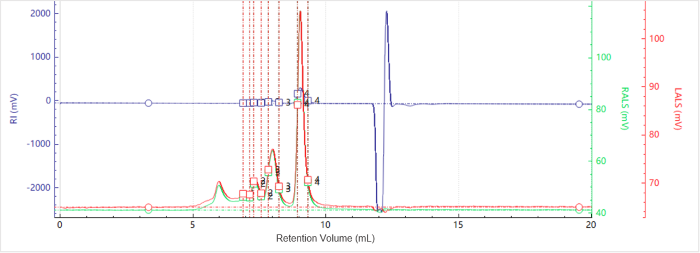
Figure 1. Elution profiles of the multi-detector signals for Sample A. Image Credit: Bettersize Instruments
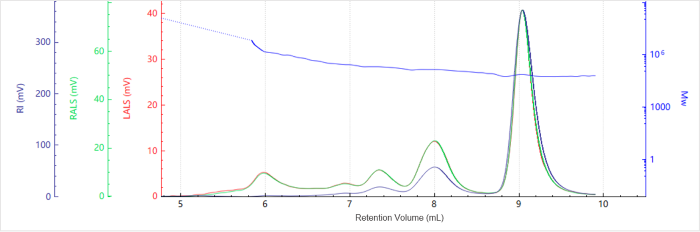
Figure 2. Elution profile of the molecular weight for Sample A. Image Credit: Bettersize Instruments
Figure 1 demonstrates the elution profile of HSA after it passed through the SEC column. Many distinct peaks are observed, indicating that in PBS HSA exists in multiple aggregated states.
After baseline correction and integration, the RI and light-scattering signal ranges were defined, and the molecular weight of each peak was calculated. Table 1 summarizes these values.
Figure 2 gives the molecular weight profile derived from the full signal integration. As expected, when the elution volume increased, the molecular weight decreased gradually, consistent with the principle of SEC separation.
At each peak, the molecular weight remained constant, forming a flat plateau. This behavior reflects the narrow molecular-weight distribution of each oligomeric state of the protein.
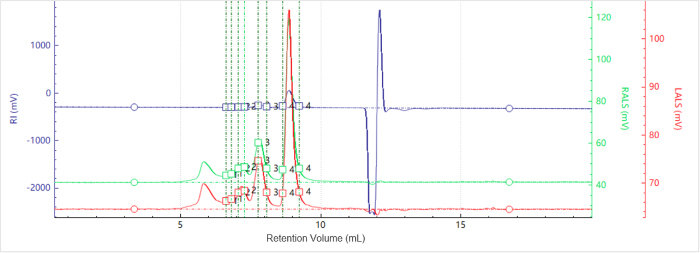
Figure 3. Elution profiles of the multi-detector signals for Sample B. Image Credit: Bettersize Instruments
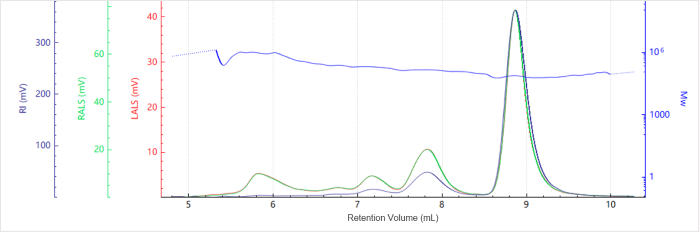
Figure 4. Elution profile of the molecular weight for Sample B. Image Credit: Bettersize Instruments
Table 1. Molecular weight results for peaks in Sample A and B. Source: Bettersize Instruments
| Peak |
Sample A |
Sample B |
| Mw (Da) |
Area (%) |
Mw (Da) |
Area (%) |
| Peak 1 |
274,459 |
1.5 |
271,545 |
1.7 |
| Peak 2 |
199,148 |
4.6 |
201,826 |
3.8 |
| Peak 3 |
138,694 |
16.5 |
141,070 |
14.4 |
| Preak 4 |
68,516 |
76.1 |
68,403 |
77.3 |
Table 1 shows that Peak 4, which elutes last, has a molecular weight of approximately 68 kDa, consistent with the theoretical value for the HSA monomer. Peaks 1 through 3 scale as simple multiples of Peak 4, which is accordant with the dimer, trimer, and tetramer species.
Peak area analysis indicates that the monomer accounts for approximately 77 % of the total protein in both HSA samples, while a substantial portion is also present in aggregated forms.
Conclusion
This article demonstrates how the BeSEC LS2 with light scattering can be used to accurately determine the molecular weight of HSA samples. The results confirm that static light scattering can precisely provide molecular weight values for each elution peak across the entire chromatogram.
These measurements enable precise identification of aggregation states, distinguishing monomeric HSA from higher-order oligomers.
Acknowledgments
Produced using materials originally created by Zhibin Guo, from Bettersize Instruments
About Bettersize Instruments 
With over 29 years of experience, Bettersize Instruments has established itself as a leading global manufacturer of analytical instruments for particle analysis. Quality is core to our business - we carry out 95 % in-house production for strict quality control.
Our mission is to empower our customers worldwide with best-in-class instruments, comprehensive solutions, and exceptional customer service. We are dedicated to helping scientists, researchers, and engineers gain deeper insights into material properties to facilitate R&D and improve production efficiency.
We are proud to have 95 patents and serve over 17,000 organizations across 92 countries and industries, including pharmaceuticals, battery materials, chemicals, coatings, mining, and more. We invest 15 % of annual revenue in R&D to continuously improve the performance of existing instruments while driving relentless innovation to ensure precise measurement results.
In 2023, we opened a new facility in Costa Mesa, California, to provide real-time support and improve product delivery for our North American customers. This facility allows us to work more closely with local material scientists, researchers, and engineers to optimize their materials analysis.
Our Main Product Series:
- BeNano Series: Nanoparticle size and zeta potential analysis by three light scattering techniques;
- Bettersizer Series: Particle sizing by laser diffraction technology with built-in dry/wet dispersion systems;
- BeVision Series: Particle size and shape analysis by dynamic/static image analysis technologies;
- BeDensi Series: Tapped and bulk density, flowability, and angle of repose measurement;
- PowderPro Series: 14-in-1 automatic powder characteristics tester;
- BetterPyc 380: Automatic gas pycnometer for volume, true density, solid content, and open cell content measurement.
International qualifications:
All Bettersize instruments have passed ISO9001 international quality management system certification and the European CE certification. Laser particle analyzers obtained the approval of 21 CFR Chapter I Subchapter J, Part 1040.10 and 1040.11.
The software complies with 21 CFR Part 11 of the FDA, ensuring the validity and reliability of results and regulatory compliance.
Services and support:
1. Online Store: Hassle-free ordering of our BeDensi Series.
2. Free Sample Testing: Up to 3 free sample tests for particle size, particle shape, zeta potential, molecular weight, and powder characteristics.
3. Complete Pre-sale and After-sales Service System: Timely response to product inquiries, 2-3 years warranty, free installation and debugging, free software upgrade, spare parts supply, and more;
4. Knowledge Hub: Get free product brochures, application notes, industry solutions, guidebook whitepaper, and more;
5. Training Conference: Expert-led sessions for product training and sales strategy.
Sponsored Content Policy: News-Medical.net publishes articles and related content that may be derived from sources where we have existing commercial relationships, provided such content adds value to the core editorial ethos of News-Medical.net, which is to educate and inform site visitors interested in medical research, science, medical devices, and treatments.